Reviewed · MEXICO CITY TOURS
Arrivals & Survival of Jews in Mexico from 1519
Mexico City’s Jewish story begins long before its first synagogue. This three-and-a-half-hour walk follows Jewish merchants, refugees, artists, political figures, and families through the city center, from the ruins of the Great Aztec Temple to two early synagogues near Plaza Loreto. The strongest part is the way Jewish history is tied to Mexico’s wider story, not treated as an isolated subject.
I like the small maximum of 10 people, which gives you room to ask questions, and I like the unusual route through places many standard Centro Histórico walks skip. Carlos is frequently named as an engaging guide, and his style combines Mexican, world, and Jewish history. The main drawback is that the tour can feel broader than its title suggests: one portion focuses heavily on Mexico’s religious and political past, so you should not expect three and a half hours devoted only to Jewish community life.
In This Review
- Key points to know before you book
- Starting above the Great Aztec Temple
- Behind the Metropolitan Cathedral and the Chapel of the Souls
- Plaza de Santo Domingo and the risks of ordinary trade
- The Inquisition buildings and the Perpetual Prison
- San Ildefonso, Rivera, Kahlo, and Mexican political life
- Plaza Loreto and Mexico’s first purpose-built synagogues
- Inside the Justo Sierra Synagogue
- What the $99 price really covers
- Pace, walking, and practical planning
- Who will get the most from this walk
- Should you book Arrivals & Survival of Jews in Mexico?
- FAQ
- Where does the tour begin?
- Where does the tour end?
- How long does the experience last?
- Is the tour offered in English?
- How large is the group?
- What synagogues are included?
- Can I cancel for a refund?
Key points to know before you book
- Begin above the ruins of the Great Aztec Temple: The opening conversation places Jewish history inside Mexico City’s layered religious past.
- See the former Inquisition district: The route explains how colonial architecture, public trade, and religious control shaped Jewish life.
- Connect Diego Rivera and Frida Kahlo to Jewish identity: Their meeting place adds an artistic and political chapter to the tour.
- Visit the first synagogues built for Sephardic and Ashkenazi communities: The tour ends with the decommissioned Justo Sierra Synagogue.
- Plan for a history walk, not a museum tour: Most stops are viewed from outside, though access to some public and private places has been arranged.
- Allow for cancellation risk: Free cancellation applies up to 24 hours ahead, but the provider has also canceled close to departure in cases involving health or security concerns.
Starting above the Great Aztec Temple
Meet at 10 a.m. at Librería Porrúa, on República de Argentina in the Centro Histórico. The tour begins from a terrace with a view toward the ruins of the Templo Mayor, the former ceremonial center of the Aztec capital.
This is a smart place to begin. You are not dropped straight into a list of dates and names. Instead, the guide uses the view to discuss how different religions and communities have occupied the same city over time. The ruins, the surrounding colonial buildings, and modern Mexico City form a compact lesson in changing power.
The first hour includes an introductory conversation, and some guides have made this a relaxed sit-down start with coffee or a snack. That opening matters because the subject is complicated. Jewish arrival in Mexico is connected to Spain, the conquest, the Catholic Church, trade routes, forced conversion, migration, and later political movements. A quick sidewalk lecture would not give those links enough room.
If Carlos is leading your group, you can expect an animated, question-friendly presentation. He has been praised for bringing his own connection to the subject into the discussion, while still placing it within Mexican and global events. His approach is not simply a succession of dates. He asks you to consider how people maintained identity when public Jewish practice could be dangerous.
Other Mexico City days travellers weigh against this one:
- Teotihuacan, Guadalupe Shrine & Tlatelolco Day Tour with Lunch
★ 5.0 · 11,603 reviews - Xochimilco, Coyoacan and Frida Kahlo with Optional Lunch
★ 4.5 · 7,320 reviews - Balloon flight + Breakfast in cave + Pyramids + Pick up CDMX.
★ 5.0 · 6,335 reviews
Behind the Metropolitan Cathedral and the Chapel of the Souls
From the bookstore, you walk toward the Metropolitan Cathedral. The stop is behind the cathedral, at the Chapel of the Souls, where displays about heresy and other religions help explain the religious rules imposed during the colonial period.
The guide uses the location to point out how the city’s design reflected Catholic authority. You also get a view of colonial architecture that, according to the tour’s interpretation, was arranged in ways intended to keep Jews away from important religious spaces. This is one of the places where the experience moves beyond a standard Jewish heritage walk. You are also learning how Mexico City was built to display power.
Do not expect a grand synagogue interior here. The value is in understanding the setting and reading the city’s buildings as evidence of policy. The material can be pointed and political, and some explanations may feel simplified if you have already studied the Spanish Inquisition. Still, the guide gives you a physical location for ideas that can otherwise remain abstract.
The stop lasts about 20 minutes. You remain in the historic center, so the walk between sites is part of the experience rather than dead time.
Plaza de Santo Domingo and the risks of ordinary trade
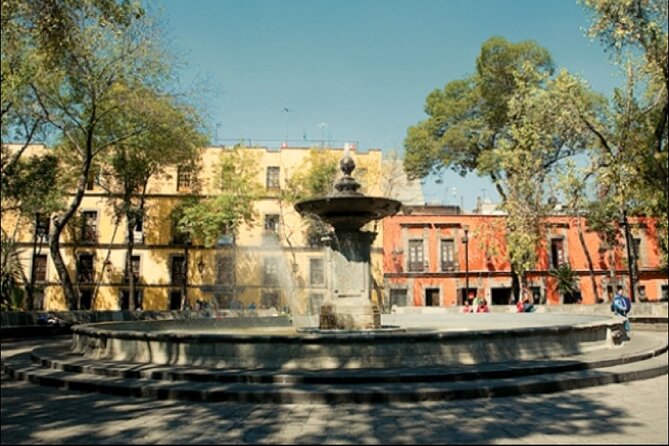
At Plaza de Santo Domingo, the story becomes more personal. This was a major trading marketplace from the 16th through the 19th centuries, and Jewish people living in secrecy had to bring goods there while being watched.
The plaza helps explain a basic fact of survival: hiding did not mean disappearing. People still needed to work, sell, buy, move through the city, and maintain contact with others. A marketplace could offer opportunity, but it could also expose someone to scrutiny.
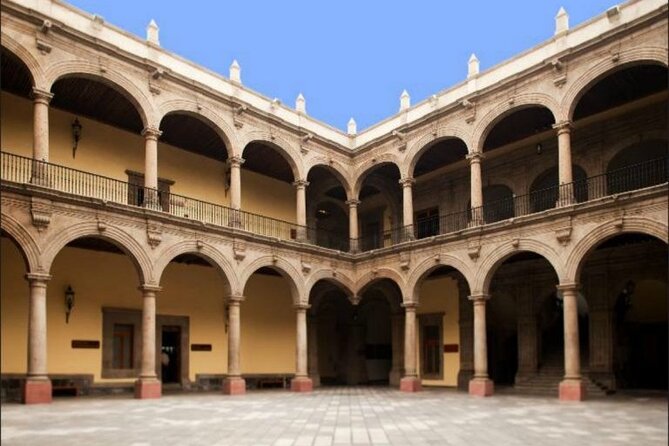
The tour also examines the Palace of the Inquisition and the Santo Domingo church. The guide points out anti-Jewish messages and discusses the church as the beginning of El Camino Real, a route that offered a measure of safety to Jewish merchants on the move.
This is an especially useful stop if you want social and economic context. Jewish history is often told through famous rabbis, community leaders, or dramatic acts of persecution. Here, you consider the practical problems of earning a living under suspicion. The visit lasts about 20 minutes, and most of the learning comes through the guide’s explanation rather than formal admission to a site.
The Inquisition buildings and the Perpetual Prison
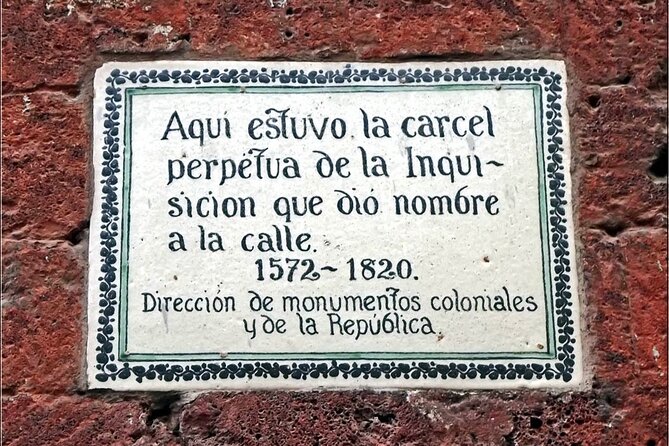
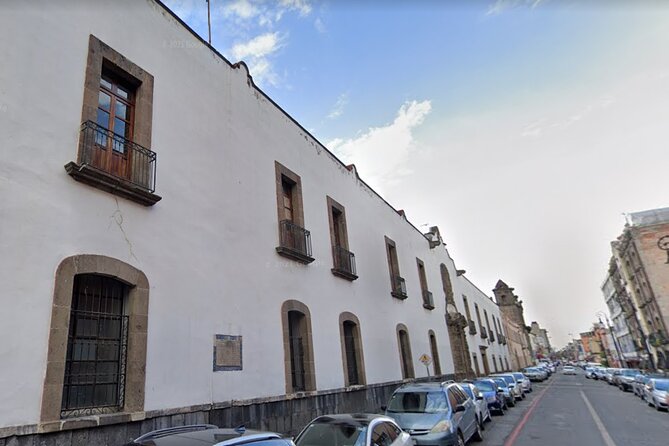
The next part of the route passes the former administrative building of the Inquisition, its living quarters, and the Perpetual Prison. The stop is brief, about 20 minutes, but its subject is grim. The guide explains that Jews were imprisoned, tortured, and sentenced to death in this area.
This section gives the earlier discussion a sharper edge. The marketplace was not merely a place of commerce, and the church architecture was not merely decorative. The institutions around you had the authority to investigate belief and punish people who were accused of heresy.
You should be prepared for a serious tone. The tour deals with antisemitism and religious persecution directly, without turning the subject into a sightseeing curiosity. At the same time, this is not a visit to a preserved prison interior. You are passing historic buildings and relying on interpretation, so the experience will be strongest for anyone who values explanation and context over visual spectacle.
A few people may find the overall story too broad or the historical treatment too basic. If you have read extensively about colonial Mexico or the Inquisition, ask questions. The guide’s ability to expand on the material is one of the most useful features of the small group.
A different kind of day out, same stretch of Mexico:
- Teotihuacan pyramids morning or afternoon without tourist traps
★ 5.0 · 6,186 reviews - Teotihuacan Early Access Guided Tour with optional Lunch
★ 4.5 · 6,138 reviews - Balloon flight + pick up in CDMX + Breakfast in Cave + Pyramids
★ 5.0 · 5,651 reviews - Balloon Flight + Cave Breakfast + Pick Up from CDMX or We Fly
★ 5.0 · 4,410 reviews
San Ildefonso, Rivera, Kahlo, and Mexican political life
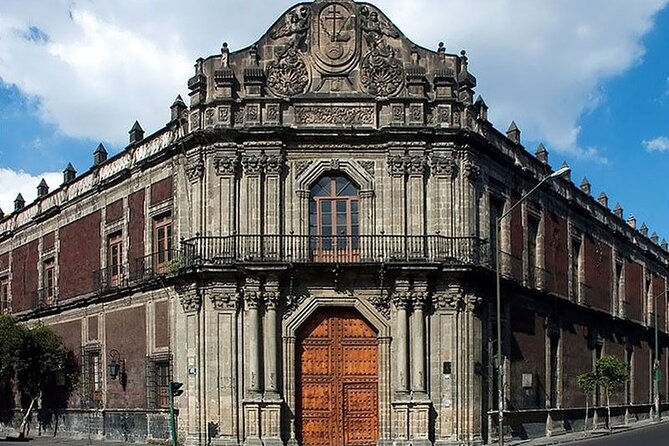
At the former Antiguo Colegio de San Ildefonso, you see the outside of the building where Diego Rivera and Frida Kahlo’s paths crossed. The tour identifies Rivera as being of Sephardic origin and Kahlo as being of Ashkenazi origin, then uses their connection to open a wider discussion of art, identity, anti-Fascism, and Jewish refugees in Mexico.
This is one of the route’s most appealing turns. You are no longer focused only on colonial persecution. Jewish identity appears in modern Mexican culture and politics, including the effort to cancel the country’s first and only anti-Semitic national convention.
The guide also discusses Mexico’s reception of Lev Davidovich Bronstein, better known as Leon Trotsky, as a refugee. That adds political tension to the story. Mexico was not presented as having one simple attitude toward Jewish people, foreigners, or political dissent. Its response changed by period, institution, and political setting.
The San Ildefonso stop lasts around 15 minutes and is viewed from outside. If you are hoping for a full Frida Kahlo or Diego Rivera art tour, this is not it. The artists are part of a larger story, not the main subject. Still, the link makes the history easier to place in the Mexico City you are seeing today.
Plaza Loreto and Mexico’s first purpose-built synagogues
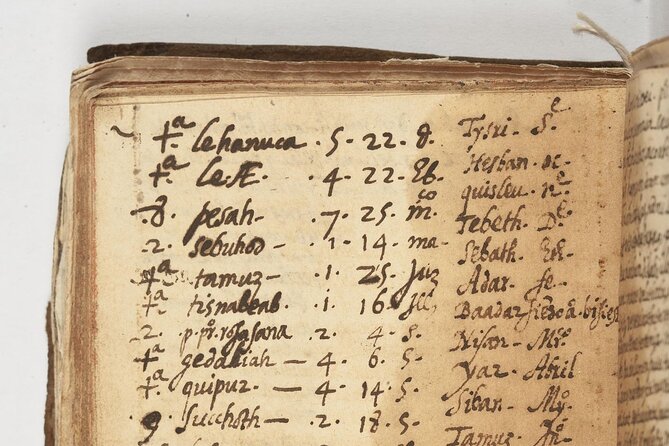
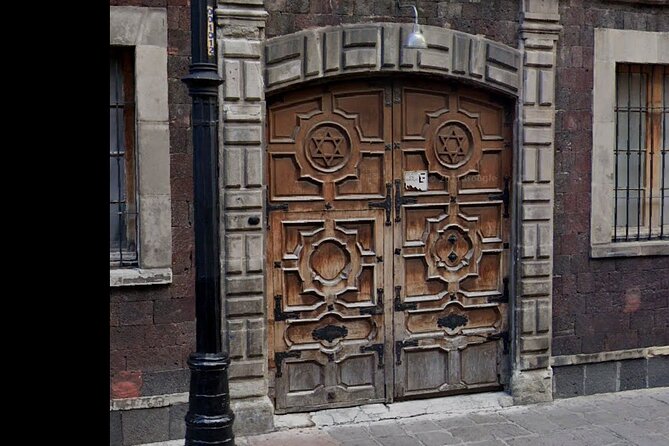
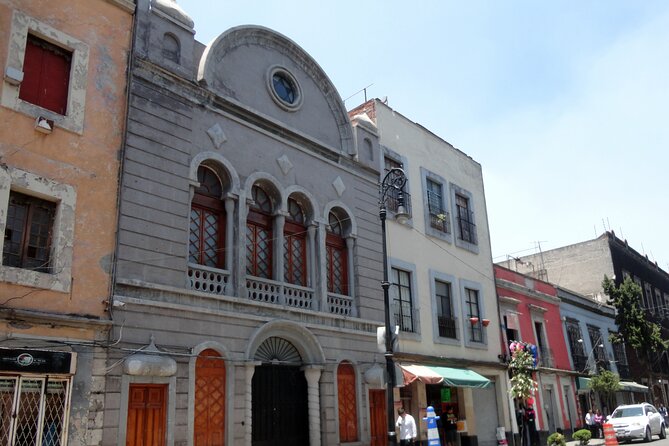
The route then reaches Plaza Loreto, where you pass the first purpose-built synagogue in Mexico, Sephardic Mount Sinai, and the neighboring Nidjei Israel, identified as the first Ashkenazi synagogue in the country.
This is the point where earlier themes become visible in actual community buildings. Sephardic and Ashkenazi Jews did not form one identical group. They carried different traditions, languages, family histories, and migration patterns, and the presence of separate congregations reflects that variety.
The stop takes about 15 minutes, but it carries considerable weight. You have moved from secret Jewish life under colonial rule to openly organized communities with permanent institutions. That change did not happen all at once, and the guide uses the earlier stops to explain why these synagogues matter.
The route ends in front of Loreto Park on the south side of Justo Sierra Street. That makes the final location easy to identify, though you should not assume the tour returns to the starting bookstore. You finish in the same historic district, but at a different address.
Inside the Justo Sierra Synagogue
The final visit is to the decommissioned Justo Sierra Synagogue, described as the first Ashkenazi synagogue in Mexico. This is the most tangible conclusion to the walk. After hearing about hidden worship, surveillance, forced conversion, and migration, you reach a building created for Jewish communal life.
The synagogue is not simply another photo stop. Its former use helps you think about how a community becomes visible and organized. A dedicated house of worship requires money, trust, shared customs, and the confidence to establish a lasting presence.
Access to certain public and private places has been arranged or included, but the exact interior access can depend on the day and operating conditions. That is worth keeping in mind. The itinerary provides a strong ending, but historic religious buildings do not always function like regular museums.
The last visit takes about 20 minutes. Some people may want more time here, especially if they have a personal connection to Ashkenazi Jewish history. The fixed schedule may feel short, but the guide’s explanation links this final building to the entire route.
What the $99 price really covers
At $99 per person, this is not the cheapest way to walk around Mexico City’s historic center. You are not paying mainly for admission tickets, since many stops are viewed from public streets and plazas. You are paying for a small-group guide who brings together Mexican history, Jewish history, colonial religious policy, art, migration, and politics.
That value depends heavily on the guide. The strongest feedback centers on Carlos, who is described as articulate, warm, interactive, and able to answer detailed questions in English. If another guide leads your departure, the quality may feel different, so it is reasonable to confirm the guide’s name when booking.
I consider the price fair for someone who wants a focused, personal history walk rather than a general orientation tour. It is less convincing if you only want to see synagogues or expect extensive interior access. The experience is also more worthwhile when you engage with the questions and discussion. A passive listener may feel that too much time is spent on general Mexican history.
The small group, capped at 10 people, helps protect the value. You can hear the guide in busy streets, ask follow-up questions, and avoid being moved through the center in a large pack.
Pace, walking, and practical planning
The full experience lasts about three hours and 30 minutes. The route includes several short stops and walking between them, but the schedule is not one long march. People have found the pacing manageable, with breaks for explanation and conversation.
You should still have a moderate level of physical fitness. Wear comfortable shoes and be ready for uneven historic-center sidewalks, street crossings, and time spent standing. The meeting point is near public transportation, which makes the 10 a.m. start practical for building into a morning in Centro Histórico.
The tour is offered in English and uses a mobile ticket. Service animals are allowed. Since the route takes place in an active city center, conditions can change because of crowds, public events, or security concerns.
Cancellation deserves special attention. You can cancel up to 24 hours before the start for a full refund, but changes made inside that window are not accepted. The provider has also canceled close to departure in cases involving illness, a marathon, or security concerns connected with the sensitivity of the subject. If you book, keep your phone and booking messages available on the morning of the tour, and make sure the reseller has a working way to contact you.
Who will get the most from this walk
I would choose this experience if you want:
- A Jewish history tour that also explains Mexico City’s colonial and political past
- A small group with time for questions
- A guide-led walk rather than a museum-heavy program
- A route that includes both Sephardic and Ashkenazi community history
- A more unusual alternative to a standard Centro Histórico introduction
- A thoughtful activity for families with older children or teenagers interested in history and identity
I would look elsewhere if you want a strictly academic seminar, a full art tour focused on Rivera and Kahlo, or several hours inside active synagogues. One portion of the tour centers on the broader history of Mexico and the Catholic Church. That wider frame is a strength for many people, but it can feel like a detour if you want every minute devoted to Jewish community life.
Should you book Arrivals & Survival of Jews in Mexico?
Book it if you want to understand how Jewish life in Mexico developed through pressure, adaptation, trade, migration, art, and political change. The route has a clear arc: hidden religious identity, controlled commerce, persecution, modern cultural life, refugee politics, and permanent synagogues.
The experience is at its best with Carlos, whose storytelling and personal connection add warmth to a difficult subject. I would also book it early, since it is often reserved about a month ahead and the group is limited to 10 people.
The final decision comes down to expectations. This is not a simple synagogue crawl, and it is not only a Jewish tour in the narrow sense. It is a serious, sometimes challenging walk through Mexico City’s center that uses Jewish history to explain the city itself. For the right audience, the $99 cost buys a perspective you are unlikely to get from a standard sightseeing route.
FAQ
Where does the tour begin?
It begins at Librería Porrúa, República de Argentina 15, in Mexico City’s Centro Histórico. The start time is 10 a.m.
Where does the tour end?
The tour ends at Justo Sierra 71, in front of Loreto Park on the south side of Justo Sierra Street.
How long does the experience last?
The tour lasts approximately three hours and 30 minutes.
Is the tour offered in English?
Yes. The experience is offered in English and uses a mobile ticket.
How large is the group?
The maximum group size is 10 people.
What synagogues are included?
The route passes the first purpose-built Sephardic synagogue, Sephardic Mount Sinai, and the first Ashkenazi synagogue, Nidjei Israel. It also includes a visit to the decommissioned Justo Sierra Synagogue.
Can I cancel for a refund?
You can cancel at least 24 hours before the local start time for a full refund. Cancellations or changes made less than 24 hours before the tour are not accepted for a refund.
Recently reviewed around Mexico City
- Town walking tour of the city★ 5.0 · 72 reviews
- Cholula experience (private tour)★ 5.0 · 52 reviews
- Cholula tour from Puebla★ 5.0 · 66 reviews
- Private Hiking Tour in Iztaccihuatl★ 5.0 · 45 reviews
- City walking tour in Puebla (private tour)★ 5.0 · 40 reviews
- Cholula Magical Twon on a Traditional Tram from Puebla★ 4.5 · 61 reviews
- Hiking Excursion to the Iztaccíhuatl Volcano from Puebla★ 5.0 · 74 reviews
- Museum of Anthropology: a look at Mexico’s past★ 5.0 · 52 reviews
Mexico City Tours, compared.
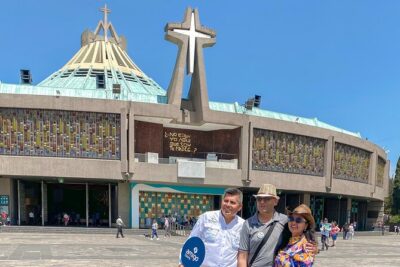
Teotihuacan, Guadalupe Shrine & Tlatelolco Day Tour with Lunch
Read our review →
Xochimilco, Coyoacan and Frida Kahlo with Optional Lunch
Read our review →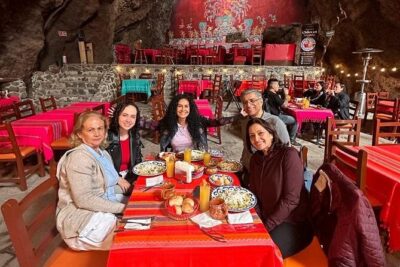
Balloon flight + Breakfast in cave + Pyramids + Pick up CDMX.
Read our review →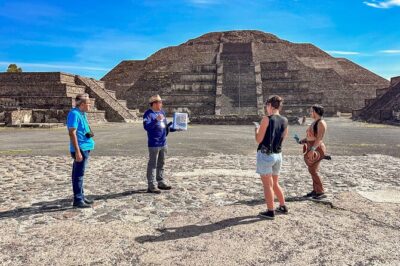
Teotihuacan Early Access Guided Tour with optional Lunch
Read our review →
Balloon flight + pick up in CDMX + Breakfast in Cave + Pyramids
Read our review →
Balloon Flight + Cave Breakfast + Pick Up from CDMX or We Fly
Read our review →
Teotihuacan, Tlatelolco & Guadalupe Shrine Tour
Read our review →