
Reviewed · FRIDA KAHLO MUSEUM TOURS
La Catrina & Muralism: Diego Rivera’s Legacy & Frida Kahlo
Mexico City’s mural movement turns public buildings into history books. This walking tour links Diego Rivera, Frida Kahlo, La Catrina, and the political art of post-Revolutionary Mexico, with guides such as Sofía, Ulysses, Ady, and Waryor adding the stories that labels often leave out.
I like the small maximum of 12 people, which makes questions easier, and I like that museum tickets and public transportation are included. The main thing to watch is timing: although the tour is advertised at about two and a half hours, some outings have run much longer, with little time for water, food, or a restroom break.
In This Review
- Key points at a glance
- Why Mexican muralism is worth your morning
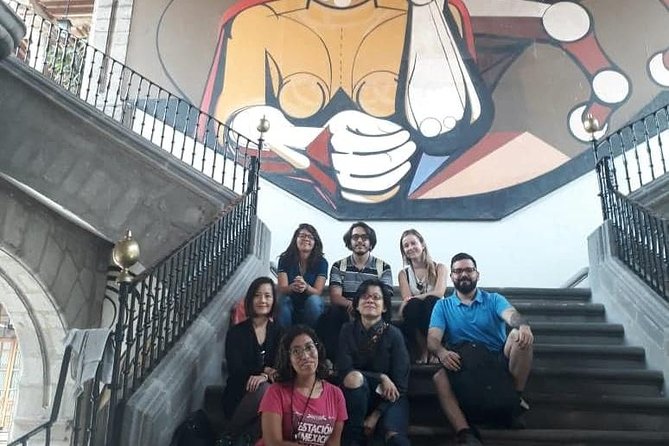
- Starting at San Ildefonso with Rivera and Kahlo
- Museo Vivo del Muralismo and the scale of public art
- La Catrina at Museo Mural Diego Rivera
- Ending at Palacio de Bellas Artes
- The guides are the heart of the experience
- The real duration can be longer than 2 hours 30 minutes
- Is $66.14 a fair price?
- Who should book this mural walk?
- Practical details before you go
- Should you book La Catrina and Muralism?
- FAQ
- Where does the tour begin?
- What time does the tour start?
- Where does the tour end?
- How long is the tour?
- What language is the tour offered in?
- Which places are included?
- Are museum tickets included?
- Is public transportation included?
- How large is the group?
- Can I cancel for a full refund?
Key points at a glance
- La Catrina gets the spotlight: See the famous skeleton figure in Diego Rivera’s major mural at Museo Mural Diego Rivera.
- Four central Mexico City stops: Visit San Ildefonso, Museo Vivo del Muralismo, Museo Mural Diego Rivera, and Palacio de Bellas Artes.
- The guide adds the real value: Ulysses, Sofía, Ady, Waryor, Diana, David, and other hosts are praised for clear storytelling and strong knowledge of Mexican art.
- Small-group format: The maximum group size is 12, a useful size for museum rooms and questions.
- Expect active sightseeing: You will walk, stand, use public transportation, and move through several museum spaces.
- Plan for schedule changes: The museums may change depending on availability, and some outings have lasted three and a half to four hours.
Why Mexican muralism is worth your morning
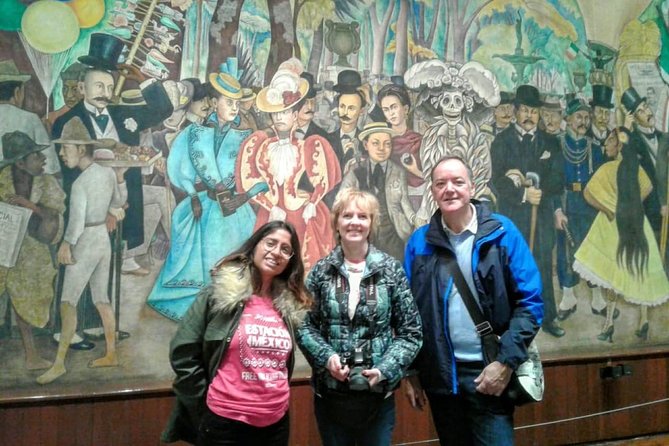
This is not simply a tour of pretty walls. Mexican muralism was a major artistic movement of the 20th century, and its artists used public buildings to tell stories about workers, revolution, inequality, Indigenous identity, national pride, and political conflict.
That context matters. Without it, a large mural can feel like a crowded scene full of historical figures. With a guide, you can begin to see how the artists arranged symbols, whose point of view is being presented, and why these works were placed where ordinary people could see them.
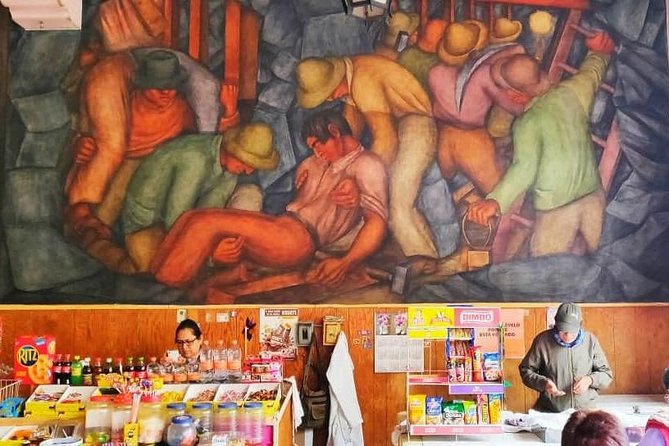
I especially like this approach for a first visit to Mexico City’s Centro Histórico. You move through important buildings, but the focus stays on how art and national identity fit together. The tour also appears to include murals in places you might pass without realizing what is inside, including market areas and less obvious sections of public buildings.
The English-language format keeps the storytelling focused. Rather than switching between languages, your guide can explain the art, answer questions, and connect Rivera’s work with other major muralists such as José Clemente Orozco and David Alfaro Siqueiros.
Other Mexico City days travellers weigh against this one:
- Teotihuacan, Guadalupe Shrine & Tlatelolco Day Tour with Lunch
★ 5.0 · 11,603 reviews - Xochimilco, Coyoacan and Frida Kahlo with Optional Lunch
★ 4.5 · 7,320 reviews - Balloon flight + Breakfast in cave + Pyramids + Pick up CDMX.
★ 5.0 · 6,335 reviews
Starting at San Ildefonso with Rivera and Kahlo
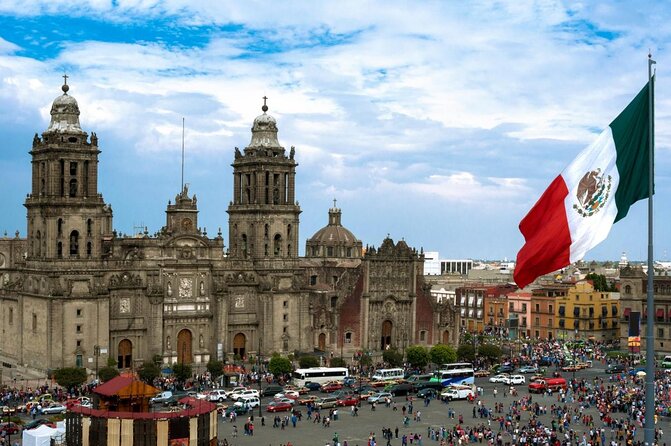
The meeting point is the former Colegio de San Ildefonso, at Justo Sierra 16 in Centro Histórico. The tour begins at 11 a.m., and the first visit lasts about 35 minutes, with admission included.
San Ildefonso is an excellent opening because it connects the art to the people behind it. You receive a short introduction to Diego Rivera’s life and work, along with the story of how this site witnessed the beginning of the relationship between Rivera and Frida Kahlo.
That personal connection gives the tour an easy way into a subject that can otherwise feel academic. Rivera and Kahlo are often treated as celebrity names, but here their relationship becomes part of the setting and the story of Mexican art.
Do not expect a long, stand-alone Frida Kahlo tour. Kahlo is part of the introduction and wider artistic context, while the main subject is muralism. If your top priority is Kahlo’s personal life or the Frida Kahlo Museum, this experience will not replace a dedicated visit.
The venue may involve standing as your guide explains the murals and their setting. Wear comfortable shoes from the start. Even though the distance is manageable for most people, the day is spent on your feet more than a standard museum visit.
Museo Vivo del Muralismo and the scale of public art
The second stop is Museo Vivo del Muralismo, visited for about 35 minutes with admission included. The museum has two courtyards and three levels, so you get a sense of how mural art works across a building rather than on one isolated wall.
This is one of the tour’s useful features. You are not only looking at individual paintings. You are seeing how murals occupy courtyards, stairways, and multiple floors, creating an experience that changes as you walk through the building.
A guide is particularly helpful here. Large public works can contain more people, symbols, and historical references than you can absorb at a glance. The hosts are praised for making the information easy to follow, even when the subject includes the Mexican Revolution and difficult political themes.
The setting also helps explain why these paintings mattered. A mural in a public institution reaches a wider audience than a work kept in a private collection. The art becomes part of daily life, not just something you seek out in a gallery.
The practical drawback is pace. Thirty-five minutes can feel quick if your guide has a lot to explain, but it can also feel long if you prefer to study each work silently. This tour is built around interpretation and conversation, not leisurely solo viewing.
La Catrina at Museo Mural Diego Rivera
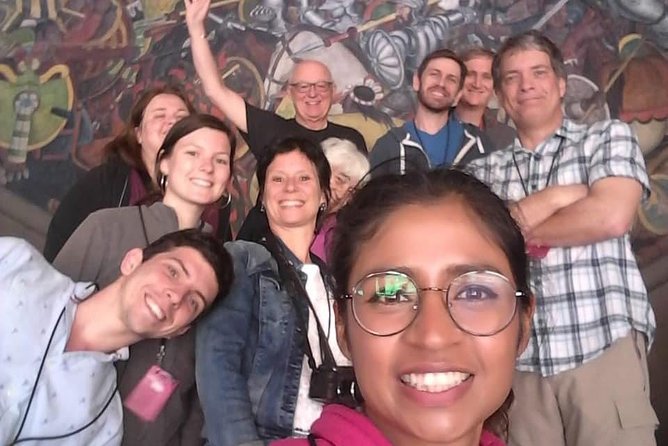
The third stop, Museo Mural Diego Rivera, lasts about 30 minutes. Here you see one of the best-known works connected with Mexican muralism, a large composition that brings together Día de Muertos imagery and La Catrina.
La Catrina is one of Mexico’s most recognizable figures, but a quick photograph does not tell you why she matters. Your guide can help place her within the mural’s wider scene and explain how the work combines death, memory, social classes, and Mexican identity.
This is likely the tour’s clearest payoff for anyone booking because of the title. You get the famous image, but you also get a way to read the crowded composition around it. I find that especially useful for first-time art visitors who want more than a list of names and dates.
The museum stop also gives the tour a strong visual center. San Ildefonso sets up Rivera and Kahlo. Museo Vivo del Muralismo expands the story across public spaces. Museo Mural Diego Rivera brings you to a single celebrated work where the themes become easier to see together.
As with the other stops, you should allow for standing room and a steady schedule. Thirty minutes is enough for a guided look, but not necessarily enough for a slow, detailed examination of every figure.
A different kind of day out, same stretch of Mexico:
- Teotihuacan pyramids morning or afternoon without tourist traps
★ 5.0 · 6,186 reviews - Teotihuacan Early Access Guided Tour with optional Lunch
★ 4.5 · 6,138 reviews - Balloon flight + pick up in CDMX + Breakfast in Cave + Pyramids
★ 5.0 · 5,651 reviews - Balloon Flight + Cave Breakfast + Pick Up from CDMX or We Fly
★ 5.0 · 4,410 reviews
Ending at Palacio de Bellas Artes
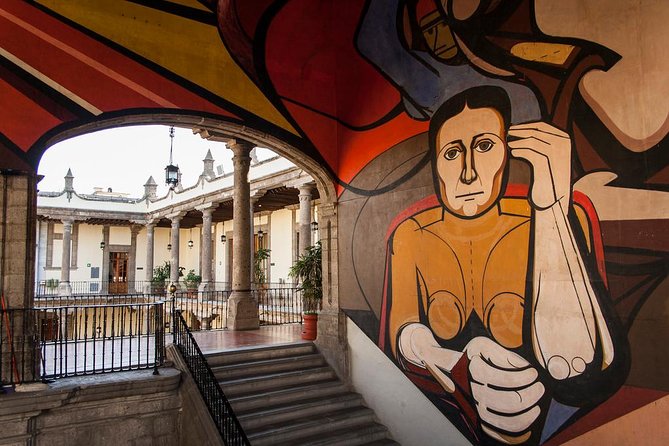
The final stop is Palacio de Bellas Artes, Mexico City’s major cultural venue. The planned visit lasts about 30 minutes, and the tour ends nearby on Avenida Juárez.
The focus here is a Diego Rivera mural created in the United States and later preserved at Bellas Artes. The work is described as one of Rivera’s most controversial murals, which gives your guide another chance to explain the political arguments surrounding his art and commissions.
This final stop works well because it places Rivera’s work in one of the city’s most important cultural buildings. It also gives you a natural point to continue exploring Centro Histórico after the tour.
The end point is practical. Your guide shares suggestions for things to do and places to eat nearby, so you can turn the tour into part of a longer morning or afternoon in the center. The meeting and ending locations are both near public transportation, and public transit is included during the activity.
One important qualification: the museum stops can change because of availability. You should treat the four listed venues as the intended route, not an absolute guarantee for every departure. If Bellas Artes is especially important to you, confirm the day’s plan with your guide when the tour begins.
The guides are the heart of the experience
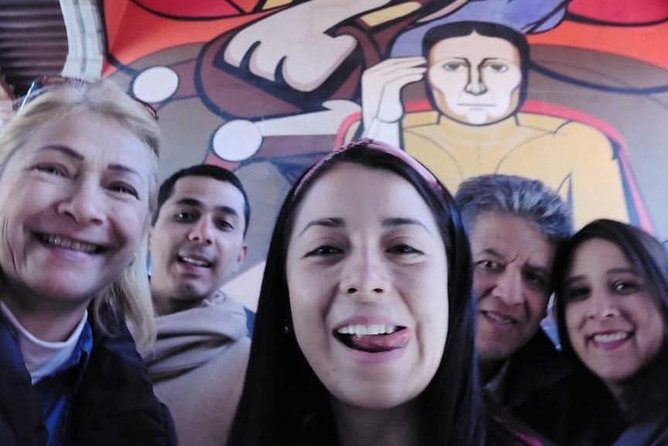
The strongest feature here is not simply access to museums. It is the guide’s ability to connect the murals to Mexican history in plain, engaging language.
Sofía is repeatedly praised for her passion and clear explanations. Ulysses is noted for finding works that would be difficult to locate alone, including murals in the Secretary of Education building and other less obvious places. Waryor, also called Warrior or Guerrero, is described as warm, entertaining, and deeply committed to the subject.
Ady is praised for making the subject friendly and easy to understand, while Diana is noted for placing Rivera alongside Orozco and Siqueiros. David is also praised for explaining both the murals and Mexican culture along the way.
The individual guide matters because this is a story-heavy tour. A rushed or vague guide would leave you with a few famous images and little else. A strong guide can show you how the murals express different and sometimes conflicting versions of Mexico’s past.
There is also some flexibility in the way guides handle the route. On one outing, a guide helped complete a final mural visit after the scheduled time had run out. That kind of personal effort cannot be promised on every departure, but it suggests that the company values the quality of the experience over simply moving people from one stop to the next.
The real duration can be longer than 2 hours 30 minutes
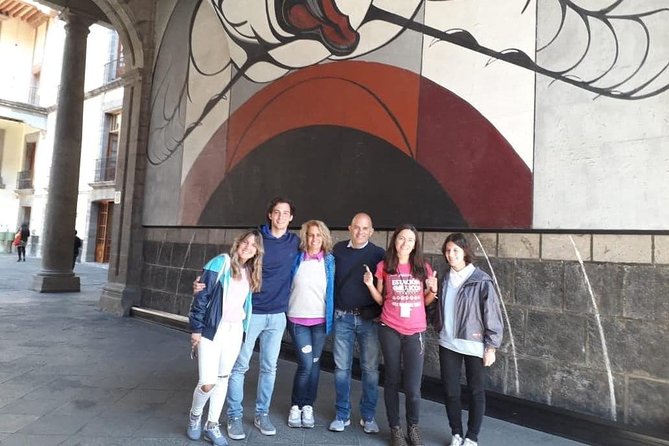
The official duration is approximately two hours and 30 minutes. You should plan cautiously, because some outings have lasted three and a half hours or more, with one reported experience running beyond four hours.
A longer tour can be a bonus if you are eager to see more murals and ask questions. It can also create a problem if you have a lunch reservation, a museum booking, or an afternoon activity across town.
Bring water. Bring a small snack, especially if you book the 11 a.m. start and expect to continue through lunchtime. There is no scheduled food or drink stop listed, and the experience includes substantial standing and walking.
You should also allow time for public transportation and the movement between venues. The route is central and near transit, but this is still an active city walk rather than a seated lecture.
Most people can participate, but the tour is not ideal if you need frequent rest periods. One useful way to think about it is this: the physical effort is moderate, but the amount of time spent standing may be more demanding than the distance itself.
Is $66.14 a fair price?
At $66.14 per person, this is not the cheapest way to see downtown murals. The price includes museum admission, public transportation, and an English-speaking host in a group capped at 12 people.
That package makes the cost reasonable for you if you want interpretation rather than independent sightseeing. You could visit some public buildings on your own, but you might miss the symbolism, the political background, and the less obvious mural locations that give the day its shape.
The value is strongest for first-time visitors, art students, teachers, history fans, and anyone who has looked at Rivera’s work and wanted help understanding it. It is also a good choice for a solo visitor who prefers company but does not want a large bus tour.
The value is weaker if you already know Mexican muralism well, dislike guided schedules, or want long stretches of quiet time with each painting. You may prefer to visit Bellas Artes or Museo Mural Diego Rivera independently and spend as long as you wish.
The small group helps justify the price. With 12 people or fewer, you have a better chance of hearing the explanations and asking about a detail that caught your eye. Still, the exact group size and the final museum route can vary.
Who should book this mural walk?
I would recommend it to you if you want art tied to social and political history. The tour explains how Mexican people struggled through revolution and social change, and how those pressures appeared on public walls.
It also suits families with older children and teenagers. A 14-year-old joined one outing, and the small group allowed plenty of questions and time with the art. Parents should still prepare children for walking and standing rather than a short, casual museum visit.
Solo visitors can also benefit. The small group makes it easier to speak with the guide, and a private-feeling outing may happen if the departure is lightly booked. That cannot be guaranteed, but the format supports conversation.
I would hesitate to recommend it for anyone with a tight schedule. The listed duration is only an estimate in practice, and the lack of a built-in snack or restroom break may be inconvenient.
Book at least a few weeks ahead if you have fixed dates. The experience is booked, on average, about 20 days before the start date, which suggests that advance planning is sensible.
Practical details before you go
The tour is offered in English and begins at 11 a.m. at Antiguo Colegio de San Ildefonso, Justo Sierra 16, in Centro Histórico.
You receive confirmation when you book. The route is near public transportation, and transit used during the experience is included. Food and drinks are not included, so carry water and a snack.
Free cancellation is available up to 24 hours before the local start time for a full refund. Cancellations or changes made within 24 hours are not accepted and are not refunded.
The museum schedule may change due to availability. If a particular building matters most to you, ask about the day’s route at the beginning rather than assuming every listed stop will be available.
Should you book La Catrina and Muralism?
Book this tour if you want the story behind Mexico City’s murals, not just a checklist of famous paintings. The strongest guides, including Sofía, Ulysses, Ady, and Waryor, make the experience feel like an introduction to how Mexico tells its own story through public art.
The main caution is time. Carry water and food, wear good shoes, and keep your afternoon flexible. If you can handle an active walk that may run well past the advertised two and a half hours, the museum admissions, small group, public transit, and guide-led context make $66.14 a fair price for a thoughtful introduction to Rivera and Mexican muralism.
FAQ
Where does the tour begin?
It begins at Antiguo Colegio de San Ildefonso, Justo Sierra 16, Centro Histórico, Mexico City.
What time does the tour start?
The start time is 11 a.m.
Where does the tour end?
It ends near Palacio de Bellas Artes on Avenida Juárez.
How long is the tour?
The stated duration is approximately two hours and 30 minutes. Some outings have lasted three and a half hours or longer, so you should keep extra time available.
What language is the tour offered in?
The tour is offered in English and uses a one-language format.
Which places are included?
The planned stops are Antiguo Colegio de San Ildefonso, Museo Vivo del Muralismo, Museo Mural Diego Rivera, and Palacio de Bellas Artes.
Are museum tickets included?
Yes. Admission tickets for the museums are included.
Is public transportation included?
Yes. Public transportation used during the tour is included.
How large is the group?
The activity has a maximum of 12 people.
Can I cancel for a full refund?
Yes, if you cancel at least 24 hours before the local start time. Cancellations made within 24 hours are not refunded.
Recently reviewed around Mexico City
- Town walking tour of the city★ 5.0 · 72 reviews
- Cholula experience (private tour)★ 5.0 · 52 reviews
- Cholula tour from Puebla★ 5.0 · 66 reviews
- Private Hiking Tour in Iztaccihuatl★ 5.0 · 45 reviews
- City walking tour in Puebla (private tour)★ 5.0 · 40 reviews
- Cholula Magical Twon on a Traditional Tram from Puebla★ 4.5 · 61 reviews
- Hiking Excursion to the Iztaccíhuatl Volcano from Puebla★ 5.0 · 74 reviews
- Museum of Anthropology: a look at Mexico’s past★ 5.0 · 52 reviews
Frida Kahlo Museum Tours, compared.

Xochimilco, Coyoacan and Frida Kahlo with Optional Lunch
Read our review →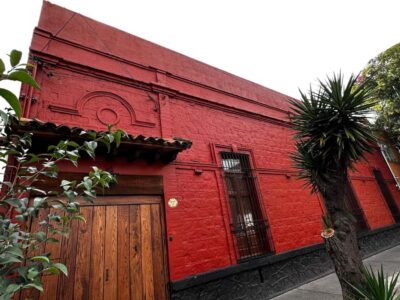
Xochimilco, Coyoacan, Frida Kahlo Museum & Murals Tour
Read our review →
Frida Kahlo VIP [Museum Tickets Included] Bike, Markets & Churros
Read our review →
Frida Kahlo VIP [Museum Tickets Included] Walk, Markets & Churros
Read our review →
EXCLUSIVE TOUR Frida Kahlo Museum – SMALL GROUPS
Read our review →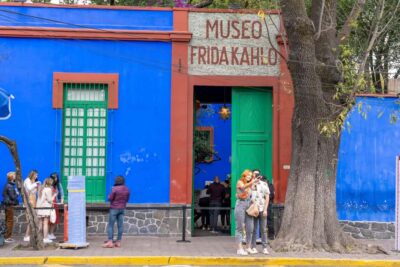
Frida Kahlo Museum Entry Ticket w/Digital Guide
Read our review →
Private City Tour in Frida Kahlo, Coyoacan, and Xochimilco
Read our review →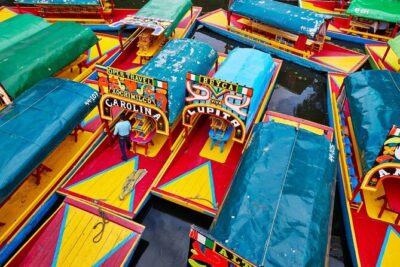
PREMIUM Frida Kahlo Museum and Xochimilco (Small Groups)
Read our review →Browse the lists this tour appears in