Reviewed · MEXICO CITY TOURS
Museo Nacional de Antropología – Small Groups
The most useful part of this tour is its clear route through a huge museum. Instead of trying to cover every case, you focus on about six of the eleven archaeology rooms, using Olmec, Zapotec, Teotihuacan, and Mexica objects to make sense of Mesoamerica before the fall of Mexico Tenochtitlan in 1521.
I like the small maximum of six people, which keeps the visit personal, and I like that Raúl explains both the objects and the thinking behind the museum’s design. The main drawback is pace: three hours gives you a strong introduction, but you will not see everything, and a guide who explains objects in detail may cover fewer rooms than planned.
In This Review
- Key points to know
- Why this museum needs a three-hour plan
- Meeting Raúl at the National Anthropology Museum
- The museum’s design is part of the story
- Following the Olmec, Zapotec, Teotihuacan, and Mexica worlds
- Famous materials, stolen objects, and the stories behind them
- A focused route, not a complete museum visit
- Is $83.63 a fair price?
- Who will get the most from this experience?
- Booking terms and useful planning notes
- Should you book this museum tour?
- FAQ
- How long does the Museo Nacional de Antropología small-group tour last?
- How many people can join the tour?
- Is museum admission included in the tour price?
- Which cultures does the tour cover?
- Is the tour offered in English?
- Where does the tour start and finish?
Key points to know
- Six rooms instead of eleven: The route concentrates on major archaeology galleries so you can follow a clear story without racing through the entire museum.
- Raúl leads the experience: He is described as an artist, researcher, and official tourist guide with training in archaeology and history.
- The objects carry the story: Gold, jade, obsidian, monumental sculpture, and everyday cultural clues help explain how Mesoamerican societies worked.
- Small means personal: The group is limited to six people, making it easier to ask questions and hear the guide.
- Admission costs extra: Pay MX$210 per person through the museum’s official website, not through another seller.
- Allow for standing and walking: A moderate fitness level is suggested, though seated breaks can be worked into the visit.
Why this museum needs a three-hour plan
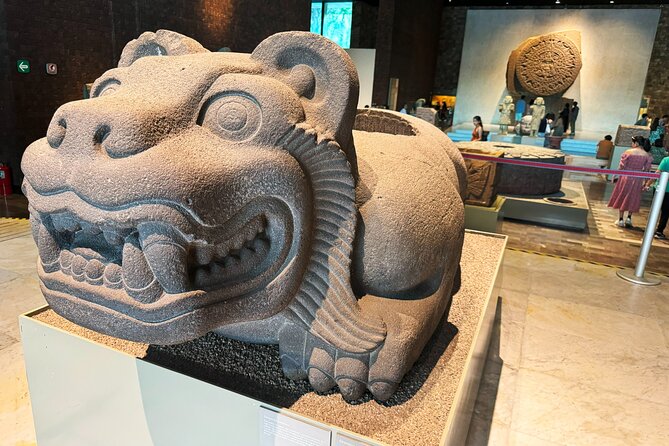
Mexico City’s Museo Nacional de Antropología is not a quick stop where you glance at a few famous objects and move on. Its archaeology section covers major cultures across a wide span of time, and the displays can be hard to place without a basic map of who came first, where each society lived, and how ideas moved across Mesoamerica.
That is where this tour earns its keep. You are not simply led from one famous object to another. The guide uses selected pieces as markers in a wider story, helping you connect political power, religion, trade, art, and technology.
I especially like the focus on six rooms. It gives you a manageable target inside a very large museum. You can pay attention to the explanations instead of spending the whole morning wondering if you are missing an important gallery around the next corner.
The route also prepares you for later visits to archaeological sites. If you plan to see Teotihuacan or Monte Albán, the museum can give those places more meaning. You will already have a basic sense of the cultures and symbols that shaped them.
Other Mexico City days travellers weigh against this one:
- Teotihuacan, Guadalupe Shrine & Tlatelolco Day Tour with Lunch
★ 5.0 · 11,603 reviews - Xochimilco, Coyoacan and Frida Kahlo with Optional Lunch
★ 4.5 · 7,320 reviews - Balloon flight + Breakfast in cave + Pyramids + Pick up CDMX.
★ 5.0 · 6,335 reviews
Meeting Raúl at the National Anthropology Museum
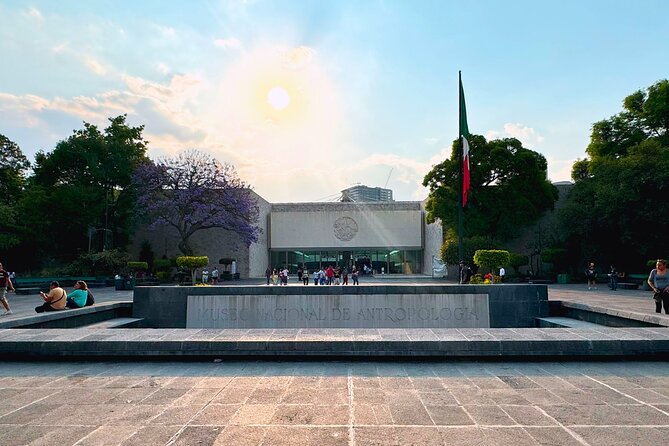
The meeting point is at the museum on Avenida Paseo de la Reforma, in the Polanco area of Bosque de Chapultepec. The location is near public transportation, and the tour begins and ends at the same place.
The museum is a busy setting, so arriving with enough time to find the entrance is wise. One practical issue is identifying the guide in the lobby. With many people around, a sign or clearly visible meeting marker would make the start easier, so keep an eye out and do not assume you will spot your guide instantly.
Raúl is presented as an artist, researcher, and official tourist guide. He also has a degree in archaeology and history. That background matters here because the museum asks you to move between art, ritual, political systems, and material evidence.
His strongest quality is his ability to make complicated subjects easy to follow in English. The museum’s signs are in Spanish, so an English-speaking guide is especially useful if you want more than a quick translation. You get context, connections, and the reason a particular object matters.
The group limit of six is another strong point. In a large public museum, a tiny group makes a real difference. You can stay close enough to hear, ask a question without interrupting a crowd, and tell the guide when you want a little more time at a display.
The museum’s design is part of the story
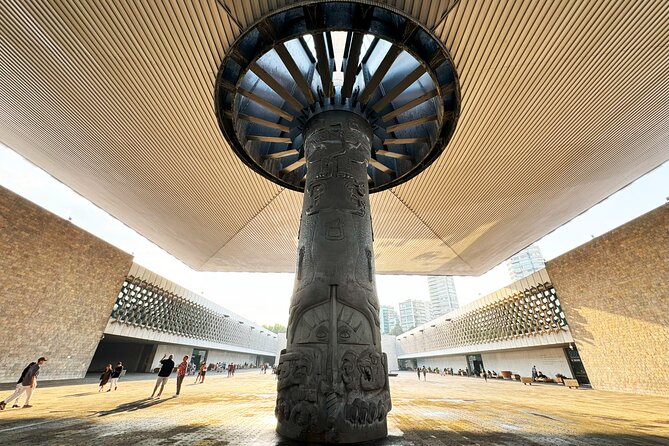
The tour does not treat the building as a plain container for objects. Part of the experience looks at the project behind the museum’s design.
That is a worthwhile angle. The way a museum arranges its rooms shapes the story you take away. A guide can point out how the building presents Mexico’s Indigenous cultures, how the galleries lead you through time, and how architecture frames the objects.
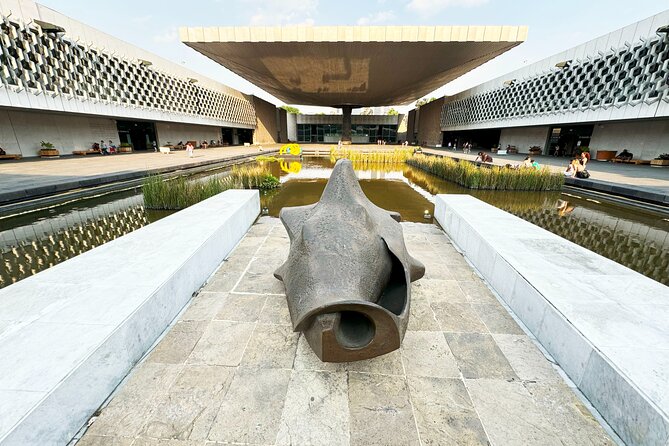
This subject is easy to miss when you visit alone. You may notice the scale of the building or its dramatic central courtyard, but you may not stop to ask why the rooms are arranged as they are. Here, the building itself becomes part of the lesson.
The focus remains mainly on the archaeology rooms, so this is not a full survey of every part of the museum. That is a benefit if you have limited time, but you should not book it expecting to cover all eleven archaeology rooms or the entire institution.
Following the Olmec, Zapotec, Teotihuacan, and Mexica worlds
The central route moves through several major cultures. Each room offers a different way to understand Mesoamerican life, and the guide uses individual pieces to keep the story grounded.
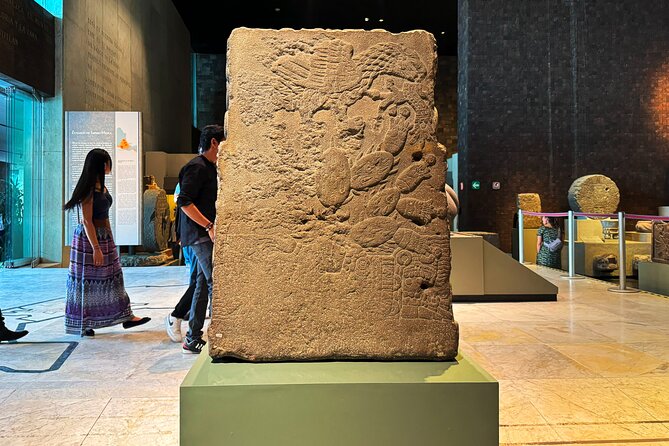
The Olmec material gives you an early point of reference. Rather than seeing isolated sculptures as mysterious art, you can consider what they suggest about authority, belief, skill, and long-distance connections.
The Zapotec collections add another layer. Objects become a way to discuss organized society, ritual practice, and the development of powerful centers. The goal is not to memorize a list of dates. It is to understand how distinct societies formed and how their ideas changed over time.
Teotihuacan brings another major shift in scale and ambition. The museum’s objects can help you connect artistic style and religious thought with the city’s larger political and urban world.
The Mexica material brings the story closer to the period before the Spanish conquest. It helps place Mexico Tenochtitlan within a complex Indigenous world, rather than treating 1521 as the beginning of Mexican history.
This broad sweep is one of the tour’s best features. You get a framework that links cultures without pretending they were all the same. The route also gives you useful preparation for archaeological sites outside Mexico City.
A different kind of day out, same stretch of Mexico:
- Teotihuacan pyramids morning or afternoon without tourist traps
★ 5.0 · 6,186 reviews - Teotihuacan Early Access Guided Tour with optional Lunch
★ 4.5 · 6,138 reviews - Balloon flight + pick up in CDMX + Breakfast in Cave + Pyramids
★ 5.0 · 5,651 reviews - Balloon Flight + Cave Breakfast + Pick Up from CDMX or We Fly
★ 5.0 · 4,410 reviews
Famous materials, stolen objects, and the stories behind them
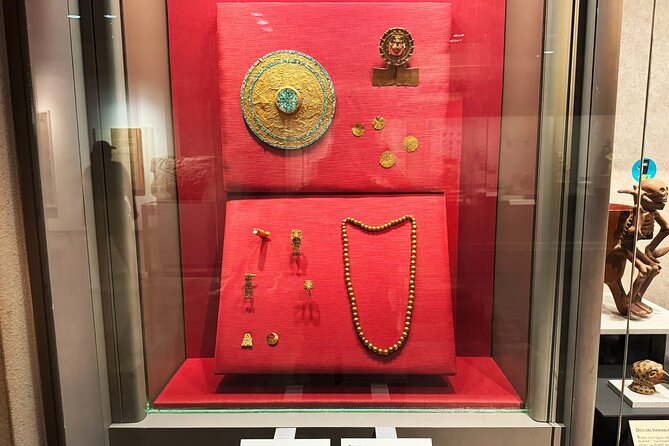
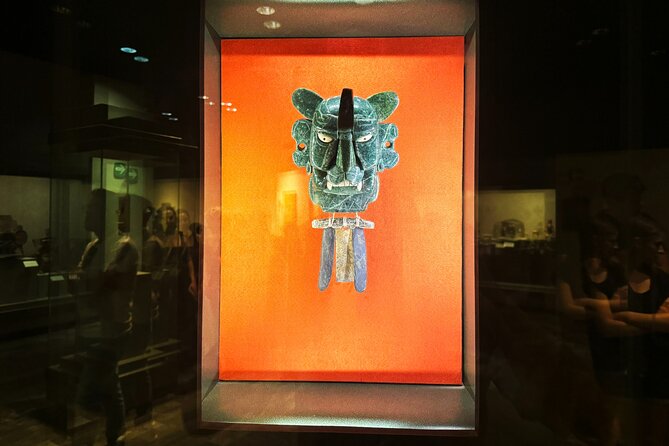
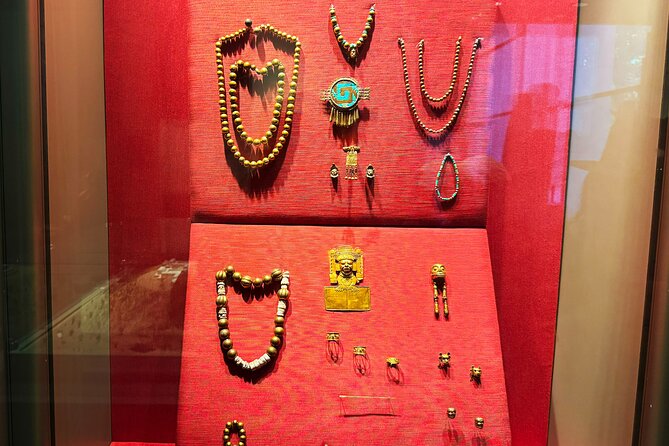
Some of the most memorable objects on the route are made from gold, jade, and obsidian. These materials are not just visually striking. They open the door to discussions about craftsmanship, status, trade, belief, and the value societies placed on particular resources.
The tour also includes an unusual museum story: some of these pieces were stolen on December 25, 1985. That detail adds a modern chapter to the visit and shows that museum objects have lives beyond the ancient world.
A good guide can use that story to remind you that collections are not frozen in time. Objects have been excavated, moved, interpreted, displayed, protected, and sometimes taken illegally. Their present location is part of their story too.
I would pay close attention when the tour reaches these materials. They are easy to remember, but their importance goes beyond beauty. Ask questions if you want to know how the object’s material shaped its meaning or why it remains important today.
A focused route, not a complete museum visit
The advertised duration is about three hours. That is long enough to build a strong understanding of the selected cultures, but short enough to fit into a larger Mexico City day.
The trade-off is coverage. A focused explanation takes time, and the guide may stop for detailed discussion. One account of the experience described spending four hours on only four rooms, which shows how much the pace can change when you pause for questions and close looking.
That is not automatically a flaw. If you want a serious explanation, fewer rooms can be better than a rushed checklist. But you should decide what matters most to you before arriving. If your priority is seeing every gallery, this may feel too slow. If your priority is understanding the major objects, the slower pace can be useful.
You also need moderate physical fitness. The visit involves walking through museum galleries and spending time on your feet. Seated breaks are possible, and Raúl has been willing to continue explaining while a family member rested. Still, tell the guide about your needs early so the pace can be handled sensibly.
Is $83.63 a fair price?
The tour costs $83.63 per person, and the museum entrance fee is separate. Admission is listed as MX$210 per person and should be bought through the museum’s official website. Do not treat the tour price as an all-in ticket.
The cost is easiest to justify if you value interpretation in English and prefer a small group. You are paying for about three hours of guide service, a planned route through a massive museum, and access to a guide with archaeology and history training.
It is less appealing if you are comfortable reading Spanish, already know the cultures well, or prefer to wander alone. The museum can be enjoyed independently, though you will need to set your own route and decide which objects deserve your time.
The group size helps the value. A six-person maximum is much more personal than a large coach-style museum tour. You are not paying for transportation or admission, so compare this experience with the cost of hiring a private guide or joining a larger group. Its strongest value is the combination of English explanation, a limited group, and a route that avoids wasting time.
The tour is often booked about 14 days ahead. That is useful planning information if your Mexico City dates are fixed. I would reserve early during a busy visit, then purchase the separate museum ticket from the official source.
Who will get the most from this experience?
I would choose this tour if you are visiting the Anthropology Museum for the first time and want a sensible introduction rather than a room-by-room reading marathon. It is also a good fit if you plan to visit Teotihuacan or Monte Albán and want more context before seeing those sites.
History-minded visitors will appreciate the cultural connections. So will anyone who prefers a guide who can explain why an object matters instead of simply naming it.
Families and mixed-age groups may benefit from the small size and flexible pauses, especially if someone cannot stand for long periods. The physical requirement still matters, but the pace can include seated explanations.
Independent museum visitors may decide to skip the tour if they want complete freedom. The same is true for repeat visitors who already have a firm plan for the galleries. This experience is built around guidance and interpretation, not unlimited time.
The English language option is important. Since the museum signage is in Spanish, you gain much more than a simple escort if you want the background explained clearly in English.
Booking terms and useful planning notes
You receive confirmation when you book, and the experience offers free cancellation up to 24 hours before the start time. Cancel at least 24 hours ahead for a full refund. Changes or cancellations inside that window are not accepted, and the times are based on Mexico City local time.
The tour ends where it begins, at the museum. That makes it easy to plan lunch, Chapultepec visits, or another activity afterward, though you should leave a little breathing room if your group asks many questions.
Bring a plan for the extra admission fee, and use the museum’s official website for that ticket. Also give yourself time to find the meeting point and identify Raúl in the crowded lobby.
Should you book this museum tour?
Book it if you want the National Anthropology Museum to make sense, not merely to look impressive. Raúl’s archaeology and history background, clear English, and personal approach suit anyone who wants context in a small group.
Skip it if you prefer to explore every room at your own speed or already know the major Mesoamerican cultures. The $83.63 price plus MX$210 admission is not the cheapest way into the museum, but it is a fair choice for a focused three-hour explanation.
For a first visit, especially before Teotihuacan or Monte Albán, I would consider it a strong use of your time. Just arrive ready for a selective route, some walking, and the possibility that a fascinating object may slow the group down.
FAQ
How long does the Museo Nacional de Antropología small-group tour last?
The experience lasts approximately three hours.
How many people can join the tour?
The group has a maximum of six travelers.
Is museum admission included in the tour price?
No. The admission fee is separate and listed as MX$210 per person. Tickets should be purchased through the museum’s official website.
Which cultures does the tour cover?
The route uses objects from the Olmec, Zapotec, Teotihuacan, and Mexica cultures, among others.
Is the tour offered in English?
Yes. The experience is offered in English, with guide service included.
Where does the tour start and finish?
It starts at the Museo Nacional de Antropología on Avenida Paseo de la Reforma in Mexico City and ends back at the same meeting point.
Recently reviewed around Mexico City
- Town walking tour of the city★ 5.0 · 72 reviews
- Cholula experience (private tour)★ 5.0 · 52 reviews
- Cholula tour from Puebla★ 5.0 · 66 reviews
- Private Hiking Tour in Iztaccihuatl★ 5.0 · 45 reviews
- City walking tour in Puebla (private tour)★ 5.0 · 40 reviews
- Cholula Magical Twon on a Traditional Tram from Puebla★ 4.5 · 61 reviews
- Hiking Excursion to the Iztaccíhuatl Volcano from Puebla★ 5.0 · 74 reviews
- Museum of Anthropology: a look at Mexico’s past★ 5.0 · 52 reviews
Mexico City Tours, compared.
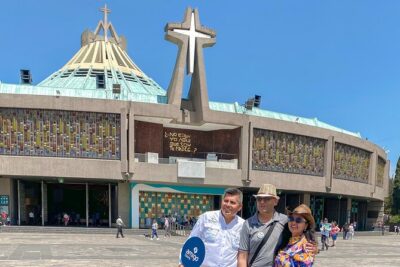
Teotihuacan, Guadalupe Shrine & Tlatelolco Day Tour with Lunch
Read our review →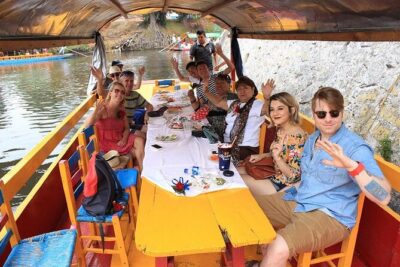
Xochimilco, Coyoacan and Frida Kahlo with Optional Lunch
Read our review →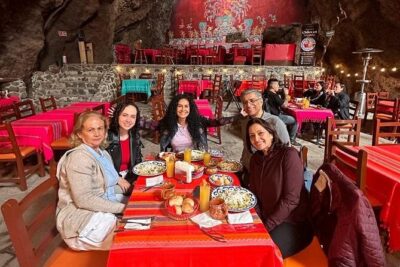
Balloon flight + Breakfast in cave + Pyramids + Pick up CDMX.
Read our review →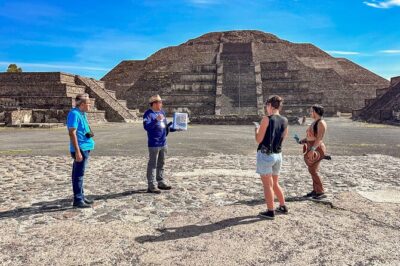
Teotihuacan Early Access Guided Tour with optional Lunch
Read our review →
Balloon flight + pick up in CDMX + Breakfast in Cave + Pyramids
Read our review →
Balloon Flight + Cave Breakfast + Pick Up from CDMX or We Fly
Read our review →
Teotihuacan, Tlatelolco & Guadalupe Shrine Tour
Read our review →