
Reviewed · COOKING CLASSES
The Real Traditional Oaxaca culinary Cooking experience
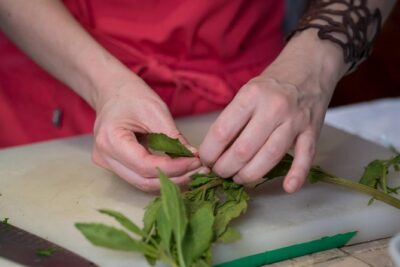
The best part of this Oaxaca cooking experience is that you start with ingredients, not just recipes. At Quinta Brava in Santa Cruz Xoxocotlán, you may pick produce from the garden, visit a local market, taste several moles, then turn nixtamalized corn into tortillas, empanadas, memelas, or tetelas. You do the cooking, rather than simply watching a chef work.
I especially like the chance to shape the menu around your tastes and the setting in a family home with a garden and wood-fired kitchen. I also like the generous food program, which can include coffee, quesadillas, soups, salsas, several moles, a main meal, and dessert. The main caution is timing: the experience is advertised at about five hours, but some sessions have run until 3 or 4 p.m., and one past group found parts of the class rushed.
In This Review
- Key points at a glance
- From Oaxaca Centro to a ranch kitchen
- Coffee, quesadillas, and a look around the garden
- A market stop that gives the meal some context
- Nixtamalized corn and the first round of dishes
- The mole tasting is the real lesson
- Soups, salsas, and a meal you helped build
- Dessert and the pace of the afternoon
- What the $100.74 price buys you
- Who will enjoy Quinta Brava most
- Should you book this Oaxaca cooking class?
- FAQ
- Where does the cooking experience take place?
- What time does the experience start?
- How long does the cooking experience last?
- Is transportation provided?
- Is the class offered in English?
- What foods can I learn to make?
- Will I make tortillas from scratch?
- Do I get to choose the mole?
- How many people can join the class?
- Can I cancel for a refund?
Key points at a glance
- Make tortillas from nixtamalized corn: Learn the traditional masa process and shape tortillas by hand.
- Taste before you choose: Sample as many as nine or ten moles, then select sauces to prepare.
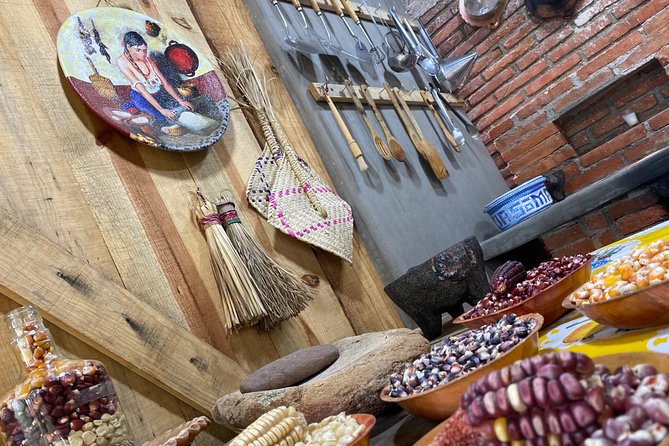
- Cook in a family setting: The class takes place at an outdoor kitchen and garden in Santa Cruz Xoxocotlán.
- Shop for the meal: A market visit and garden stop connect the finished dishes with their ingredients.
- Expect a very full day: The official duration is about five hours, but the end time may be closer to midafternoon.
- Small-group format: The stated maximum is 10 people, and English is offered.
From Oaxaca Centro to a ranch kitchen
The experience begins at 9 a.m. at 5 de Mayo 210 in Oaxaca Centro. Roundtrip transportation from your accommodation is available, but confirm the pickup arrangement when you book. If you are meeting at the stated address, arrive early. A group once missed the arranged transport after arriving only five minutes before the scheduled time, so this is not the morning to cut things close.
Your destination is Santa Cruz Xoxocotlán, a municipality just outside central Oaxaca. The cooking takes place in a rural-style family setting rather than a polished restaurant school. That matters. You are not only learning how a dish is assembled. You are seeing how food fits into a home, a garden, a market, and a communal meal.
The exact group size can affect the feel of the class. The listed maximum is 10, which should allow good access to the worktables and cooking stations. One past session was described as having 15 people, so I would confirm the expected number if personal instruction is important to you.
More Oaxaca trips worth a second look
- Flavors of Oaxaca: Cooking Class with No Set Menu and Local Market Tour
★ 4.5 · 333 reviews - Traditional Oaxaqueña Cooking with Grandma’s Recipes
★ 5.0 · 260 reviews - Oaxacan Vegetarian Cooking Class
★ 5.0 · 235 reviews
Coffee, quesadillas, and a look around the garden
The morning begins with food almost immediately. Coffee or hot chocolate may be served with quesadillas, giving you something to eat while the menu is discussed. This is a useful feature for a morning class, since you will be tasting and cooking for hours.
The garden is more than a pleasant backdrop. You may see where some ingredients come from and pick produce for the meal. The property also has animals, including dogs, cats, chickens, goats, and a donkey. That can make the setting especially appealing for families with children, although anyone who dislikes animals around a cooking space should keep it in mind.
Chef Miguel, also referred to as Miguel Angel or Mike, leads much of the instruction. José and Vicky are also involved in the kitchen and hosting. Miguel is described as warm, funny, and patient, with a strong grasp of Oaxacan food, ingredient history, and cooking technique. José is also praised for clear instruction and an easy manner.
The tone is informal. You may be offered mezcal cocktails or beers while cooking, and the meal is often shared with the team and other participants. This is part of the appeal, but it also means the experience feels more like a long food-filled visit to a family property than a tightly timed professional cooking school.
A market stop that gives the meal some context
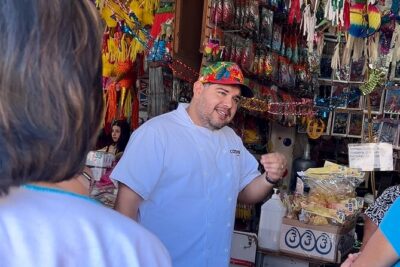
The group then visits a local market to gather ingredients. This is one of the most useful parts of the day because it shows you the raw materials before they are transformed by heat, grinding, roasting, and seasoning.
The market visit is not presented as a separate sightseeing tour. Its purpose is practical: buy what the garden does not provide and prepare for the menu. You will get a better sense of how a meal is built around seasonal produce and what is available locally.
For you, the value is in connecting the cooking lesson to everyday food shopping. A recipe on a printed page can feel abstract. Choosing ingredients at a market, then using them a short time later, makes the process easier to remember.
There is a small tradeoff. If your main goal is uninterrupted kitchen time, the market trip takes time away from chopping and cooking. Most people who enjoy food culture will consider that a fair exchange, but serious home cooks should know this is not five straight hours at a stove.
Nixtamalized corn and the first round of dishes
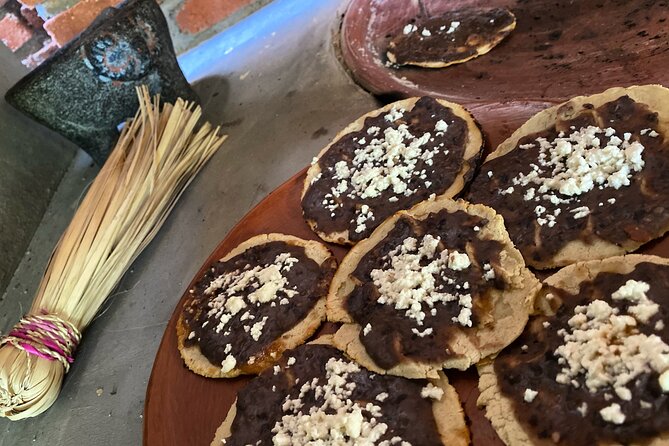
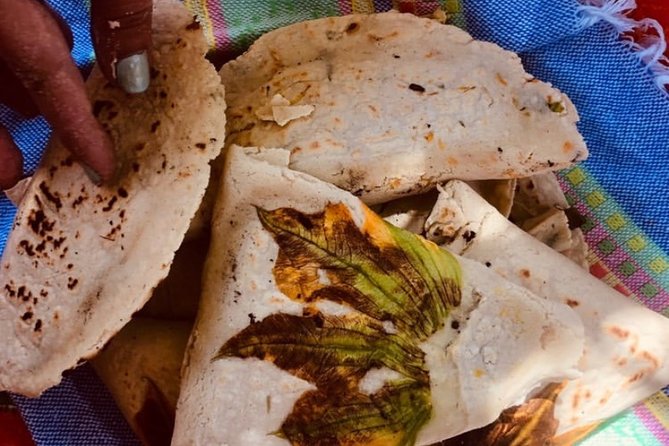
Corn is the heart of the lesson. You will work with nixtamalized corn to make masa and shape handmade tortillas. Nixtamalization is an old process that treats corn with an alkaline solution, improving its texture and making it suitable for masa. Here, you learn by handling the dough, not by hearing a quick explanation and moving on.
The starter choices may include:
- Tortillas
- Empanadas
- Memelas
- Quesadillas
- Tetelas
These are not simply snacks placed in front of you. You help make them, often filling or topping them with ingredients such as quesillo and squash blossoms. The different shapes also show how one basic corn dough can become several distinct Oaxacan foods.
This section suits beginners because you do not need previous cooking experience. It also has enough detail for experienced cooks, especially if you want to understand texture, shaping, and traditional preparation. Several people have found the hands-on work one of the strongest parts of the day.
Your participation can vary with group size and kitchen rhythm. Most of the program is designed for you to cook or prepare the dishes, but one past participant felt that not every step was equally hands-on. If you want to do every task yourself, tell the chef early and ask where you can take the lead.
A different kind of day out, same stretch of Mexico:
- Hierve el Agua, Tule Tree, Mitla and Mezcal Distillery Tour
★ 4.5 · 1,094 reviews - Explore Hierve el Agua, Mitla, Tule, Textile and Mezcal for a day
★ 5.0 · 1,043 reviews - Monte Alban Guided Half Day Tour
★ 5.0 · 880 reviews - From Oaxaca de Juarez: Hierve el Agua and Mezcal Distillery
★ 4.9 · 615 reviews
The mole tasting is the real lesson
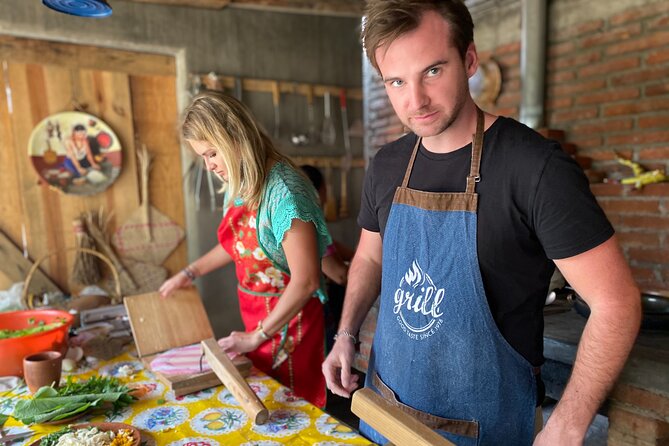
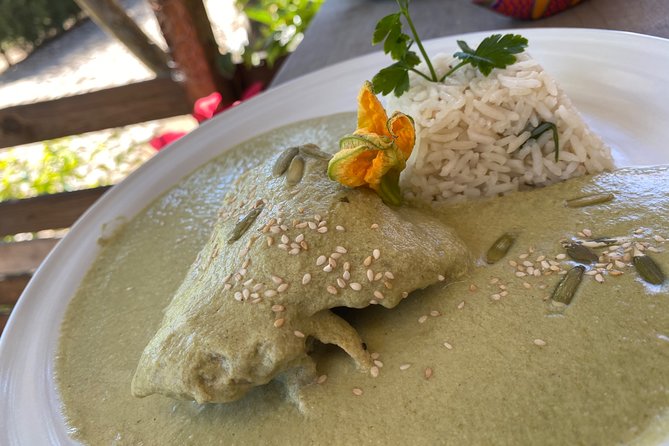
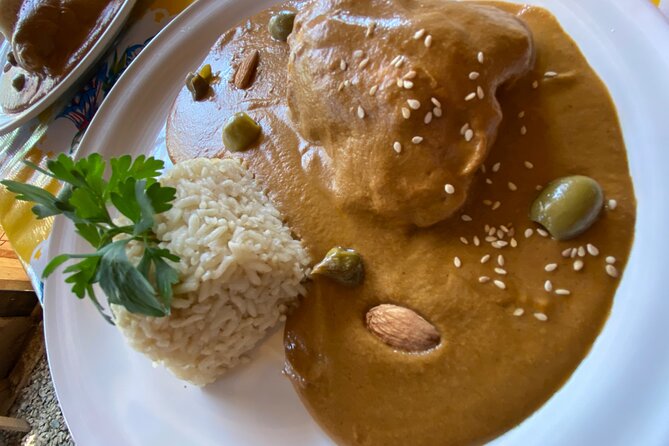
Before choosing the sauces for your meal, you may taste nine or ten different moles. This is a highlight because it replaces the simple idea of one standard mole with a broader understanding of the category.
Mole can include dried chiles, spices, seeds, nuts, fruit, chocolate, herbs, and other ingredients. The balance can shift from sweet to smoky, earthy to spicy, or mild to intense. Tasting several versions side by side helps you notice those differences before you begin cooking.
You then choose one or two moles to prepare with guidance from the cocineras. The menu is flexible enough to take your preferences into account, and the staff may also consider what ingredients you can find at home. That is a practical touch. If you live outside Mexico, you can ask how to adapt the recipe without losing its character.
One point needs clarification: the program says you will choose from soups and moles, but the exact dishes are not fixed. If you have your heart set on a particular traditional mole, ask what is planned that day. One participant wanted a more traditional mole and felt that the selected version did not quite meet that expectation.
Soups, salsas, and a meal you helped build
The main cooking section expands beyond tortillas. You may prepare a local soup, several salsas, and two different moles, then sit down to eat the finished meal. The instruction covers both the how and the why: why an ingredient is used, how flavors are built, and how older cooking methods shape the final dish.
The wood-fired kitchen adds a real sense of place. Cooking over wood changes the pace and can bring a smoky note to food, but it may also make the class feel less predictable than a modern indoor kitchen. You should expect a working kitchen, not a quiet demonstration room.
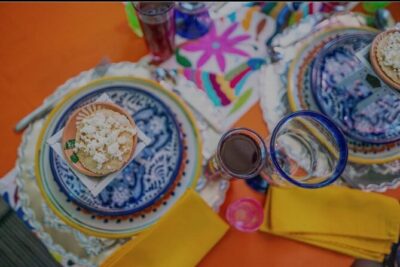
The quantity of food is a major part of the value. You may eat from the opening coffee and quesadillas through the tortilla course, soup, main dishes, mole, and dessert. Mezcal cocktails have also been prepared during some sessions. You will not leave wondering where lunch went.
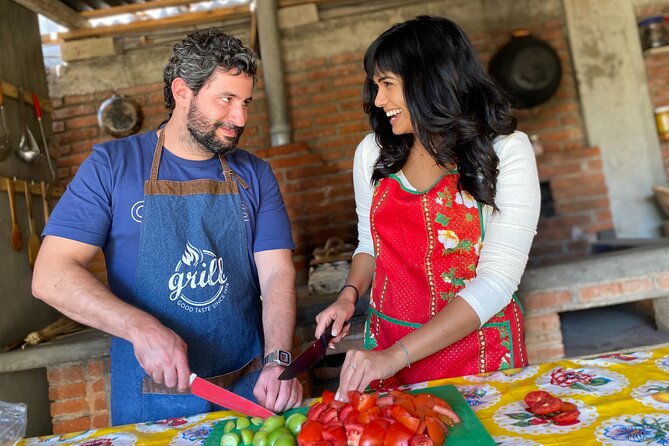
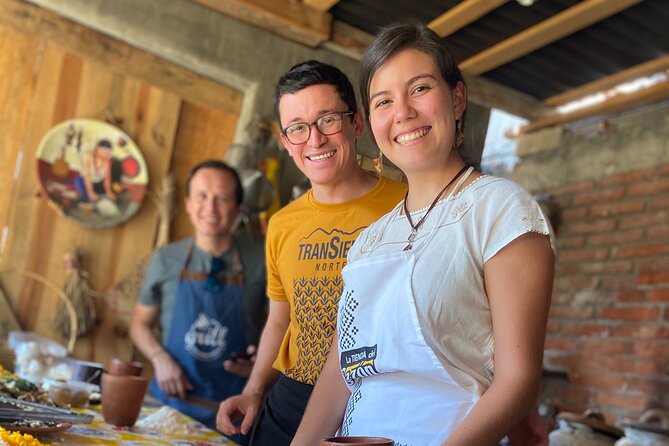
The group meal is social. People chop, stir, shape, taste, and exchange stories while the food comes together. Solo visitors can fit in well, and one solo participant ended the day eating with the family. Couples and families also have enough variety to keep everyone involved.
Dessert and the pace of the afternoon
Dessert is described as a choice among several options rather than one set final course. That flexibility is useful if you prefer something less sweet or want to try another regional preparation.
The schedule is the one area where you should set realistic expectations. The official duration is approximately five hours, with a 9 a.m. start. Yet several accounts place the finish around 3 or 4 p.m., which makes the actual outing closer to a long half-day or more.
That extra time may be welcome. You get more food, conversation, and time with the staff. It can also create trouble if you have an afternoon museum booking, a bus, or a flight. Plan nothing important immediately afterward. If you need to leave at a firm time, tell the team at the start and ask what can be shortened.
One person felt rushed during some cooking stages, while another described the day as well run and relaxed. Both impressions can be true. A smaller group and an easygoing menu may give you more time at the board. A full group, a market stop, many tastings, and several dishes can make the later stages move quickly.
What the $100.74 price buys you
At $100.74 per person, this is not the cheapest way to eat in Oaxaca. You could buy a fine local meal for far less. But the price includes more than lunch: transportation may be available, you visit a garden and market, taste a wide range of moles, receive instruction, prepare multiple dishes, and eat the results.
I see the strongest value for anyone who will use the recipes later. The tortilla and masa work alone can justify the class if you have wanted to make proper corn tortillas at home. The mole tasting is also hard to reproduce on your own without buying many sauces or ingredients.
The value is weaker if you want a short, polished demonstration with a fixed menu and a precise finish. You are paying for time, food, teaching, and a personal setting. You are not paying only for a cooking lesson.
The experience has a 4.8 rating from 251 reviews, with 94 percent recommending it. Most feedback is strongly positive, particularly about the food, staff, setting, market visit, and hands-on format. A few concerns deserve attention: variable timing, uneven access to every cooking task, and one complaint about unwanted phone calls after contact information was shared. The provider disputed that complaint and said phone details are normally used only to arrange directions or pickup.
Who will enjoy Quinta Brava most
I would choose this for food-focused visitors who want to understand Oaxacan cooking from the ground up. It is also a good match for:
- Beginners who want patient instruction
- Experienced home cooks seeking traditional methods
- Families whose children enjoy animals and hands-on tasks
- Solo visitors who like shared meals and conversation
- Couples looking for a full-day food activity
- Anyone curious about masa, mole, salsas, and seasonal ingredients
It may not suit you if you dislike group activities, need a guaranteed five-hour schedule, or want every dish selected in advance. It is also not ideal for a rushed itinerary, especially because the listed meeting point and the optional accommodation pickup require careful coordination.
English is offered, and the activity is near public transportation. Service animals are allowed. Confirmation is sent when you book, but the non-refundable policy means you should be certain about your date before paying.
Should you book this Oaxaca cooking class?
Book it if you want a generous, personal food day rather than a quick class. The combination of garden, market, handmade tortillas, mole tasting, wood-fired cooking, and a shared meal gives you a much better sense of Oaxacan food than a restaurant visit alone.
Before booking, confirm pickup, expected group size, menu plans, and the likely end time. If you can spare the afternoon and enjoy a relaxed setting with plenty of eating, Quinta Brava is a strong choice at $100.74. If your schedule is tight or you want total control over each dish, choose a shorter and more structured class instead.
FAQ
Where does the cooking experience take place?
The activity begins in Oaxaca Centro and travels to Santa Cruz Xoxocotlán, where the cooking takes place in an authentic ranch-style kitchen and family property.
What time does the experience start?
The stated start time is 9 a.m.
How long does the cooking experience last?
The listed duration is approximately five hours. Some sessions have finished around 3 or 4 p.m., so allow extra time.
Is transportation provided?
Roundtrip transportation from your accommodation is available. The stated meeting point is 5 de Mayo 210 in Oaxaca Centro, so confirm the exact pickup arrangement when booking.
Is the class offered in English?
Yes. English is one of the languages offered.
What foods can I learn to make?
The menu can include tortillas, empanadas, memelas, quesadillas, tetelas, soups, salsas, moles, and dessert.
Will I make tortillas from scratch?
Yes. You will work with nixtamalized corn to make masa and handmade tortillas.
Do I get to choose the mole?
The experience includes tasting several moles before choosing options to prepare. The exact choices can vary, so ask about the planned menu if you have a particular mole in mind.
How many people can join the class?
The stated maximum is 10 participants. Group size may vary by session, so confirm if a small group is important to you.
Can I cancel for a refund?
No. The experience is non-refundable and cannot be changed after booking. If the provider cancels because the minimum number of participants is not reached, you will be offered another date or experience, or a full refund.
Recently reviewed around Oaxaca
- Ultimate Hierve el Agua Hike + Textile Art★ 5.0 · 42 reviews
- Private Minivan: Huatulco International Airport (HUX)★ 4.0 · 119 reviews
- Culture, History and Food in Oaxaca City★ 5.0 · 43 reviews
- Oaxaca Walking Tour★ 5.0 · 32 reviews
- Private and safe transfer from the airport to the hotel in Oaxaca★ 4.5 · 58 reviews
- Traditional Oaxaqueña Cooking with Grandma’s Recipes★ 5.0 · 260 reviews
- Private and Secure Transfer Hotel to Oaxaca Airport★ 5.0 · 33 reviews
- The Late Shift: Tasting Oaxaca, by Night★ 5.0 · 35 reviews
Cooking Classes, compared.
Cabo San Lucas Mexican Cooking Class Experience and Local Markets
Read our review →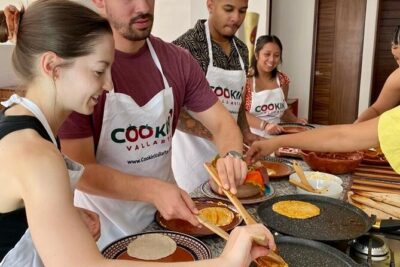
Puerto Vallarta Cooking Class Experience with Market Tour
Read our review →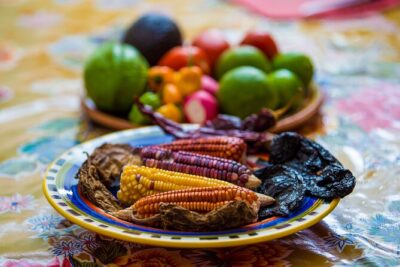
Mexican Cooking from Scratch in a Local Home in Tulum
Read our review →
Mexican Cooking Class with Food Market Visit in Mexico City
Read our review →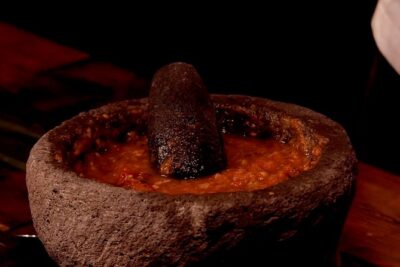
Flavors of Oaxaca: Cooking Class with No Set Menu and Local Market Tour
Read our review →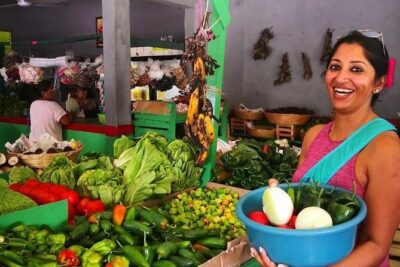
Browse the lists this tour appears in