
Reviewed · FOOD & DRINK
Unique cablecar experience, pulque tasting &unbeatable views
Mexico City’s Cablebus carries you above steep hills, tightly packed homes, bright street art, and the daily life of northern neighborhoods. At the end of the line, the outing continues by car and on foot to a mountain viewpoint, followed by a taste of pulque in a local setting. I like the unusual public-transport ride and the chance to see Cuautepec rather than staying in the familiar historic center. I also like the way guides such as Erick and Alex add local stories along the route.
The main thing to consider is the short but steep hike on rocky, uneven ground. One person in a family group chose not to walk it and still had a worthwhile outing, but anyone with limited mobility should think carefully before booking. The transport between stops can also be basic, so this suits curious, flexible visitors more than those seeking polished sightseeing.
In This Review
- Key points to know before you go
- Why this Cablebus trip feels different
- Meeting Erick at Indios Verdes
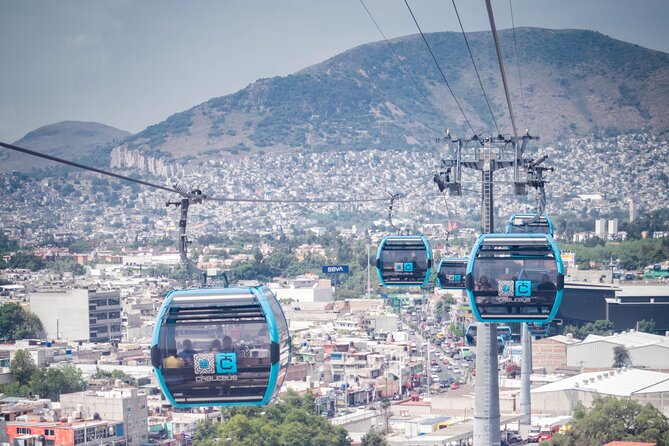
- Stop one: riding above Mexico City’s northern hills
- Stop two: Cuautepec beyond the usual city route
- Stop three: cars, steep roads, and the final climb
- The view from Mexico City’s last green lung
- Pulque at a local pulquería
- What $35 gets you
- Who should book this outing
- Booking details worth knowing
- Should you book the Cablebus and pulque tour?
- FAQ
- Where does the Cablebus and pulque tour meet?
- Where does the activity end?
- How long does the tour last?
- How much does the tour cost?
- Is the tour offered in English?
- Is there a hike?
- How many people can join the tour?
- Can I cancel for a refund?
Key points to know before you go
- Cablebus from Indios Verdes: Ride Mexico City’s modern gondola system above northern barrios and steep hills.
- Cuautepec from above and at street level: See colorful homes, street art, VW taxi cars, markets, and daily local routines.
- Mountain viewpoint near 2,800 meters: Continue by car and walk to high views over Mexico City and the State of Mexico.
- Pulque tasting: Try a traditional agave drink at a local pulquería, with the chance to meet people from the area.
- Small-group format: The activity is capped at nine people, creating room for questions and personal attention.
- Come prepared for rough footing: Wear comfortable shoes and use sunscreen. The walk is short but can be steep.
Why this Cablebus trip feels different
Many Mexico City outings keep you near the Zócalo, Frida Kahlo’s neighborhood, or the major museums. This one sends you north from Indios Verdes into the hills of Gustavo A. Madero, where the Cablebus is not mainly a sightseeing toy. It is part of the local transport system, helping people in hillside neighborhoods reach the city and connect with the Metro.
That difference matters. You are not simply looking at Mexico City from a gondola. You are seeing a transport system built around the shape of the city and the needs of its residents. The fare is low, reported as 10 pesos for the Cablebus ride, and the cabins move over neighborhoods that are difficult to reach by road.
The ride also gives you a useful visual lesson in Mexico City’s size. From above, streets climb sharply, houses fill slopes, and the flat central city seems far away. You may see Volkswagen Beetles working as taxi cabs, brightly painted walls, narrow roads, and homes built in places that would challenge any road engineer.
This is an outing for people who want context, not just a list of famous sights. Guides explain how the neighborhoods developed and how the Cablebus has changed commuting. Erick is especially involved in the experience, while Alex and Marcos have also led departures. The best part of the guiding is the conversational tone. You can ask questions as you ride instead of waiting for a formal speech at each stop.
More Food Tours in Mexico City
- Historic Center Food Tour in Mexico City
★ 5.0 · 1,263 reviews - Lucha Libre Tickets & Tacos & Beer & Mezcal – BEST NIGHT EVER!
★ 5.0 · 1,077 reviews - Polanco Food Tour: The Bestselling Food Adventure in Mexico City
★ 5.0 · 881 reviews
Meeting Erick at Indios Verdes
The official meeting point is the Cablebus Indios Verdes station at Residencial Zacatenco in Gustavo A. Madero. The tour returns to this same point, so you do not need to arrange a separate ride from the mountain at the end.
Indios Verdes connects with Mexico City’s public transport network, including Metro Line 3 and local bus routes. Several people have found it easy to reach by public transportation, though the ride from a hotel in the city center can make the full outing longer than the advertised two to three hours. Plan on extra time if you must cross the city before the meeting point.
Your guide meets you at the Cablebus entrance and helps you through the first part of the trip. That assistance is useful if you have never used the system. The Cablebus itself is simple enough, but transferring between lines and understanding where to get off is easier with someone who knows the route.
The group limit is nine people. That is small enough for a guide to answer questions and adjust the pace. Hotel pickup is not part of the standard meeting arrangement, but a pickup may be available for an extra fee. Confirm that option before booking if Indios Verdes would be difficult for you to reach.
Stop one: riding above Mexico City’s northern hills
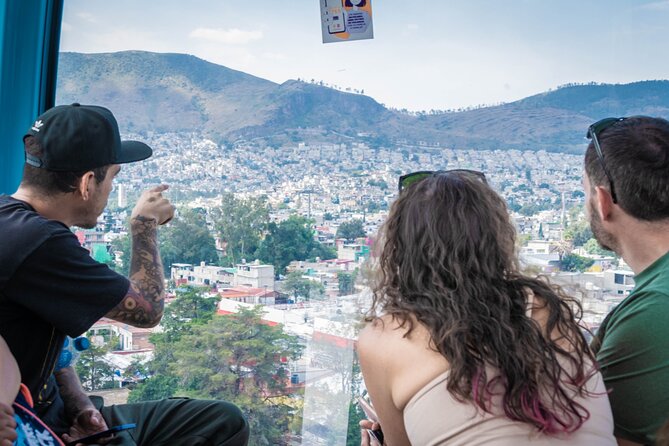
The first ride lasts about 45 minutes. You board at Indios Verdes and travel through the Cablebus system toward Cuautepec. The route gives you a wide view of the built-up hills, with the cabins moving quietly above roads and homes.
I like this part because it shows how people actually move through a difficult urban setting. From a taxi or bus, you would spend much of the time looking at traffic and walls. From the cabin, you can see the shape of the neighborhood: steep grades, crowded streets, homes painted in different colors, and paths that appear to climb straight up the hills.
Your guide explains the development of the area and points out features that are easy to miss when you are simply passing through. The ride is also a chance to ask about the Cablebus itself, its role in commuting, and the connection to the Metro.
The views are best when the weather is clear. On a hazy day, you will still see the neighborhoods below, but the distant outlook may be less impressive. The cabins are enclosed, and the ride is smooth, though anyone uneasy with heights should know that this is a real aerial journey rather than a brief scenic lift.
You may transfer to another Cablebus after several stops. The change is part of the public-transport experience, not a flaw in the tour, but it means the outing is not a single uninterrupted ride. Your guide handles the route and keeps the group together.
Stop two: Cuautepec beyond the usual city route
Cuautepec is more than a place to get off the gondola. The area has a long human story, with settlement in the region reaching back to around 2000 B.C. Chichimeca and Toltec connections are part of the area’s past, and small pre-Hispanic objects were found there in the early 1900s.
The tour does not turn this into a museum visit. Instead, you see how old history and present-day life occupy the same hills. Streets rise sharply, homes are built into difficult ground, and local businesses operate along roads that can feel far removed from the polished center of Mexico City.
This is where the trip feels most rewarding for curious people. You see a side of the capital that is easy to miss if you only visit major attractions. A local market or a small food stop may be part of the wider outing, depending on timing and the guide’s arrangements. Past groups have enjoyed tacos, traditional food, churros, candy, and a simple lunch prepared by a local family.
Food is not listed as the core feature, so do not book this expecting a structured food tour. Think of any meal or snack as part of the neighborhood visit. That makes it more interesting, but also less predictable than a restaurant-based excursion.
More Mexico City food and drink outings:
- Colonia Roma Food Tour
★ 5.0 · 838 reviews - Mexico City Historical Centre Food Tour with 7 Authentic Tastings
★ 5.0 · 723 reviews - Mexico City Boat Tour Food and Unlimited Drinks Priority Boarding
★ 5.0 · 653 reviews - Lucha Libre Tour and Mezcal Tasting in Mexico City
★ 5.0 · 519 reviews
Stop three: cars, steep roads, and the final climb
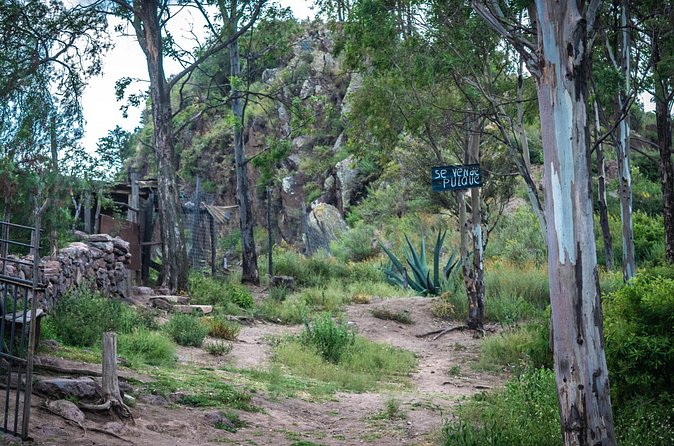
After the Cablebus, you continue uphill by car toward the high point near Tlalnepantla. The ride has included old Volkswagen Beetle taxis on some departures, while other accounts describe arranged cars for the climb. Either way, expect practical local transport rather than a luxury vehicle.
This part can be fun because the road itself becomes part of the story. You go up steep streets through hillside neighborhoods, pass a gap in the wall around part of the city, and reach the starting point for the walk. The vehicles may be old and basic. One serious complaint described the cars as unsafe and unhygienic, so I would not ignore that concern. Ask the guide about the day’s transport if vehicle condition is important to you.
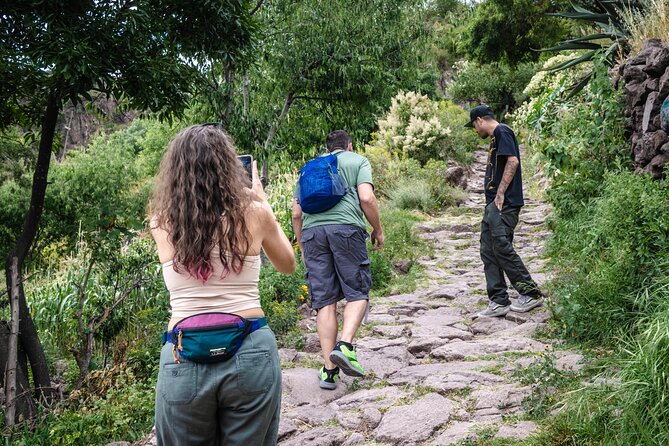
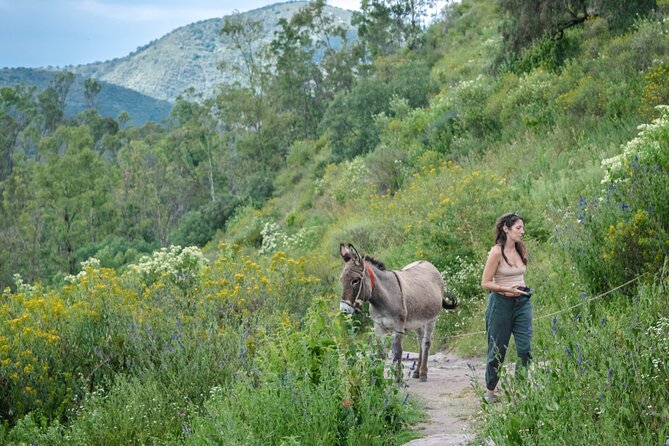
The walk to the high viewpoint is short, but it is not flat. You may encounter rocky and uneven ground, along with a steep section. Comfortable walking shoes are essential. Sandals, smooth-soled shoes, or stiff city footwear could make the climb unpleasant.
The elevation reaches about 2,800 meters. That number helps explain why the walk may feel harder than its length suggests. Move at your own pace, drink water, and use sunscreen. The tour is not presented as a demanding mountain trek, but it is still a hill walk at high altitude.
If you cannot manage the climb, tell your guide at once. One family group skipped the walk and instead visited a town center with a church and market. The guide adjusted the plan, which shows that the experience can bend a little, though the mountain view and pulque stop are the main rewards of completing the climb.
The view from Mexico City’s last green lung
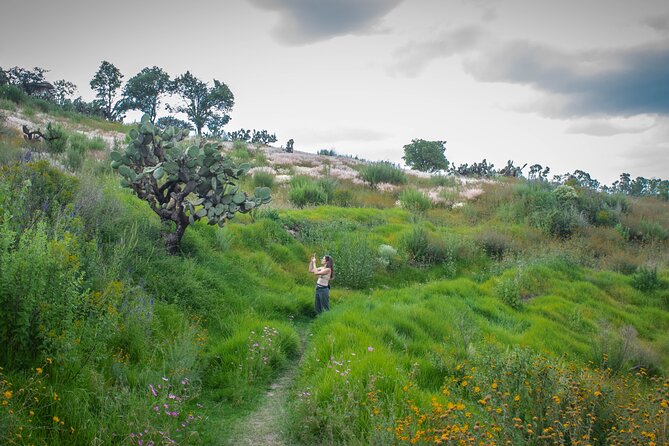
At the top, the city spreads below you in a way that is hard to understand from street level. You see the built-up hills of the capital mixed with open land and natural areas. The viewpoint also reaches toward the State of Mexico, giving you a broader sense of the valley and the city’s northern edge.
The phrase last lung is used for the natural reserve in this area. It is a useful reminder that Mexico City is not only concrete and traffic. These hills provide open space and vegetation close to a huge urban zone.
Weather controls how much you get from the view. Clear skies can reveal a broad sweep of the valley, while pollution or clouds may reduce the distance. Even with limited visibility, the height and contrast between the city and the reserve make the climb worthwhile for people who enjoy seeing how a metropolis fits into its surroundings.
I would not choose this tour only for photography. The viewpoint is a bonus within a larger cultural outing. The strongest appeal is the combination of aerial transport, hillside neighborhoods, local conversation, and a high walk that would be difficult to arrange alone.
Pulque at a local pulquería
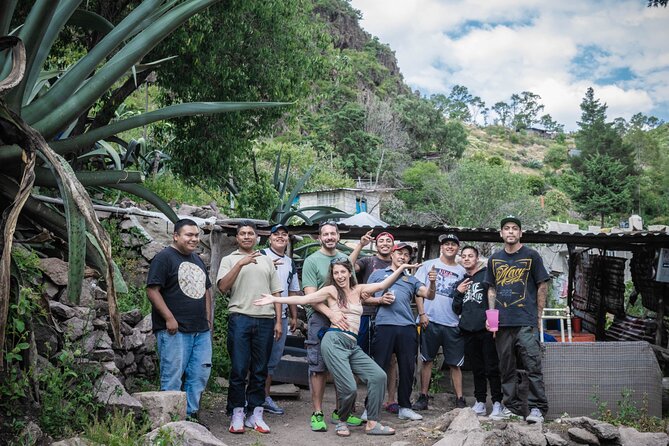
The pulque tasting is the social heart of the outing. Pulque is a traditional fermented agave drink, and the stop takes place at a local pulquería. Some departures have visited a spot where the drink was made from nearby agave plants, giving the tasting a stronger connection to the area.
You can expect a simple local setting rather than a formal tasting room. That is part of the appeal. You may interact with people from the neighborhood, learn how pulque fits into local culture, and try a drink that most visitors would not encounter on a standard Mexico City schedule.
The drink is not for everyone. One person reported feeling ill a few hours afterward and could not be sure the pulque was the cause. If you are sensitive to fermented drinks, have a cautious taste or skip it. The tour should still have value without forcing you to drink.
There is also one important practical warning. A departure found the planned drink stop closed and was taken to a place the participant considered dirty and unhygienic. Most of the available feedback describes the pulquería as enjoyable, but conditions can vary. If the stop does not look clean to you, do not feel obliged to eat or drink there. A good guide should respect that choice.
What $35 gets you
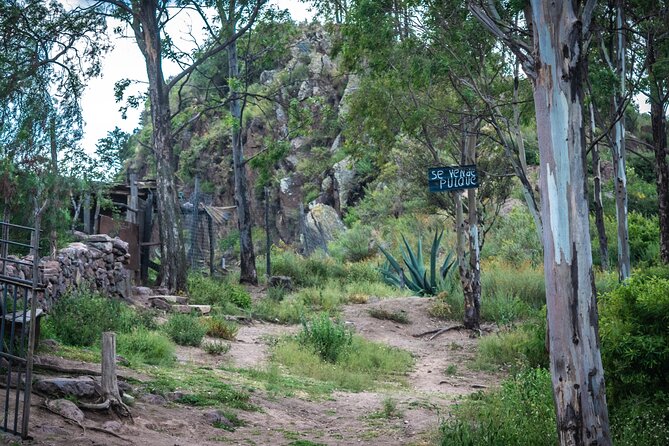
At $35 per person, this is fairly priced if you value access and guiding more than luxury. The Cablebus fare itself is inexpensive, but the price also covers the planning needed to connect the Cablebus, the hillside ride, the walking route, the viewpoint, and the local tasting.
You are paying for a route that would be awkward to arrange without local help. You would need to work out the correct Cablebus lines, find a car up the hill, locate the viewpoint, and identify a pulquería. The guide adds value by explaining the neighborhoods and keeping the group moving.
The price is less attractive if you want a polished vehicle, a formal food program, or a guaranteed long tasting. Transport is basic, and the outing is shaped by local conditions. For me, the value comes from the access to a part of Mexico City that is not set up for casual sightseeing.
The advertised duration is two to three hours, but allow more time if you are coming from the city center. One round trip from central lodging took about four hours, including the journey to Indios Verdes and back. That is not a problem if you plan for it, but it can disrupt a tightly packed day.
Who should book this outing
I would choose this for independent-minded visitors who have already seen the main center or want to add a very different half-day. It suits people who enjoy public transportation, local neighborhoods, informal conversation, unusual food and drink, and views earned by a walk.
It also works well for solo visitors and couples because the small group makes it easier to talk with the guide. Families can enjoy it too, especially children interested in cable cars, but parents should judge the rocky climb for themselves. A ten-year-old enjoyed the Cablebus and pulque stop on one outing, while another family member chose to skip the walk.
I would hesitate to recommend it to anyone who needs fully accessible paths or carefully controlled transport. Most people can participate, and service animals are allowed, but the uneven hike and basic cars are real limitations. The route is near public transportation, yet reaching Indios Verdes from central neighborhoods takes planning.
Book near the start of your Mexico City stay if you want local orientation. The guide can explain how northern neighborhoods connect with the rest of the capital, and the trip may help you understand the city beyond the places you first planned to visit.
Booking details worth knowing
The activity is offered in English, with guides including Erick, Alex, and Marcos. Confirmation normally arrives at booking, though reservations made within one day of departure are confirmed as soon as possible and depend on availability.
The tour is capped at nine people and ends where it begins, at Cablebus Indios Verdes. Free cancellation is available up to 24 hours before the start time. Inside that window, the payment is not refunded and changes are not accepted.
Should you book the Cablebus and pulque tour?
Book it if you want a personal look at northern Mexico City, are comfortable with basic local transport, and can handle a short steep walk. The Cablebus views, Cuautepec streets, mountain outlook, and pulque tasting create a memorable mix that is hard to copy on your own.
Skip it if you want a relaxed ride with no rough footing, dislike heights, or need firm control over food and vehicle standards. For the right person, $35 buys far more than a gondola ride. It gives you a guide, a route into the hills, and a practical look at how Mexico City extends beyond its famous center.
FAQ
Where does the Cablebus and pulque tour meet?
The tour meets at Cablebus Indios Verdes, at Residencial Zacatenco in Gustavo A. Madero, Mexico City.
Where does the activity end?
The activity ends back at the Cablebus Indios Verdes meeting point.
How long does the tour last?
The advertised duration is approximately two to three hours. If you are traveling from the city center, allow extra time for the journey to and from Indios Verdes.
How much does the tour cost?
The price is $35 per person.
Is the tour offered in English?
Yes. The activity is offered in English.
Is there a hike?
Yes. The route includes a short walk to the mountain viewpoint. The ground can be rocky and uneven, and the climb is steep in places.
How many people can join the tour?
The maximum group size is nine people.
Can I cancel for a refund?
You can cancel at least 24 hours before the start time for a full refund. Cancellations or changes made less than 24 hours before departure are not refunded or accepted.
Recently reviewed around Mexico City
- Town walking tour of the city★ 5.0 · 72 reviews
- Private Hiking Tour in Iztaccihuatl★ 5.0 · 45 reviews
- Cholula experience (private tour)★ 5.0 · 52 reviews
- Cholula tour from Puebla★ 5.0 · 66 reviews
- City walking tour in Puebla (private tour)★ 5.0 · 40 reviews
- Cholula Magical Twon on a Traditional Tram from Puebla★ 4.5 · 61 reviews
- Hiking Excursion to the Iztaccíhuatl Volcano from Puebla★ 5.0 · 74 reviews
- Museum of Anthropology: a look at Mexico’s past★ 5.0 · 52 reviews
Food & Drink, compared.
Early morning Chichen Itza Tour: Cenote and Tequila Tasting
Read our review →
4×4 ATV Adventure with Tequila Tasting and Mexican Buffet Lunch
Read our review →
Winner 2025 Downtown Vallarta Food Tour with Vallarta Food Tours
Read our review →
Cabo Migrino Beach and Desert ATV Tour plus Tequila Tasting
Read our review →
Food & Mixology Tour:Tequila,Tacos, Mezcal and Agave Cocktails
Read our review →
Small-Group 3 Hidden Cenotes Adventure with Tequila Tasting
Read our review →
Tour to Chichen Itza-Tickets, food and cenote
Read our review →
Cabo San Lucas Downtown Food and Tacos Tasting Experience
Read our review →Browse the lists this tour appears in