
Reviewed · HISTORICAL TOURS
Walking Tour of the Historic Center of Mexico City
Mexico City’s historic center makes the most sense when you see its layers side by side. This three-hour walk moves from the Mexica world of the Templo Mayor to Spanish rule, independence, revolution, muralism, and modern city life. Guides such as Fernanda, Luis, Alexia, Nat, and Benjamin bring the buildings into a clear story rather than treating them as a string of photo stops.
I like the small group limit of 10, which makes it easier to ask questions and hear the guide in crowded streets. I also like the mix of major sights and smaller details, from Diego Rivera’s murals inside the Ministry of Education to the archaeological window hidden beneath a street. The main drawback is the amount of walking on uneven pavement, with limited places to sit, so this is not the best choice if you need frequent breaks.
In This Review
- Key points to know before booking
- Why this walk works as a Mexico City introduction
- Starting beneath the National Palace at the Zócalo
- The Metropolitan Cathedral and the old city beneath it
- Templo Mayor and the Mexica center
- Diego Rivera inside the Ministry of Education
- Plaza de Santo Domingo and the reach of New Spain
- A shaded pause at Plaza Tolsá
- The archaeological window beneath the street
- Bellas Artes, Palacio Postal, and the final stretch
- What the three-hour pace feels like
- Small groups, guide style, and English service
- What is included, and where the value lies
- Who should book this Mexico City walk?
- Should you book it?
- FAQ
- How long is the walking tour?
- Where does the tour begin?
- Where does the tour end?
- Is the tour offered in English?
- How large is the group?
- Is transportation included?
- Are admission tickets included?
- Do you visit the inside of the Metropolitan Cathedral?
- Are food and sweets included?
- Can I cancel for a full refund?
Key points to know before booking
- A strong first look at Centro Histórico: The route links Mexica, colonial, revolutionary, and modern Mexico in one walk.
- Diego Rivera murals are an included highlight: You go inside the Ministry of Education to see a large body of his work.
- The group stays small: A maximum of 10 people gives the guide room to answer questions and adjust the pace.
- The route is packed: Nine listed stops fit into roughly three hours, so some places receive only a short explanation.
- Expect uneven streets and sun: Cobblestones, standing, and the city’s altitude can make the walk tiring.
- It ends near Bellas Artes: You finish beside the Palace of Fine Arts and the House of Tiles, a useful spot for continuing on your own.
Why this walk works as a Mexico City introduction
I see this tour as an orientation walk rather than a series of full museum visits. You will get the broad shape of Mexico City’s past, learn why the center looks the way it does, and leave with a list of places worth returning to.
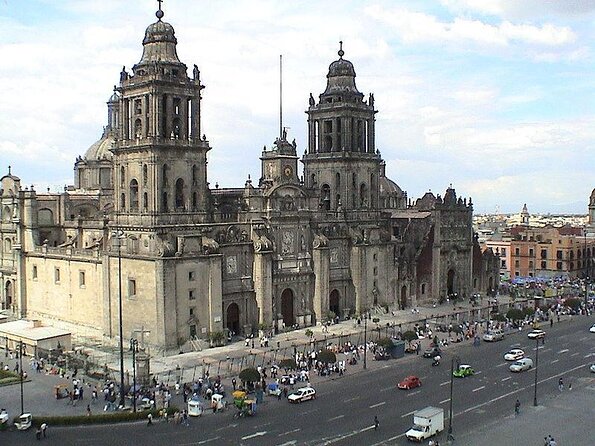
The route begins at the Plaza de la Constitución, better known as the Zócalo, and ends near the Edificio Guardiola beside Bellas Artes and the House of Tiles. That direction matters. You start in the political and religious heart of the city, then move through archaeology, colonial power, art, commerce, and public life.
The guides speak English, and the strongest descriptions of the experience point to clear storytelling, good answers to questions, humor, and attention to comfort. Fernanda is praised for balancing modern humor with Mexico’s past. Luis is noted for a comfortable pace and useful recommendations. Alexia offers a thoughtful mix of history, architecture, daily life, and current events. Nat has guided small groups and shared personal stories, while Benjamin brings energy and humor.
Guide quality can vary from one departure to another, but the repeated strengths are clear: solid English, enthusiasm for Mexico City, and a willingness to explain rather than rush.
More City Tours in Mexico City
- Mexico City: Teotihuacan, Tlatelolco & Guadalupe Shrine Tour
★ 4.6 · 3,773 reviews - Teotihuacan Hot Air Balloon Flight from Mexico City / Volare
★ 5.0 · 3,262 reviews - Teotihuacan Private Tour from Mexico City
★ 5.0 · 1,890 reviews
Starting beneath the National Palace at the Zócalo
The walk opens in the Zócalo, one of the largest urban squares in the world. From here, you look toward the National Palace, the Supreme Court of Justice, and the shops associated with silver and traditional commerce.
This is the right place to begin because the square gathers several kinds of power in one view. Government, law, religion, and public ceremony all meet here. Your guide uses the space to introduce Mexico City as both a Mexica capital and a Spanish colonial city built over it.
The Zócalo can be crowded, and the square offers little shade depending on the time of day. Guides have been attentive about sun and street crossings, but bring water and wear a hat. The opening stop is listed at about 15 minutes, so expect orientation rather than a detailed tour of the National Palace.
The Metropolitan Cathedral and the old city beneath it
The Metropolitan Cathedral receives an outside explanation of its construction, origins, and Baroque and neoclassical design. You should not expect an interior visit as part of this stop, and admission is not included.
Even from outside, the cathedral helps explain the physical story of the center. It occupies ground tied to the former Mexica ceremonial precinct, making it a useful bridge between pre-Hispanic Mexico and the colonial city. The guide’s job here is to point out how the building developed over time and why its appearance combines more than one architectural style.
The stop lasts about 10 minutes. That is enough to understand the building’s role and design, but not enough for a close architectural study. If the cathedral interests you, treat this as an introduction and return later with more time.
Templo Mayor and the Mexica center
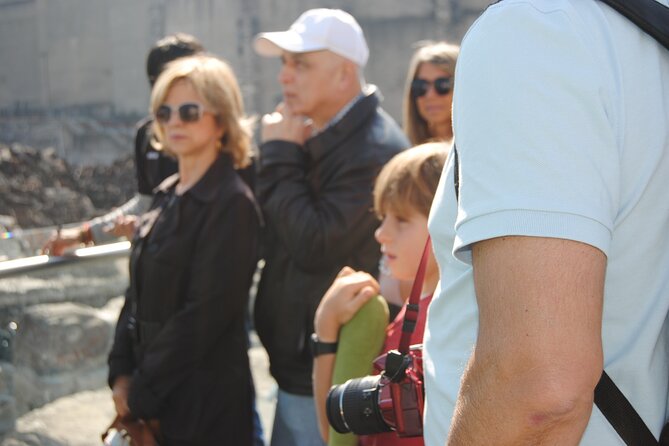
Near the cathedral, you see the archaeological remains of the Templo Mayor from outside. The site was dedicated to important Mexica deities associated with rain and the sun, and the guide explains its place within the old ceremonial center.
This is one of the most useful moments on the route because the ruins are not presented as an isolated archaeological site. You learn how the Mexica city was organized and how the Spanish colonial center grew around, over, and beside it. The nearby cathedral and government buildings then become part of the same story.
The itinerary specifies an exterior view here, not a full museum or excavation visit. If you want a long look at artifacts and the complete archaeological complex, you would need to return separately. For a first walk, the short stop gives you the map in your head that helps the rest of the tour make sense.
More Historical Tours in Mexico City
- Historic Downtown Walking Tour
★ 5.0 · 1,289 reviews - Historic Center Food Tour in Mexico City
★ 5.0 · 1,263 reviews - Mexico City: Historic Downtown Walking Tour
★ 4.8 · 1,039 reviews - Mexico City Historical Centre Food Tour with 7 Authentic Tastings
★ 5.0 · 723 reviews
Diego Rivera inside the Ministry of Education
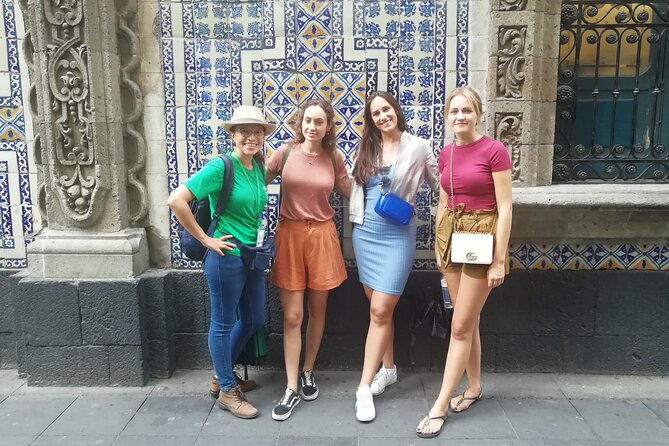
The Museo Vivo del Muralismo is the most distinctive included visit. You enter the Ministry of Education and see a large portion of the murals Diego Rivera painted during his career.
The murals cover subjects tied to early twentieth-century Mexico: festivals, traditions, work, politics, and social struggle. This gives you more than a famous artist’s name. You see how public art became a way to tell national history and present ideas about class, labor, and Mexican identity.
The visit lasts about 25 minutes, which is short for a building filled with murals. Still, it is a worthwhile use of time because you see the work in its original public setting rather than only in a museum reproduction. One guide has also allowed extra minutes in the courtyard when the group wanted a longer look, though you should not count on every departure having extra time.
This stop is especially good for readers who want culture without committing half a day to a large museum. It is also a welcome change of pace after the open squares and busy streets.
Plaza de Santo Domingo and the reach of New Spain
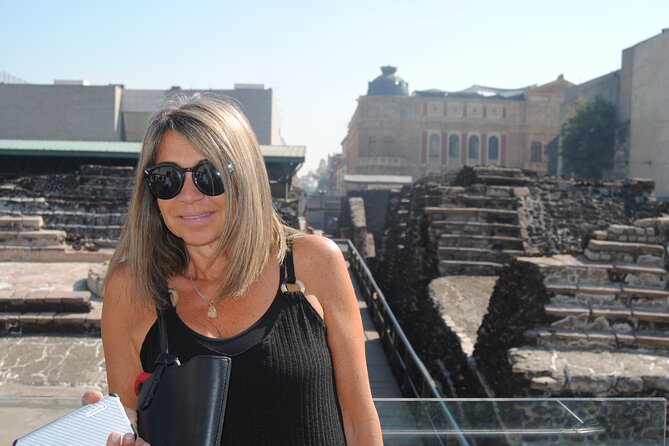
At Plaza de Santo Domingo, the guide turns to the colonial era. The square witnessed important events during the viceroyalty of New Spain and was tied to commerce in spices and other goods moving between Mexico and Asia.
The discussion also covers the Holy Inquisition and French attempts to conquer Mexico. Those topics show that the historic center was not simply a local neighborhood. It was connected to religion, imperial trade, European conflict, and the wider Spanish colonial world.
The stop lasts about 15 minutes and is free to enter. You will hear the historical context and view the plaza, but the experience is not designed as a detailed interior tour of every surrounding building.
A shaded pause at Plaza Tolsá
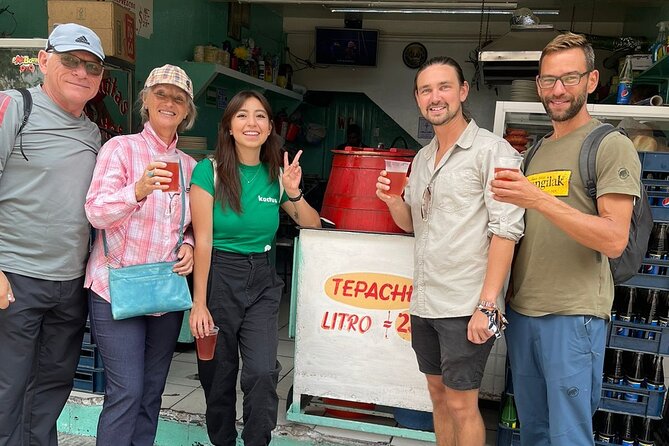
Plaza Tolsá provides a planned rest in the shade. This is important because the walk has several stretches with little opportunity to sit.
Here, the guide can move away from dates and monuments and talk about indigenous languages, Day of the Dead traditions, music, politics, and Mexican food. Each guide brings a personal selection of examples, so this is one of the more flexible parts of the experience.
You also see the equestrian statue of Charles IV, commonly called El Caballito, along with the exteriors of the National Museum of Art and the Mining Palace. The square is a good place to ask practical questions about what to eat, what to visit next, and how the historic center fits into present-day Mexico City.
The listed stop is about 20 minutes. It is not a meal break, and food or sweets are not included, though you may find items to buy along the way.
The archaeological window beneath the street
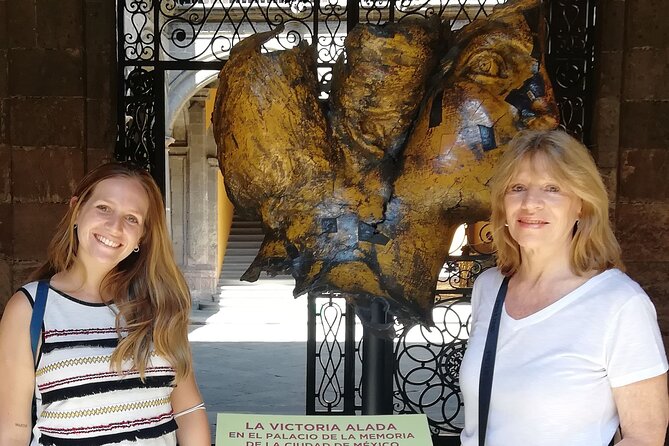
The Ventana Arqueológica is a brief five-minute stop, but it offers one of the route’s best small surprises. Through an archaeological window beneath a street near the main temple, you see traces of the city’s earlier layers.
The guide explains how the remains were discovered and why many central buildings conceal older structures below. This is a compact lesson in Mexico City’s unusual physical history. The modern street does not erase the earlier city. It often sits directly on top of it.
Because the stop is so short, listen closely and ask your question quickly. It is a glimpse rather than a full archaeological visit, but it reinforces the central idea of the tour: Mexico City is built in layers.
Bellas Artes, Palacio Postal, and the final stretch
The Palace of Fine Arts is one of the city’s essential sights, and the tour gives you time to admire its exterior. The building’s interior and exterior are both presented as works of art, though the schedule does not promise an interior visit as part of the walk.
The listed admission is free, but you should read that as no included ticket cost for this stop, not as a guarantee of a long interior tour. The guide focuses on the building as a major cultural landmark and helps you understand why it deserves a return visit.
Next comes Palacio Postal, an ornate working palace that still functions as a post office. The guide uses it to explain the economic and political meaning of such a grand public building. Admission is not included, so this portion is primarily an exterior look unless you choose to continue inside on your own.
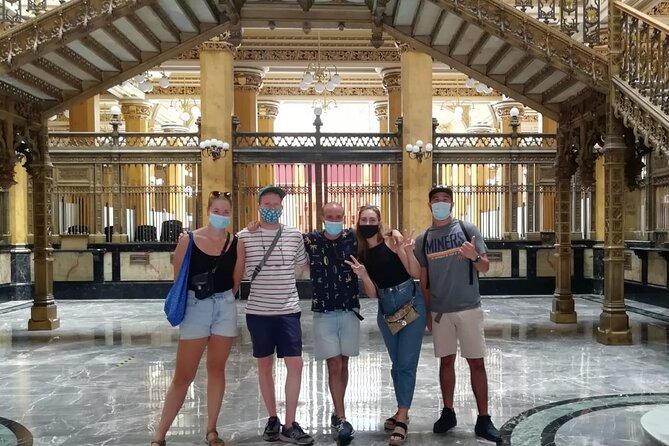
The final stop is the House of Tiles, one of the city’s most photographed facades. Its tiled exterior makes an immediate impression, and the location is convenient for independent exploring after the tour. Since the walk ends beside Bellas Artes and the House of Tiles, you can continue into the surrounding center without arranging another transfer.
What the three-hour pace feels like
Nine listed stops in approximately three hours creates a brisk but manageable schedule for someone comfortable walking. Several stops last only 5 to 15 minutes, while the Ministry of Education receives the longest visit at about 25 minutes.
That pacing is useful if you are new to Mexico City and want a clear overview in one morning or afternoon. It is less suitable if you want to sit quietly at each monument, read every plaque, or spend a long time inside museums.
The route includes standing, street crossings, and uneven surfaces. One group moved more slowly because some people had difficulty walking, and the delay meant not every planned point could be covered. I would book this with supportive shoes and a realistic sense of your own stamina.
The altitude can also affect how the walk feels, especially in bright sun. The guides have been praised for finding shade, watching the group at crossings, and allowing bathroom breaks, but those comforts do not remove the physical demands of a city-center walk.
Small groups, guide style, and English service
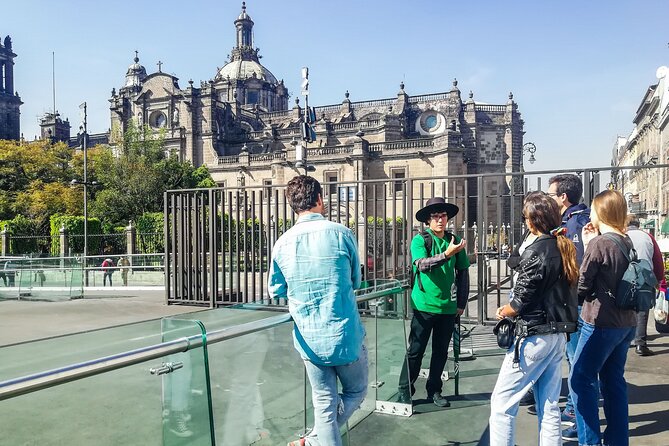
The maximum group size is 10, and that is a real advantage in crowded Centro Histórico. A small group is easier to keep together, and you have a better chance of getting an answer without losing the guide’s voice in street noise.
The experience is offered in English. The named guides associated with strong experiences include Fernanda, Luis, Alexia, Nat, Benjamin, Sarah, Thomas, Eduardo, Gabby, Oscar, and others. The qualities I would look for are not a fixed script but the ability to connect architecture with daily life and answer questions in plain English.
You can identify the guides by their green shirts and umbrellas. That detail matters at the Zócalo, where several groups may be gathering at the same time.
What is included, and where the value lies
The package includes the three-hour guided walk and admission to the Museo Vivo del Muralismo and the archaeological window. Transportation to the Zócalo, tips, and any food or sweets are extra.
The cathedral, Palacio Postal, and some other stops do not include admission, while several outdoor stops are free to view. This means the value is mainly in the guide’s explanation, route planning, historical connections, and access to the mural visit, not in a bundle of paid entry tickets.
One important point is that at least one participant felt a free walking tour with a direct tip to a student might offer better value. That is a fair comparison. If you are choosing between paid and tip-based walking tours, compare the group size, the included mural visit, the booking structure, and the certainty of an English departure. The tour’s strong 4.8 rating from 870 reviews and 95 percent recommendation suggest that many people find the organization and guiding worth paying for, but value depends on what you want from the walk.
Who should book this Mexico City walk?
I would choose this tour for a first visit, especially if you want history explained while you move rather than through a long lecture indoors. It suits solo visitors, couples, friends, and families with older children who can manage three hours on foot.
It is also a good choice if you want to see several major landmarks before deciding where to spend more time. The route gives you useful follow-up options: the cathedral, Templo Mayor, Bellas Artes, the National Museum of Art, and the House of Tiles can all merit separate visits.
I would think twice if you have limited mobility, need frequent seating, or dislike uneven streets. Most people can participate, and service animals are allowed, but the physical side of the route should not be underestimated.
The meeting point is the Plaza de la Constitución in Centro Histórico. The tour does not provide transport there, though the area is near public transportation. It ends at Edificio Guardiola on Avenida 5 de Mayo, beside Bellas Artes and the House of Tiles.
Should you book it?
Book this walking tour if you want a lively, well-organized introduction to Mexico City’s center, with a small group and a meaningful visit to Diego Rivera’s murals. Its best feature is the way it links Mexica ruins, colonial power, public art, and modern Mexican life in a single route.
Skip it if you want long museum visits, lots of sitting, or a slow architectural study. For everyone else, I would use it early in your stay, carry water, protect yourself from the sun, and keep the afternoon open so you can return to the places that catch your eye.
Free cancellation is available up to 24 hours before the start time for a full refund. Changes or cancellations inside that window are not accepted, and poor weather or an insufficient number of bookings can lead to a new date or a full refund.
FAQ
How long is the walking tour?
The tour lasts approximately three hours.
Where does the tour begin?
It begins at Plaza de la Constitución in Mexico City’s Centro Histórico.
Where does the tour end?
It ends at Edificio Guardiola on Avenida 5 de Mayo, beside the Palace of Fine Arts and the House of Tiles.
Is the tour offered in English?
Yes. The walking tour is offered in English.
How large is the group?
The experience has a maximum of 10 participants.
Is transportation included?
No. Transportation to the meeting point is not included.
Are admission tickets included?
Admission to the Museo Vivo del Muralismo and the Ventana Arqueológica is included. Admission is not included for the Metropolitan Cathedral or Palacio Postal. Several outdoor stops have no admission charge.
Do you visit the inside of the Metropolitan Cathedral?
The cathedral is explained from the outside. The tour information does not include an interior visit.
Are food and sweets included?
No. Food and sweets available for purchase are not included.
Can I cancel for a full refund?
Yes, if you cancel at least 24 hours before the experience’s start time. Cancellations made less than 24 hours before the start time are not refunded. If the tour is canceled because of poor weather or an insufficient number of participants, you are offered another date or a full refund.
More Walking Tours in Mexico City
- Frida Kahlo VIP [Museum Tickets Included] Walk, Markets & Churros
★ 5.0 · 982 reviews - Anthropology Museum Private Experience Walking Tour
★ 5.0 · 355 reviews - Mexico City: Guided walking tour through the most historic parts of the city.
★ 4.5 · 172 reviews - Mexico City: Lucha Libre Show, Walking Tour & Tequila
★ 4.6 · 156 reviews
Recently reviewed around Mexico City
- Teotihuacan from Mexico City with early access★ 4.7 · 49 reviews
- Teotihuacan Pyramids: Guided Tour with Entry Ticket Included★ 4.1 · 45 reviews
- Teotihuacan Pyramids: Skip-the-Line Ticket★ 3.8 · 98 reviews
- From Mexico City: Puebla and Cholula Day Tour★ 4.2 · 194 reviews
- Puebla: Cholula Magical Town Tour by Double-Decker Bus★ 4.3 · 74 reviews
- Puebla: Walking Tour of Puebla City★ 4.9 · 45 reviews
- Nevado De Toluca: Reach the Summit with Professionals★ 4.8 · 250 reviews
- Mexico City: Vegan and Vegetarian Street Food Adventure★ 4.8 · 65 reviews
Historical Tours, compared.


Mexico City Historical Centre Food Tour with 7 Authentic Tastings
Read our review →
Historical and Cultural Walking Tour of San Miguel de Allende
Read our review →
Historical and Cultural Walking Tour of San José del Cabo
Read our review →
Historical & Cultural Walking Tour of San Miguel de Allende
Read our review →
Guided walking tour through the most historic parts of the city.
Read our review →Browse the lists this tour appears in