
Reviewed · MUSEUMS
Anthropology Museum Guided Tour
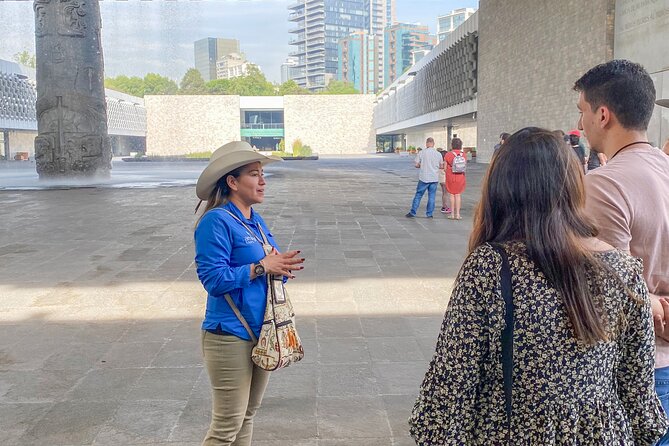
The National Museum of Anthropology is the kind of place where a guide can change the whole experience. The collection runs from Olmec stone heads and Maya tombs to the Aztec Stone of the Sun and a model of Tenochtitlan, but the museum offers only limited written context in English. A strong guide gives you the timeline and geography you need.
I like the included admission, which keeps the $39 price easy to understand, and I like the morning schedule, since it leaves your afternoon open for Chapultepec or another part of Mexico City. Guides such as Alan, Ligia, Antonio, Leonardo, and Gibran have earned especially warm praise for clear explanations and lively storytelling.
The main caution is inconsistency. Some groups have enjoyed excellent, patient guides, while others have faced confusing meeting arrangements, delayed starts, hard-to-understand English, or groups that felt larger than expected. Arrive early, and treat the maximum group size of 25 as a real possibility.
In This Review
- Key points to know before booking
- Why this museum needs a guide
- The Stone of the Sun and the Aztec story
- Olmec heads from the Gulf Coast
- Maya tombs, cenote treasures, and southern Mexico
- A model of Tenochtitlan and the shape of modern Mexico City
- What the 2.5-hour route feels like
- Guide quality is the deciding factor
- Is $39 a fair price?
- Practical rules inside the museum
- Who should book this tour?
- Should you book it?
- FAQ
- How long does the Anthropology Museum Guided Tour last?
- Where does the tour begin?
- Where does the tour end?
- Is museum admission included?
- Is the tour offered in English?
- What is not included in the price?
- How many people can join the tour?
- Can I bring a backpack into the museum?
- Is the museum near public transportation?
- What happens if I cancel?
Key points to know before booking
- The Stone of the Sun anchors the visit: You’ll see the famous Aztec calendar stone as part of a wider story about Mexico’s ancient cultures.
- Olmec, Maya, and Aztec collections share one morning: The tour links several civilizations instead of leaving you to piece the chronology together alone.
- English-speaking guide quality matters: Alan, Ligia, Antonio, Leonardo, Lili, and Gibran have received particularly strong praise, but guide assignments can vary.
- The $39 fee includes entry: You do not buy a separate museum ticket, and food and drinks are not included.
- The group may reach 25 people: Headphones or audio equipment may be used, but sound quality and clarity can affect how much you take in.
- Bring only a handbag: Food, drinks, and backpacks are not allowed inside. Public transportation is nearby.
Why this museum needs a guide
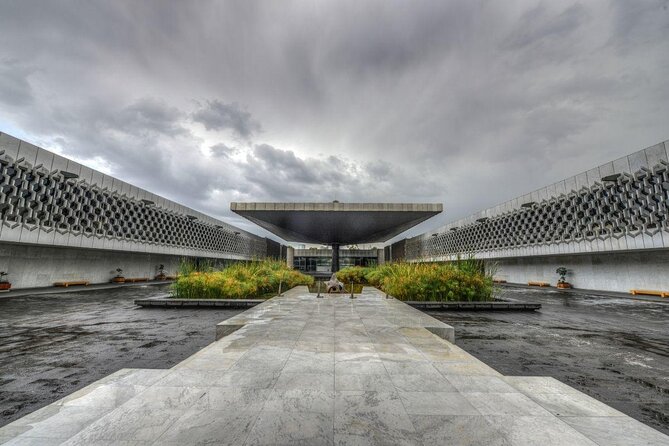
Mexico City’s National Museum of Anthropology is not a small, quick-stop museum. Its permanent ground-floor halls cover the pre-Columbian civilizations found across present-day Mexico, along with areas that once belonged to Mexico and now lie in the southwestern United States.
That scope is the museum’s strength, but it can also make your visit feel scattered. You may move from the Olmec world to Teotihuacan, the Toltec period, the Mexica, and the Maya, with each hall filled with major objects and long timelines. If you walk in without a plan, it is easy to admire the stonework while missing how the cultures connect.
I see the guide as the main reason to book this experience. A good guide can establish a simple sequence, explain where each culture lived, and show how an object fits into religious, political, or daily life. Several highly praised guides, including Alan and Leonardo, reportedly begin with broad geography and chronology before focusing on individual pieces. That is the right approach here.
The museum’s own signs may not give you all the help you want in English. One particularly enthusiastic account noted that many signs were in Spanish and that the guide’s explanations made the objects understandable. Even if you speak some Spanish, a spoken explanation can help you see why a carved figure, burial object, or monumental stone matters.
More Museum Tours in Mexico City
- CDMX: Xochimilco, Coyoacan, Frida Kahlo Museum & Murals Tour
★ 4.4 · 3,025 reviews - Chapultepec Castle & Anthropology Museum Tour
★ 4.5 · 1,348 reviews - Frida Kahlo VIP [Museum Tickets Included] Bike, Markets & Churros
★ 5.0 · 1,072 reviews
The Stone of the Sun and the Aztec story
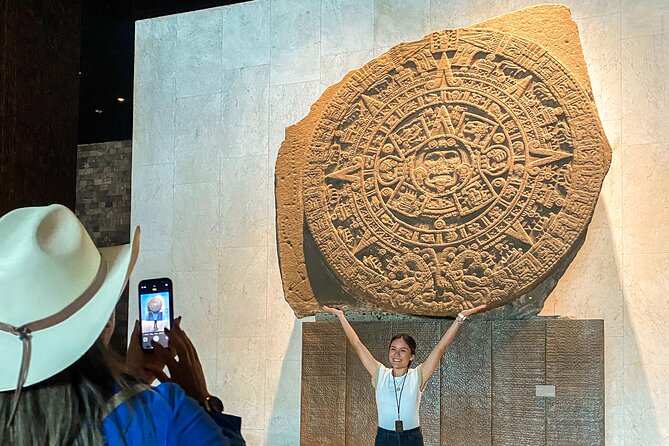
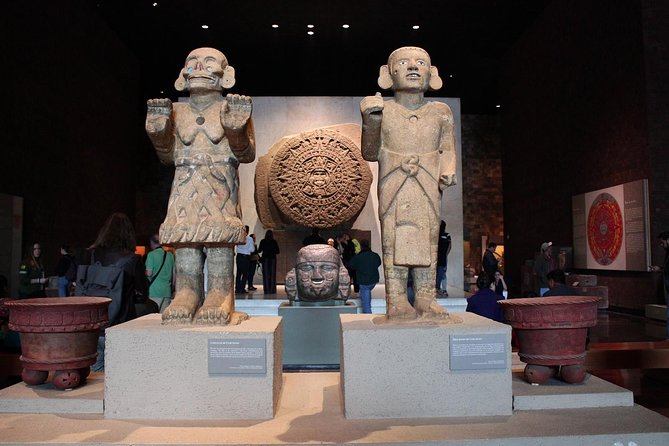
The Stone of the Sun is the museum’s most famous object, and it is a natural early highlight. Often called the Aztec Calendar, it is far more than a large carved disk to photograph. You’ll get more from it if your guide explains the symbols, the cosmology, and the place of Mexica political power in the wider story of central Mexico.
The collection also includes a model showing the location and layout of Tenochtitlan, the former Aztec capital. Modern Mexico City occupies the same central area, so this model helps you connect the ancient city with the streets and plazas you see today.
This is one of the best moments to ask questions. The relationship between Tenochtitlan and Teotihuacan can confuse first-time visitors because the sites belong to different periods. A guide who uses the model and maps well can make that distinction clear. A guide who jumps between periods without a firm timeline can leave you more confused than when you arrived.
Expect the tour to focus on selected objects rather than every display. That is necessary in a museum this large. The trade-off is that you may leave several halls unexplored, but you should come away with a usable framework for returning on your own.
Olmec heads from the Gulf Coast
The giant Olmec heads are among the museum’s most memorable pieces. These enormous stone portraits were found in the jungles of Tabasco and Veracruz, and their scale alone makes them worth seeing.
The real value comes from hearing how the objects fit into the Olmec world. A guide can point out the physical presence of the sculptures and explain why they are important to the study of early Mesoamerican civilization. You may also see smaller objects that are less instantly dramatic but help fill out the picture.
This part of the visit rewards a guide who can avoid turning the museum into a string of isolated facts. The best commentary connects the heads to the region, the people who made them, and the long influence of Olmec forms and ideas. If your guide simply recites dates, you will still see impressive stones, but you will lose much of the meaning.
Maya tombs, cenote treasures, and southern Mexico
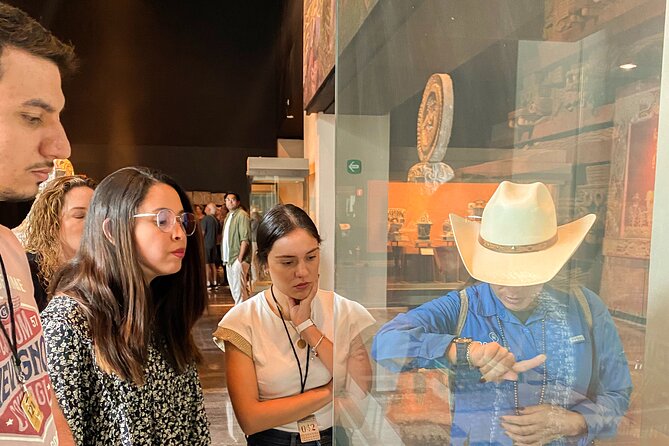
The Maya displays bring a different feel from the central Mexican halls. The museum includes reconstructions of Maya tombs and treasures recovered from the Sacred Cenote at Chichen Itza. These objects help show the religious and ceremonial side of Maya life.
A reconstruction is useful because it lets you understand placement and setting, not just individual artifacts behind glass. Your guide may use pictures or drawings to explain how buildings were constructed and how objects were used. Guides Alexa and Gibran, among others, have been praised for using visual aids to make complex material easier to follow.
The Maya material also creates a test for the tour’s pacing. There is a lot to absorb, and some guides give the group time to look around each room before explaining the main pieces. That can work well if the guide then points you to the important details. It feels wasteful if you spend free time reading objects and then hear the same basic information afterward.
You should not expect to understand every Maya hall in one guided visit. The tour is best treated as an introduction. If the Maya collection is your main reason for coming, plan to return after the tour and spend extra time in those rooms.
More Mexico City trips worth a second look
- Frida Kahlo VIP [Museum Tickets Included] Walk, Markets & Churros
★ 5.0 · 982 reviews - EXCLUSIVE TOUR Frida Kahlo Museum – SMALL GROUPS
★ 5.0 · 901 reviews - Mexico City: Anthropology Museum Guided Visit
★ 4.4 · 708 reviews - Mexico City: Frida Kahlo Museum Entry Ticket w/Digital Guide
★ 4.5 · 683 reviews
A model of Tenochtitlan and the shape of modern Mexico City
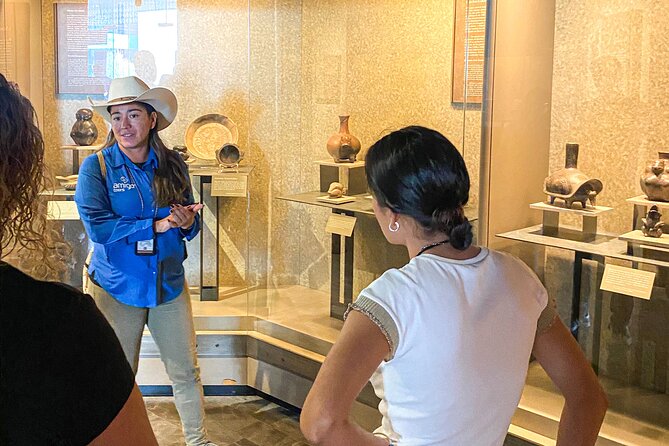
The Tenochtitlan model is valuable because it turns an abstract historical idea into something you can see. The former capital was a major urban center, and its location beneath modern Mexico City gives the city an unusual connection to its past.
A good explanation here should cover geography as well as politics. You need to know where the city sat, how it related to the surrounding lake area, and why the site remains central to Mexico’s national story. The model gives your guide a practical tool for doing that.
This is also where the tour can connect ancient history with the rest of your visit. Once you understand that modern central Mexico City occupies the area of the old capital, later stops around the city make more sense. The museum is not only about distant ruins. It helps explain the city you are walking through now.
What the 2.5-hour route feels like
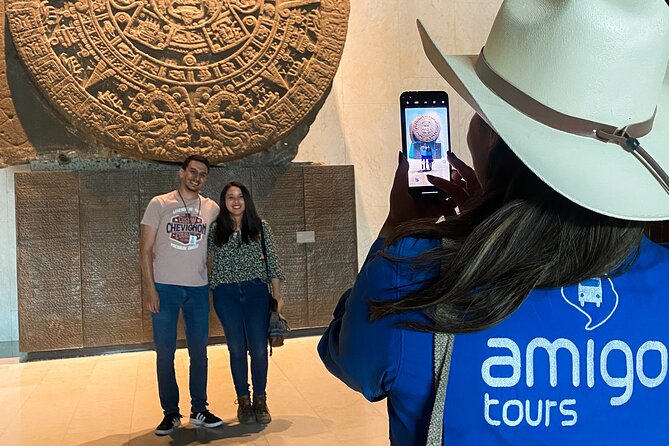
The advertised duration is about two hours and 30 minutes, all at the National Museum of Anthropology. You meet at the museum on Avenida Paseo de la Reforma in Polanco, within Chapultepec, and finish back at the same meeting point. No transportation, meal, or drink is part of the experience.
The tour is long enough to give you a solid introduction without taking your entire day. A morning departure is especially useful. You can visit the museum first, eat afterward, and still have time for Chapultepec, the castle, or another Mexico City sight.
Do not arrive ten minutes late and hope to catch up. One group missed the tour after arriving late, even after sending a message, and the guide had already left. Mexico City traffic can be unpredictable, so give yourself extra time. The meeting point can also be confusing, particularly if several tour groups are gathering near the entrance.
The tour has a maximum of 25 participants. That is manageable for a museum visit, but it is not a private experience. Some groups have found the size comfortable, while others felt crowded or larger than expected. Audio equipment may be used, yet there have been complaints about poor sound or difficulty understanding the guide’s English.
Guide quality is the deciding factor
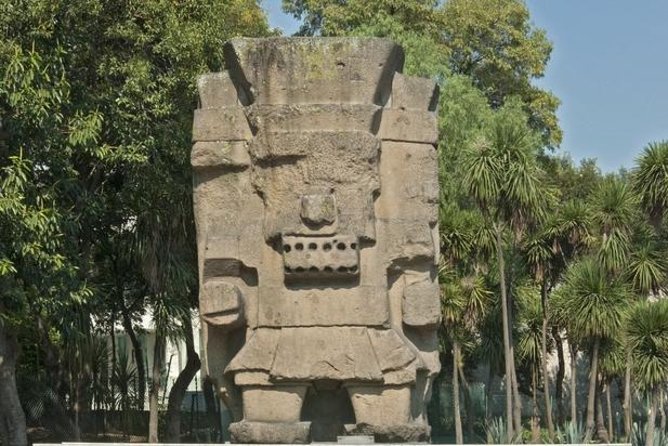
The strongest part of this experience is the person leading it. Alan has been praised for starting with geography and building toward the cultures in a logical way. Ligia has been described as patient, responsive, and able to answer questions in both English and Spanish. Antonio has received praise for warmth and for making the objects feel connected to real people and events.
Leonardo has also earned strong marks for guiding a group through the huge building while keeping the story interesting. Lili has been described as patient and passionate, while Gibran, also identified as Alex in one account, used a binder of pictures and examples to explain the Aztec, Maya, and other indigenous cultures.
Those names are useful when comparing experiences, but you should not assume you can select one of them. The provider is Amigo Tours, and guide assignment may vary by date and group. The overall rating is 4.5 from 1,035 ratings, which suggests that many people receive a worthwhile visit, but the very low scores point to a real risk of uneven delivery.
The common problems are clear: delayed starts, confusing ticket handling, one-way lectures, unclear English, and guides who spend too much time managing a crowd. One account also described a child ticket dispute and a group that felt much larger than promised. These are not minor annoyances in a museum where concentration matters.
Is $39 a fair price?
At $39 per person, the value depends on the guide you receive. Admission is included, so you are paying for both entry and roughly two and a half hours of interpretation. That makes the price reasonable if the guide gives you a clear timeline, explains the major objects, and answers questions.
The value is weaker if you spend much of the time waiting, standing in a queue, or listening to commentary you cannot understand. Since the museum is already a major attraction, you can still have a good day after a poor tour, but you may need to repeat the halls on your own.
For a first visit, I think the fee can be justified, especially if you do not read Spanish comfortably or you want historical context rather than a quick look at famous objects. For a second visit, you may prefer to enter independently and set your own pace.
Group discounts are available, and confirmation is provided when you book. Free cancellation is allowed up to 24 hours before the local start time. After that point, the payment is not refunded, and changes are not accepted.
Practical rules inside the museum
Pack lightly. Food, drinks, and backpacks are not allowed, and only a handbag is permitted. This is easy to overlook, so leave bulky bags behind before you arrive.
The museum is near public transportation, which helps if you are staying elsewhere in Mexico City. The stated meeting point is the National Museum of Anthropology, not a hotel pickup location. Check the exact meeting instructions carefully, and arrive early enough to identify the guide and group before the start time.
Most people can take part, and the activity is suitable for anyone interested in archaeology, history, or Mexico’s indigenous cultures. Still, two and a half hours of walking and standing in a large museum may feel tiring, especially if the group pauses often in crowded rooms.
Who should book this tour?
I would choose this experience if you are visiting the museum for the first time, want an English-speaking explanation, and prefer a broad introduction to Mexico’s ancient cultures. It is also a good fit if you want the museum finished in the morning so you can use the afternoon elsewhere.
Families can benefit from a guide who uses drawings, models, and clear stories rather than a list of dates. The tour also suits solo visitors who want someone to explain the objects and provide a route through the building.
I would be more cautious if you need a private experience, want to linger at every display, or have difficulty understanding a range of English accents. In that case, an independently arranged private guide may offer better control, though this activity’s supplied information does not promise a private group.
Should you book it?
Yes, with two conditions: arrive early and understand that guide quality can vary. The museum itself is essential, and the best guides, including Alan, Ligia, Antonio, Leonardo, Lili, and Gibran, have turned a huge collection into a clear and memorable introduction.
Book it for context, not for a guaranteed intimate visit. If the meeting process is smooth and your guide builds a firm timeline, $39 is a fair way to make sense of the Stone of the Sun, the Olmec heads, the Maya displays, and Tenochtitlan. If you want total control over pace and group size, visit independently or seek a private option instead.
FAQ
How long does the Anthropology Museum Guided Tour last?
The tour lasts approximately two hours and 30 minutes.
Where does the tour begin?
It begins at the National Museum of Anthropology, Av. Paseo de la Reforma s/n, in Polanco’s Chapultepec area of Mexico City.
Where does the tour end?
The activity ends back at the museum meeting point.
Is museum admission included?
Yes. The entrance to the National Museum of Anthropology is included in the $39 tour price.
Is the tour offered in English?
Yes. The activity is offered in English with a professional guide.
What is not included in the price?
Food and drinks are not included.
How many people can join the tour?
The stated maximum is 25 participants.
Can I bring a backpack into the museum?
No. Backpacks, food, and drinks are not allowed. Only a handbag is permitted.
Is the museum near public transportation?
Yes. The meeting point is near public transportation.
What happens if I cancel?
You can cancel up to 24 hours before the experience start time for a full refund. Cancellations or changes made less than 24 hours before the start time are not accepted for a refund.
Recently reviewed around Mexico City
- Teotihuacan from Mexico City with early access★ 4.7 · 49 reviews
- Teotihuacan Pyramids: Guided Tour with Entry Ticket Included★ 4.1 · 45 reviews
- Teotihuacan Pyramids: Skip-the-Line Ticket★ 3.8 · 98 reviews
- From Mexico City: Puebla and Cholula Day Tour★ 4.2 · 194 reviews
- Puebla: Cholula Magical Town Tour by Double-Decker Bus★ 4.3 · 74 reviews
- Puebla: Walking Tour of Puebla City★ 4.9 · 45 reviews
- Nevado De Toluca: Reach the Summit with Professionals★ 4.8 · 250 reviews
- Mexico City: Vegan and Vegetarian Street Food Adventure★ 4.8 · 65 reviews
Museums, compared.
Xochimilco, Coyoacan, Frida Kahlo Museum & Murals Tour
Read our review →
Chapultepec Castle & Anthropology Museum Tour
Read our review →![Frida Kahlo VIP [Museum Tickets Included] Bike, Markets & Churros](https://1.bestmexicotours.com/wp-content/uploads/frida-kahlo-vip-museum-tickets-included-bike-markets-churros-400x267.jpg)
Frida Kahlo VIP [Museum Tickets Included] Bike, Markets & Churros
Read our review →![Frida Kahlo VIP [Museum Tickets Included] Walk, Markets & Churros](https://1.bestmexicotours.com/wp-content/uploads/frida-kahlo-vip-museum-tickets-included-walk-markets-churros-400x267.jpg)
Frida Kahlo VIP [Museum Tickets Included] Walk, Markets & Churros
Read our review →
EXCLUSIVE TOUR Frida Kahlo Museum – SMALL GROUPS
Read our review →
Coba Multun-Ha Cenote Tulum and Mayan Museum Small Group
Read our review →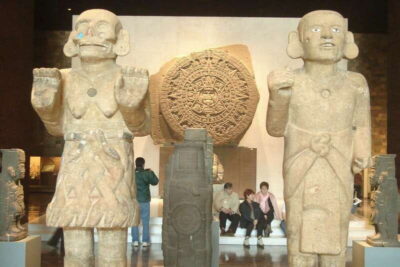
Frida Kahlo Museum Entry Ticket w/Digital Guide
Read our review →Browse the lists this tour appears in