

Reviewed · CHICHEN ITZA TOURS
Chichen Itza: Self-Guided Tour with Audio Narration & Map
Chichén Itzá is far easier to appreciate when you know what you are looking at, and this self-guided audio tour gives you that context without tying you to a group. The app leads you around the major monuments with GPS-triggered stories, images, and text.
I like two things right away: the offline operation saves you from depending on data service, and the flexible route lets you stop for shade, photos, or souvenirs without losing your place. The main catch is setup. You must download the app and enter your code before arriving, and a phone battery can disappear quickly during a hot, two-hour walk.
In This Review
- Key points to know before you go
- What the $9.99 price really buys you
- Download the app before entering Chichén Itzá
- Starting at the handicraft market
- El Castillo and the first major monuments
- El Caracol and the ceremonial center
- Red House, Ossuary, and the older buildings
- Las Monjas and La Iglesia
- How the GPS tour works on the ground
- Timing, heat, and the amount of walking
- Audio quality and depth of information
- Who should choose this tour?
- Should you book the Chichén Itzá audio tour?
- FAQ
- Is admission to Chichén Itzá included?
- Does the tour work without mobile data?
- How long does the self-guided tour take?
- What language is available?
- Does a guide meet you at the entrance?
- Can I cancel for a full refund?
Key points to know before you go
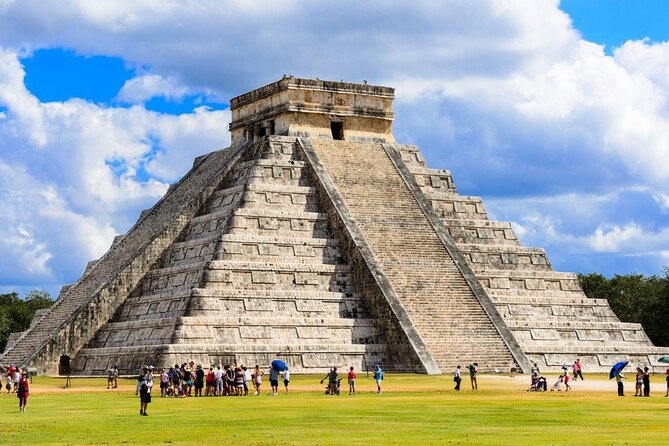
- More than 37 audio stories cover roughly 1.5 to 2 miles of the archaeological site.
- GPS starts the narration near each monument, so you can keep your phone in hand or pocket and listen through headphones.
- El Castillo, the Great Ball Court, El Caracol, and La Iglesia are among the main stops.
- The app works offline after download, with no roaming or Wi-Fi needed inside the site.
- English is the only listed language, so this is not a good choice for anyone who needs French, Spanish, or another option.
- The $9.99 price is low compared with a private guide, but Chichén Itzá admission is separate.
What the $9.99 price really buys you
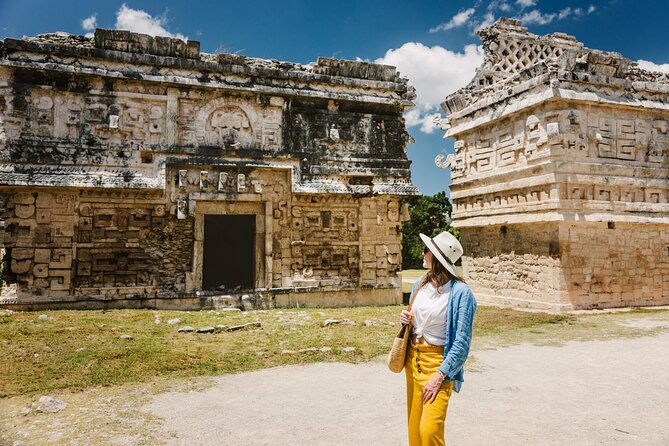
At $9.99 per person, this is a modest add-on to a costly day at Chichén Itzá. The entrance ticket is not included, and the app does not reserve your entry or replace an admission pass. Still, the price makes sense if you want historical explanation without paying for a private guide.
I see the value in the format rather than in the amount of audio alone. Site signs are limited, and the stones do not explain themselves. The app gives you a route, basic background, and something useful to listen to while you look closely at carvings and buildings.
A couple can also reduce the cost by sharing one purchase and splitting headphones, though that is less convenient than having a separate device. You should bring earbuds or headphones, since much of the experience depends on hearing the narration while standing near each monument.
The tour includes lifetime access with no expiry according to the current details. That gives you room to pause, replay sections at home, or use it again on another visit. Some older instructions refer to one year of access, so I would check the terms shown at booking if repeat use matters to you.
Other Valladolid & Chichen Itza days travellers weigh against this one:
- Chichén Itzá Skip-the-Line Entrance Ticket
★ 4.0 · 343 reviews - From Tulum: Chichen Itza, Cenote & Valladolid Tour
★ 4.7 · 214 reviews - Valladolid Mayan Bees Tour with Lunch or breakfast and Honey Tasting
★ 5.0 · 193 reviews
Download the app before entering Chichén Itzá
The most important practical step happens before your visit. After booking, you receive setup instructions and a password by email and text. Search your inbox and messages for audio tour, then download the separate Action’s Tour Guide app while you still have strong cellular service or Wi-Fi.
Open the app, enter the password, and test the tour before leaving your accommodation. A few technical snags have been reported, including a code screen that appeared to request the password again. Closing and reopening the app resolved that problem in one case, but you do not want to discover it at the entrance.
Once the tour is downloaded, it uses GPS rather than mobile data. That is a major advantage in Mexico, especially if your phone plan charges for roaming. You still need a charged phone and working location services, so a portable charger is a smart item to pack.
The recommended devices are an iPhone running iOS 15 or later, an Android phone running version 9 or later, or an iPad or tablet with GPS and cellular capability. The activity is private in the simple sense that only your group uses the app. No guide meets you at the gate.
Starting at the handicraft market
The route begins near the handicraft market at the Chichén Itzá site. This is a useful starting point because it places you at the edge of the visit, before the major monuments begin to crowd your attention.
The opening narration introduces the ancient Maya world and frames Chichén Itzá as a place shaped by different peoples over a long period. Do not expect a university lecture here. The tone is designed for a walking visit, with short stories that give you just enough background to make the stonework more meaningful.
A second early point refers to the official guide area and the wider Maya civilization. This section helps establish that Chichén Itzá was not simply a collection of isolated pyramids. It was a major center with ceremonial, political, astronomical, and social functions.
Take a moment here to orient yourself with the map. The route can feel slightly confusing at first, particularly if you begin walking before the first GPS point activates. Once your location matches the route, the next stories are easier to follow.
El Castillo and the first major monuments
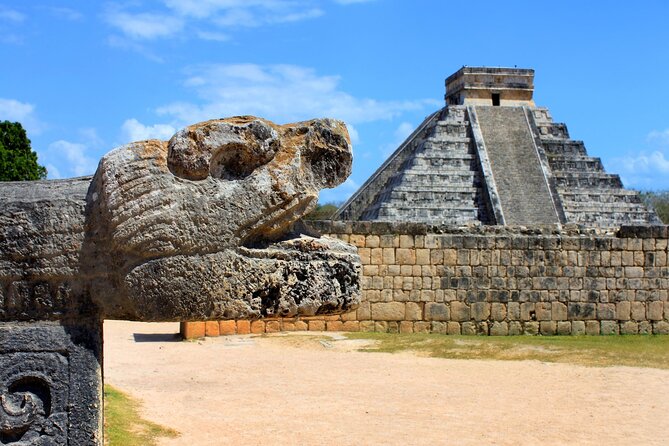
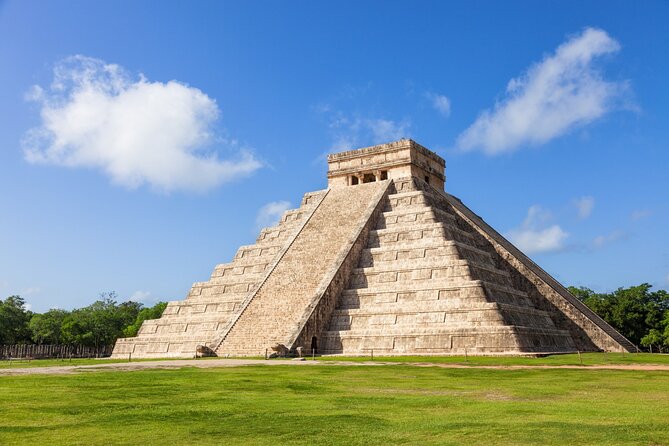
El Castillo, also called the Pyramid of Kukulkan, is the visual anchor of Chichén Itzá. The tour explains its connection with Kukulkan, the feathered serpent deity, and points you toward the architectural features that reflect Maya beliefs and observations of the sky.
The narration is most useful when you stand back and look at the whole pyramid, then listen again while studying its stairways and proportions. You cannot climb the monument, so the experience depends on noticing details from ground level.
From here, the route moves toward the Gran Juego de Pelota, the Great Ball Court. This was not a casual sports field. Sculpted reliefs along the walls show ball players and scenes tied to Maya ritual life. The audio helps you look beyond the size of the court and notice the carved figures.
Next comes Tzompantli, or the skull rack. Its name refers to the display of human heads, and the platform’s carvings include warriors, skulls, snakes, and eagles. This is one of the darker stops, but it is important for understanding the ceremonial world represented at Chichén Itzá.
The Eagles and Jaguars Platform follows. Its flat design suggests a stage for public viewing, ceremonies, speeches, or dance rather than a temple with a roof. This is a good example of why a guide helps. Without explanation, a low platform can look far less important than a pyramid.
A different kind of day out, same stretch of Mexico:
- Private Guide Service in the Archaeological Zone of Chichen Itza
★ 5.0 · 151 reviews - Rio Lagartos guided boat tour- Ek Balam from Valladolid
★ 5.0 · 151 reviews - From Valladolid: Tour to Chichen Itza & 2 Cenotes
★ 4.9 · 92 reviews - Xkopek, Mayan Bees Tour and Honey Tasting in Valladolid
★ 4.8 · 66 reviews
El Caracol and the ceremonial center
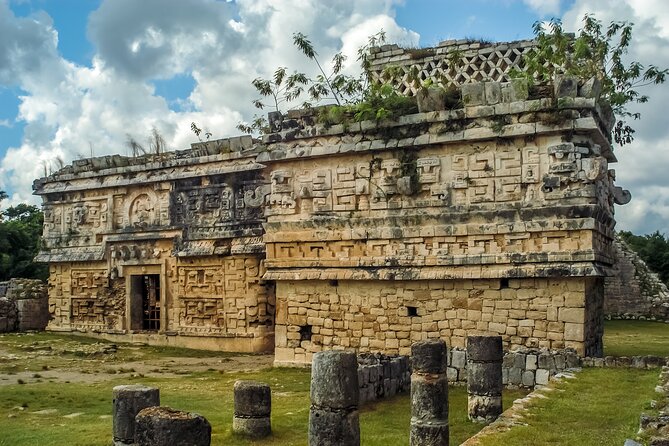
El Caracol is one of the most intriguing structures on the route. The circular upper building is associated with astronomical observation, and the tour explains how Maya observers watched the movement of stars and planets.
The app includes El Caracol twice in the itinerary, likely from different approach points or route sections. That may feel repetitive, but it can also help if you wander away and rejoin the path later. Pay attention to the map and story titles so you do not mistake the second reference for an entirely different monument.
The longer central section of the tour gives you about an hour around the principal archaeological zone. This is where the app earns its keep. You can pause under shade, replay an explanation, read the text instead of listening, or move on when a stop does not interest you.
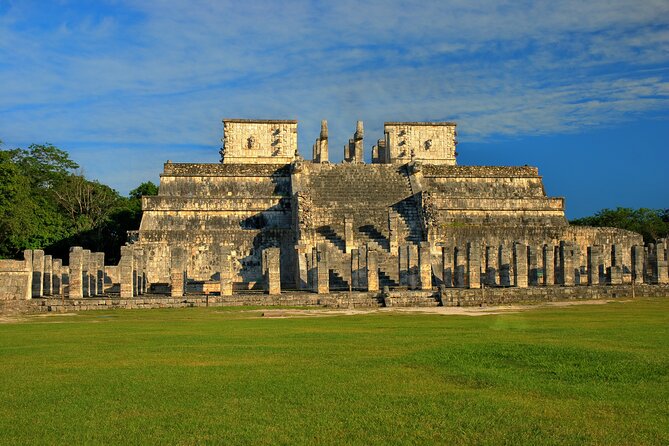
The Temple of the Warriors is especially impressive from the front. Its broad tiers and upper temple are accompanied by a forest of columns, many carved with Toltec-style warriors. The audio connects the building to the mixture of Maya and central Mexican influences visible across Chichén Itzá.
The comparison to a layered wedding cake is a little playful, but it helps you read the shape. Look closely at the columns and reliefs rather than treating the temple as a single mass of stone.
Red House, Ossuary, and the older buildings
The Red House, or Chichanchob, is also called the House of Little Holes. Decorative latticework near the top gives the building its nickname. It is smaller and less famous than El Castillo, which makes the narration useful here. You might otherwise pass it without noticing the design.
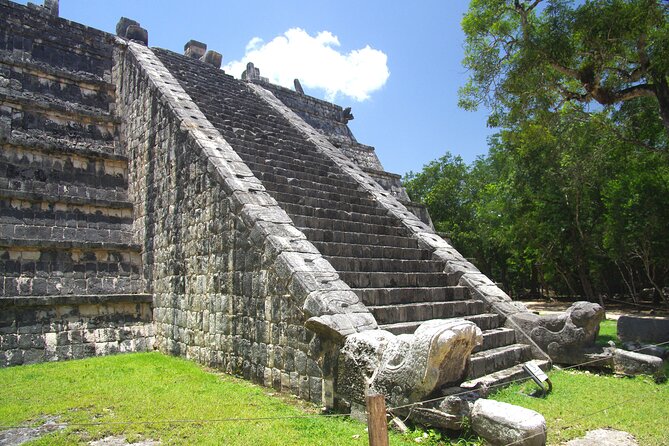
The Ossuary is also known as El Osario and the High Priest’s Grave. Archaeologists found human and animal remains in and beneath the pyramid, including several tombs believed to belong to members of Maya high society.
The route lists the Ossuary under several names, so do not be surprised if the app returns to the same structure. That repetition is one of the itinerary’s weak points. It is not a reason to reject the tour, but it means you should use the skip function if you feel you are hearing the same subject twice.
These smaller stops reward patience more than quick sightseeing. You will not get the same instant impact as El Castillo, but the buildings help show that Chichén Itzá was a working ceremonial city with layers of use and status.
Las Monjas and La Iglesia
Las Monjas, or the Nunnery, is one of the largest and most important buildings in this part of the site. Its walls carry many inscriptions, including references to a ruler named Kakupakal.
The nickname is misleading if you take it literally. This was not a Christian convent. The name came from later observers who thought the structure’s many rooms resembled a nunnery.
The final stop, La Iglesia, is among the most photographed buildings at Chichén Itzá. Its exterior is covered with decorative veneer, including masks of Chac, the rain god. Look for the smaller animal forms mixed into the decoration: an armadillo, crab, snail, and tortoise.
This is a fitting end because it shifts your attention from huge architecture to fine surface detail. The app’s images and written notes are helpful here, especially if you cannot get close enough to inspect every carving.
How the GPS tour works on the ground
The audio is designed to begin automatically when you reach a story point. In practice, GPS may start a little early, and that is worth knowing. One person found the map slightly off, with narration beginning before reaching the exact location.
I would treat this as a minor nuisance rather than a serious failure. Early audio can actually give you a clue about what to look for, but you may need to stop, glance at the map, and match the description to the correct building.
You can also start stories manually, replay them, pause the route, or skip sections. If you wander off for photographs, souvenirs, or a quiet spot in the shade, GPS can help you return to the route.
For the smoothest experience, walk at a steady pace and keep one ear available for the next cue. If the audio fails, support is available, but on-site technical help is not guaranteed. That is another reason to test the app before you arrive.
Timing, heat, and the amount of walking
The full route covers more than two miles and includes over 37 audio stories. Most people should allow around two hours, although the stated duration ranges from two to three hours depending on your pace and how often you stop.
You can rush through the essentials in about one to two hours, but that leaves less time for photographs and repeated explanations. If you want to inspect carvings, sit down, and take breaks, plan on the longer end.
This is a walking tour, not a quick loop from the parking area to El Castillo. Good shoes, water, sun protection, and a charged phone matter. Refreshment stalls and a sitting area are available within the compound, which gives you somewhere to recover during the route.
The site is open daily from 8:00 a.m. to 5:00 p.m. The tour itself can be paused and resumed, and its lifetime access means you are not forced to complete every story in one continuous session. Your actual entry still depends on the archaeological site’s admission rules and hours.
Audio quality and depth of information
The strongest part of the experience is its convenience. GPS narration lets you look at the monument instead of staring at a printed guide, and the written text and images give you a second way to absorb the material.
The information is generally concise. That is good if you want a clear explanation at each stop, but less satisfying if you are looking for a detailed account of Maya customs, political change, or why the city was eventually abandoned. One section in particular has been criticized as too basic, and the narration may not satisfy someone who prefers a long, academic presentation.
Audio quality can also depend on your expectations. Most of the supplied feedback describes the app as clear and easy to use, but one complaint raised problems with tone, pronunciation, and translation. Since the tour is offered in English only, check that the narration style suits you if audio presentation is especially important.
I would choose this tour for practical interpretation, not for a full scholarly treatment. It gives you a useful framework, then lets the monuments do much of the talking.
Who should choose this tour?
I would recommend it to independent visitors who dislike being herded from one monument to the next. You can walk ahead, wait for crowds to thin, stop in the shade, or repeat a story without holding up a group.
It also suits couples and families on a budget. A private guide can cost much more, while this option gives you a route and explanations for $9.99 per person. Families should remember that two miles in sun and heat can be tiring, especially for children.
This is less suitable if you want to ask questions as you go, hear several languages, or receive a deep discussion of Maya society. It is also a poor choice if you cannot download apps reliably or have no headphones and limited phone battery.
Should you book the Chichén Itzá audio tour?
Book it if you want a low-cost guide you can control. The best reasons are the offline GPS, flexible pacing, clear route, and coverage of the site’s major monuments from El Castillo to La Iglesia.
Skip it if you expect a private expert who can answer questions or provide extensive historical detail. Also skip it if you plan to arrive without preparing the app, since the setup issue is the one problem most likely to spoil the experience.
For most independent visitors, I think the $9.99 cost is fair. Download it on strong Wi-Fi, carry earbuds and a power bank, allow two hours or more, and use the map as a guide rather than assuming every GPS trigger will be exact. That small amount of preparation can turn a confusing walk among ancient stones into a much more rewarding visit.
FAQ
Is admission to Chichén Itzá included?
No. The $9.99 fee covers the self-guided app, audio stories, map, images, and text. You must purchase your Chichén Itzá entrance ticket separately.
Does the tour work without mobile data?
Yes. You must download the tour while connected to strong Wi-Fi or cellular service, but it works offline afterward using GPS.
How long does the self-guided tour take?
The route usually takes about two hours, although the stated duration is two to three hours. The walking route covers more than two miles and includes over 37 audio stories.
What language is available?
The tour is offered in English. No other language option is listed in the supplied information.
Does a guide meet you at the entrance?
No. This is a self-guided private activity. You go to the starting point, open the Action’s Tour Guide app, and follow the GPS route and audio cues yourself.
Can I cancel for a full refund?
Yes, if you cancel at least 24 hours before the experience start time. Cancellations made within 24 hours are not refunded, and changes during that period are not accepted.
Recently reviewed around Valladolid & Chichen Itza
- Private Tour in Chichen Itza Official History Guide★ 5.0 · 36 reviews
- Mayan Experience in Chichen Itza★ 5.0 · 53 reviews
- Private Tulum Experience & Cenote★ 5.0 · 39 reviews
- Chichen Itza : Walking Tour with Expert Guide and Skip-the-Line Access!★ 5.0 · 30 reviews
- Private Guide Service in the Archaeological Zone of Chichen Itza★ 5.0 · 151 reviews
- Chichen Itza Guided Group Walking Tour – Last minute booking★ 5.0 · 32 reviews
- Xkopek, Mayan Bees Tour and Honey Tasting in Valladolid★ 4.8 · 66 reviews
- From Valladolid: Tour to Chichen Itza & 2 Cenotes★ 4.9 · 92 reviews
Chichen Itza Tours, compared.

Chichen Itza, Cenote & Valladolid Tour with Tequila and Lunch
Read our review →
Chichen Itza, Cenote & Valladolid Tour with Lunch
Read our review →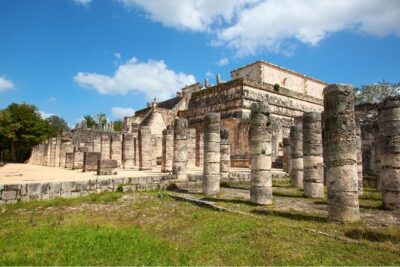
Early morning Chichen Itza Tour: Cenote and Tequila Tasting
Read our review →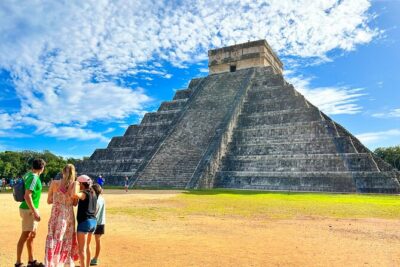
Chichen Itza Early Access All Inclusive: Hotel Pick up & All Fees
Read our review →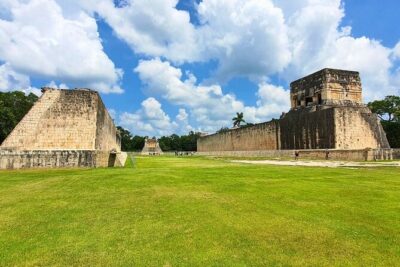
Chichen Itza Gastronomic, Valladolid and Cenote Extremo
Read our review →
Chichen Itza, Cenote and Valladolid Small Group Day Trip
Read our review →
Browse the lists this tour appears in