
Reviewed · WALKING TOURS
Epic Condesa and Roma Norte Walking Tour
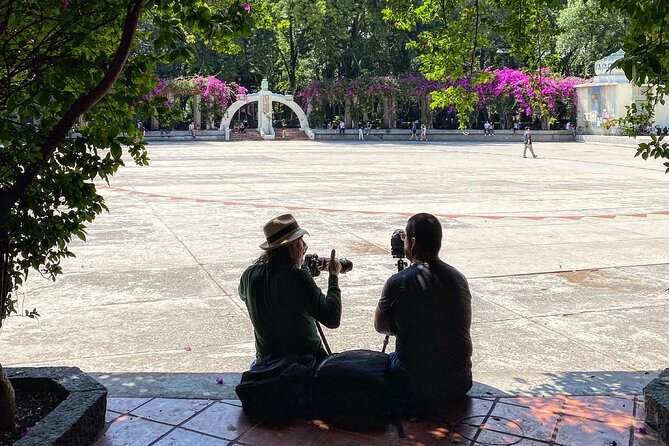
Condesa and Roma Norte are best understood on foot, where a former racetrack, Art Deco apartment blocks, quiet plazas, galleries, churches, and ordinary residential streets all fit into one long city story. Ricardo leads this English-language walk from Parque México to Huerto Roma Verde, adding local context and food suggestions along the way.
I like the small maximum of 12 people, which gives Ricardo room to answer questions and adjust the pace. I also like the mix of famous sights and less obvious corners, from La Romita to Casa Basalta and the garden at Huerto Roma Verde. The main catch is simple: this is a long walk. Although the advertised time is about four and a half hours, several people have spent five hours on the route once breaks and detours are included.
In This Review
- Key points before you book
- Why these neighborhoods work so well on foot
- Parque México and the old racetrack curve
- Parque España, Condesa DF, and the Mexico-Spain connection
- Houses, books, and a church in Roma Norte
- Plaza Río de Janeiro and an eccentric landmark
- Casa Basalta and La Romita
- Pushkin Garden and Avenida Álvaro Obregón
- Art Nouveau, fountains, and old commercial spaces
- Calle Orizaba and the final stretch
- What Ricardo adds to the experience
- Is $59 a fair price?
- Who should book this walk?
- Should you book the Epic Condesa and Roma Norte Walking Tour?
- FAQ
- How long does the tour last?
- Where does the tour start?
- Where does the tour end?
- Is the tour offered in English?
- How large is the group?
- Can I cancel for a full refund?
Key points before you book
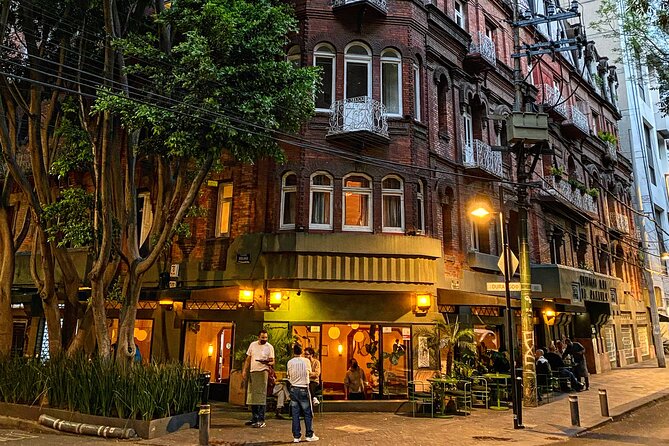
- Ricardo is the guide to know: His English is described as excellent, and his talks range from architecture and art to Mexican history, food, and current life.
- You cover two major neighborhoods: The route moves from Condesa into Roma Norte and ends in Roma Sur, giving you a broad look at areas that many visitors only sample.
- The route is architecture-heavy: Expect Art Deco, Art Nouveau, neo-Gothic, colonial, and eclectic buildings, with parks and plazas providing regular pauses.
- Food advice adds value: Past stops have included a bakery, street tacos, and restaurant suggestions, though food is not listed as an included part of the tour.
- Plan for serious walking: The stops themselves add up to about three hours, before the connecting walks and rest periods.
- It is a good first-day orientation: You finish with a list of places to eat, browse, revisit, and explore on your own.
Why these neighborhoods work so well on foot
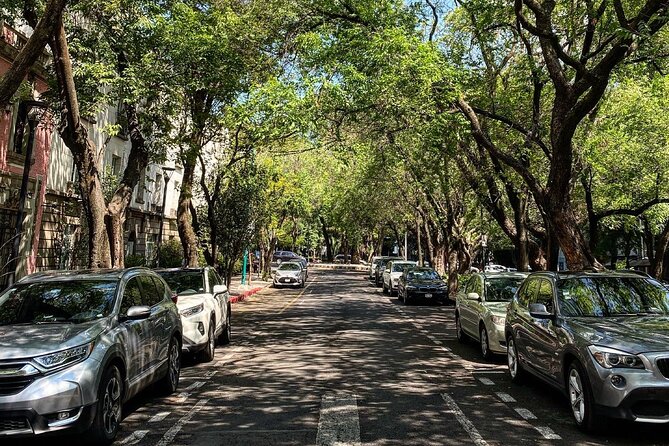
Condesa and Roma are not museum districts with one grand monument at the center. Their appeal comes from the way the streets fit together. A leafy park leads to a curved avenue, which opens onto an old mansion, a church, a gallery, or a café-lined square.
That makes a guide especially useful. You can walk past a handsome façade without knowing why it matters. Ricardo connects the buildings to the city’s development, changing architectural tastes, and the lives of people who shaped the neighborhoods.
The tour starts at Churrería El Moro on Avenida Michoacán at noon. That is a practical meeting place in the Hipódromo section of Condesa, though you should arrive ready to walk rather than treating the churro shop as a formal first stop.
The route then finishes at Huerto Roma Verde on Jalapa in Roma Sur. Since the end point is not the same as the start, this works best when you have no tight afternoon appointment. Both ends are near public transportation, but allow time to get your bearings before and after the walk.
More Walking Tours in Mexico City
- Historic Downtown Walking Tour
★ 5.0 · 1,289 reviews - Mexico City: Historic Downtown Walking Tour
★ 4.8 · 1,039 reviews - Frida Kahlo VIP [Museum Tickets Included] Walk, Markets & Churros
★ 5.0 · 982 reviews
Parque México and the old racetrack curve
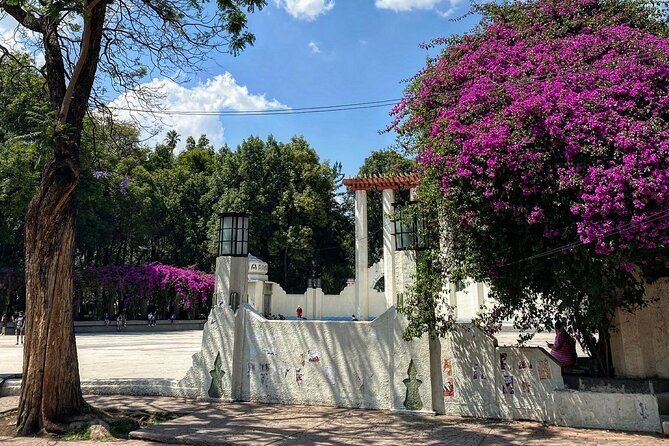
Parque México is a fitting opening. Its paths, greenery, Art Deco details, and public spaces introduce the look and feel of Condesa before the tour moves into the surrounding streets.
You will spend about 15 minutes here, enough to notice how the park acts as a neighborhood living room. It is not just a patch of grass between buildings. The design, paths, and sculptures help explain why Condesa feels different from many other parts of Mexico City.
From there, the group reaches Ámsterdam, the elliptical street that follows the shape of a former horse-racing track. This is one of the most useful places to have a guide. The unusual curve is easy to appreciate, but Ricardo can help you read the street as a planned urban area, with mature trees, green spaces, and early 20th-century buildings following the old track.
The route does not rush through these first stops. Together, Parque México and Ámsterdam give you a visual key for the rest of the afternoon: curved streets, low-rise architecture, planted sidewalks, and a neighborhood built for strolling.
Parque España, Condesa DF, and the Mexico-Spain connection
Parque España provides a short five-minute pause. You will see greenery, pathways, sculptures, and monuments, but the stop is brief. Think of it as a transition between the larger park at Parque México and the architectural focus that follows.
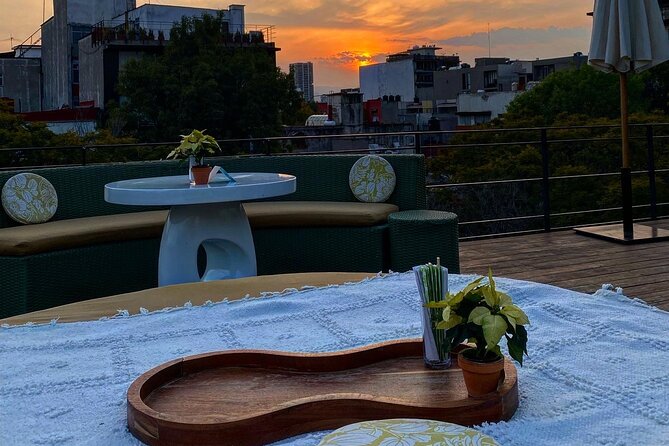
Condesa DF is next, with about 10 minutes devoted to its blend of modern and colonial design. The boutique hotel is known for its interior design and rooftop views over Condesa. The precise access and viewing arrangements are not specified, so you should treat this as an exterior and architectural stop rather than assume a full hotel visit.
At Fuente de Cibeles, Ricardo explains the meaning behind Mexico City’s replica of Madrid’s famous fountain. This small stop turns a familiar photo opportunity into a discussion of Mexico-Spain ties. It is a good example of how the tour uses objects in the streets to connect local places with wider cultural links.
Houses, books, and a church in Roma Norte
Casa Museo Guillermo Tovar de Teresa is one of the more distinctive stops. The preserved house contains art, antiques, and material connected with the life of the prominent Mexican art historian Guillermo Tovar de Teresa.
The scheduled time is 15 minutes. That is enough for an introduction and a look at the setting, but not an exhaustive museum visit. If you are especially interested in interiors, collecting, or Mexican art, this is a stop to listen closely to Ricardo and note down the details for a later return.
Casa Universitaria del Libro UNAM brings another layer: a historic mansion now connected with temporary exhibitions. You will have about five minutes here, so the emphasis is likely on the building and what is showing rather than a long gallery visit.
The Parroquia de la Sagrada Familia gives the walk a religious and architectural marker. Its neo-Gothic design and place among Roma Norte’s older churches make it worth pausing for, even though the scheduled visit is also only five minutes. As with many churches on a city walk, access inside can vary, so focus on the exterior unless Ricardo indicates otherwise.
More Mexico City walks with a guide:
- Walking Tour of the Historic Center of Mexico City
★ 5.0 · 870 reviews - Anthropology Museum Private Experience Walking Tour
★ 5.0 · 355 reviews - Walking Tour in Mexico City for Exploring their Cultural Heritage
★ 5.0 · 245 reviews - Walking Tour – Impressive murals in Historical Center of Mexico City
★ 5.0 · 224 reviews
Plaza Río de Janeiro and an eccentric landmark

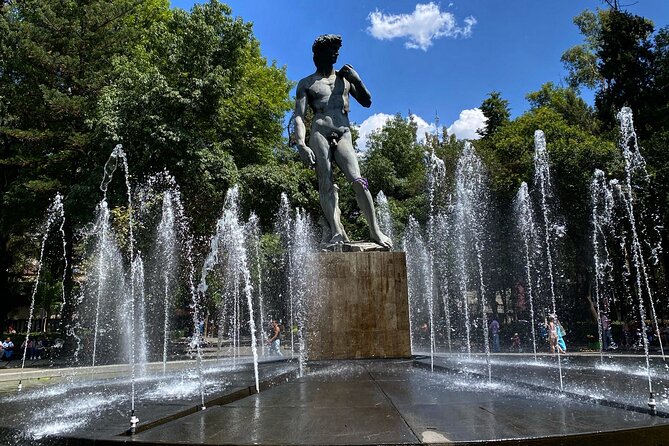
Plaza Río de Janeiro is one of the route’s pleasant breathing spaces. You will have time to take in the park, the surrounding buildings, and the well-known replica of Michelangelo’s David.
The square works well because it brings several themes together: public art, urban design, and the mixture of historic and later architecture that gives Roma Norte its character. Edificio Río de Janeiro, beside the plaza, adds a striking eclectic building to the discussion.
These stops are short, only about five minutes each, but they are not filler. The value comes from learning what to look for. Instead of taking a quick photograph and moving on, you can compare the building’s shapes and details with the Art Deco and Art Nouveau examples elsewhere on the route.
Casa Basalta and La Romita
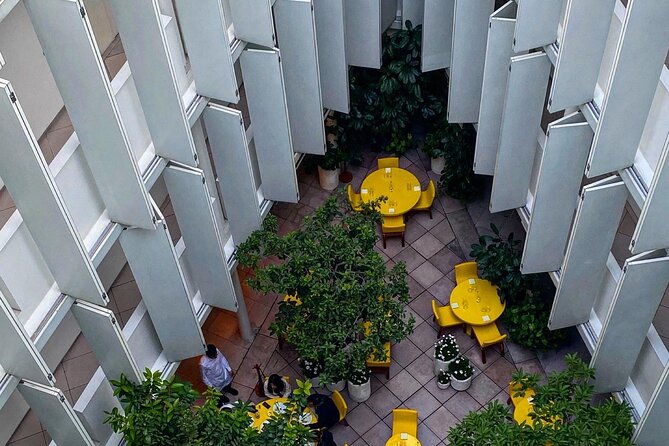
Casa Basalta is another unusual address. This early 20th-century mansion now brings together the MAIA Contemporary art gallery, a meditation center, and restaurants. The stop lasts about 10 minutes and gives you a look at how old buildings can take on new cultural uses.
You may find this part especially useful if you want ideas for returning after the tour. The experience is not only a march past façades. Ricardo points out places that combine art, food, and local activity, giving you options for the rest of your stay.
La Romita shifts the mood again. Its narrow streets and historic plaza preserve the feel of a smaller settlement within the larger city. Ricardo explains its origins as the pre-Hispanic village of Aztacalco and its later development.
The 10-minute stop is short, but the contrast matters. After the formal curves of Ámsterdam and the grander buildings around Roma Norte, La Romita shows a more intimate side of the district. It is also the sort of place that is easy to miss if you stick only to the best-known avenues.
Pushkin Garden and Avenida Álvaro Obregón
Pushkin Garden is a five-minute crossing through a calm public park named for the Russian poet Alexander Pushkin. It offers another brief rest and helps break up the walking.
Avenida Álvaro Obregón then brings you back into the social heart of Roma Norte. The street is known for Art Deco architecture, shops, restaurants, and nightlife. You will spend about 10 minutes here, but the street deserves more of your time after the tour if you want to browse or eat.
I would pay attention to how the avenue changes from block to block. The tour gives you the framework, while a later independent walk lets you stop when a storefront, building, or restaurant catches your eye. This is one reason the route works well early in a Mexico City stay.
Art Nouveau, fountains, and old commercial spaces
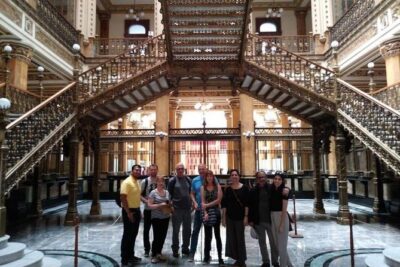
Casa Prunes is an Art Nouveau mansion that now houses a restaurant. Its exterior and unusual interior spaces make it a useful counterpoint to Condesa DF and the more formal historic homes earlier in the walk.
The stop is listed at eight minutes. That is enough to admire the design, but not enough to linger over a meal, so do not book this tour expecting a restaurant visit at every notable address.
Plaza Luis Cabrera follows with a quiet square, a large fountain, and green space. It is a five-minute stop, yet it gives you a chance to slow down. Long city walks are more enjoyable when parks and plazas are treated as part of the experience rather than obstacles between attractions.
El Parián dates to 1926 and now holds local shops and restaurants. Again, the stop is brief, about five minutes. You might want to mark it for a return visit, since shopping and dining require more time than the tour schedule allows.
Casa Lamm Centro de Cultura is another early 20th-century building, now used as a cultural center. Its architecture and cultural role make it one of the route’s better examples of Roma’s old homes finding a new public purpose.
Calle Orizaba and the final stretch
Calle Orizaba gets 15 minutes, longer than most individual stops. That makes sense. It is a street best understood as a sequence of buildings, details, and small changes rather than one single sight.
You will see early 20th-century architecture and the everyday activity of Roma Norte. This is also a good point to ask Ricardo about places you want to revisit, since the route has now covered enough ground for you to start forming your own list.
The final stop is Huerto Roma Verde, an urban garden and community space on Jalapa. Its sustainable practices and community focus provide a fitting finish after an afternoon spent looking at grand houses, churches, plazas, and commercial buildings.
Ending here also places you in Roma Sur rather than returning to Condesa. That is convenient if you want to continue exploring south of the main tourist streets, but less convenient if your hotel is back near the starting point. Check your onward route before booking anything immediately after the tour.
What Ricardo adds to the experience
The strongest part of this tour is the guide’s role. Ricardo is described as friendly, personable, and highly fluent in English. His explanations cover architecture, art, Mexican history, culture, contemporary politics, and local food.
That range matters. A guide who only lists dates can make a long walk feel like homework. Ricardo’s style appears more conversational, with personal experiences and room for questions. On smaller departures, he has adjusted the route to suit interests, added art gallery stops, and made food detours such as street tacos.
You should not assume every special request or food stop will happen on your date. Still, the group limit of 12 makes a personal exchange more likely than on a large bus or crowded city walk.
Several useful food leads have come up along the route, including a bakery and restaurant recommendations. Food is not presented as an included tasting tour, so bring your own budget for anything you choose to buy. The real value is knowing where to return later.
Is $59 a fair price?
At $59 per person, this is not the cheapest way to see Condesa and Roma Norte. You can walk through both neighborhoods for free, and many of the public parks and façades do not charge admission.
The price makes more sense if you value interpretation. In four and a half hours, you get a planned route through 20 stops, local architectural context, neighborhood orientation, and practical suggestions for food and art. You also avoid spending your first day wondering which streets are worth your time.
The scheduled stop times add up to roughly two hours and 50 minutes. The remaining time is needed for walking between districts, explanations, and breaks. Even so, the route may run longer than advertised. Plan for around five hours if you want to enjoy it without watching the clock.
The value is strongest for first-time visitors, architecture fans, solo visitors who want company, and people staying in or near these neighborhoods. It is weaker for anyone seeking a relaxed, short stroll or a tour built mainly around food tastings.
Who should book this walk?
You should be comfortable walking for several hours on city streets and standing during explanations. The activity calls for a moderate fitness level, and the route covers a lot of ground even with breaks.
I would choose it near the start of a Mexico City visit. You can use Ricardo’s suggestions later, return to the buildings that caught your eye, and turn the tour into a useful map of restaurants, galleries, parks, and streets.
It also suits people who want more than postcard views. The route includes major parks, but it spends equal time on houses, cultural centers, churches, and side streets. If you care about how a neighborhood developed and why its buildings look the way they do, you will get more from this than from a quick photo walk.
The tour is offered in English, uses a mobile ticket, and is capped at 12 people. Confirmation arrives at booking. You can cancel for a full refund up to 24 hours before the start time, but late cancellations and changes are not accepted.
Should you book the Epic Condesa and Roma Norte Walking Tour?
Book it if you want a broad, guided introduction to two of Mexico City’s most appealing central neighborhoods and you are happy to walk most of an afternoon. Ricardo’s local perspective, strong English, food tips, and ability to discuss art, architecture, and city life are the main reasons to choose it.
Skip it if you want a short outing, a formal museum tour, or guaranteed food tastings. The route is long and the schedule can stretch, but for an active visitor who wants to understand Condesa and Roma Norte rather than simply pass through them, $59 is a reasonable price for the orientation and local insight.
FAQ
How long does the tour last?
The advertised duration is approximately four hours and 30 minutes. Plan for closer to five hours if the walk includes longer breaks, questions, or small detours.
Where does the tour start?
The meeting point is Churrería El Moro, Avenida Michoacán 27, Hipódromo, Cuauhtémoc, Mexico City. The start time is 12:00 pm.
Where does the tour end?
The walk ends at Huerto Roma Verde, Jalapa 234, Centro Urbano Presidente Juárez, Roma Sur, Cuauhtémoc, Mexico City.
Is the tour offered in English?
Yes. The experience is offered in English, and Ricardo’s English is described as excellent.
How large is the group?
The maximum group size is 12 people. Smaller groups may allow more conversation and flexibility during the walk.
Can I cancel for a full refund?
Yes. You must cancel at least 24 hours before the local start time to receive a full refund. Cancellations or changes made less than 24 hours before the start are not accepted.
Recently reviewed around Mexico City
- Town walking tour of the city★ 5.0 · 72 reviews
- Cholula experience (private tour)★ 5.0 · 52 reviews
- Cholula tour from Puebla★ 5.0 · 66 reviews
- Private Hiking Tour in Iztaccihuatl★ 5.0 · 45 reviews
- City walking tour in Puebla (private tour)★ 5.0 · 40 reviews
- Cholula Magical Twon on a Traditional Tram from Puebla★ 4.5 · 61 reviews
- Hiking Excursion to the Iztaccíhuatl Volcano from Puebla★ 5.0 · 74 reviews
- Museum of Anthropology: a look at Mexico’s past★ 5.0 · 52 reviews
Walking Tours, compared.
Frida Kahlo VIP [Museum Tickets Included] Walk, Markets & Churros
Read our review →

Puerto Vallarta’s Best Canopy Zipline + Jorullo Bridge walk!
Read our review →
Historical and Cultural Walking Tour of San Miguel de Allende
Read our review →
Tacos and Tequila Walking Tour with Taste of Miguel
Read our review →Browse the lists this tour appears in