
Reviewed · HISTORICAL TOURS
Explore Mexico City: A Journey Through History, Art, and Cuisine!
Mexico City’s Centro Histórico is best understood on foot, where Aztec ruins, Spanish churches, grand public buildings, old candy shops, and Diego Rivera murals sit within a few blocks. This tour links those pieces into a brisk two-hour introduction, from Templo Mayor to the Palace of Fine Arts.
I like the mix of major sights and small local stops, especially Dulcería de Celaya and the still-working Palacio Postal. I also like the approachable guides, including Belen, Sara, and Diego, who explain architecture and Mexican history in clear English. The main catch is that this is an outdoor walking tour, and museum admission is not included, so you will need extra time and money if you want to go inside.
In This Review
- Key points to know before you go
- Starting among Aztec ruins at Templo Mayor
- Reading the Zócalo and Metropolitan Cathedral
- Dulcería de Celaya, a sweet break with local history
- The House of Tiles and Mexico City’s decorative side
- Palacio Postal, a working landmark rather than a relic
- Bellas Artes brings the route to a grand finish
- Diego Rivera’s murals add a social history lesson
- What the guides add to the morning
- The real value of a $20 booking
- Pace, weather, and practical planning
- Who should book this Mexico City walking tour?
- Should you book it?
- FAQ
- How long does the Mexico City walking tour last?
- What time does the tour start?
- Where does the tour begin?
- Where does the tour end?
- What language is the tour offered in?
- Are museum admission tickets included?
- Is bottled water provided?
- How many people can join the tour?
- Can I cancel for a full refund?
Key points to know before you go
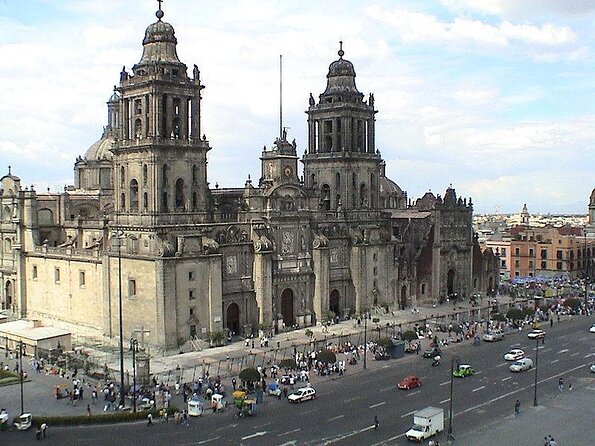
- Eight central stops in two hours: The route covers Templo Mayor, the Zócalo, the cathedral, Dulcería de Celaya, the House of Tiles, Palacio Postal, Bellas Artes, and Diego Rivera murals.
- A strong first look at Mexico City: You get useful background on the Aztecs, Spanish rule, architecture, Mexican customs, and modern city life.
- Small details add character: The oldest candy store and the working postal palace offer more than a standard monument checklist.
- English-speaking guides: Belen, Sara, and Diego have led this experience, with praise for their clear explanations and friendly manner.
- Plan for a donation: The experience and guide are described as free, but you may tip at the end. Bring water, since bottled water is not supplied.
- Museum tickets are extra: The walking tour does not include admission to museums, including Bellas Artes.
Starting among Aztec ruins at Templo Mayor
Meet at República de Guatemala 4 at 9:30 a.m., near the Templo Mayor area in the historic center. This is a smart place to begin because Mexico City’s story starts here, long before the Spanish built their churches and government palaces.
The guide uses the temple complex to explain the Aztec capital, where its people came from, how they lived, and how they built the most powerful empire in the region at that time. The planned stop lasts about 15 minutes, enough for orientation and context rather than a full museum visit.
You should be clear about the distinction here. The tour may explain the major temple, but admission to museums is not included. If you want to explore the Templo Mayor Museum or archaeological site at length, plan a separate visit and allow more time than this walking tour provides.
Still, beginning here gives the rest of the morning a useful frame. The cathedral, government buildings, and plazas you see later are not isolated sights. They occupy the center of a city shaped first by Aztec power and later by Spanish colonial rule.
More City Tours in Mexico City
- Mexico City: Teotihuacan, Tlatelolco & Guadalupe Shrine Tour
★ 4.6 · 3,773 reviews - Teotihuacan Hot Air Balloon Flight from Mexico City / Volare
★ 5.0 · 3,262 reviews - Teotihuacan Private Tour from Mexico City
★ 5.0 · 1,890 reviews
Reading the Zócalo and Metropolitan Cathedral
The Zócalo is next, with about 10 minutes devoted to Mexico City’s main square. The guide explains why the square is called Zócalo and what occupied this area before the Spanish arrival.
You will also see the National Palace from the square. That view helps connect the city’s political past with its present, even if the tour does not promise entry to the palace. The Zócalo can feel enormous and impersonal when you first arrive, so a guide’s explanation makes the open space easier to read.
The Metropolitan Cathedral follows, with around eight minutes on its design and story. This is a short exterior-focused stop, not an extended church visit. You will hear about its architectural style and importance as Mexico City’s major church.
I would treat these first three stops as a compact lesson in power: Aztec authority at Templo Mayor, civic authority at the Zócalo, and religious authority at the cathedral. The stops are brief, but their order makes sense.
Dulcería de Celaya, a sweet break with local history
Dulcería de Celaya is one of the tour’s most appealing choices. Instead of moving from one huge building to another, the group visits the city’s oldest candy store.
The guide explains which sweets are traditional, how they are prepared, and where they come from. The description does not promise a tasting, so you should not book this expecting food to be included. Think of it as a stop for cultural background and a chance to see a long-running specialty shop.
This is the sort of place you might skip if you were following a standard sightseeing route. That makes it valuable. Food traditions often tell you as much about a city as its monuments, and this short visit adds a more everyday side to the morning.
If you want to buy something, carry your purchases carefully while walking. The tour continues on foot, and the next stops are architectural rather than culinary.
The House of Tiles and Mexico City’s decorative side
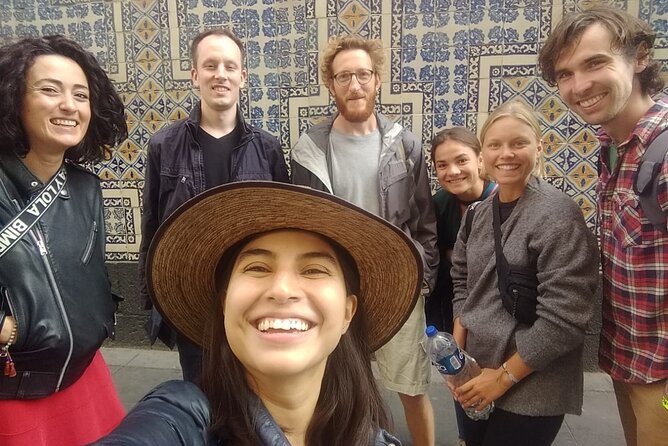
The House of Tiles, or Casa de los Azulejos, is one of the Centro Histórico’s most recognizable buildings. The tour enters the site and explains its history and artwork, with roughly 15 minutes here.
The building’s tiled exterior is the obvious draw, but the interior matters too. This stop gives the guide room to discuss the decorative arts of the city, rather than focusing only on political events or famous people.
Because the tour moves quickly, you will not have unlimited time to study every detail. I would listen closely to the guide first, then take photographs during any pause. The value here is having the design explained instead of simply walking past a pretty facade.
The House of Tiles also helps vary the morning. After ruins, a plaza, and a cathedral, you get a building where craftsmanship takes center stage.
More Historical Tours in Mexico City
- Historic Downtown Walking Tour
★ 5.0 · 1,289 reviews - Historic Center Food Tour in Mexico City
★ 5.0 · 1,263 reviews - Mexico City: Historic Downtown Walking Tour
★ 4.8 · 1,039 reviews - Walking Tour of the Historic Center of Mexico City
★ 5.0 · 870 reviews
Palacio Postal, a working landmark rather than a relic
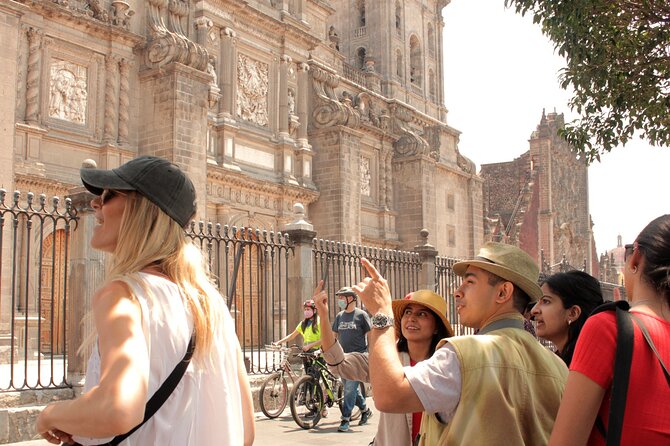
Palacio Postal receives about 15 minutes, and it is another strong choice. The guide explains what the building was before, how it still functions, and its place in the city’s story.
The fact that the postal palace remains in use gives the stop a practical edge. You are not only looking at an old grand interior preserved behind glass. You are seeing a historic building connected to an ordinary service that still matters.
Past participants singled out the original post office as a memorable part of the route. That makes sense: it combines architecture with daily city life, and the building is easy to appreciate even if you are not an architecture specialist.
Again, do not expect a long independent visit. Fifteen minutes is enough for an introduction and photographs, but not for a detailed architectural study.
Bellas Artes brings the route to a grand finish
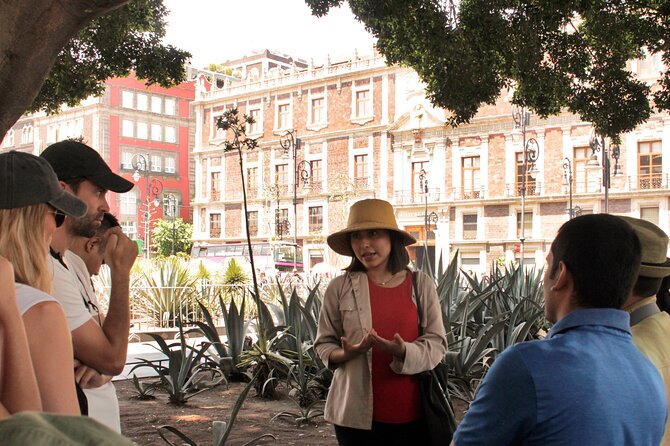
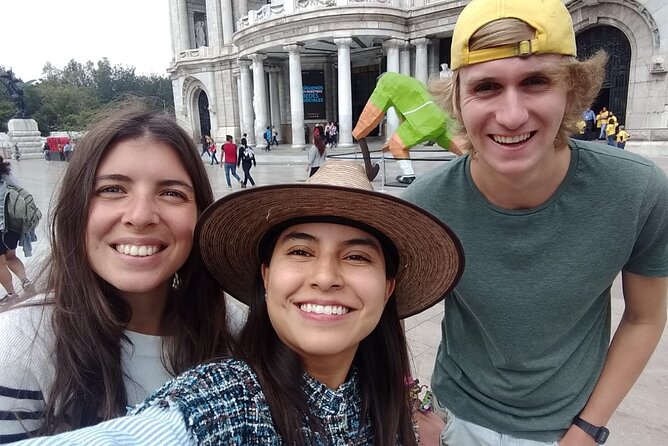
The route ends at Palacio de Bellas Artes, on Avenida Juárez. The guide discusses its architectural style, unusual facts, history, and current billboard, with about 15 minutes at the building.
Ending here is practical. Bellas Artes is one of the city center’s best-known landmarks, and its location makes it a useful point from which to continue exploring. The tour does not include admission, and a specific practical warning is worth noting: Bellas Artes tickets are not sold online, according to one recent account. Check current entry arrangements before planning an immediate museum visit.
The stop is mainly an introduction rather than a full cultural program. You will learn what to look for and why the building matters, then decide if you want to return for the interior and its exhibitions.
The tour’s short duration makes this a good first meeting with Bellas Artes, not a replacement for visiting it. If you care about murals, exhibitions, or the building’s interior, schedule separate time.
Diego Rivera’s murals add a social history lesson
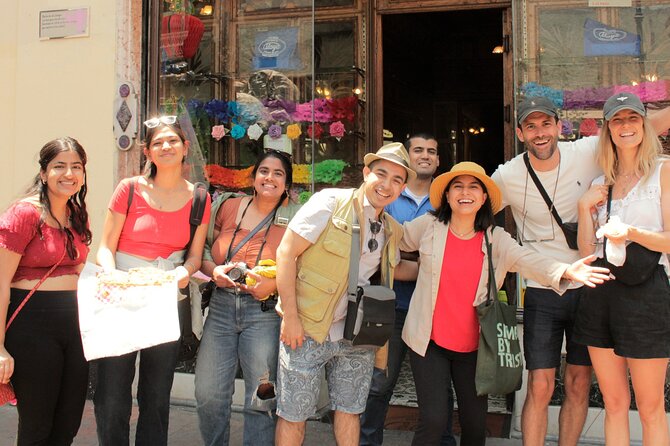
The final listed stop is the Diego Rivera mural collection at the Secretariat of Public Education, with approximately 20 minutes devoted to it. The guide uses Rivera’s work to explain Mexican traditions and customs.
This may be the most rewarding stop for anyone who wants more than dates and architectural labels. Murals can show work, festivals, political ideas, and ordinary life in a way a lecture cannot. The guide’s role is important here, since the scenes can be crowded with figures and symbols.
The stop also gives the tour a modern Mexican voice after its focus on Aztec and colonial sites. You move from the origins of the city, through conquest and religion, into the artwork of one of Mexico’s major 20th-century painters.
The published route places the murals before the end at Bellas Artes, though the listed timings add up to more than two hours once walking between stops is considered. Treat the schedule as approximate. Mexico City’s center is active, and the guide may need to adjust the pace.
What the guides add to the morning

The strongest part of this experience is the guide-led storytelling. Belen is praised for explaining Mexican history and culture clearly, while also sharing places and details that are easy to miss. Sara is described as fluent in English, professional, and able to add local context. Diego receives similar praise for his friendly manner and command of Mexico City’s past.
Those names do not guarantee who will lead your departure, but they give you a sense of the guiding style to expect: conversational, personal, and focused on connecting buildings to Mexican life.
The group can have up to 20 people. That is small enough to remain manageable, though it is not a private tour by default. One previous departure became a private walk because only one person joined, but you should treat that as a lucky possibility rather than a feature.
The guides have also been praised for walking at a reasonable pace. That matters because eight stops in roughly two hours can otherwise feel rushed. You will still need to stay with the group and listen while walking, rather than expecting long periods at each site.
The real value of a $20 booking
The price is $20 per person, while the experience and guide are described as free, with a tip optional at the end. In practical terms, think of the $20 as the cost of reserving a place on a guided walk, not as a ticket bundle.
That is good value if you want orientation, historical context, and a route through the central district without paying for a private guide. The tour takes you to several major landmarks and adds two less obvious stops, Dulcería de Celaya and Palacio Postal.
The value drops if you expect museum entry, food, drinks, or long visits inside each building. Those costs are separate, and you should budget for them if they matter to your plans.
The tipping policy deserves a small note. A tip is optional, but one person felt uncomfortable when a guide suggested a specific amount. My advice is simple: decide in advance what the service was worth to you, and tip only what you consider appropriate.
Pace, weather, and practical planning
This is a walking tour, so wear shoes you can use comfortably for two hours. Bring bottled water because it is not provided. The route stays in the Centro Histórico, and the meeting and ending points are both near public transportation.
The start is República de Guatemala 4 at 9:30 a.m. The finish is Palacio de Bellas Artes on Avenida Juárez. That makes the tour easy to pair with further sightseeing in the center, though you should not schedule a timed museum entry immediately afterward unless you leave a generous buffer.
Service animals are allowed, and most people can participate. The group limit is 20. Confirmation arrives when you book, and cancellation is free up to 24 hours before the start time. Cancellations or changes made within 24 hours are not refundable.
English is the offered language. If you need another language, this experience is not presented as a suitable choice.
Who should book this Mexico City walking tour?
I would recommend it to a first-time visitor who wants a quick, sensible introduction to the Centro Histórico. It also suits solo visitors, couples, families, and anyone who prefers a guide to explain the meaning behind a building instead of simply handing over a list of names.
It is particularly good for people who enjoy a blend of major landmarks and small local details. The old candy shop and working post office keep the route from becoming a parade of plazas and churches.
You may want a different plan if your main goal is museum time. The stops are short, admissions are not included, and the walk is designed to give you context across the district. Use it as a foundation, then return to Templo Mayor, Bellas Artes, or another site for a slower visit.
Should you book it?
Book this tour if you want to get your bearings in Mexico City’s historic center while learning how Aztec, colonial, religious, artistic, and everyday traditions fit together. The $20 cost is reasonable for an English walking introduction, especially with guides such as Belen, Sara, and Diego bringing warmth and local detail.
Skip it if you dislike walking, need guaranteed museum entry, or want a deep study of just one monument. For most first visits, though, the route offers a useful balance: famous buildings, overlooked stops, clear explanations, and a finish at Bellas Artes that leaves you ready to explore more on your own.
FAQ
How long does the Mexico City walking tour last?
The experience lasts approximately two hours.
What time does the tour start?
The tour starts at 9:30 a.m. local time.
Where does the tour begin?
It begins at República de Guatemala 4, Centro Histórico de la Ciudad de México, Centro, Cuauhtémoc, Mexico City.
Where does the tour end?
It ends at Palacio de Bellas Artes on Avenida Juárez in Mexico City’s historic center.
What language is the tour offered in?
The tour is offered in English.
Are museum admission tickets included?
No. Museum admission is not included. You need to purchase tickets separately if you want to enter museums or sites requiring admission.
Is bottled water provided?
No. Bottled water is not included, so bring your own for the walking route.
How many people can join the tour?
The maximum group size is 20 people.
Can I cancel for a full refund?
Yes. You can cancel at least 24 hours before the start time for a full refund. Cancellations or changes made less than 24 hours before the start are not refunded or accepted.
Recently reviewed around Mexico City
- Town walking tour of the city★ 5.0 · 72 reviews
- Cholula experience (private tour)★ 5.0 · 52 reviews
- Cholula tour from Puebla★ 5.0 · 66 reviews
- Private Hiking Tour in Iztaccihuatl★ 5.0 · 45 reviews
- City walking tour in Puebla (private tour)★ 5.0 · 40 reviews
- Cholula Magical Twon on a Traditional Tram from Puebla★ 4.5 · 61 reviews
- Hiking Excursion to the Iztaccíhuatl Volcano from Puebla★ 5.0 · 74 reviews
- Museum of Anthropology: a look at Mexico’s past★ 5.0 · 52 reviews
Historical Tours, compared.


Mexico City Historical Centre Food Tour with 7 Authentic Tastings
Read our review →
Historical and Cultural Walking Tour of San Miguel de Allende
Read our review →
Historical and Cultural Walking Tour of San José del Cabo
Read our review →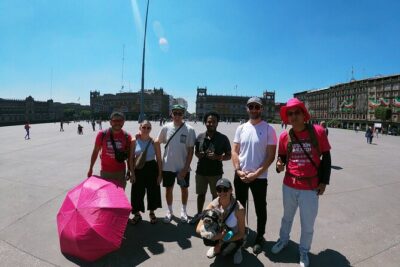
Walking Tour in Mexico City for Exploring their Cultural Heritage
Read our review →Browse the lists this tour appears in