
Reviewed · CITY TOURS
From Mexico City: Puebla, Cholula and Tonantzintla Day Trip
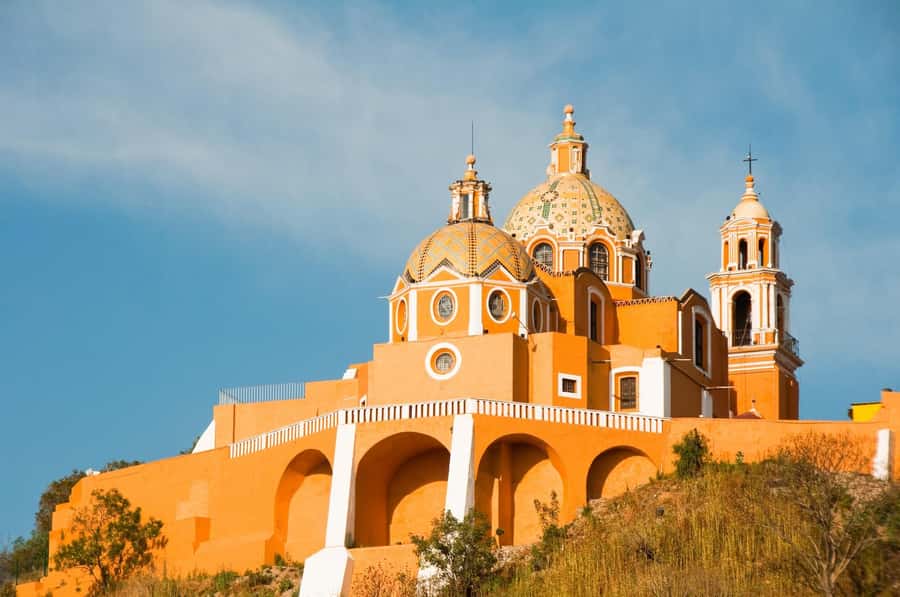
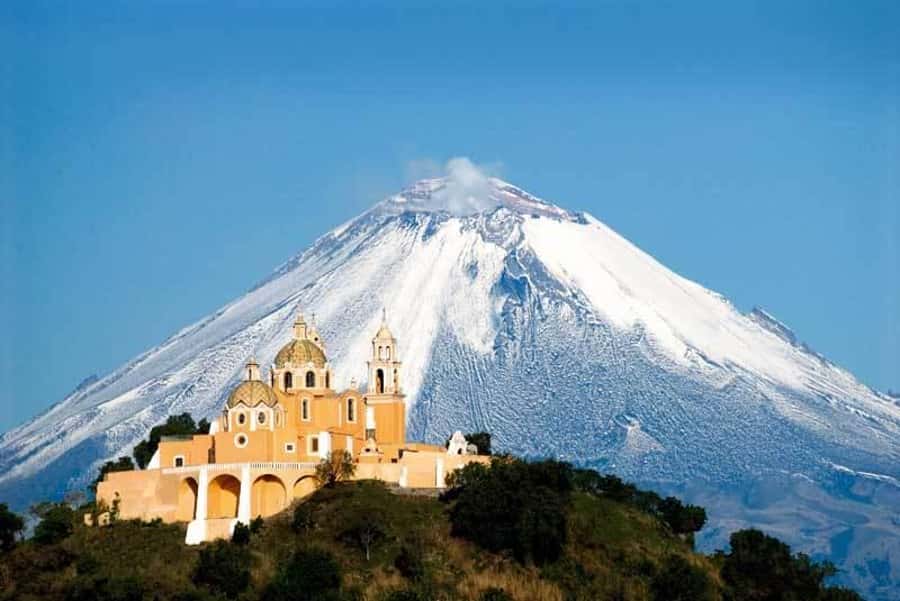
The Great Pyramid of Cholula is the surprise at the heart of this day trip. It is the largest pyramid in the world by volume, though much of it is hidden beneath a hill topped by a Spanish church. Add Puebla’s painted churches, Talavera pottery, and Tonantzintla’s astonishing blend of Indigenous and Christian art, and you get a useful first look at central Mexico beyond the capital.
I like two things here: the route packs three very different places into one outing, and the bilingual guides often make the long day feel like a moving history lesson. Guides such as Rodrigo, Alvaro, Alex, and Leonardo have earned especially strong praise for clear storytelling and patient answers. The main drawback is time. Cholula can feel rushed, and Mexico City traffic may turn a planned 6.5 to 11-hour outing into a 12-hour day.
In This Review
- Key points to know before booking
- Why this three-stop route works
- Cholula and the pyramid beneath the church
- Santa María de Tonantzintla’s Indigenous baroque interior
- Puebla’s Cathedral, Rosary Chapel, and tiled streets
- Puebla food and the optional lunch
- The Parián Market and Talavera shopping
- The bus ride, timing, and traffic
- The guides make the difference
- Is $89 a fair price?
- Who should book this day trip?
- Final booking advice
- FAQ
- How long does the Puebla, Cholula, and Tonantzintla tour last?
- Where is the meeting point?
- Is hotel pickup available?
- Is lunch included?
- What languages does the guide speak?
- Do I need to bring my passport?
- Is the tour suitable for people who do not want much walking?
Key points to know before booking
- Cholula’s pyramid is partly hidden: You see how an ancient sacred site became a colonial religious center, with the church on top providing a striking view.
- Tonantzintla is the visual surprise: Its interior mixes Christian scenes with Indigenous faces, plants, and symbols in a style unlike Puebla’s grander churches.
- Puebla rewards a guided walk: The center brings together the Cathedral, Santo Domingo’s Rosary Chapel, tiled buildings, food, and Talavera craft.
- The day is well priced at $89: Round-trip transport and guiding make this a good deal, though lunch is included only with the selected lunch option.
- Expect bilingual commentary: Spanish and English are offered, sometimes with listening devices so you can hear the guide clearly.
- Bring breakfast and sturdy shoes: The early start, uneven ground, and long return drive are the practical parts to plan for.
Why this three-stop route works
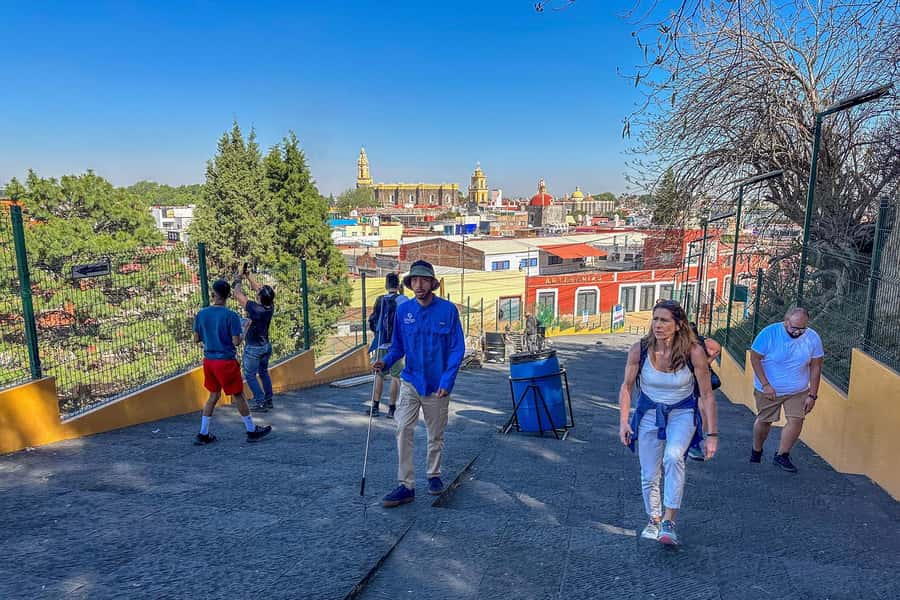
This is not one of those day trips that takes you to three versions of the same attraction. Cholula gives you ancient Mexico and a living town. Tonantzintla offers a small church with an extraordinary artistic identity. Puebla then shifts the focus to colonial streets, major churches, regional food, and shopping.
I like that sequence because each stop answers a different question. What did sacred life look like before the Spanish conquest? How did Indigenous artists adapt Christian art to their own world? And what did a prosperous colonial city look like after those cultures began to overlap?
The route begins east of Mexico City, with a scenic drive toward Puebla State. On a clear day, Popocatépetl and Iztaccíhuatl frame the view. Weather is changeable, though, and clouds may hide the volcanoes entirely. Treat the viewpoint as a pleasant bonus, not the reason to book the trip.
The first pickup can be early, with a meeting at Hostal Amigo in Mexico City at 6:20 am or 8:10 am, depending on the option you choose. Hotel pickup is available with the private option, but you need to provide your hotel name and address. If you sleep late, this outing will test your resolve. Bring a snack for the bus, since breakfast is not listed as included.
More City Tours in Mexico City
- Mexico City: Teotihuacan, Tlatelolco & Guadalupe Shrine Tour
★ 4.6 · 3,773 reviews - Teotihuacan Hot Air Balloon Flight from Mexico City / Volare
★ 5.0 · 3,262 reviews - Teotihuacan Private Tour from Mexico City
★ 5.0 · 1,890 reviews
Cholula and the pyramid beneath the church
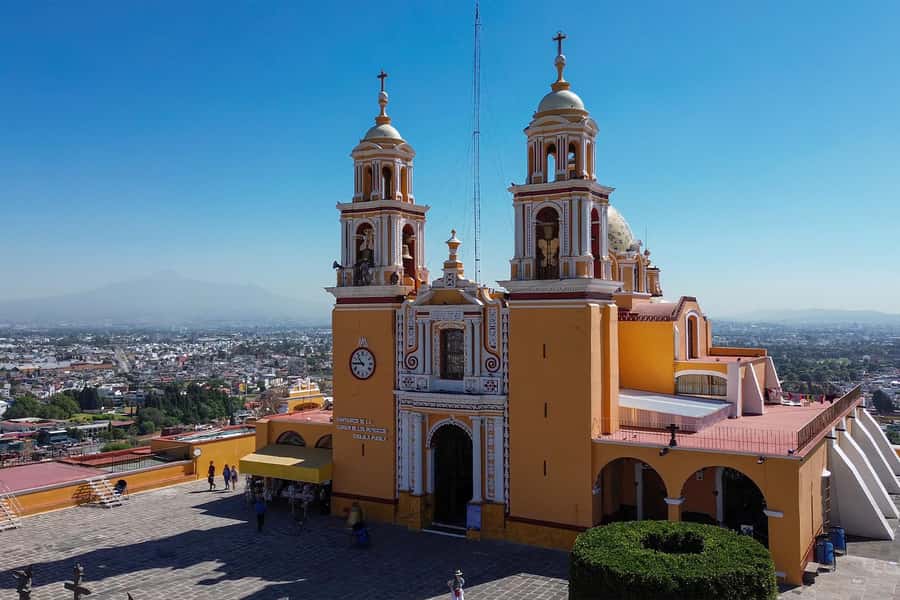
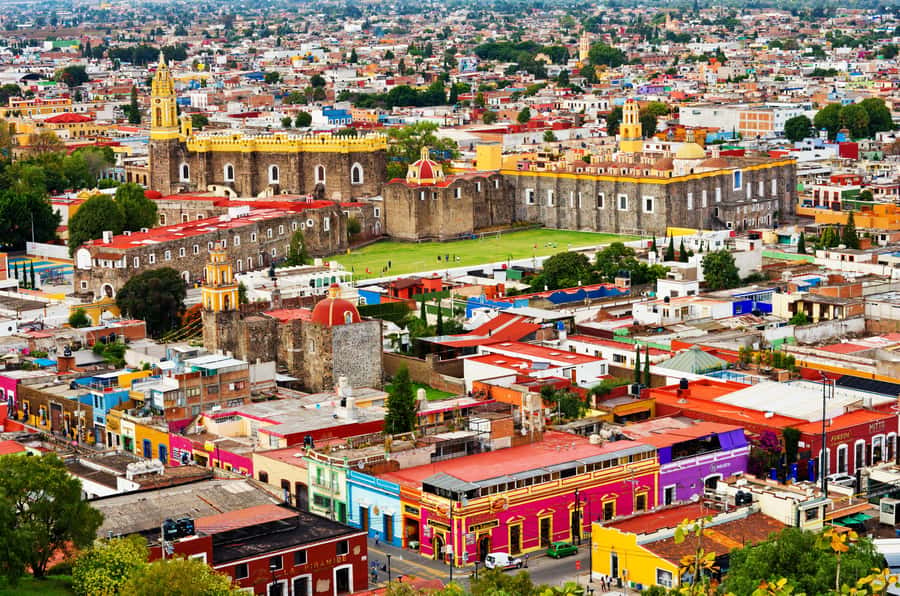
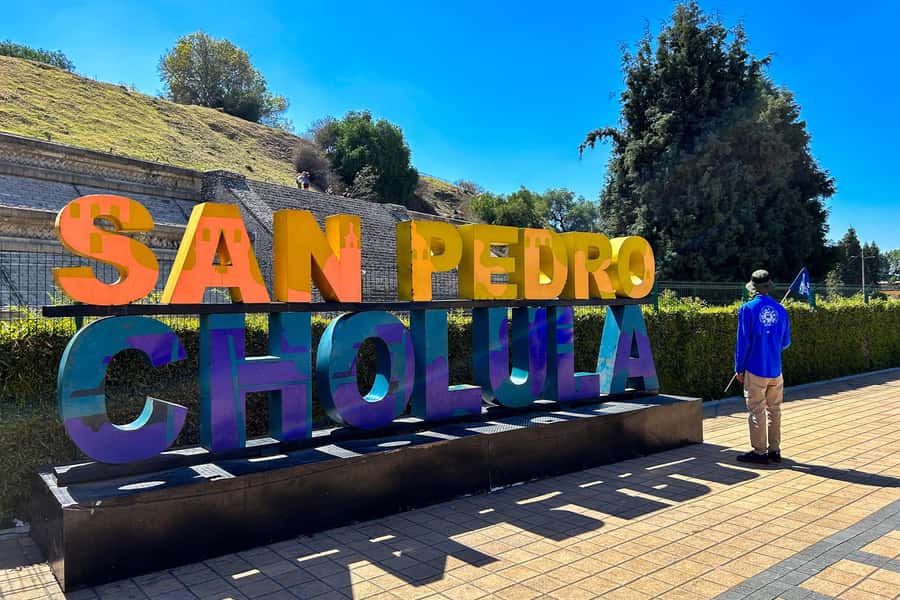
Cholula is the day’s strongest historical stop. The Great Pyramid of Cholula was dedicated to Quetzalcoatl and is enormous by volume. Its shape can be hard to grasp at first because the ancient structure was built up over time and now looks like a broad natural hill.
That concealment is part of the appeal. You are not simply walking up a clean, exposed pyramid. You are seeing layers of construction, conquest, and religious change in one place. A colonial-era church sits above the pyramid, creating a powerful visual link between pre-Hispanic worship and Spanish Catholicism.
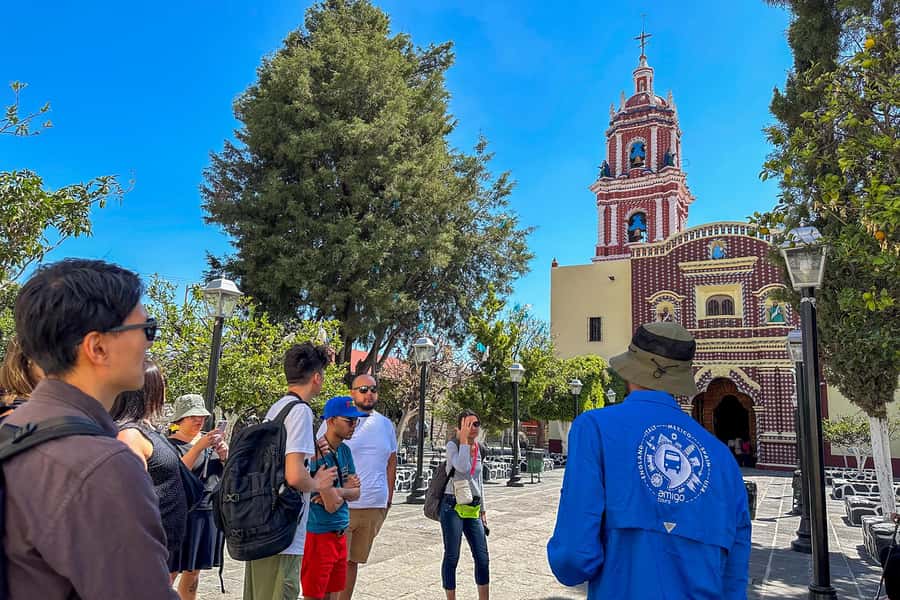
The schedule allows about 90 minutes for a guided visit, photographs, and personal time. That is enough to understand the site and explore a little, but not enough to see every corner at a leisurely pace. You may need to choose between the archaeological area, the church at the summit, a nearby monastery, and shopping.
I would set your priority before you arrive. If the pyramid matters most, stay focused on the archaeological site and the climb. If you care more about colonial religious history, leave time for the church and monastery. Some people use their free minutes to browse, but that means giving up part of the ruins.
Expect uneven ground and a moderate amount of walking. Comfortable shoes are not a nice extra here. They are the sensible choice, especially if you plan to reach the church at the top.
Santa María de Tonantzintla’s Indigenous baroque interior
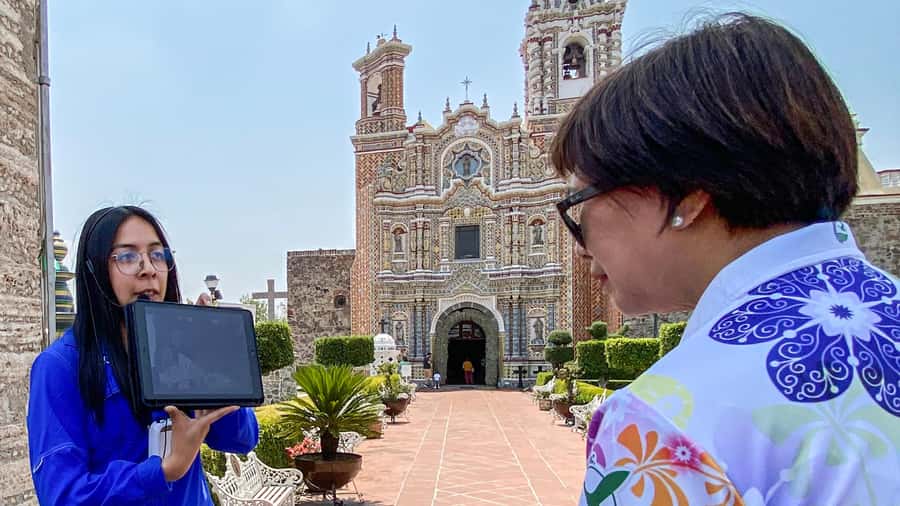
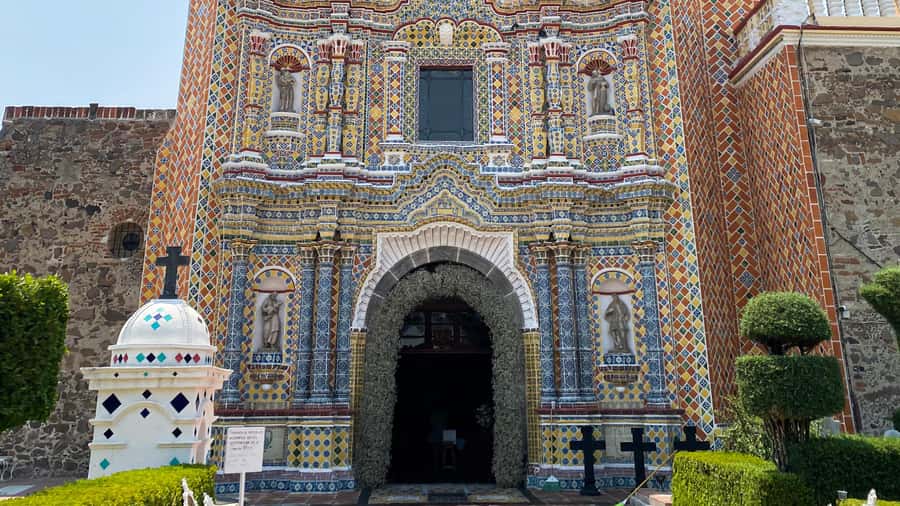
The stop at Santa María de Tonantzintla lasts about 40 minutes, but it may be the most memorable church visit of the day. From outside, it can seem less grand than Puebla’s major churches. Inside, it becomes a riot of carved and painted detail.
The church is celebrated for its Indigenous baroque style. Christian figures share the space with native motifs, faces, plants, and decorative forms. The result is not a plain European design transplanted to Mexico. It is a local interpretation of Catholic art, shaped by Indigenous artists and traditions.
I would pay close attention to the ceiling and upper walls. A guide can help you spot details that are easy to miss when you first step inside. This is where a good bilingual guide earns the price of the tour. Guides including Rodrigo, Alvaro, and Leonardo have been praised for connecting the art to the wider story of Mexico, rather than simply naming the church and moving on.
The visit is short, so do not expect a long independent exploration. Follow the explanation, take your photographs where permitted, and save a few quiet moments to look up. Tonantzintla is a small stop with a large visual payoff.
Puebla’s Cathedral, Rosary Chapel, and tiled streets
Puebla, often called the City of Angels, is the largest stop on the route. The historic center is listed by UNESCO, and the guided walk introduces you to its main churches, public spaces, and colorful colonial architecture.
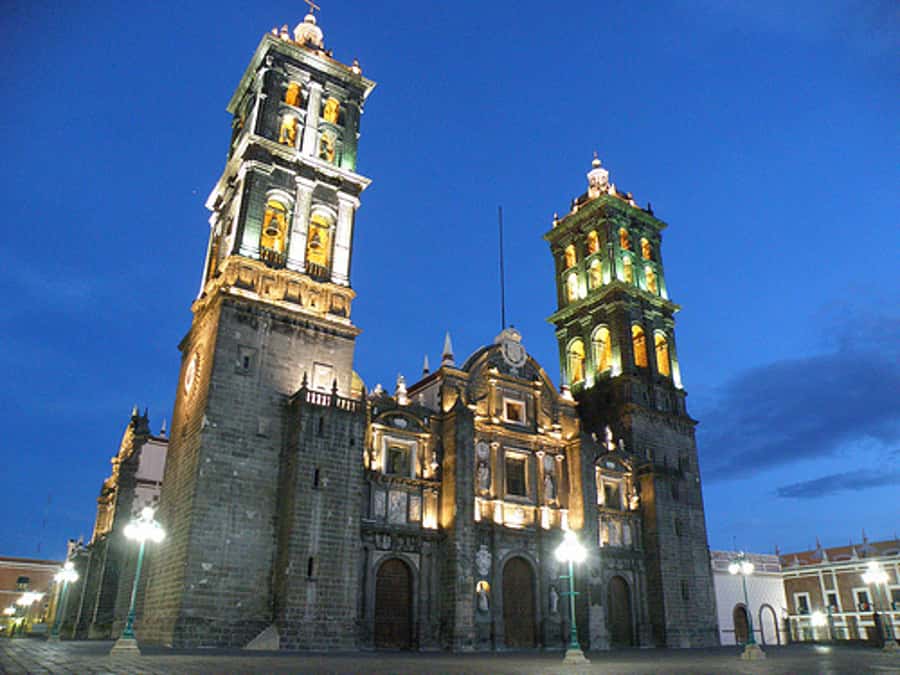
The Cathedral is the obvious landmark. Its scale and formal design give you a sense of Puebla’s importance, while the surrounding streets offer a more intimate look at the city. Puebla is also closely linked with Talavera pottery, which appears in tiles, dishes, decorative objects, and shop displays.
Santo Domingo’s Rosary Chapel deserves special attention. Its gilded interior is considered one of Mexico’s finest examples of religious decoration. This is a place where the guide’s context matters. Without explanation, you may notice only gold and ornament. With the story behind the chapel, the decoration becomes a lesson in colonial faith, wealth, and artistic ambition.
The Puebla portion lasts roughly two hours and 20 minutes, including the guided visit, lunch if selected, sightseeing, and free time. That sounds generous on paper, but it goes quickly. Several people have wished for more time here, and I understand why. Puebla is easy to like, with handsome buildings, churches, food, and a calmer feel than Mexico City.
You may receive a set period for lunch and then additional free time. Use the guided walk to get oriented, then decide what matters most. You could browse pottery, revisit a church, wander the streets, or head to the Parián Market. You probably cannot do all of these in depth.
More Mexico City trips worth a second look
- Puebla, Cholula & Tonantzintla Day Trip with Optional Lunch
★ 4.5 · 1,702 reviews - Mexico City: Hop-on Hop-off City Tour by Turibus 1-Day Pass
★ 4.1 · 691 reviews - From Mexico City: Tolantongo Hot Springs Day Trip with Guide
★ 4.9 · 46 reviews - Chichen Itza, Cenote and Valladolid Small Group Day Trip
★ 5.0 · 2,104 reviews
Puebla food and the optional lunch
The lunch option is worth considering if you want a simple, organized meal without spending time choosing a restaurant. The tour includes a traditional meal at a local Puebla restaurant only when you select the lunch package. Drinks are not included, so carry cash for beverages and any extra purchases.
Puebla is known for regional cooking, and one dish specifically enjoyed on the route is mole with chicken and rice. Lunch may also include a pleasant setting and, depending on the restaurant, live music. The supplied information does not promise a fixed menu, so think of the lunch as a convenient regional meal rather than a guaranteed tasting menu.
If you enjoy choosing your own food, skip the included option and use your free time to eat independently. If you want the day to run smoothly, the lunch package removes one decision from an already full schedule.
The Parián Market and Talavera shopping
The Parián Market is a natural final stop because it gathers the crafts Puebla is known for in one colorful place. You can browse Talavera pottery, textiles, and handmade goods, then continue along the surrounding streets if time allows.
This is a good spot for gifts, but keep your expectations practical. You have limited free time, and the market is part of a packed day. Look carefully, compare pieces, and remember that fragile pottery must survive the ride back to Mexico City.
Talavera is more than a souvenir label. It is part of Puebla’s visual identity, appearing across the city in architectural tiles as well as household objects. Even if you buy nothing, the market helps connect the craft to what you saw during the walking tour.
Carry cash. It is listed among the recommended items, and it is useful for drinks, snacks, small purchases, and any optional food costs. Your passport, an original, digital copy, or photocopy, is also required to show legal stay in Mexico under government immigration rules.
The bus ride, timing, and traffic
Round-trip transportation is included, and the vehicles have been described as comfortable and clean. One useful feature reported on the tour is a charging port at each seat. Some guides also provide listening devices, which help when the group spreads out around a church or archaeological site.
The drive includes about one hour in each direction at the start, a 45-minute transfer from Tonantzintla to Puebla, and a return journey scheduled at about two and a half hours. That final estimate can change sharply. Mexico City traffic is unpredictable, especially on the return.
One outing left around 9:30 am after pickups and did not reach Mexico City until about 9:30 pm. Another day ran close to 12 hours. This is not a flaw unique to the operator, but it affects your plans. Do not book a theater ticket, airport transfer, or important dinner immediately after the stated end time.
The early start is another consideration. November conditions can feel cold at first, so layers help. By afternoon, you may want lighter clothing. Comfortable clothes, sturdy shoes, water, cash, and a small breakfast are the right kit.
The guides make the difference
The tour uses Spanish and English, with the guide often presenting both languages during the same explanation. That can make the commentary longer, but it also lets mixed-language groups stay together.
The strongest part of the operation is the guiding. Rodrigo has been praised for history, clear explanations, and an engaging manner. Alvaro is known for enthusiasm and stories about Mexican history. Alex has been noted for excellent English and good group organization. Leonardo has connected the individual sites to a broader account of Mexico’s past.
Other guides named on different departures include Ingrid, Barbara, Yair, Ada, Alexa, Bernardo, Carlo, and Andrés. Your guide will vary by date, so do not book on the assumption that one particular person will lead your group. Still, the repeated praise for guides across departures suggests a consistent emphasis on history, translation, and keeping people together.
Good guides also matter because the schedule is tight. You need someone who can explain a site clearly, answer questions, and get the group back to the vehicle on time. The better guides leave room for personal exploration while making sure nobody is left behind.
Private and small-group options are available. A private tour should give you more control over pace and stops, though the supplied information does not specify exact group sizes or how much extra time each option provides. If independent time matters greatly to you, check those details before paying.
Is $89 a fair price?
At $89 per person, this is a solid value for a full-day route from Mexico City. You get round-trip transport, a bilingual guide, the Tonantzintla visit, and access to three places that would be awkward to combine on your own in one day.
The value is strongest if you want historical background and a simple plan. You do not have to arrange intercity transport, navigate the pyramid, find Tonantzintla, or organize a walk through Puebla. The lunch option adds convenience, but compare its price with what you would prefer to spend on your own meal.
The tradeoff is control. A group schedule moves on even when you want another 20 minutes at Cholula or Puebla. If you prefer slow museum visits, long meals, and spontaneous stops, a private option or overnight stay in Puebla may suit you better.
The experience has an overall rating of 4.3 out of 5 from 1,191 reviews. More important than the number is the pattern behind it: guides and drivers receive frequent praise, while the repeated cautions concern traffic and limited time, especially in Cholula.
Who should book this day trip?
You should book it if you have a few days in Mexico City and want to see a different side of the region without arranging the transport yourself. It works well for first-time visitors, families, couples, and anyone who likes history explained in plain English or Spanish.
It is also a good choice if you want variety. In one day, you see an ancient pyramid, a church shaped by Indigenous art, a major colonial center, a craft market, and regional food.
You may want another plan if you dislike early starts, long bus rides, uneven ground, or fixed schedules. Puebla deserves more than a couple of hours, and Cholula can leave you wishing for extra time. If you can stay overnight, do so. If you cannot, this trip gives you a strong introduction and lets you decide which place deserves a longer return visit.
Final booking advice
I would book this tour for its route and its guides, not because it promises a slow day. The mix of Cholula, Tonantzintla, and Puebla is unusually rewarding, and $89 is fair for the transport and interpretation.
Choose the lunch option if convenience matters. Bring breakfast, wear shoes made for walking, keep your afternoon flexible, and prepare for traffic on the way home. If you accept those limits, this is one of the better ways to spend a full day outside Mexico City.
FAQ
How long does the Puebla, Cholula, and Tonantzintla tour last?
The listed duration ranges from 6.5 to 11 hours, depending on the selected starting time and option. Traffic can make the day longer, with some departures taking around 12 hours.
Where is the meeting point?
The meeting point is Hostal Amigo at Calle Isabel la Católica 61-A in Mexico City’s Centro Histórico. The meeting time is 6:20 am or 8:10 am, depending on your selected start.
Is hotel pickup available?
Hotel pickup and drop-off are included with the private option. You must provide your hotel name and address, and an alternative nearby meeting point may be offered if your hotel is outside the pickup area.
Is lunch included?
Lunch is included only when you select the lunch option. Drinks are not included.
What languages does the guide speak?
Live guiding is available in Spanish and English. The tour uses bilingual guides, and some departures provide listening devices so you can hear explanations more clearly.
Do I need to bring my passport?
Yes. All clients must present a passport, digital copy, original, or photocopy that proves legal stay in Mexico under government immigration regulations.
Is the tour suitable for people who do not want much walking?
The tour involves a moderate amount of walking on uneven ground. Bring comfortable shoes and clothes, and consider the private or small-group option if you need more flexibility.
Recently reviewed around Mexico City
- Teotihuacan from Mexico City with early access★ 4.7 · 49 reviews
- Teotihuacan Pyramids: Guided Tour with Entry Ticket Included★ 4.1 · 45 reviews
- Teotihuacan Pyramids: Skip-the-Line Ticket★ 3.8 · 98 reviews
- From Mexico City: Puebla and Cholula Day Tour★ 4.2 · 194 reviews
- Puebla: Cholula Magical Town Tour by Double-Decker Bus★ 4.3 · 74 reviews
- Puebla: Walking Tour of Puebla City★ 4.9 · 45 reviews
- Nevado De Toluca: Reach the Summit with Professionals★ 4.8 · 250 reviews
- Mexico City: Vegan and Vegetarian Street Food Adventure★ 4.8 · 65 reviews
City Tours, compared.
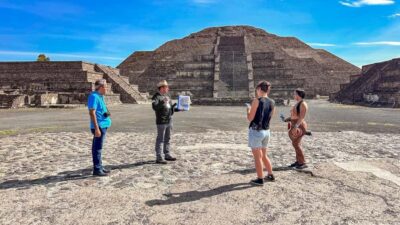
Teotihuacan, Tlatelolco & Guadalupe Shrine Tour
Read our review →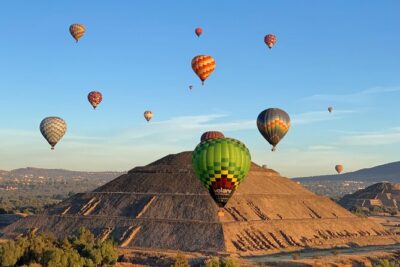
Teotihuacan Hot Air Balloon Flight from Mexico City / Volare
Read our review →
The best tour to Teotihuacán from Mexico City
Read our review →
Teotihuacan, Tlatelolco & Basilica of Guadalupe
Read our review →Browse the lists this tour appears in