
Reviewed · CITY TOURS
Mexico City: Hop-on Hop-off Bus Tour
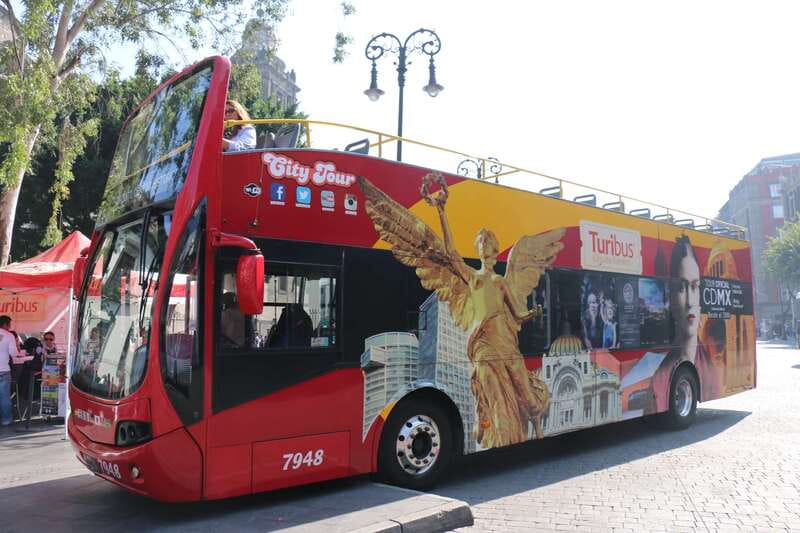
Mexico City’s Turibus is more than a sightseeing loop. It is a practical way to get your bearings across a huge capital, from the Zócalo and Reforma to Coyoacán, Polanco, and the Basilica of Guadalupe. I especially like the four-route access with one bracelet and the chance to use the bus as both a narrated tour and city transport. The upper deck also gives you a fine view of monuments and daily street life.
I like that you can spend as little or as much time as you want at each stop, and that the $21 starting price can replace several taxi or rideshare trips. The catch is Mexico City traffic. A route that looks simple on the map can take much longer than expected, and loud Spanish announcements sometimes overpower the English audio.
In This Review
- Key points to know before boarding
- How the Mexico City Turibus works
- Historic Downtown Route: the strongest first ride
- Polanco Route: shopping, museums, and polished avenues
- South Route: Coyoacán, Frida Kahlo, and the UNAM area
- Basilica Route: a short ride with major religious importance
- Audio commentary and live staff
- Timing, traffic, and comfort
- Is $21 good value for Mexico City?
- Who should book this tour?
- FAQ
- How long is the Turibus pass valid?
- Can I use one bracelet on all four routes?
- Where can I board the bus?
- What time does the Historic Downtown Route operate?
- Does the bus have an audio guide in English?
- Are children under three charged?
- Does the bus have toilets or indoor seating?
Key points to know before boarding

- Four routes, one pass: Connect the Historic Downtown, Polanco, South, and Basilica circuits with the same bracelet.
- Best for first-time orientation: The bus links major museums, plazas, neighborhoods, and monuments before you decide where to return on foot.
- Historic Downtown runs most often: Buses are scheduled about every 30 minutes from 9 a.m. to 7 p.m.
- South Route needs patience: Traffic can make the trip to Coyoacán and Frida Kahlo Museum a long ride.
- Bring your own earphones: The supplied ones may be poor, and the English channel can be hard to hear beside loud Spanish speakers.
- The upper deck is open to the weather: It is pleasant in mild conditions but can become very hot, especially on metal seats in the afternoon.
How the Mexico City Turibus works
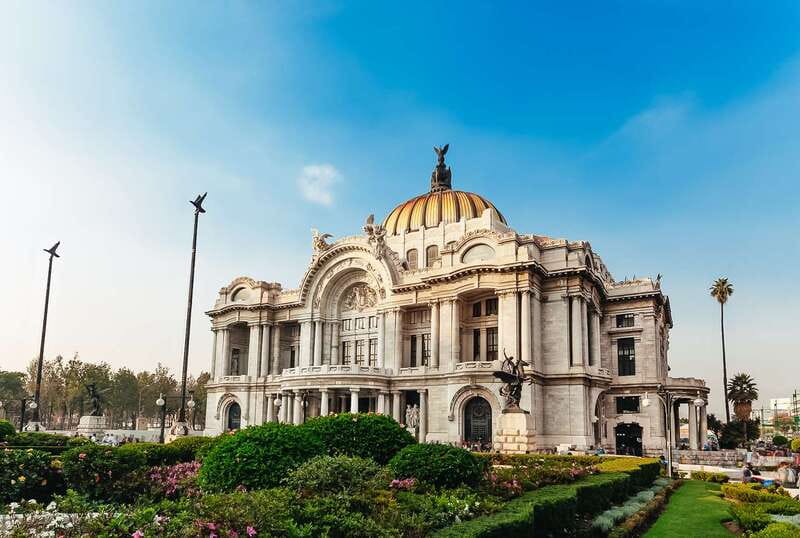
You can begin at any listed stop. Show your printed or electronic voucher when boarding, then receive or use the bracelet that covers all four circuits for one or two days. This is useful because you do not need to return to one central ticket office every time you change areas.
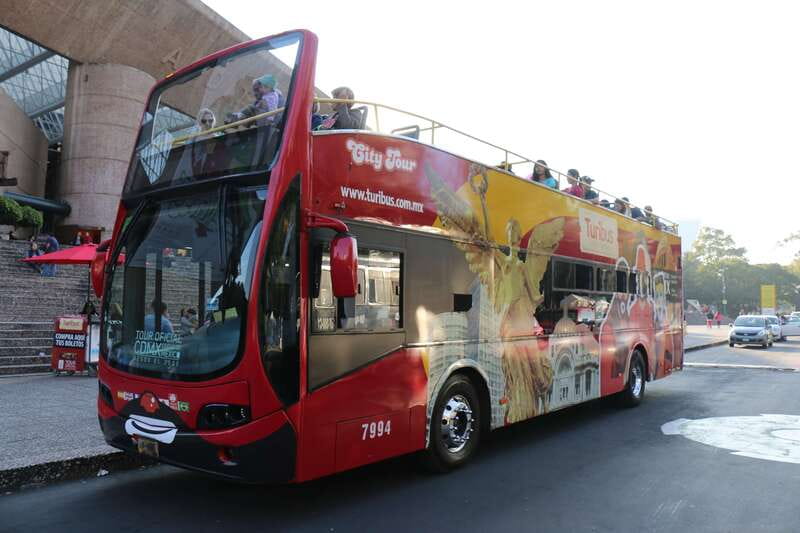
The buses are open-top double-deckers, with an audio system offering Spanish, English, German, French, Italian, Chinese, Japanese, Portuguese, and Russian. There is also a children’s channel. The live staff languages are English and Spanish, though the main commentary is recorded.
I suggest starting with the Historic Downtown Route if you have only one day. It gives you the clearest introduction to the city’s major landmarks, and you can use the ride to mark places for a later visit. If Coyoacán and the Frida Kahlo Museum matter most, start the South Route early instead.
The printed or electronic voucher is accepted at the stops, but signage and pickup instructions can be uneven. Some stops are marked by Turibus banners, while others may not be exactly where you expect. Check the stop name carefully and ask the bus staff before getting off if you are heading to a museum with a tight entry time.
More City Tours in Mexico City
- Mexico City: Teotihuacan, Tlatelolco & Guadalupe Shrine Tour
★ 4.6 · 3,773 reviews - Teotihuacan Hot Air Balloon Flight from Mexico City / Volare
★ 5.0 · 3,262 reviews - Teotihuacan Private Tour from Mexico City
★ 5.0 · 1,890 reviews
Historic Downtown Route: the strongest first ride
The red Historic Downtown circuit is the most useful choice for a first look at Mexico City. It runs daily from 9 a.m. to 7 p.m., with buses about every 30 minutes, and has 19 stops.
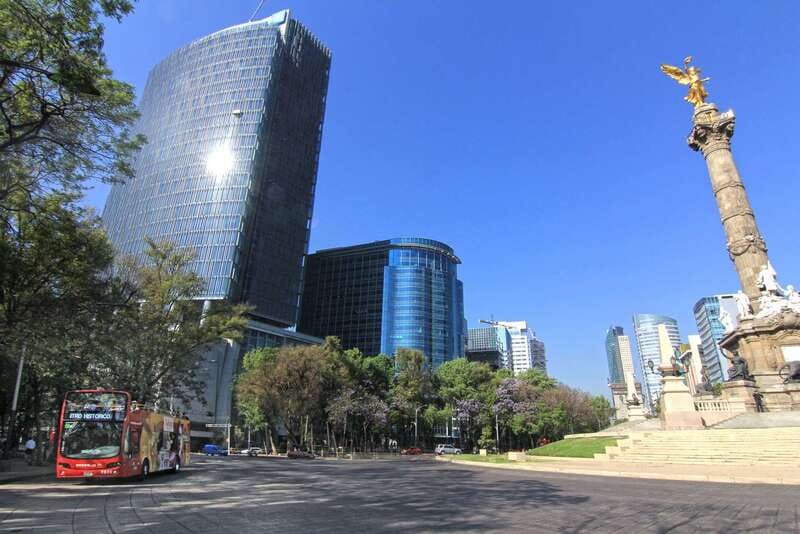
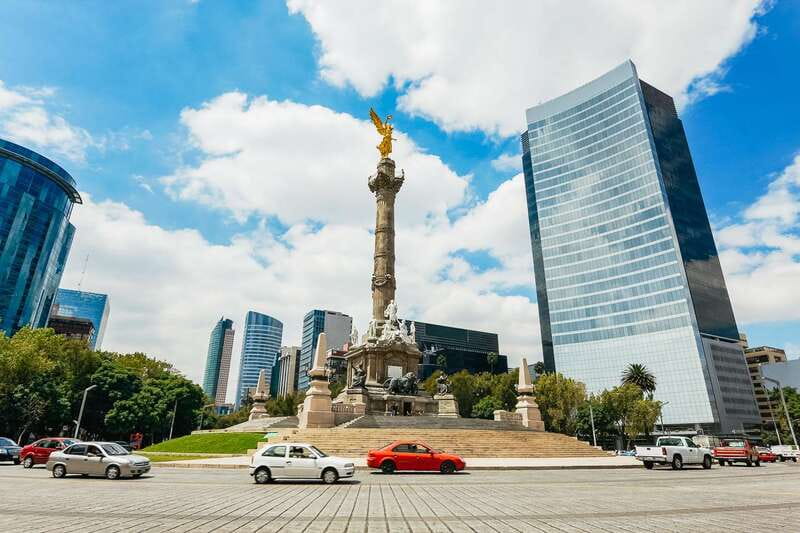
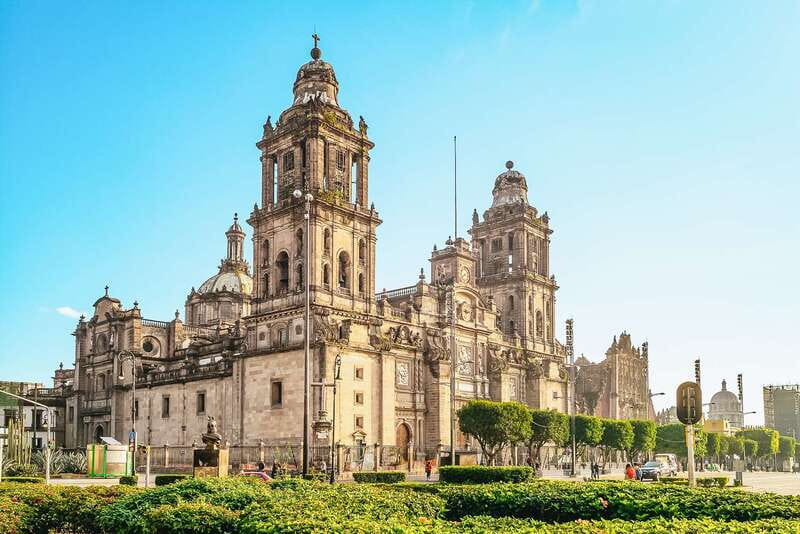
The circuit begins around the grand central areas near the Zócalo, then reaches Reforma, museums, and major monuments. You pass the Angel of Independence, Reforma 222, the Monument to the Revolution, the Hemiciclo a Juárez, Plaza Manuel Tolsá, Museo Franz Mayer, and the National Museum of Anthropology area.
At the Zócalo, get off if you want Mexico City at full scale: a vast square, the city’s central activity, and easy access to historic streets and food. The nearby Plaza Manuel Tolsá and Museo Franz Mayer offer a quieter change of pace. The route also passes the National Museum of Anthropology, one of the city’s major cultural stops, though you will need a good block of time if you plan to visit properly.
The Reforma stretch is best enjoyed from the upper deck. Here you see major monuments, wide avenues, museums, and modern Mexico City in one long view. It is also a useful way to understand distances. Places that look close on a map may be separated by heavy traffic and broad avenues.
The route includes stops near the Wax Museum and Ripley’s, Museo de San Carlos, the Monument to the Revolution, Condesa, Cibeles, Casa Lamm, and the Museum of Modern Art. Condesa and Cibeles are good places to get off for food or a neighborhood walk, while the museum stops help you build a short list for another day.
Traffic is the main issue. The red route is frequent, but the full circuit can take much longer during busy periods. I would avoid peak traffic if possible, especially if you want to transfer to another line. The bus is comfortable and generally clean, but it cannot move faster than the streets allow.
Polanco Route: shopping, museums, and polished avenues
The Polanco circuit is the shortest and most selective route, with seven stops. It operates from Auditorio at listed departure times of 10 a.m., 11:30 a.m., 1 p.m., 2:30 p.m., 4 p.m., and 5:30 p.m.
This route focuses on the city’s upscale shopping and contemporary architecture. Stops include Auditorio, Arquímedes and Campos Elíseos, Masaryk and Moliere, Centro Comercial Antara, Museo Soumaya, Hipódromo and Granja Las Américas, and Museo del Papalote.
Polanco is a good choice if you want a break from old plazas and colonial buildings. Masaryk and Moliere point toward high-end shops and restaurants, while Antara offers a large shopping center. Museo Soumaya is the standout cultural stop, with its unusual building and major art collection.
The route is less useful as a continuous narrated ride than the Historic Downtown circuit, but it works well for connecting a few specific stops. I would use it when you already know you want Museo Soumaya, Antara, or the Auditorio area. Since departures are less frequent, write down the next return time before you get off.
South Route: Coyoacán, Frida Kahlo, and the UNAM area
The South Route is the most atmospheric circuit, but also the one most likely to test your patience. It operates daily from 11 a.m. to 7 p.m., with frequency listed between roughly 30 and 60 minutes.
Its 19 stops include Fuente de Cibeles, Mercado Roma, the World Trade Center, Torre Manacar, Museo Frida Kahlo, historic Coyoacán, Avenida de la Paz, Centro Cultural San Ángel, the University City area, the botanical garden, Perisur, KidZania Cuicuilco, Rectoría de la UNAM, Plaza Oasis Coyoacán, Mercado Roma Coyoacán, and Fonart.
The route takes you away from the central avenues and into neighborhoods with a slower feel. Coyoacán is the main reason to choose it. Its central area has plazas, older buildings, markets, and a distinct local character. The Frida Kahlo Museum stop is popular, but the bus stop may be some distance from the museum rather than directly at its entrance, so allow walking time.
The University City stops add architecture and open space, while San Ángel and the southern neighborhoods show a side of Mexico City that the central route cannot. The circuit also links shopping centers and family attractions, so it can suit mixed-interest groups.
Plan carefully. One ride to the Frida Kahlo area can take close to two hours in heavy traffic. I would not schedule a timed museum entry immediately after boarding this route. If you have one day, take the South Route in the morning, then use the Historic Downtown circuit later. If you have two days, give the South Route a full half-day or more.
More Mexico City city days:
- Mexico City: Teotihuacan Early or Afternoon Access Tour
★ 4.6 · 1,547 reviews - Historic Center Food Tour in Mexico City
★ 5.0 · 1,263 reviews - The best tour to Teotihuacán from Mexico City
★ 5.0 · 1,236 reviews - From Mexico City: Puebla, Cholula and Tonantzintla Day Trip
★ 4.3 · 1,191 reviews
Basilica Route: a short ride with major religious importance
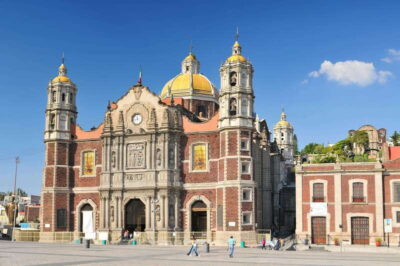
The Basilica Route offers a different theme from the other circuits. It connects pre-Hispanic, colonial, and modern Mexico through four stops: Zócalo, Garibaldi, Basilica of Guadalupe, and Palacio de los Condes de Miravalle.
Departures from the Zócalo are listed at 10 a.m., 11:30 a.m., 1 p.m., 2:30 p.m., 4 p.m., and 5:30 p.m. Because this is a limited departure route, check the return plan before getting off.
The Basilica of Guadalupe is the main destination. It is one of the city’s most important religious sites and gives the tour a strong connection to Mexican faith and identity. Garibaldi brings a very different atmosphere, associated with mariachi music and public celebration. The Zócalo provides an easy transfer point to the red route.
This route is worth choosing if the Basilica is high on your list. It is less flexible than the red circuit, so do not assume another bus will arrive quickly if you miss the scheduled departure. The audio helps provide context, but you will get more from the visit if you treat the ride as an introduction and leave time to look around on foot.
Audio commentary and live staff
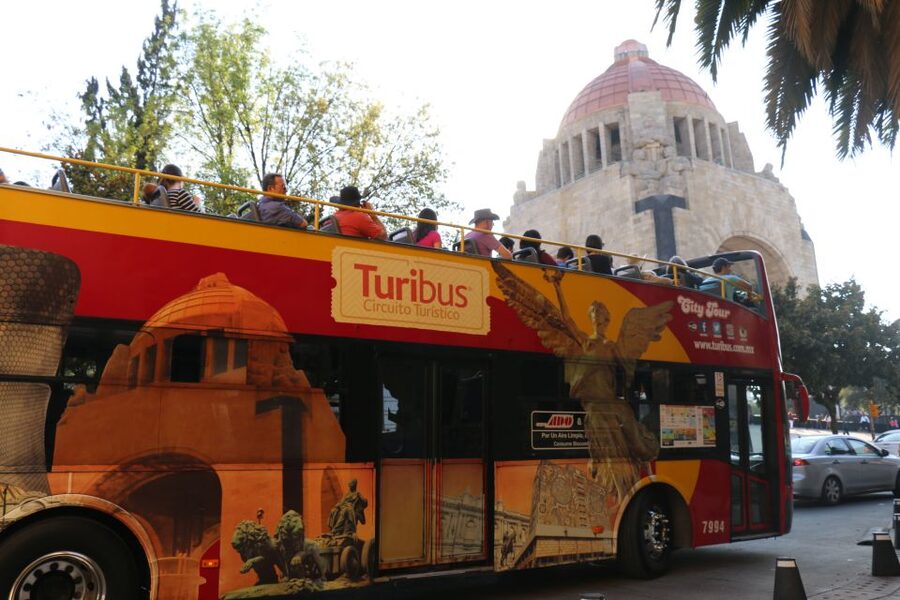
The audio system is included, and the language list is generous. English works through a numbered channel, and the system also includes a children’s option. Bring your own earphones if you have them. The supplied earbuds have been uncomfortable or unreliable for some passengers, and your own pair is usually the safer choice.
The biggest complaint is sound balance. Spanish announcements played through the bus can be loud enough to drown out the English recording, especially near the speakers. Street noise adds another layer, and some audio explanations may stop before the sentence is complete. Try several seats and avoid sitting directly beside a speaker.
The commentary gives useful background on landmarks and explains the city through its pre-Hispanic, colonial, and modern periods. It is not a substitute for a specialist museum guide, but it does what a city bus tour should do: help you understand what you are seeing and decide where to spend more time.
Live guides may be present on some departures. Names associated with particularly friendly or well-informed service include Estefania, Cristian, Diane, Lillie, and Ellie, but staff assignments can change. I would treat the audio system as the dependable part of the experience and any live commentary as a welcome extra.
Timing, traffic, and comfort
The stated operating window is generally 9 a.m. to 7 p.m. for the main route, not 9 a.m. to 9 p.m. Some departures may leave you at the nearest stop when service ends, so do not board a late bus for a long cross-city ride.
Traffic is not a minor detail. It shapes the entire experience. The bus lets you rest while someone else handles the route, but a short transfer can turn into a long wait. The red line usually has the best frequency. Polanco and Basilica operate at specific departure times, and the South Route can be slowed by traffic around Coyoacán and southern Mexico City.
The upper deck is the best place for views and photos, particularly in the morning or later afternoon. In strong sun, the metal seats can become very hot, and the open roof offers no shelter. Bring water, a hat, and sunscreen. The buses have no restrooms, so use facilities before a long circuit or get off near a suitable stop.
The vehicles are described as clean and in good shape, but Wi-Fi may not work. Drivers handle difficult streets and traffic, though the tone of staff service can vary. The bus is wheelchair accessible, which makes it a useful option for visitors who need a more structured way to cover the city.
Is $21 good value for Mexico City?
At $21 per person, the pass is good value if you use it as transport as well as sightseeing. The price covers one or two days, all four routes, the open-top bus, and the audio system. A full day of short taxi or rideshare trips across Reforma, Centro, Polanco, and Coyoacán could cost more, while the bus also gives you an overview.
The value drops if you sit through one full loop and never get off. The best use is selective: ride to a neighborhood, spend time there, then continue to another area. Even if you do not visit every attraction, the bus helps you understand where those places are.
A one-day pass is enough for the red route plus one carefully chosen circuit. It is not enough to explore all four areas in depth, especially with traffic. I would choose two days if you want both Coyoacán and the Basilica, or if museums are part of your plan.
Cancellation is free up to 24 hours before departure, and you can reserve now and pay later. Children up to age three ride free on a parent’s lap.
Who should book this tour?
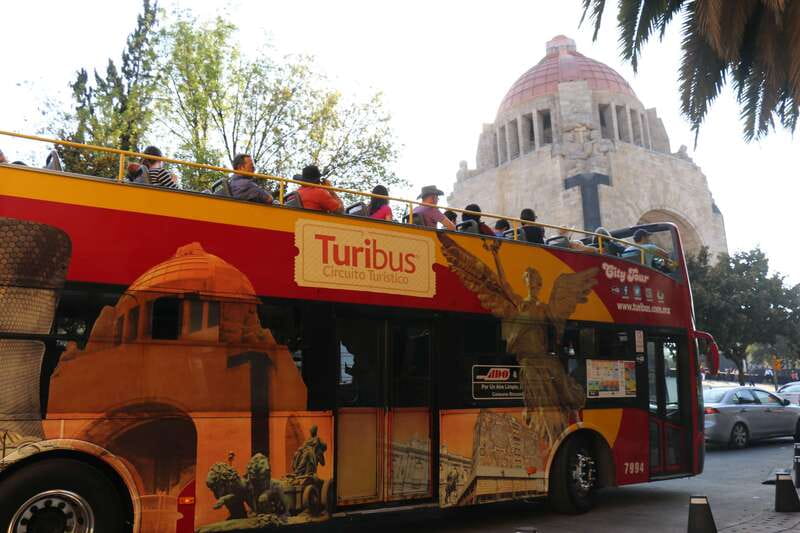
I recommend the Turibus for first-time visitors, short stays, families, and anyone who wants a broad city introduction without arranging several separate rides. It is also useful after a few days of walking, when you want to rest while still seeing streets and monuments.
You should be comfortable with an open-air bus, uneven timing, street noise, and the possibility of waiting for a connection. If you want a tightly timed museum day or a detailed specialist tour, use the bus only for orientation and arrange separate visits.
Plan your route before boarding. Note the last departure, carry earphones, and allow generous time for traffic. Those small steps turn a loose sightseeing ride into a useful city day.
FAQ
How long is the Turibus pass valid?
You can choose a one-day or two-day hop-on hop-off pass. Check availability for the specific starting date and operating times.
Can I use one bracelet on all four routes?
Yes. One bracelet covers the Historic Downtown, Polanco, South, and Basilica routes and their stops.
Where can I board the bus?
You can begin at any listed Turibus stop. Show your printed or electronic voucher when boarding.
What time does the Historic Downtown Route operate?
The Historic Downtown Route runs daily from 9 a.m. to 7 p.m., with buses approximately every 30 minutes.
Does the bus have an audio guide in English?
Yes. The digital audio system includes English, Spanish, German, French, Italian, Chinese, Japanese, Portuguese, and Russian, along with a special children’s channel.
Are children under three charged?
Children up to age three travel free, but they must sit on a parent’s lap.
Does the bus have toilets or indoor seating?
The buses do not have restrooms. They are open-top double-deckers, so bring water and protect yourself from strong sun.
Recently reviewed around Mexico City
- Teotihuacan from Mexico City with early access★ 4.7 · 49 reviews
- Teotihuacan Pyramids: Guided Tour with Entry Ticket Included★ 4.1 · 45 reviews
- Teotihuacan Pyramids: Skip-the-Line Ticket★ 3.8 · 98 reviews
- From Mexico City: Puebla and Cholula Day Tour★ 4.2 · 194 reviews
- Puebla: Cholula Magical Town Tour by Double-Decker Bus★ 4.3 · 74 reviews
- Puebla: Walking Tour of Puebla City★ 4.9 · 45 reviews
- Nevado De Toluca: Reach the Summit with Professionals★ 4.8 · 250 reviews
- Mexico City: Vegan and Vegetarian Street Food Adventure★ 4.8 · 65 reviews
City Tours, compared.
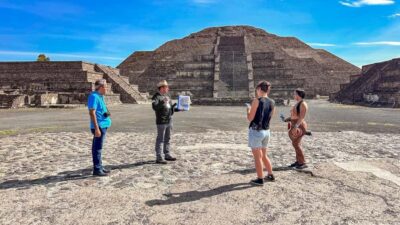
Teotihuacan, Tlatelolco & Guadalupe Shrine Tour
Read our review →
Teotihuacan Hot Air Balloon Flight from Mexico City / Volare
Read our review →

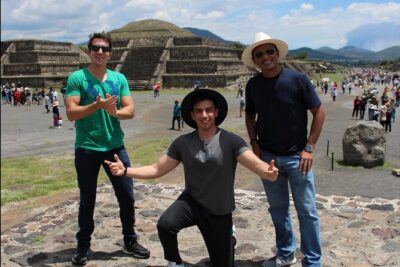
The best tour to Teotihuacán from Mexico City
Read our review →
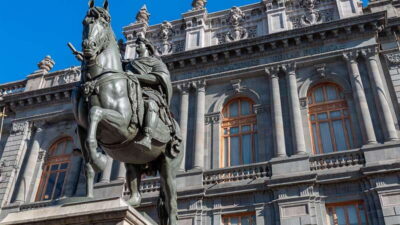
Teotihuacan, Tlatelolco & Basilica of Guadalupe
Read our review →Browse the lists this tour appears in