
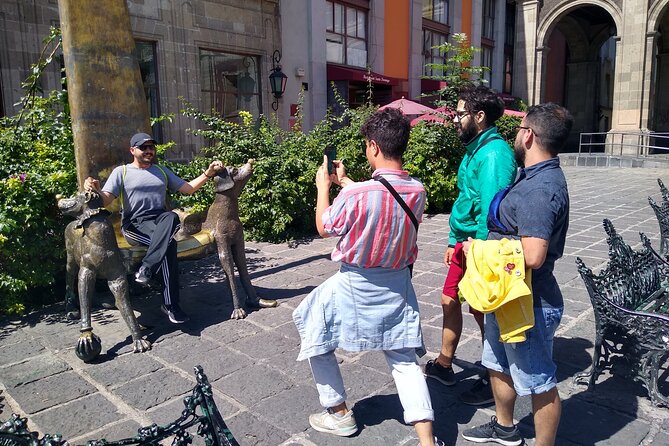
Reviewed · HISTORICAL TOURS
Gay Side of History through Plazas & Temples
Mexico City’s historic center looks familiar on a standard sightseeing route, but this tour asks you to read it differently. Through LGBTQ+ history, Carlos connects the Aztec capital, Spanish conquest, Catholic power, the Inquisition, and modern Mexico with stories often left out of schoolbooks.
I like the rooftop start at Librería Porrúa, where coffee or tea comes with views toward Templo Mayor and major colonial landmarks. I also like the small-group format, capped at 10 people, which gives Carlos room to shape the talk around your questions. The main drawback is that the experience is almost entirely outdoors and walking-based, so rain, heat, crowds, and uneven historic-center streets can affect your comfort.
In This Review
- Key points to know before you book
- Why this tour changes the way you see the Historic Center
- Starting above Templo Mayor at Librería Porrúa
- Templo Mayor and the city beneath the city
- The Zócalo, where national history becomes public
- Centro Cultural de España and the restored colonial mansion
- Santo Domingo Plaza and the tools of colonial control
- Carlos’s guiding style and the value of a small group
- Price, timing, and what you receive
- Who should book this experience?
- Should you book the Gay Side of History tour?
- FAQ
- How long does the tour last?
- What language is the tour offered in?
- Who leads the experience?
- How many people can join the tour?
- Where does the tour begin?
- Where does the tour finish?
- What time does the tour start?
- How far do you walk?
- Is food or drink included?
- What digital materials are included?
Key points to know before you book
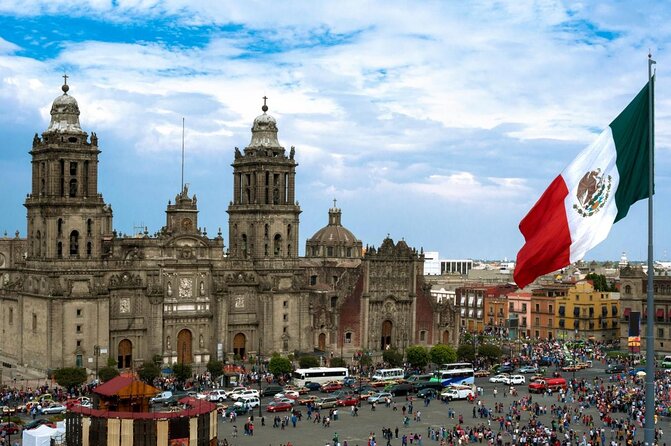
- A different view of famous Mexico City sights: Templo Mayor, the Metropolitan Cathedral, the Zócalo, and Santo Domingo Plaza all gain an LGBTQ+ historical angle.
- Carlos is the central strength: He is praised for clear storytelling, broad historical context, humor, and thoughtful answers.
- The tour begins above the city: Coffee or tea at Librería Porrúa gives you a useful visual introduction to the Historic Center.
- Small groups matter here: With no more than 10 people, the experience can feel more like a guided conversation than a marching tour.
- Useful take-home material is included: You receive a digital LGBT+ map and a PDF copy of RAINBOW MEXICO: Bridging Forgotten Pasts and Vibrant Futures.
- Plan for a steady mile of walking: The pace is described as moderate, but you should still wear comfortable shoes and dress for the weather.
Why this tour changes the way you see the Historic Center
The best reason to take this experience is not simply to collect another set of Mexico City landmarks. It is to understand how power, religion, law, gender, and sexuality shaped the city across several centuries.
Carlos places LGBTQ+ stories within the larger history of Mexico. That means you do not get a narrow talk detached from the places around you. You get the Aztec past, the Spanish conquest, colonial rule, the Catholic Church, the Inquisition, independence, political change, and modern Mexican identity, all tied to the streets beneath your feet.
That wider frame is especially useful if you already know the usual Mexico City story. The Zócalo and Cathedral can blur together after a few sightseeing stops. Here, the same buildings become evidence of changing ideas about authority, morality, public life, and personal freedom.
The subject is serious, but the tone is not stiff. Carlos is described as entertaining, personable, and funny while still treating the subject with care. That balance matters. A three-and-a-half-hour history lesson can drag, but a well-paced conversation with room for questions can pass quickly.
You do not need to identify as LGBTQ+ to benefit from the experience. The focus is LGBTQ+ history, but the route also functions as an unusual introduction to Mexico City’s past. An ally who joined the tour described it as one of their favorite educational experiences, which makes sense: the material opens a new door into familiar history.
More Historical Tours in Mexico City
- Historic Downtown Walking Tour
★ 5.0 · 1,289 reviews - Historic Center Food Tour in Mexico City
★ 5.0 · 1,263 reviews - Mexico City: Historic Downtown Walking Tour
★ 4.8 · 1,039 reviews
Starting above Templo Mayor at Librería Porrúa
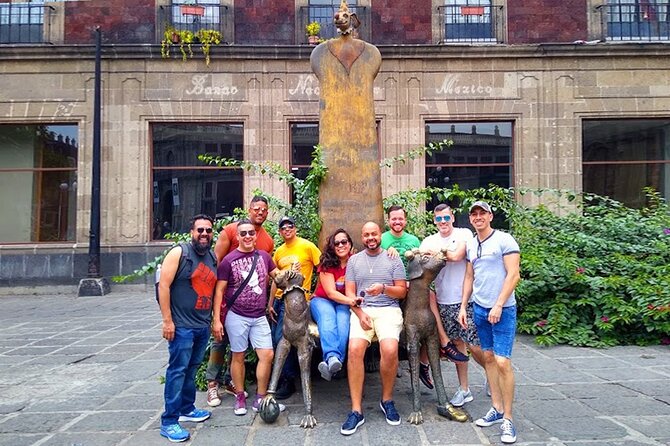
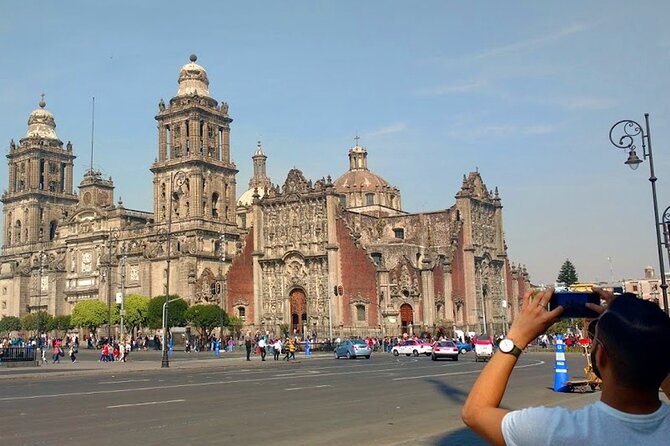
The tour begins at Librería Porrúa, a bookshop with a rooftop balcony overlooking several of the Historic Center’s key sights. This is a smart place to begin because the view helps you understand the city before you start walking through it.
From above, you can look toward the ruins of Templo Mayor, the Metropolitan Cathedral, the Palace of the Royal Duty, and the so-called Hideaway Rooms of Frida Kahl, as described in the tour details. The exact view will depend on weather, crowds, and your position on the balcony, but the purpose is clear: Carlos uses the setting to lay out the historical ground rules.
The opening section is expected to take about an hour, making it the longest scheduled stop. You are not simply being handed coffee and pointed toward a ruin. This is where the larger story begins, including the early population of the Americas, the Mexica capital, and the Spanish conquest.
I like this start because it gives you context before the walking begins. If you visit Templo Mayor on your own, you may see layers of stone and imagine the scale of the old city. From the balcony, Carlos can point out how the archaeological site, cathedral, government buildings, and modern streets occupy the same crowded center.
Coffee, tea, and bottled water are included. That is a modest benefit, but it helps during a long morning. You should still bring your own water if you prefer to drink often, especially in warm weather.
Templo Mayor and the city beneath the city
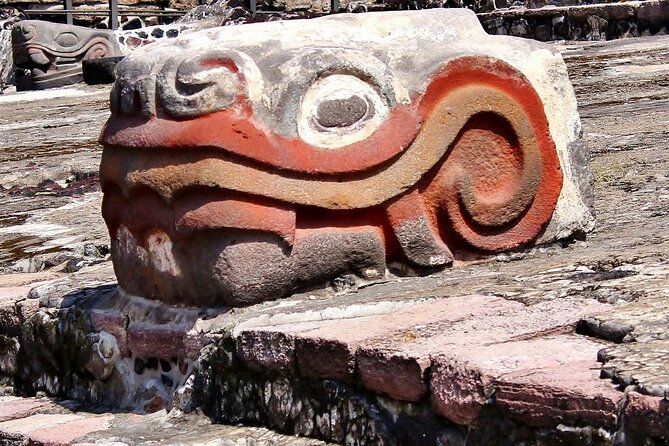
Templo Mayor was the main temple of the Mexica capital, often called the Aztec capital in English. It is one of the most important stops on the route because it anchors the tour in the pre-Hispanic city that existed before Spanish rule.
The LGBTQ+ focus does not turn the archaeological site into a simple symbol. Instead, the stop appears to establish the social and political world that came before colonial law and Catholic institutions. That broad timeline helps you understand that Mexican history did not begin with the Spanish arrival.
You should expect interpretation rather than a long museum visit. The supplied schedule identifies the temple as part of the route, while the named admission ticket is attached to the Librería Porrúa stop. If entering the archaeological museum or site is important to you, confirm what is included before booking.
The nearby Metropolitan Cathedral adds a sharp contrast. It represents the power of the Catholic Archdiocese of Mexico and the colonial order built after the conquest. Seeing the temple ruins and cathedral in the same opening section makes the city’s layers unusually easy to grasp.
The Zócalo, where national history becomes public
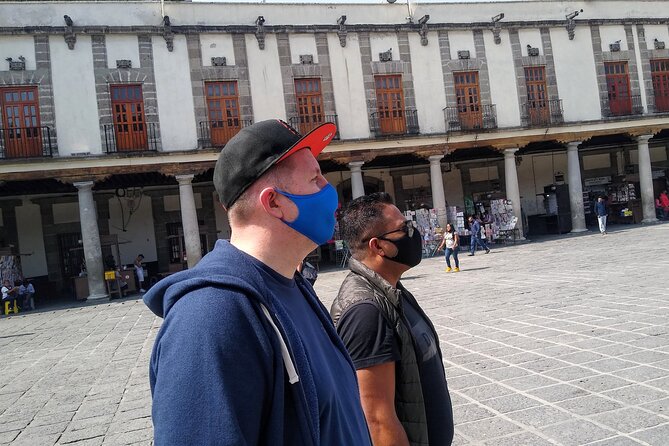
The Zócalo is the central plaza and the symbolic heart of Mexico City. It has been a meeting place since the 16th century, and the tour gives you about 30 minutes here.
This is not just a photo stop. The open square helps explain how Mexico City’s history has repeatedly been performed in public. Religious processions, political power, civic gatherings, protests, and national celebrations all connect to this space.
The National Palace occupies one side of the plaza. It is the seat of Mexico’s federal executive and has also served as the official presidential residence since 2018. Even if you do not go inside, its position gives you a clear lesson in how colonial and national authority share the same civic center.
The tour’s LGBTQ+ lens adds a second layer to that public setting. It asks who was permitted to appear openly, who was punished, and how public institutions shaped private lives. That is more useful than simply memorizing dates because it connects the buildings to real social pressure.
The Zócalo can also be the most demanding part of the route if the plaza is crowded or the weather is harsh. You may spend time standing while listening, so comfortable shoes, sun protection, and suitable clothing are wise.
More history-led days around Mexico City:
- Walking Tour of the Historic Center of Mexico City
★ 5.0 · 870 reviews - Mexico City Historical Centre Food Tour with 7 Authentic Tastings
★ 5.0 · 723 reviews - Walking Tour in Mexico City for Exploring their Cultural Heritage
★ 5.0 · 245 reviews - Walking Tour – Impressive murals in Historical Center of Mexico City
★ 5.0 · 224 reviews
Centro Cultural de España and the restored colonial mansion
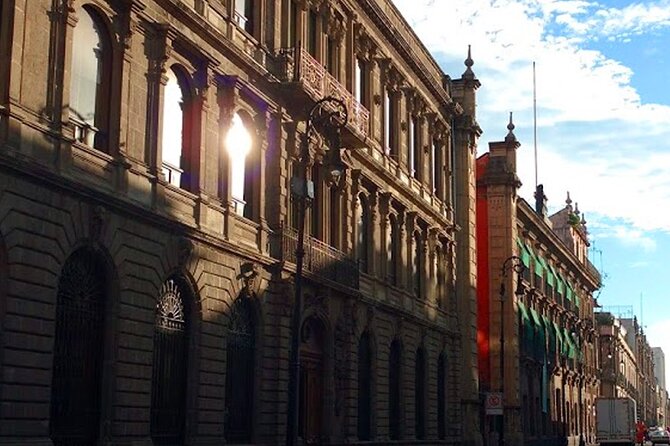
The route continues to the Centro Cultural de España en México at 18 Guatemala Street, behind the Cathedral. The building began as an old mansion that had fallen into ruin. In the late 1990s, the Mexico City government ceded it to Spain, and restoration finished in time for its inauguration by the King of Spain and Mexico’s president in 2002.
The stop is scheduled for roughly 30 minutes, with free admission. Its value is partly architectural and partly symbolic. A damaged historic building was given a new public life as a cultural center, linking preservation, international ties, and contemporary programming.
For this tour, the location also offers a useful transition. You move from the grand public spaces of the Zócalo toward smaller streets and institutions where less visible stories can be discussed. The route remains rooted in Mexico City’s physical past, but the conversation can shift toward the way historical memory gets preserved or ignored.
Do not expect a full cultural-center program or an extended indoor visit. The experience is built around the walking route and Carlos’s interpretation. The center is one piece of a larger argument, not a stand-alone museum tour.
Santo Domingo Plaza and the tools of colonial control
The final major stop is Plaza de Santo Domingo, the Historic Center’s second-largest plaza. The tour ends nearby at the Antiguo Palacio de la Santa Inquisición, at the corner of República de Venezuela and República de Brasil.
The plaza is flanked by the Portal de Evangelistas, a Tuscan colonnade with round arches. Scribes once worked there, and the space is associated with typewriters and antique printing machines. That detail gives the plaza a practical, human feel. It was not merely a backdrop for official buildings. It was also a place where documents were produced and daily business took place.
On the north side is the Church of Santo Domingo. The church faces the plaza and marks the starting point of El Camino Real, the trading route running from Old Mexico toward New Mexico. The tour connects this route with stories of gay male couples and the ways people sought safety and companionship within a difficult colonial system.
The discussion of the Spanish Inquisition is one of the heaviest parts of the tour. According to the experience description, the civilian institution executed people convicted of homosexuality between 1521 and 1821. This section is important for understanding how law and religious authority affected LGBTQ+ lives, but it may be emotionally difficult. The subject is not treated as a light sightseeing anecdote.
The ending at the former Palace of the Holy Inquisition gives the tour a strong sense of place. You finish not with a generic restaurant recommendation or a return to the starting point, but at a building tied directly to the historical institutions discussed along the way.
Carlos’s guiding style and the value of a small group
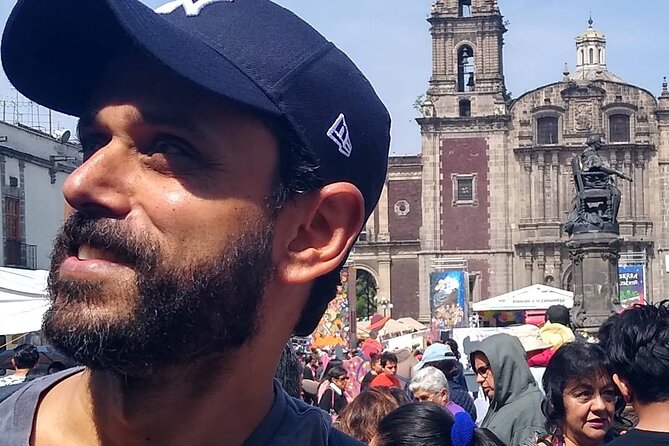
Carlos is the named guide associated with the experience, and his role appears to be the main reason the tour works. He is praised for combining broad historical knowledge with an engaging delivery. He also takes time to ask about personal interests and bring those interests into the discussion.
That flexibility is valuable on a subject this wide. One person may want more detail on colonial law. Another may care most about modern LGBTQ+ life, architecture, politics, or the Aztec period. A maximum of 10 people makes it more realistic for the guide to answer questions without the group becoming unwieldy.
Some sessions may be smaller than the maximum. When only two people booked one departure, the discussion lasted about four hours because of the number and quality of their questions. You should not assume every tour will run that long, but it shows that the format can allow for extra conversation when conditions permit.
The guide’s method also includes sitting down to provide context before examining a site. That is a good approach for visitors who prefer to understand what they are seeing instead of receiving a rapid list of names and dates.
Still, this is not the right choice if you want a quiet, purely visual walk or a quick introduction to the main monuments. The LGBTQ+ focus is central, and the historical discussion is substantial. You should enjoy listening, asking questions, and following a complicated story across several centuries.
Price, timing, and what you receive
At $99 per person, this is not the cheapest walking tour in Mexico City. The value depends on how much you want from the guide rather than on admission tickets, since most of the route is free and the experience is built around public plazas and exterior landmarks.
The price includes a local guide, coffee or tea, bottled water, a digital LGBTQ+ map of the Historic Center, extra resources, and a downloadable PDF of RAINBOW MEXICO: Bridging Forgotten Pasts and Vibrant Futures. Those digital materials add value after the walk. You can use the map to revisit the area and the e-book to continue reading at your own pace.
The experience lasts about three hours and 30 minutes and covers roughly one mile. That is a leisurely distance, but the time is long because the tour is discussion-heavy. The route is offered in English and uses a mobile ticket, making it easy to keep the booking on your phone.
The meeting point is República de Argentina 15 in the Historic Center at 10:00 a.m. The ending point is the former Palace of the Holy Inquisition at República de Brasil 33, beside Santo Domingo Plaza. Since you do not return to the start, plan your next stop from the ending point rather than leaving a vehicle or belongings near the first meeting place.
The tour operates in all weather. You need a moderate level of physical fitness, and service animals are allowed. The minimum age is 18, so this is designed for adults rather than families with young children.
Free cancellation is available if you cancel at least 24 hours before the local start time. Changes or cancellations inside that window are not accepted for a refund.
Who should book this experience?
I would choose this tour if you have already seen the Zócalo, Cathedral, or Templo Mayor and want more than the standard explanation. It is also a strong first-day activity if you like history and want a guide to help you get your bearings in the Historic Center.
It suits:
- LGBTQ+ visitors seeking local history beyond nightlife and restaurant guides
- Allies who want a serious, welcoming introduction to LGBTQ+ Mexico
- History lovers who enjoy long-form storytelling
- Solo visitors who like a small group and chances to ask questions
- Repeat visitors who want familiar landmarks presented in a new way
I would hesitate if you dislike extended talks, need a fully indoor activity, or want to spend most of the time inside museums. The route is not a fast highlight reel. It asks you to listen, think, and walk at an easy pace.
Should you book the Gay Side of History tour?
Yes, if you want a thoughtful and highly specific way to understand Mexico City. The strongest features are Carlos’s storytelling, the rooftop opening at Librería Porrúa, the small group size, and the way LGBTQ+ history is tied to major landmarks rather than treated as a separate subject.
At $99, you are paying for interpretation, conversation, and useful follow-up material more than for entrance tickets. That is fair value for the right audience. Book it at least a day ahead, bring weather-ready clothing, and leave room afterward for a drink or snack near the Zócalo or Santo Domingo Plaza.
FAQ
How long does the tour last?
The experience lasts approximately three hours and 30 minutes.
What language is the tour offered in?
The tour is offered in English.
Who leads the experience?
The guide named for the experience is Carlos.
How many people can join the tour?
The maximum group size is 10 travelers.
Where does the tour begin?
It begins at República de Argentina 15 in Mexico City’s Historic Center.
Where does the tour finish?
It finishes at the Antiguo Palacio de la Santa Inquisición, República de Brasil 33, beside Plaza de Santo Domingo.
What time does the tour start?
The scheduled start time is 10:00 a.m.
How far do you walk?
You walk approximately one mile over about three hours.
Is food or drink included?
Coffee or tea and bottled water are included.
What digital materials are included?
You receive a digital LGBTQ+ map of the Historic Center and extra resources, along with a downloadable PDF of RAINBOW MEXICO: Bridging Forgotten Pasts and Vibrant Futures.
Recently reviewed around Mexico City
- Town walking tour of the city★ 5.0 · 72 reviews
- Private Hiking Tour in Iztaccihuatl★ 5.0 · 45 reviews
- Cholula experience (private tour)★ 5.0 · 52 reviews
- Cholula tour from Puebla★ 5.0 · 66 reviews
- City walking tour in Puebla (private tour)★ 5.0 · 40 reviews
- Cholula Magical Twon on a Traditional Tram from Puebla★ 4.5 · 61 reviews
- Hiking Excursion to the Iztaccíhuatl Volcano from Puebla★ 5.0 · 74 reviews
- Museum of Anthropology: a look at Mexico’s past★ 5.0 · 52 reviews
Historical Tours, compared.


Mexico City Historical Centre Food Tour with 7 Authentic Tastings
Read our review →
Historical and Cultural Walking Tour of San Miguel de Allende
Read our review →
Historical and Cultural Walking Tour of San José del Cabo
Read our review →
Walking Tour in Mexico City for Exploring their Cultural Heritage
Read our review →Browse the lists this tour appears in