
Reviewed · TURTLE RELEASES
Los Cabos turtle release conservation program
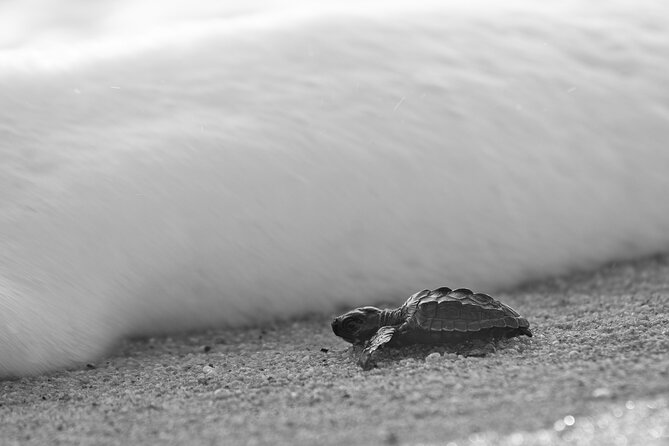
The most memorable part of this Cabo outing is wonderfully simple: you place a baby turtle on the sand and watch it work its way toward the Pacific. At sunset, those tiny flippers face a real challenge, and you get a close look at nature without turning the moment into a staged animal show.
I like the hands-on conservation work and the clear, entertaining talk from marine biologist Patricio. I also like that your $85 helps support programs for turtles and donkeys at Rancho Carisuva. The main catch is timing: the four-hour estimate includes a lot of driving, and the release can be canceled if no turtles hatch.
In This Review
- Key points to know before you book
- Why this sunset turtle release feels different
- Rancho Carisuva: a working conservation stop
- Playa Migriño and the long trip to the sea
- Patricio’s talk gives the activity its meaning
- Four hours sounds short until you count the driving
- Is $85 a fair price?
- What to bring and how to dress
- The biggest concern: cancellations and refunds
- Who will enjoy this most?
- Should you book the Rancho Carisuva release?
- FAQ
- Where does the turtle release take place?
- What time does the activity start?
- How long does the tour last?
- Is hotel pickup included?
- Which turtles are part of the conservation program?
- Can I touch the baby turtles?
- What is included in the price?
- What happens if no turtles hatch?
Key points to know before you book
- The release happens at Playa Migriño near sunset, after staff wait for safer light conditions and fewer hungry seabirds.
- Marine biologist Patricio leads the educational talk, covering turtle species, nesting, eggs, and the journey from nest to sea.
- July through September is the stated nesting season for Olive Ridley and Black Turtles in Cabo.
- Hotel pickup is included, but the exact pickup time may not arrive until the morning of the activity.
- The standard group can reach 20 people, while a private upgrade gives you a more personal release experience.
- Nature controls the schedule: if hatchlings are not ready, the operator may reschedule, offer another activity, or issue a refund.
Why this sunset turtle release feels different
Many Cabo excursions put you on a boat or behind a glass panel. This one asks you to slow down and watch a very small animal do one very important thing. The baby turtle does not perform for you. It crawls, pauses, turns, and keeps going toward the water.
That is the appeal. You are not simply looking at wildlife. You are taking part in a conservation program designed to improve the odds of survival for hatchlings that would otherwise face predators and other hazards on the beach.
The activity is educational before it is emotional. You begin with a presentation about sea turtles, their life cycle, and their nesting habits. The talk can last about an hour, depending on the day and the wait for sunset. Patricio is described as both funny and deeply committed to the work, a useful combination when young children or restless adults need to stay engaged.
The actual release is usually about 90 minutes outside of driving time. You may receive one turtle, or in some cases more than one, depending on the arrangement and the group setup. The basic experience is shared with other people, while the private option allows a smaller, more personal release away from the main group.
Other Cabo San Lucas days travellers weigh against this one:
- Outdoor Ziplining and UTV Adventure from Los Cabos
★ 5.0 · 4,181 reviews - Cabo Migrino Beach and Desert ATV Tour plus Tequila Tasting
★ 5.0 · 2,367 reviews - Whale Watching Cabo-Women crew-Sightings Guaranteed & Free Photos
★ 5.0 · 1,743 reviews
Rancho Carisuva: a working conservation stop
The outing begins at Rancho Carisuva, an approximately 20-minute stop where you can learn about two programs: donkeys and turtles. Admission is included, and the ranch gives the tour a wider purpose than a single beach event.
This is not just a photo stop. The ranch connects the sea turtle work with local animal care, giving you a short introduction to the organization behind the release. You will have a chance to get oriented, meet the conservation programs, and prepare for the beach portion.
Do not expect a full meal or a long list of facilities. Bathrooms and bottled water are provided, but food is not part of the stated inclusions. Some visitors have found snacks and drinks useful for the van ride and the wait before sunset. Pizza and merchandise have also been available on some outings, but those extras are not included, and you should not count on them as part of the tour.
The bathrooms have been described as basic. I would use them when you arrive and bring a small snack if you are prone to getting hungry in the late afternoon.
Playa Migriño and the long trip to the sea
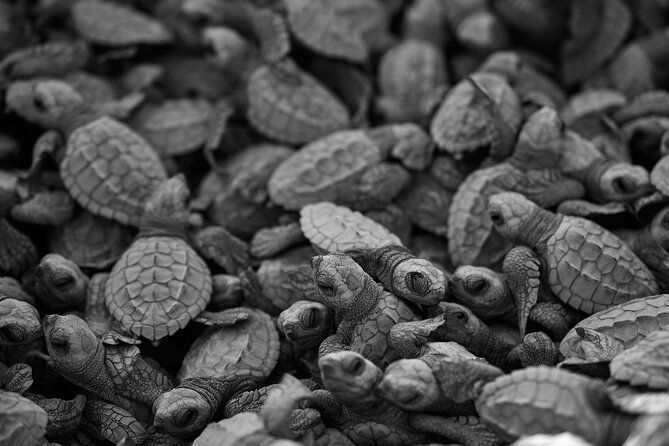
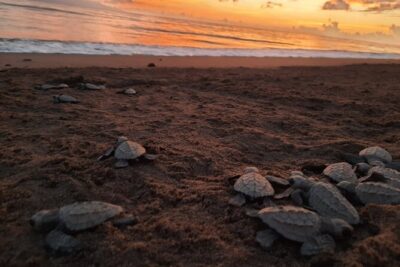
The main event takes place at Playa Migriño, outside Cabo San Lucas. From July to September, Olive Ridley and Black Turtles come ashore to lay eggs deep in the sand. The hatchlings emerge about 45 days later, after staff have protected the nest and cared for the eggs.
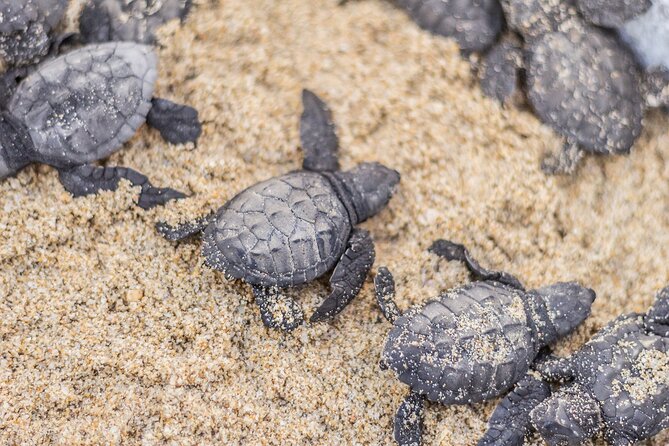
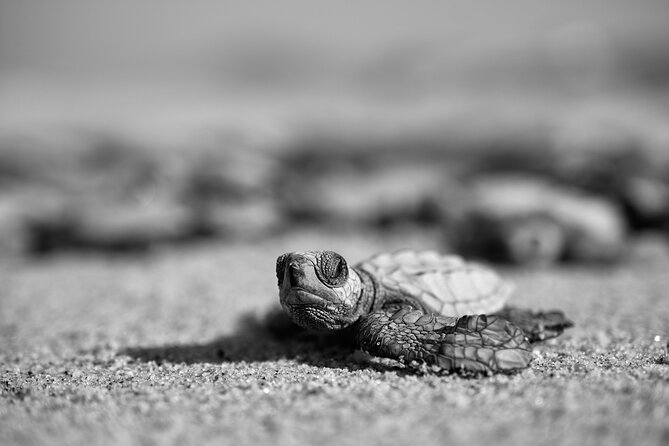
The conservation goal is straightforward: raise the number of hatchlings that make it safely into the ocean. The guides handle the turtles carefully, and one of the most important rules is not touching them. That protects the turtles from human contact while also keeping people and animals from exchanging germs.
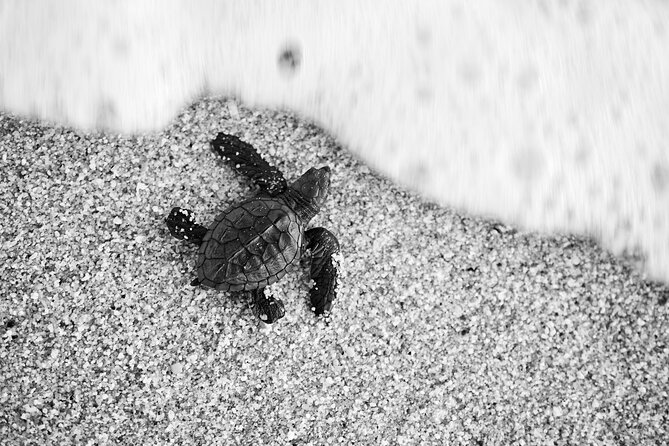
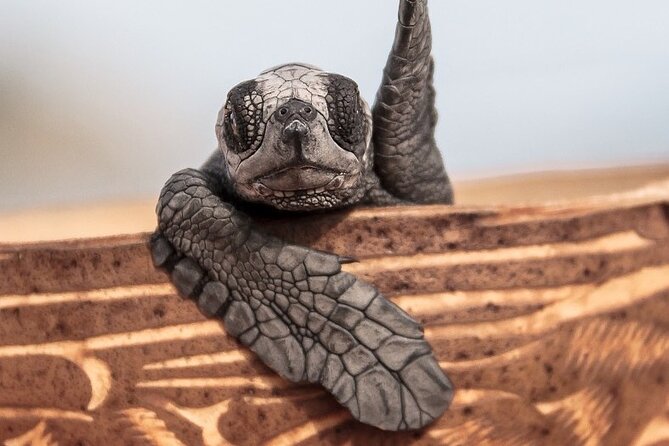
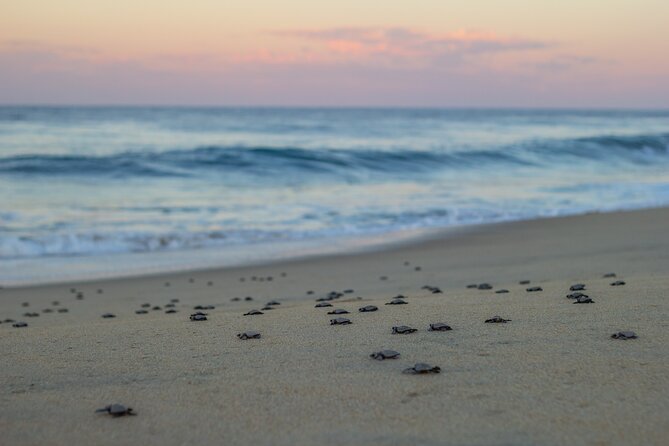
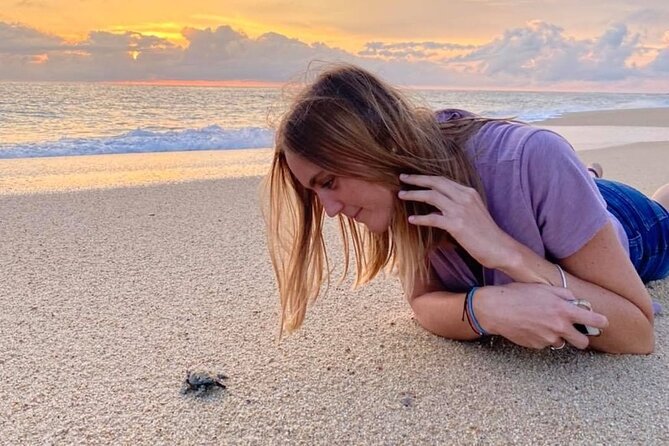
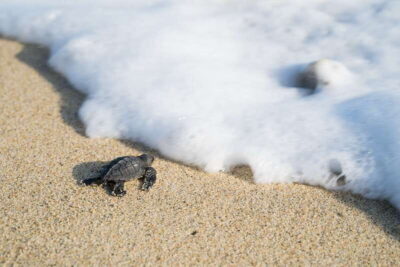
You receive a turtle in a bowl, then place it on the beach at the proper release point. The hatchling makes its own way. That means you need patience. Turtles are slow, and the distance to the surf can feel surprisingly long when you are watching a creature only a few inches across.
The wait for sunset is part of the schedule, not wasted time. Staff delay the release until the light is lower so seabirds are less likely to spot and eat the hatchlings. Even then, birds may still approach, so guides keep a careful watch.
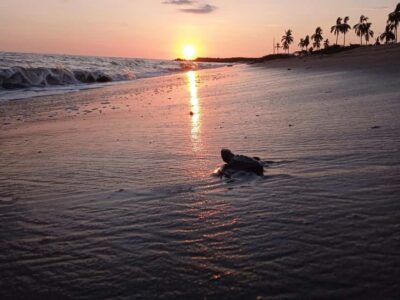
This is where the experience becomes exciting. You find yourself quietly cheering for a turtle as it crosses uneven sand, avoids obstacles, and follows its instinct toward the waves. The sunset adds beauty, but the real drama comes from the turtle’s effort.
Patricio’s talk gives the activity its meaning
The beach release would be cute on its own, but the educational session gives it weight. Patricio explains the different kinds of sea turtles, nesting behavior, and the difficult early stage of a turtle’s life.
That context matters. Without it, you might see a group of tiny animals heading to the surf and stop there. With it, you understand why protecting nests and controlling the release can make a difference.
Families with children as young as four or five have enjoyed the program, and older children and college-age visitors can find it absorbing as well. Adults who care about marine life will appreciate that the guides explain the process instead of rushing straight to the photo opportunity.
The tone appears to be warm rather than formal. Patricio is often described as entertaining, and the staff are presented as friendly and careful. That helps during the waiting period, especially because the release cannot begin simply because the group has arrived.
A different kind of day out, same stretch of Mexico:
- Cabo San Lucas Sunset Cruise with Open Bar and Snacks
★ 5.0 · 1,610 reviews - Cabo San Lucas Downtown Food and Tacos Tasting Experience
★ 5.0 · 1,388 reviews - Cabo White Sand Horseback Riding Tour and Tequila Tasting
★ 5.0 · 1,355 reviews - Los Cabos Arch and Playa del Amor Tour by Glass Bottom Kayak
★ 5.0 · 1,317 reviews
Four hours sounds short until you count the driving
The listed duration is about four hours, but you should think of it as a half-day commitment. Hotel pickup is included in an air-conditioned van, and the activity ends back at the meeting point.
The drive can take up much of the schedule. Pickup may begin well before the stated 4:30 pm start. One example involved pickup around 3:10 pm, with additional stops at other resorts. If you have dinner reservations, a show, or another evening booking, leave a generous buffer.
The exact pickup time may be confirmed only on the morning of the activity. This is tied partly to the turtle hatching schedule, since the operator needs to confirm that hatchlings are ready for release. That arrangement makes sense from a conservation point of view, but it is not ideal for tightly planned vacations.
Hotel pickup sounds simple, but it can be less clear if you are staying in an Airbnb, villa, or private house. Pickup has been accommodated at some private residences, but the meeting instructions can be confusing. Ask for the exact pickup point and time before the afternoon begins.
The ranch is isolated, so replacing the included van with a last-minute taxi or ride service may not be easy. If you are not at a standard hotel, confirm arrangements early rather than assuming the driver will find you.
Is $85 a fair price?
At $85 per person, this is not the cheapest short activity in Cabo. You are paying for transport, a certified guide, bottled water, the conservation program, and a guided release rather than simply access to a beach.
The value depends on what you want from an excursion. If your priority is several hours of action, this may feel light because the actual turtle release is much shorter than the total outing. A large share of the time can go to hotel pickups, the drive to Playa Migriño, the educational presentation, and waiting for the right release conditions.
If you value wildlife education and a direct contribution to conservation, the price is easier to justify. The experience offers something difficult to arrange independently: a properly managed hatchling release with a marine biologist and protected nests behind it.
A private upgrade can make sense for a family or small party that wants more personal space and a more focused release. It does not turn the entire outing into a private vehicle experience, so check exactly what the upgrade covers before paying extra. The standard group may include up to 20 people.
What to bring and how to dress
Bring water and a snack, even though bottled water is included. There may be food for sale at the ranch on some days, but food is not part of the tour.
Wear comfortable clothes and shoes suitable for walking on sand. The beach portion is not a formal sit-down event. You may stand or walk while watching the hatchlings, and the sand can make a short distance feel longer.
A phone or camera is worthwhile for the sunset, but keep photography secondary to the release. Do not touch the turtles, crowd them, or shine unnecessary light toward them. The guides manage the process for a reason.
Give yourself time before the tour. Since pickup can be earlier than expected and confirmed only on the day, avoid scheduling another activity close to the stated start or end.
The biggest concern: cancellations and refunds

The hatchlings do not follow a tourist timetable. Some outings have been canceled because no baby turtles hatched on the scheduled day, and a second date has occasionally failed for the same reason. That is a genuine conservation limitation, not a minor change in the program.
The operator may offer a new date, another activity, or a refund. The stated policy allows free cancellation up to 24 hours before the start time. If the operator cancels because of weather or because the minimum group size is not met, you are to be offered another date, another experience, or a full refund.
The serious issue is communication. Some customers have had difficulty getting a clear pickup time, cancellation update, or refund response. Others received a prompt refund or an alternative activity. Because the experience is seasonal and unpredictable, I would book it early in your Cabo stay, not on your final afternoon.
That gives you room to accept a later release date if the turtles are delayed. It also protects your schedule if you need to choose a refund or another activity.
Who will enjoy this most?
I would recommend this to families, animal lovers, couples, and anyone who prefers a meaningful local program over a standard resort excursion. Children can grasp the basic story quickly: protect the nest, help the babies reach the sea, and give them a better chance.
It also suits adults who enjoy natural events that cannot be perfectly controlled. You need to accept waiting, driving, and the possibility of cancellation. If you want a guaranteed performance at a fixed time, choose something else.
The group format works well for people who like sharing a special moment, but it may feel crowded during the release. The private option is worth considering for a small family or couple who wants more room and a quieter experience.
Should you book the Rancho Carisuva release?
Book it if you want a gentle, educational wildlife outing and can keep your schedule flexible. The strongest parts are the careful conservation message, Patricio’s engaging presentation, and the sight of hatchlings making their first run to the sea at sunset.
Think twice if you have only one free evening, a strict dinner reservation, or little tolerance for long van rides. Confirm pickup details, bring a snack, and schedule this early in your stay. With those precautions, the $85 price buys a rare chance to support local turtle protection and witness a natural event that cannot be replicated on demand.
FAQ
Where does the turtle release take place?
The release takes place at Playa Migriño, near Cabo San Lucas, in Baja California Sur, Mexico.
What time does the activity start?
The stated start time is 4:30 pm. Hotel pickup may happen earlier, and the exact pickup time may be confirmed on the morning of the activity.
How long does the tour last?
The activity lasts approximately four hours, including transportation. The beach and educational portion may take about 90 minutes, while some of the schedule is spent driving and waiting for sunset.
Is hotel pickup included?
Yes. Pickup is offered, and the van waits in the lobby of your hotel. If you are staying in a private house or Airbnb, confirm the pickup arrangement in advance.
Which turtles are part of the conservation program?
Olive Ridley and Black Turtles come ashore near Cabo from July through September to lay their eggs. Hatchlings emerge about 45 days later.
Can I touch the baby turtles?
No. The release is managed without touching the turtles. You watch them move from their bowls across the sand toward the ocean.
What is included in the price?
The tour includes an air-conditioned vehicle, bottled water, certified guides, bathrooms, and admission to the listed conservation stops. A turtle birth certificate, merchandise, and a photo session are not included.
What happens if no turtles hatch?
The operator may cancel or reschedule the activity, offer another experience, or provide a full refund. Since hatching depends on nature, booking early in your Cabo stay gives you more flexibility.
Recently reviewed around Cabo San Lucas
- Snorkel Privately in Cabo San Lucas★ 5.0 · 203 reviews
- Pura Vida Yacht 42 FT with all inclusive service in Cabo★ 5.0 · 31 reviews
- Snorkel and arch tour in los cabos★ 5.0 · 178 reviews
- Los Cabos Yacht Adventure – Arch, Snorkel, Lunch, Drinks 1-18ppl★ 5.0 · 164 reviews
- Luxury Sailing catamaran charter in Cabo San Lucas all inclusive★ 5.0 · 67 reviews
- Private Yacht Cruise 4 Hour- Snorkeling & Paddle Boarding★ 5.0 · 74 reviews
- Whale Watching Experience in Cabo San Lucas★ 5.0 · 41 reviews
- Whale Watching in Cabo San Lucas on board our Luxury Trimaran!★ 5.0 · 32 reviews
Turtle Releases, compared.
Sea Turtle Release – A Puerto Vallarta Conservation Adventure
Read our review →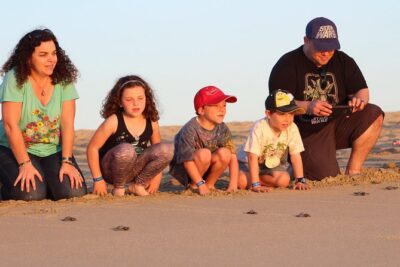
Jungle Coyuca Lagoon Boat Ride Experience & Baby Turtle Release
Read our review →Browse the lists this tour appears in