
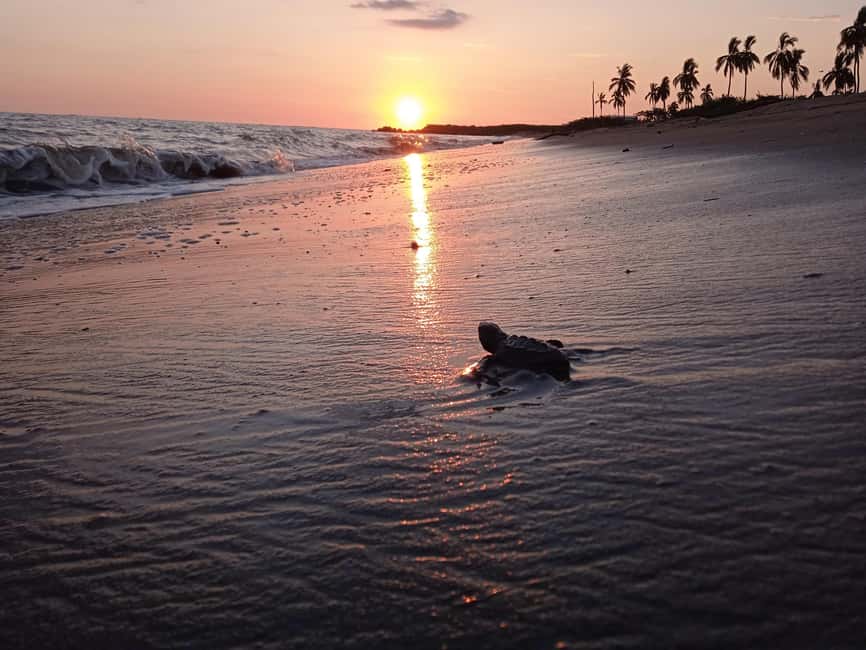
Reviewed · TURTLE RELEASES
Puerto Vallarta: Baby Turtle Release in Conservation Area
The most moving part comes at the end: you place a tiny olive ridley turtle on the sand and watch it make its own uncertain, determined trip toward the sea. Before that, you learn why the turtles need help and how a local camp protects their eggs.
I like the clear conservation lesson and the simple setting. I also like that the sunset is part of the experience, not a separate photo stop. The main consideration is that turtles may not hatch on your date, so build in enough time to reschedule.
In This Review
- Key points to know
- Why this turtle release feels different
- Finding the meeting point near Marina Vallarta
- The 15-minute walk to the conservation camp
- Forty-five minutes of turtle conservation lessons
- Seeing the incubation work up close
- Sunset, bay views, and the hatchling release
- What the $40 price includes
- Who should book this experience
- Practical tips for a smoother evening
- Should you book the baby turtle release?
- FAQ
- Where does the turtle release experience meet?
- How long does the activity last?
- How far is the conservation camp from the meeting point?
- Is transportation included?
- What happens if no turtles hatch on my date?
- What languages are available?
- Are photos included?
- Can children participate?
- What should I bring?
Key points to know
- The release depends on nature: If no turtles hatch, you may reschedule or cancel.
- Eduardo is a popular guide: He leads groups in English and Spanish, often with help from guides such as Eddie, Tony, or Carlos.
- Expect a 15-minute walk each way: The camp is reached on foot from the meeting point.
- The education comes before the emotional moment: You see how nests are found, eggs are collected, and hatchlings are protected.
- Sunset gives the release its setting: The beach faces picturesque views across the bay.
- The $40 price is fair: You get a guide, water, the release experience, an egg and nest demonstration, and photos, though ask how photo delivery works.
Why this turtle release feels different
Many wildlife activities put you behind a fence or on a boat. This one asks you to pay attention to a small section of beach and the work happening there. The reward is not a long list of sightings. It is one brief event that connects the talk, the nesting work, the sunset, and the release.
The focus is the olive ridley sea turtle. You learn about its life cycle and the hazards faced by eggs and hatchlings. The conservation workers search for nests, collect eggs, and move them into an incubation area. That process gives the eggs a better chance than they would have if left exposed on a busy or vulnerable beach.
The setting is modest. You are not visiting a polished aquarium or a large education center. You walk to a conservation camp in a natural area, spend time near the beach, and watch the hatchlings head for the water. For me, that plain setting is part of the appeal. It keeps the attention on the animals and the people doing the work.
The activity lasts about 2.5 hours and costs $40 per person. That is a reasonable price for a guided experience that includes instruction, water, the release, and photos. The value is strongest if you care about conservation and want more than a quick photo with a turtle.
Other Puerto Vallarta days travellers weigh against this one:
- Puerto Vallarta Best Zipline Canopy + Tequila and Speed Boat Ride
★ 5.0 · 3,786 reviews - Winner 2025 Downtown Vallarta Food Tour with Vallarta Food Tours
★ 5.0 · 3,738 reviews - Extreme Adventure, Wildest Bridge, ATV & Ziplines
★ 5.0 · 3,179 reviews
Finding the meeting point near Marina Vallarta
The meeting point is at the end of Paseo Bocanegra street. The clearest access is through Marina Vallarta, using Albatros Street until you cross Paseo Bocanegra. Continue straight to the end, where you should see a golf course, a wall with drawings, and the beach.
Follow these directions closely. This is not a meeting point where you should expect a large tour bus or obvious visitor center. If you arrive early, wait at the stated meeting area. Do not walk to the campground alone.
Transportation is not included, so you arrange your own way there and back. One useful detail is that the meeting point is near the area below where airplanes take off, which can help you recognize the general location. Allow time to find it, especially if you are using a taxi or rideshare.
After meeting your guide, you walk roughly 15 minutes to the conservation area. This is a beach walk, so wear comfortable clothing and shoes that can handle sand. The walk is not long, but the activity is not a good match for wheelchair users, people with mobility impairments, or anyone with a low level of fitness.
The 15-minute walk to the conservation camp
The walk is part of the experience rather than dead time. You leave the meeting area and head toward the beach camp, moving from the developed Marina Vallarta area into a more natural stretch of coast.
You may notice that the route feels somewhat out of the way. That is useful to understand before booking. This is a small conservation operation, not a major attraction with extensive facilities. The natural setting helps the lesson make sense, but it also means basic comforts are limited.
Bring insect repellent. This advice is repeated for good reason, especially during a warm evening near the beach. Biodegradable sunscreen is also recommended, along with comfortable clothes and water. Water is included, but you should still dress for an outdoor activity lasting into sunset.
The beach may not look perfectly groomed. Keeping the coast clean matters to turtle conservation, and one part of the area has had a need for better trash removal. Treat the setting as a working conservation site, not a resort beach.
Forty-five minutes of turtle conservation lessons
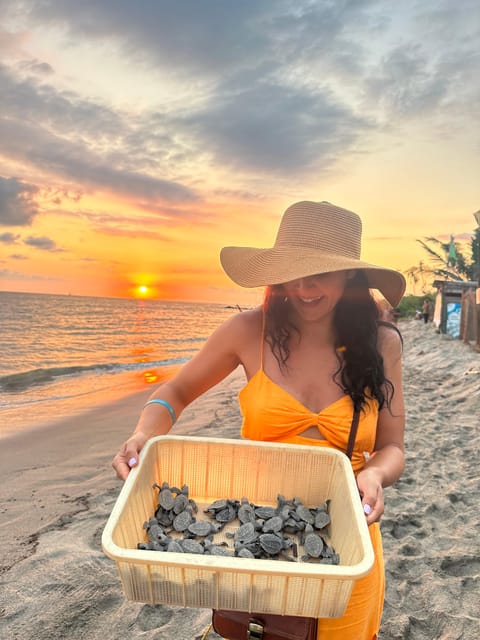
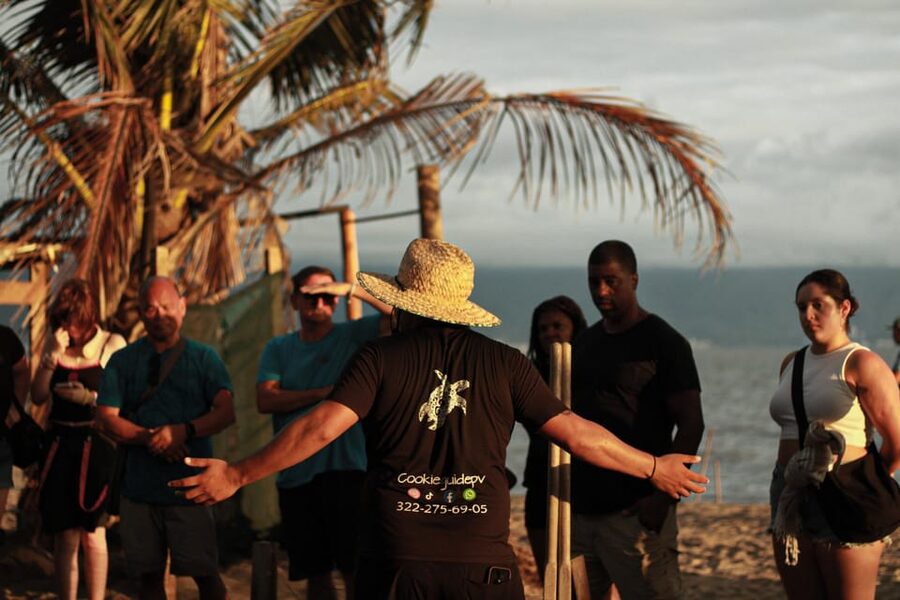
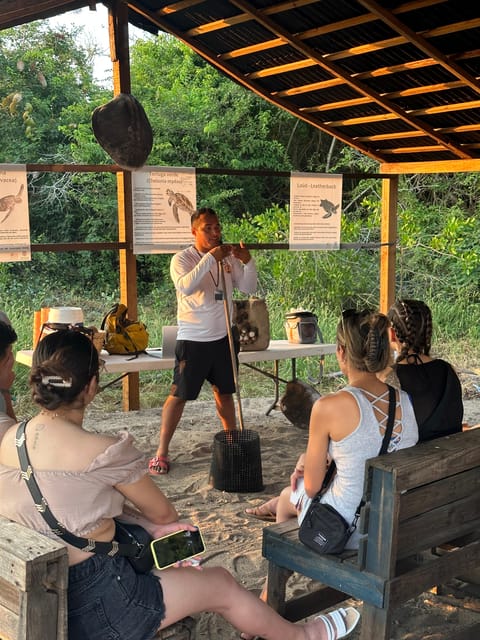
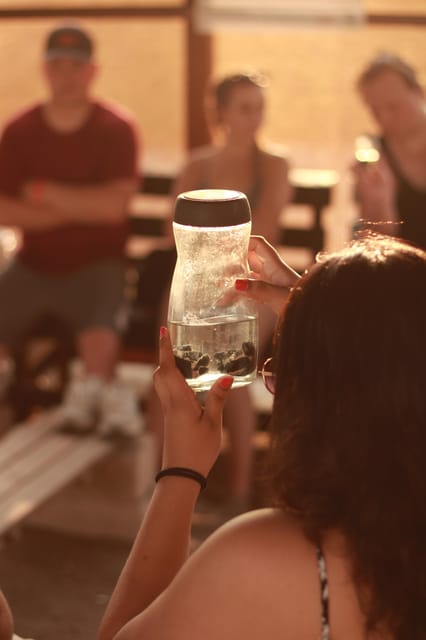
At the camp, the guide explains the olive ridley turtle’s life cycle. You learn how the turtles nest, how workers locate nests and eggs, and why the eggs are collected for incubation.
This is the part that gives meaning to the release. Without it, placing a hatchling on the sand could feel like a cute photo opportunity. With the explanation, you understand that the camp is trying to improve the turtles’ odds during their most vulnerable stage.
A demonstration shows how nest and egg collection works. You gain a practical sense of what conservation workers do, from searching for nests to preparing eggs for hatching. The guide also explains local efforts to protect the species in Puerto Vallarta.
Eduardo has led many of the sessions and is known for keeping the talk lively in both English and Spanish. Eddie, Tony, and Carlos have also guided groups. The teaching style is aimed at a mixed-age audience, so a family group can follow along without needing a background in marine biology.
I especially like that the lesson is not treated as filler before the release. The educational portion lasts about 45 minutes, giving you time to ask questions and understand the work behind the scenes. Children who are old enough to participate can learn why handling and release rules matter.
A different kind of day out, same stretch of Mexico:
- Mega Yacht ALL INCLUSIVE Yelapa Waterfall & Snorkeling Adventure
★ 5.0 · 2,515 reviews - Food & Mixology Tour:Tequila,Tacos, Mezcal and Agave Cocktails
★ 5.0 · 1,884 reviews - Outdoor Ziplining, Waterfalls & Speed boat in Puerto Vallarta
★ 5.0 · 1,796 reviews - Rhythms of the night, Sunset Cruise, Candlelit Dinner & Alma Show
★ 4.5 · 1,667 reviews
Seeing the incubation work up close
The incubation area is small and functional. You see how eggs are protected after workers collect them from nests. You also learn how the workers monitor the eggs as they prepare to hatch.
The activity does not promise that you will see a mother turtle nesting. It centers on the conservation camp and hatchlings. If you happen to visit when fresh nesting work is taking place, you might see workers burying a new set of eggs, but that should be treated as a lucky extra rather than part of the schedule.
This distinction matters. Book this if you want a guided conservation lesson tied to a possible release. Do not book it expecting a full wildlife safari or guaranteed sightings of adult turtles.
After the lesson, the group spends about 20 minutes watching for wildlife and waiting for the hatchlings. Timing is controlled by the turtles, not the clock. That can make the experience feel exciting, but it can also require patience.
Sunset, bay views, and the hatchling release
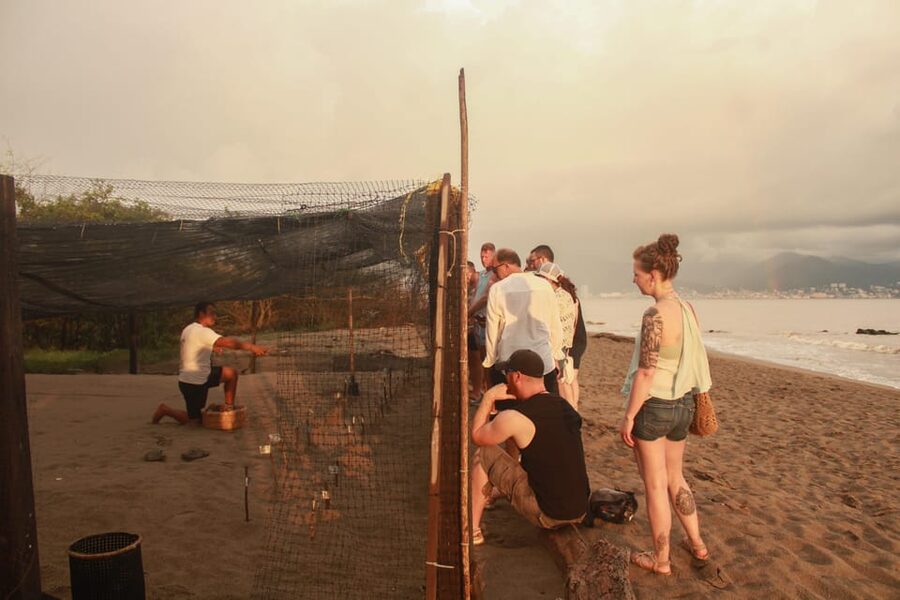
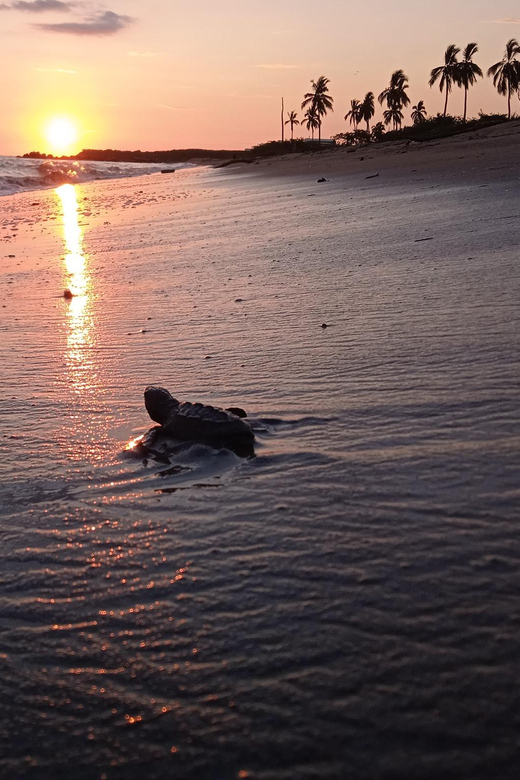
The beach becomes most scenic as the sun drops. You get views over the bay, and the sunset provides a memorable backdrop for the release. Weather can change the mood. A storm may pass through, but the release can still go ahead when conditions allow. Rain gear has been available during wet outings, though you should still prepare for changing weather.
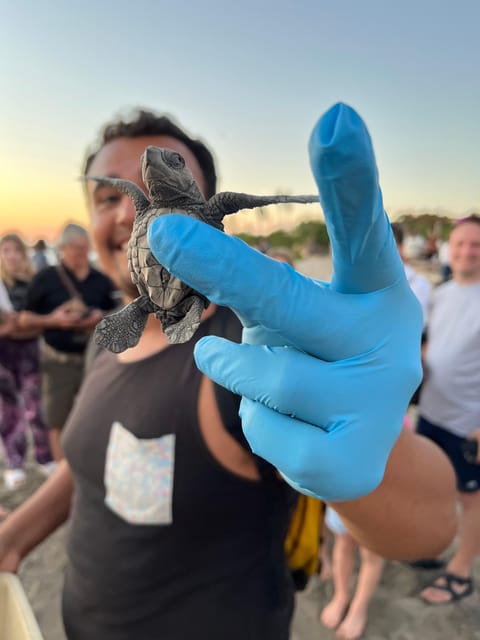
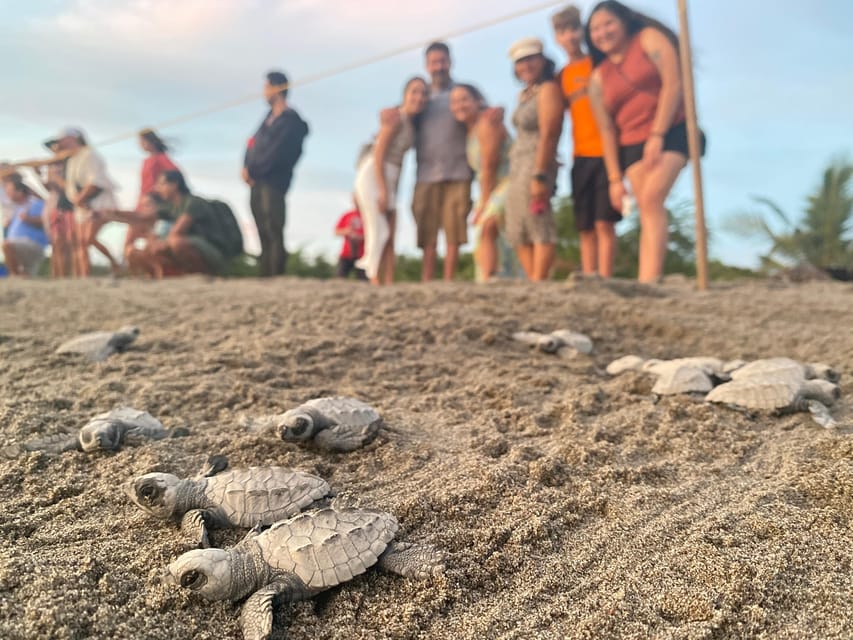
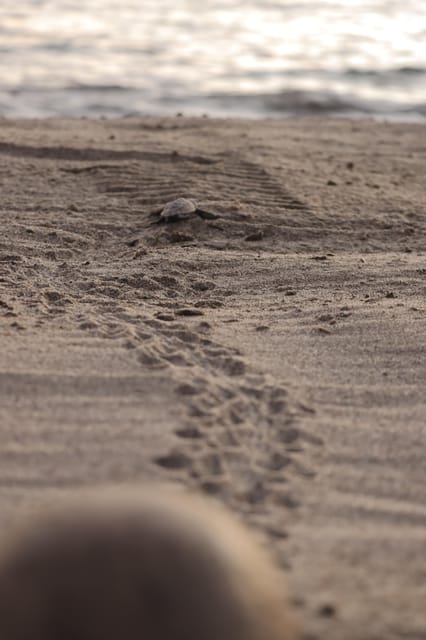
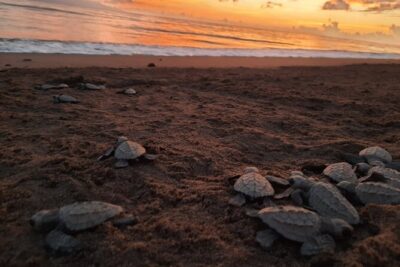
When the hatchlings are ready, you receive a baby turtle for release. Many people name the turtle, make a wish, or say a short prayer before placing it on the sand. The turtle then begins its scramble toward the ocean.
You must keep this moment brief and follow the guide’s instructions. The purpose is to help the turtles reach the water, not to hold them for a long portrait session. The best approach is to stay present, watch the tiny tracks, and let the conservation staff manage the process.
A photographer takes pictures during the release, which is helpful because you do not have to spend the whole time looking at your phone. The information about photo access has varied: photos are included in the activity details, while some participants have paid extra to keep the images. Ask your guide how the photos will be delivered and whether any additional charge applies.
The release is emotional because it is so small and so uncertain. You watch a creature begin a journey that few hatchlings will complete. The activity does not pretend that one release solves the larger problem. Instead, it shows you one direct way local workers are trying to help.
What the $40 price includes
At $40 per person, this is one of Puerto Vallarta’s more affordable guided nature activities. The cost includes:
- A live guide in English or Spanish
- The turtle release experience
- A demonstration of nest and egg collection
- Water
- Photos, with photo-delivery details worth confirming
Transportation is not included. You also pay for your own ride to the Marina Vallarta meeting point and back afterward. The walk to the camp is included in the activity, but it is on foot.
The price feels fair because the experience combines a lesson and a hands-on conservation event. You are also supporting a local effort rather than simply buying a sunset viewing session. If the release is the main reason you book, remember that nature may not cooperate on your chosen date.
If no turtles hatch, you can reschedule or cancel. I recommend booking earlier in your Puerto Vallarta stay when possible. That gives you a better chance to move the outing to another day if the camp has no hatchlings ready.
Who should book this experience
This is a good choice for families with children over age five, couples looking for a meaningful evening, and anyone interested in wildlife conservation. Children around school age can follow the lesson and enjoy the release, while older visitors can appreciate the local environmental work.
Children under five do not need a ticket, but they may only observe the release and cannot participate. The activity is not suitable for wheelchair users, people with mobility impairments, or those with respiratory issues, animal allergies, high blood pressure, or a low fitness level.
The camp is outdoors, and the route involves walking. You should be comfortable spending time on or near the beach, dealing with insects, and waiting for the turtles to hatch.
I would also think carefully if your schedule is tight. A fixed sightseeing plan works best when every part runs on time. This activity depends on hatching conditions and may need to shift. Its flexibility is a benefit, but only if you have room in your itinerary.
Practical tips for a smoother evening
Follow the meeting directions exactly, and arrive early enough to find the end of Paseo Bocanegra without rushing. Wait for the guide rather than walking to the camp by yourself.
Wear comfortable clothes and shoes suitable for a 15-minute beach walk. Use biodegradable sunscreen and bring insect repellent. Leave drones, alcohol, and drugs at your accommodation.
Carry only what you need. The beach setting is simple, and the release works best when you can give it your full attention. If you want personal photos, ask about the photographer’s process before the turtles are brought out.
Do not assume the release will happen at the exact same pace every day. If no hatchlings are ready, take the rescheduling option seriously. The best time to book is early in your stay, not on your final night in town.
At the end, the guides help the group leave safely. They can assist with calling taxis and making sure people are on their way, a useful service given the out-of-the-way location and evening timing.
Should you book the baby turtle release?
Yes, if you want an affordable, educational Puerto Vallarta activity with a real conservation purpose. The strongest parts are the 45-minute lesson, the passionate bilingual guiding, the sunset setting, and the chance to release a hatchling rather than simply look at one.
Book with realistic expectations. You arrange transportation, walk to a basic beach camp, may encounter insects or imperfect facilities, and cannot guarantee that turtles will hatch on your date. The release itself is short, and the setting is not luxurious.
For families, couples, and nature-minded visitors, I think the $40 price is worthwhile. Book early in your trip, bring repellent, follow the directions, and keep your schedule flexible. If you can accept those conditions, this is the kind of small experience that can stay with you long after the sunset fades.
FAQ
Where does the turtle release experience meet?
The meeting point is at the end of Paseo Bocanegra street. Access it through Marina Vallarta, using Albatros Street until you cross Paseo Bocanegra, then continue straight to the end near the golf course, illustrated wall, and beach.
How long does the activity last?
The experience lasts about 2.5 hours, including the walk to the conservation camp, the educational session, wildlife viewing, and the return walk.
How far is the conservation camp from the meeting point?
The walk takes about 15 minutes each way.
Is transportation included?
No. You arrange your own transportation to and from the meeting point.
What happens if no turtles hatch on my date?
You can reschedule or cancel if no turtles hatch on the day of your reservation.
What languages are available?
The live guide service is available in English and Spanish.
Are photos included?
Photos are listed among the included services, but photo access and any extra charge can vary. Ask the guide how you will receive the images and whether keeping them costs more.
Can children participate?
Children under five do not pay for a ticket, but they may only observe the release. Children five and older can participate, subject to the outdoor walking requirements.
What should I bring?
Bring biodegradable sunscreen, comfortable clothes, and insect repellent. Drones, alcohol, and drugs are not allowed.
Recently reviewed around Puerto Vallarta
- Jungle Single ATV Tour “El Mirador”★ 5.0 · 59 reviews
- Bucerias Bike and Food Tour★ 5.0 · 173 reviews
- Sayulita/Punta Mita: Zip Lines with Ocean View★ 4.8 · 34 reviews
- Sayulita: Horseback Riding Tour★ 5.0 · 37 reviews
- Sayulita: Canopy Tours & Zip-line Adventure★ 4.8 · 89 reviews
- Sayulita: ATV Adventure Tour★ 5.0 · 44 reviews
- Puerto Vallarta: Mega Yacht Whale Watching Sunset Cruise★ 4.7 · 94 reviews
- Puerto Vallarta: Yelapa Mega Yacht Cruise★ 4.7 · 180 reviews
Turtle Releases, compared.
Sea Turtle Release – A Puerto Vallarta Conservation Adventure
Read our review →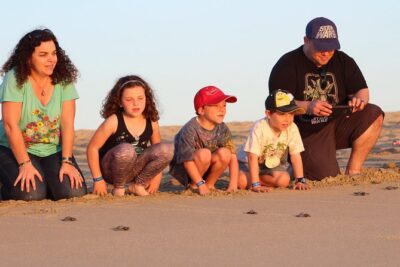
Jungle Coyuca Lagoon Boat Ride Experience & Baby Turtle Release
Read our review →Browse the lists this tour appears in