
Reviewed · HISTORICAL TOURS
Mexico City: Historical walking tour of Tenochtitlan
Mexico City’s historic center makes much more sense when you see it as one long story rather than a pile of grand buildings. This three-hour walk traces the city from Tenochtitlan to modern Mexico, with Prof. Cristina Ríos explaining how Aztec, Spanish colonial, independence-era, and 20th-century Mexico overlap under your feet.
I like the small groups, limited to 10 people, and the way the route uses architecture, murals, ruins, and old city sites instead of relying only on dates. I also like that Cristina may adjust the walk for the group, answer questions at length, and point out extra places such as Cortés’s tomb. The main consideration is that this is a serious, fact-filled tour, and several stops are viewed from outside rather than entered.
In This Review
- Key points at a glance
- Why this walk gives Mexico City a clearer shape
- Starting at Guatemala 18 and the Templo Mayor models
- Behind the Cathedral: religious power and the Calmecac site
- Cortés’s lodgings at the old Axayacatl Palace
- Iturbide Palace and the colonial city
- San Francisco and the layered colonial center
- Casa de los Azulejos and Orozco’s mural
- A passing view of Palacio de Bellas Artes
- What the $43 price buys you
- Who will enjoy it most
- Practical advice for making the morning work
- Should you book the Tenochtitlan walking tour?
- FAQ
- How long is the Mexico City Tenochtitlan walking tour?
- Where does the tour meet?
- Does the tour enter the Templo Mayor Museum?
- Is Palacio de Bellas Artes visited inside?
- What languages are available?
- How large is the group?
- Is the tour suitable for children?
- What should I bring?
Key points at a glance
- A 700-year story: Follow Mexico City from the founding of Tenochtitlan through Spanish rule, independence, and later cultural landmarks.
- Prof. Cristina Ríos leads the walk: Her PhD background and clear explanations suit visitors who want more than a quick orientation.
- Small groups keep it personal: The group is capped at 10, with a route that may be adapted when numbers are low.
- Templo Mayor is viewed from outside: You see the models and archaeological zone, but museum and site admission are not included.
- Architecture gets equal billing: Casa de los Azulejos, the old Axayacatl Palace, Iturbide Palace, and San Francisco add layers to the story.
- You finish at Bellas Artes: Leave time afterward to visit Palacio de Bellas Artes and the Templo Mayor Museum on your own.
Why this walk gives Mexico City a clearer shape
The best reason to book this tour is the timeline. Mexico City can feel visually confusing at first. Aztec ruins sit beside a huge cathedral. Colonial palaces now house banks and cultural centers. Modern crowds stream past buildings connected to Spanish conquest, Mexican independence, and national art.
Cristina’s job is to connect those pieces. You are not simply told that a building is old. You learn who used it, what stood there before it, and how later generations reused or changed the site.
That approach is especially useful on your first day in the city. You get a working map of Centro Histórico, along with suggestions for what to see afterward. Several people who took the walk also received tips about food and additional sights, and one small group was given a route shaped around its interests.
The pace is intended for walking and discussion, not for racing between photo stops. You should expect a steady three hours on foot, with time for questions and short pauses. Wear comfortable shoes, bring sun protection, and carry sunglasses or a hat. Mexico City’s central streets can be noisy, so earphones and audio equipment are supplied, with headsets used when the group has more than seven people.
More City Tours in Mexico City
- Mexico City: Teotihuacan, Tlatelolco & Guadalupe Shrine Tour
★ 4.6 · 3,773 reviews - Teotihuacan Hot Air Balloon Flight from Mexico City / Volare
★ 5.0 · 3,262 reviews - Teotihuacan Private Tour from Mexico City
★ 5.0 · 1,890 reviews
Starting at Guatemala 18 and the Templo Mayor models
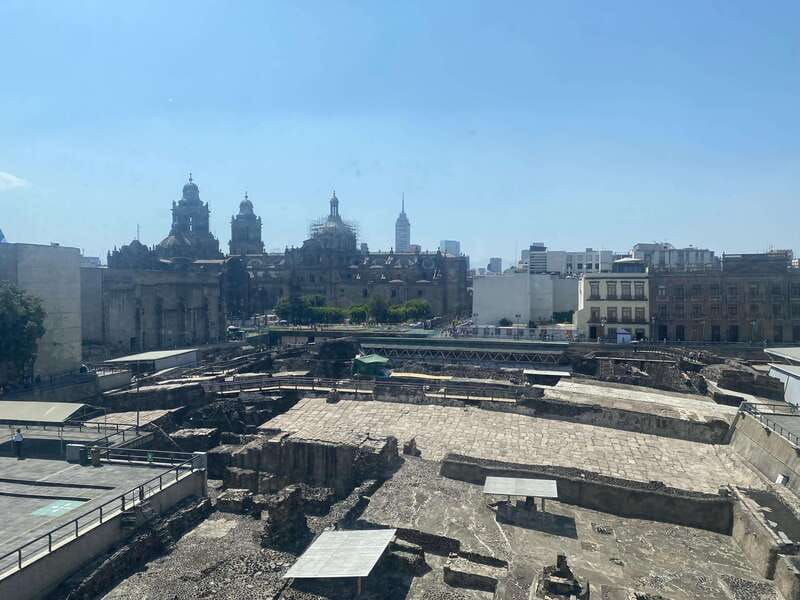
Meet at the entrance of the Centro Cultural de España at Guatemala 18. The walk begins near the Templo Mayor area, using models and an outside view of the archaeological zone to explain the Aztec capital.
The important distinction is simple: you do not enter the Templo Mayor Museum or archaeological zone as part of this tour. That keeps the walk within its three-hour format, but it also means you should plan a separate visit if you want to examine the excavated temples, museum displays, and objects at close range.
Even from outside, this is a strong opening. Templo Mayor is not an isolated ruin in a distant archaeological park. It is woven into the center of present-day Mexico City. The surrounding streets and buildings help you see how the Spanish city was built over the former Aztec capital.
This first section is where the larger story begins: the scale of Tenochtitlan, its ceremonial heart, and the changes that followed the Spanish conquest. If you like history, this early context pays off for the rest of the walk.
Behind the Cathedral: religious power and the Calmecac site
The route then moves behind the Metropolitan Cathedral, where you hear about the Ánimas del Purgatorio area and visit the exterior setting of the Calmecac Site Museum at the Centro Cultural de España.
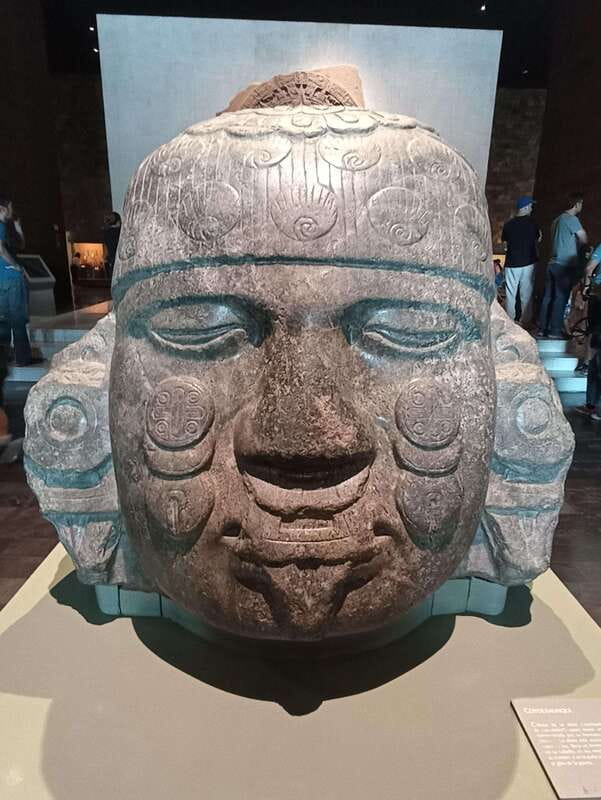
This is a useful stop because it brings the pre-Hispanic past into a less obvious part of the city. The Calmecac was associated with elite education in the Aztec world, so the location helps explain that Tenochtitlan was not only a place of temples and markets. It had systems of learning, rank, ceremony, and administration.
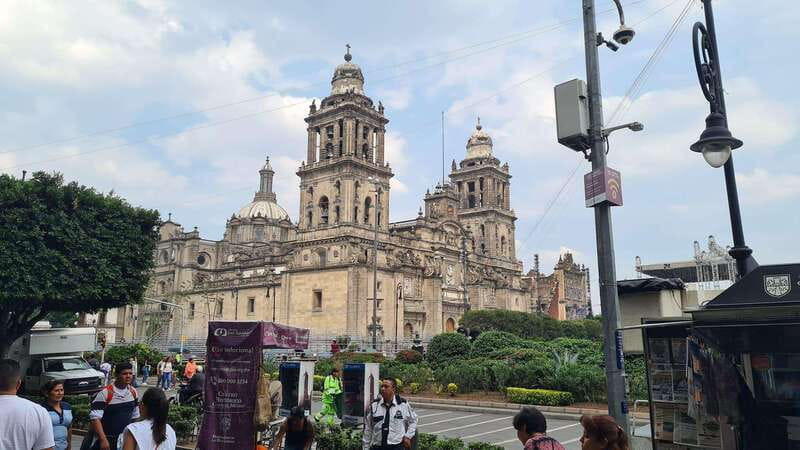
The Cathedral adds another layer. From here, Cristina can explain the force of Catholic institutions in colonial Mexico and the way Spanish religious buildings occupied the symbolic center of the rebuilt city.
You will want to pay attention rather than simply take photographs. The value is in the connection between the site, the buildings around it, and the political changes that reshaped the capital.
Cortés’s lodgings at the old Axayacatl Palace
One of the most striking historical points comes at the old Axayacatl Palace, also linked with the old houses of Moctezuma. This is associated with Hernán Cortés’s lodgings after the Spanish arrival.
The site makes conquest feel less abstract. Instead of treating the encounter between the Aztec and Spanish worlds as a distant event, Cristina places it in the center of the city, tied to an actual palace and its changing use.
This is also the kind of stop that is easy to miss on your own. You could walk past without knowing what happened there. The guide’s explanation gives the surrounding streets a human and political dimension.
If the group has time and interest, Cristina has also taken participants slightly off the stated route to see Cortés’s tomb. That extra stop is not something to assume on every departure, but it shows how the walk can respond to questions and the group’s pace.
More Historical Tours in Mexico City
- Historic Downtown Walking Tour
★ 5.0 · 1,289 reviews - Historic Center Food Tour in Mexico City
★ 5.0 · 1,263 reviews - Mexico City: Historic Downtown Walking Tour
★ 4.8 · 1,039 reviews - Walking Tour of the Historic Center of Mexico City
★ 5.0 · 870 reviews
Iturbide Palace and the colonial city
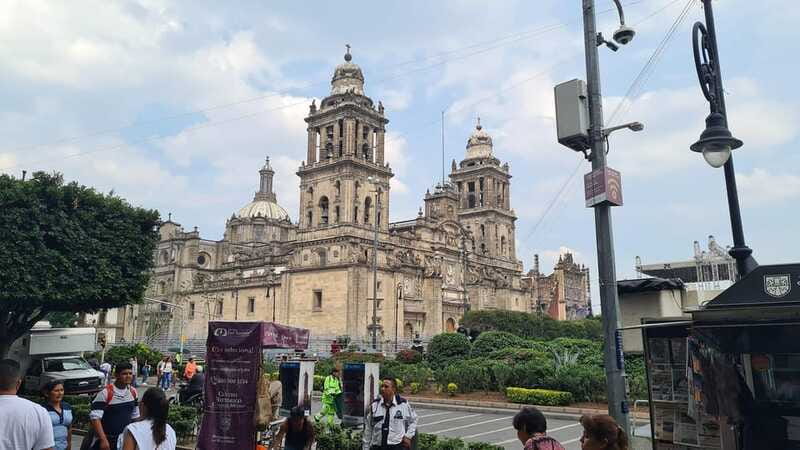
The Iturbide Palace, now the Banamex Cultural Center, shifts the focus from conquest to the architecture and society of colonial Mexico.
Here, the building itself becomes a teaching tool. You can expect an explanation of its historical role, design, and place in the center’s changing urban fabric. The tour does not treat architecture as decoration. Cristina uses façades, courtyards, and institutions to show how wealth and power were displayed.
The Banamex Cultural Center also helps you see how historic buildings survive by taking on new cultural uses. Depending on the day, you may be able to appreciate the exterior and surroundings more than the interior, since admission tickets are not included.
This stop will appeal most to adults who enjoy architecture and historical context. One practical point came through clearly in the tour feedback: the presentation is fact-filled and best suited to adults with an interest in architectural styles. You do not need specialist training, but you should be ready to listen.
San Francisco and the layered colonial center
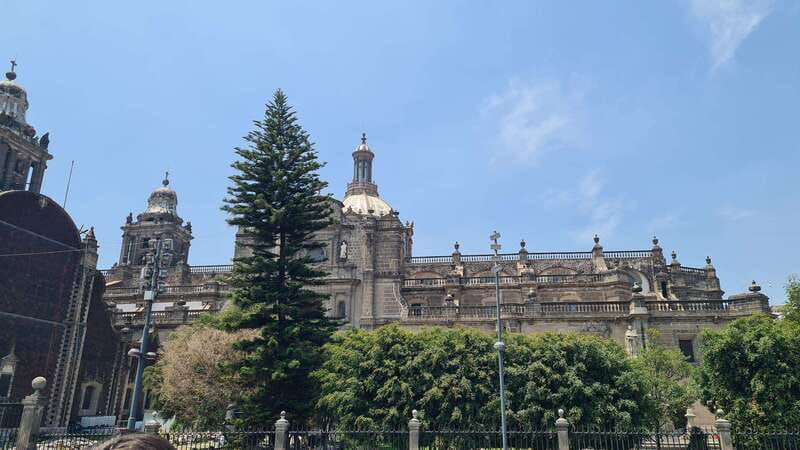
The Church of San Francisco is viewed from the façade. That may sound modest, but the stop fits the walk’s larger method. You are looking at how religious orders helped shape the colonial city and how the center developed around churches, palaces, civic buildings, and commercial streets.
A façade-only visit also keeps the tour moving. With seven major stops plus walking time, the experience cannot spend an hour inside every building. The tradeoff is clear: you get a broad, connected overview rather than a full interior tour.
This is a good point to ask questions. Cristina’s strength, according to the information available, is not just delivering a set speech. She is prepared to discuss architecture, customs, notable people, and the way Mexican history developed from the Aztec period through the republic.
Casa de los Azulejos and Orozco’s mural
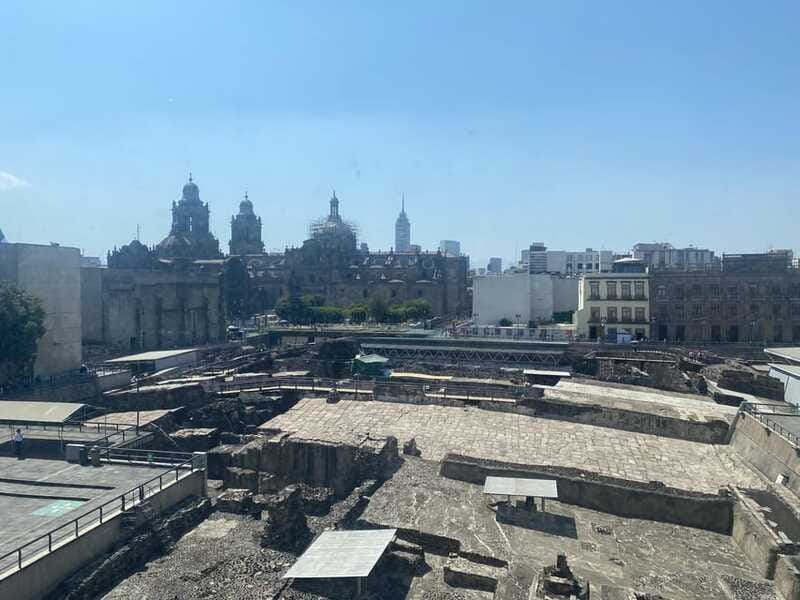
Casa de los Azulejos is one of the visual highlights. The famous blue-and-white tiled façade is easy to admire, but the inside adds a worthwhile surprise: a mural by José Clemente Orozco.
Cristina gives a detailed explanation of the mural, so this is more than a quick stop for an exterior photograph. You learn how the artwork fits into Mexico’s artistic and political story, and why the building matters beyond its attractive tiles.
For me, this is where the tour’s mix of architecture and art pays off. You see a colonial-era building, then consider a modern Mexican mural inside it. That combination captures the city’s habit of layering one period over another.
If you plan to return later for a longer look, note the difference between the guided stop and an independent visit. The tour gives you the background and points out details you might miss. You may still want extra time to examine the building at your own pace.
A passing view of Palacio de Bellas Artes
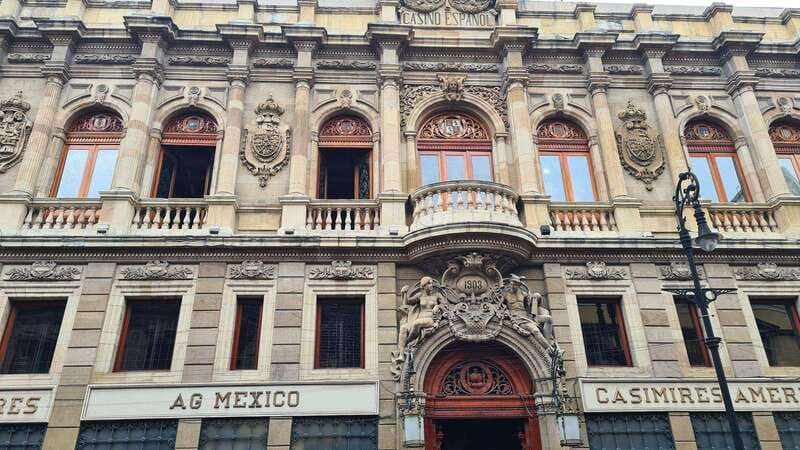
The route ends at Palacio de Bellas Artes, with the building covered as a pass-by stop rather than a full interior visit. Its domed exterior and central location make it a fitting final landmark after a walk through so many periods of Mexican history.
Do not confuse finishing here with having visited the palace. Admission is not included, and the tour does not provide a full museum or interior program. I recommend saving time afterward if you want to see the murals, exhibitions, and interior details on your own.
Ending at Bellas Artes is practical. You are in a major part of downtown, with more sightseeing and places to eat nearby. Several participants received food recommendations at the end, but food and drinks are not included in the $43 price.
What the $43 price buys you
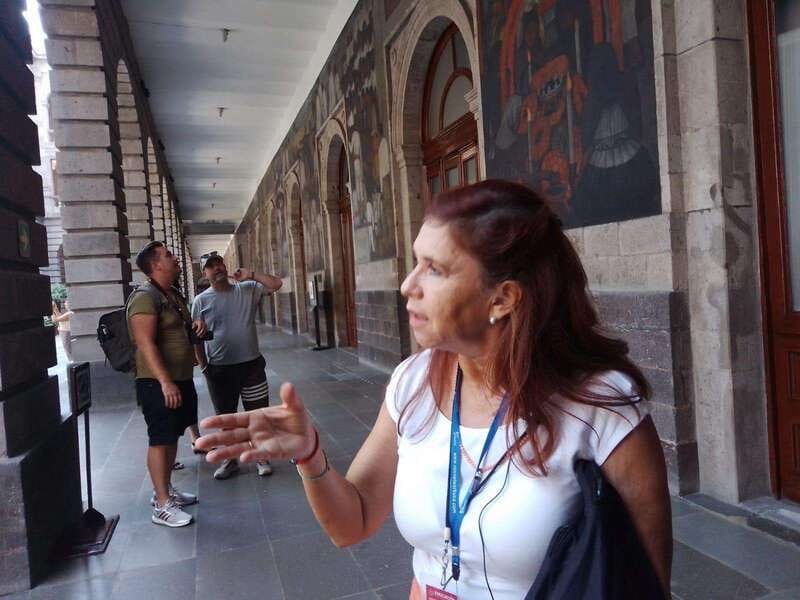
At $43 per person, this is not the cheapest way to stroll through downtown. You are paying for a specialized guide, a small group, audio equipment when needed, and a carefully connected account of the city.
The value depends on how you travel. If you want a few quick facts and plenty of free time, a general orientation walk may suit you better. If you want to understand why the Cathedral, Templo Mayor, Casa de los Azulejos, and Bellas Artes belong in the same story, the fee is easier to justify.
The small group matters here. With only three to 10 participants, Cristina can usually respond to questions without turning the walk into a lecture for a crowd. When only one or two people booked, the route was adjusted to their interests. That kind of flexibility is hard to get on a large city tour.
Keep extra costs in mind. Museum and attraction tickets are not included, nor are meals, drinks, or hotel transfers. You are buying interpretation and company on foot, not a package of admissions.
Who will enjoy it most
I would choose this tour if you like history, architecture, art, and long-form explanations. It is particularly useful for understanding Aztec society, Spanish colonization, Mexican independence, and the later development of the capital in one morning.
Cristina speaks English and Spanish, and the English tour has been described as clear and easy to follow. Her background as a professor and PhD guide is central to the experience. She brings substantial preparation, but she also welcomes questions and offers ideas for further reading and additional places to visit.
Families should note the age restriction: children under 10 are not suitable for this activity. An older child who enjoys stories, buildings, and historical questions may manage well, but the tour is aimed mainly at adults.
The walk is wheelchair accessible. Still, because it takes place outdoors in the historic center and covers several stops on foot, confirm the current route and conditions when booking if you have specific mobility needs.
Practical advice for making the morning work
Book an early start if possible. Morning light is pleasant for outdoor buildings, and finishing at Bellas Artes leaves the rest of the day open for a museum or lunch.
Arrive at the Centro Cultural de España entrance on Guatemala 18, not at a hotel or a separate attraction entrance. The meeting point is close to the Templo Mayor area, where the first explanations take place.
Bring:
- Comfortable walking shoes
- A hat or sun protection
- Sunglasses
- Sunscreen
- Water for the walk
Traditional Mexican sweets at Dulcería Celaya may be included as an optional taste stop, but food is not part of the tour price. If that interests you, carry some spending money and ask Cristina about the timing.
The tour sometimes moves through noisy streets. The supplied audio equipment helps, especially with larger groups. With a group of seven or fewer, you may not receive headsets, so stay close enough to hear the guide clearly.
Should you book the Tenochtitlan walking tour?
Book it if you want Mexico City’s historic center explained by a serious local academic rather than reduced to a list of photo stops. Prof. Cristina Ríos is the main reason to choose this experience. Her preparation, patience with questions, and ability to connect lesser-known sites with major landmarks give the three hours real substance.
Skip it if you mainly want interior access to museums and churches. Templo Mayor, the Cathedral, and Bellas Artes are not covered as full admission visits, and tickets are not included.
For most history-minded visitors, I think the strongest plan is to take this walk early in your stay, then return independently to the Templo Mayor Museum and Palacio de Bellas Artes. The tour gives you the framework. Your later visits can fill in the details.
FAQ
How long is the Mexico City Tenochtitlan walking tour?
The walking tour lasts three hours.
Where does the tour meet?
Meet at the entrance of the Centro Cultural de España at Guatemala 18, near the Templo Mayor area.
Does the tour enter the Templo Mayor Museum?
No. The tour uses models and an outside view of the archaeological zone. Museum and archaeological-site tickets are not included.
Is Palacio de Bellas Artes visited inside?
No. Palacio de Bellas Artes is a pass-by stop and the tour finishes there. Admission is not included.
What languages are available?
The live guide is available in English and Spanish.
How large is the group?
The group is limited to 10 participants. Headsets are provided when the group has more than seven people.
Is the tour suitable for children?
Children under 10 are not suitable for this activity.
What should I bring?
Bring comfortable shoes, a hat or sunglasses, and sunscreen. You may also want spending money if you choose the optional traditional sweets stop at Dulcería Celaya.
More Walking Tours in Mexico City
- Frida Kahlo VIP [Museum Tickets Included] Walk, Markets & Churros
★ 5.0 · 982 reviews - Anthropology Museum Private Experience Walking Tour
★ 5.0 · 355 reviews - Mexico City: Guided walking tour through the most historic parts of the city.
★ 4.5 · 172 reviews - Mexico City: Lucha Libre Show, Walking Tour & Tequila
★ 4.6 · 156 reviews
Recently reviewed around Mexico City
- Teotihuacan from Mexico City with early access★ 4.7 · 49 reviews
- Teotihuacan Pyramids: Guided Tour with Entry Ticket Included★ 4.1 · 45 reviews
- Teotihuacan Pyramids: Skip-the-Line Ticket★ 3.8 · 98 reviews
- From Mexico City: Puebla and Cholula Day Tour★ 4.2 · 194 reviews
- Puebla: Cholula Magical Town Tour by Double-Decker Bus★ 4.3 · 74 reviews
- Puebla: Walking Tour of Puebla City★ 4.9 · 45 reviews
- Nevado De Toluca: Reach the Summit with Professionals★ 4.8 · 250 reviews
- Mexico City: Vegan and Vegetarian Street Food Adventure★ 4.8 · 65 reviews
Historical Tours, compared.


Mexico City Historical Centre Food Tour with 7 Authentic Tastings
Read our review →
Historical and Cultural Walking Tour of San Miguel de Allende
Read our review →
Historical and Cultural Walking Tour of San José del Cabo
Read our review →
Historical & Cultural Walking Tour of San Miguel de Allende
Read our review →Browse the lists this tour appears in