
Reviewed · HISTORICAL TOURS
Private Walking Tour Gems of the Historic Center of Mexico City
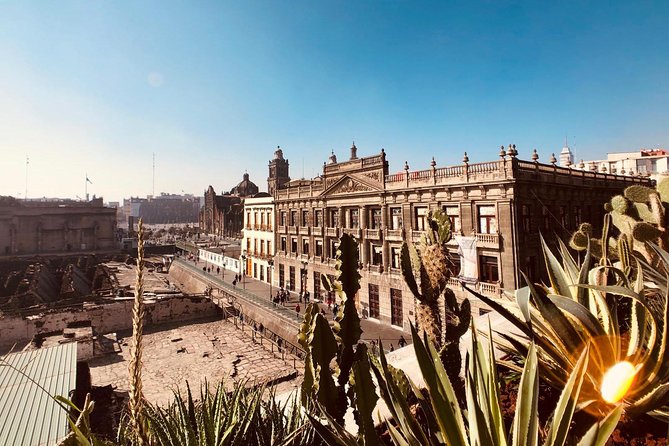
Mexico City’s story begins beneath the modern capital. This private walk connects the ruins of Templo Mayor, the vast Zócalo, colonial churches, Madero Street, the Postal Palace, and the murals of Bellas Artes in one well-planned route. You get the basic map of the city and the historical links that make each stop matter.
I like the private format, which lets your guide adjust the pace, explain what interests you, and stop for shade or coffee. I also like the route’s strong finish at Palacio de Bellas Artes, where Diego Rivera, David Alfaro Siqueiros, Rufino Tamayo, and other major Mexican artists fill the upper floors with powerful images.
The main drawback is that the tour covers a lot of ground in four hours, often close to 10,000 steps or about four miles. Templo Mayor is viewed from outside, and the National Palace cannot be entered, so this is best for orientation and interpretation rather than lengthy museum visits.
In This Review
- Key points before you book
- Why this route works as a first look at Mexico City
- Starting at Templo Mayor and the birthplace of Tenochtitlan
- Reading the Zócalo from the center of power
- Inside the Metropolitan Cathedral
- Walking Madero Street at an easy pace
- Iturbide Palace and the Professed Church
- Casa de los Azulejos and the remains of San Francisco
- Manuel Tolsá Square and the Postal Palace
- Bellas Artes and Mexico’s mural movement
- How much value do you get for $156?
- Who should book this private walk?
- Final decision: a strong orientation with an art-focused finish
- FAQ
- How long does the walking tour last?
- Is the tour private?
- What language is the tour offered in?
- Is admission to Templo Mayor included?
- Can you enter the National Palace?
- Is Palacio de Bellas Artes included?
- Is the Postal Palace included?
- Does the tour include food or drinks?
- Where does the tour start and end?
Key points before you book
- Templo Mayor is an exterior visit: You see the archaeological ruins from a panoramic point, but the museum admission is not included.
- Bellas Artes is the grand finale: Admission includes the lobby, second and third floors, and major murals when access is available.
- A private guide changes the pace: Guides such as Alicia, Silvia, Hilary, Hector, Isaias, and Julio have adapted the walk to family interests, mobility needs, art, history, and food.
- Coffee is included: A complimentary coffee or tea break gives you a chance to rest during the long walk.
- Several interiors are brief stops: The Cathedral, House of Tiles, Postal Palace, and selected churches receive short visits rather than long guided sessions.
- Crowds and public events can affect the route: Political marches and temporary closures have made some stops difficult in the past, so flexibility matters.
Why this route works as a first look at Mexico City
The historic center can feel enormous on your first day. The Zócalo alone is so large that its surrounding buildings may seem like unrelated monuments. This tour gives you a useful thread: Aztec capital, Spanish colonial city, independent nation, and modern center of Mexican art.
That order is one of the route’s best features. You begin with Tenochtitlan, walk through the colonial core, then finish with the political and social murals of the twentieth century. The guide’s explanations turn a series of facades into a connected story.
A private setting also helps. If you want more Aztec history, your guide can spend extra time near Templo Mayor. If art is your priority, you can give more attention to Bellas Artes murals. Families have found that guides such as Hilary and Francisco can keep younger children involved, while couples and solo visitors have appreciated a quieter pace and personal recommendations.
The tour is offered in English with a certified bilingual guide. Names assigned to past tours have included Alicia Herrera, Silvia, Hilary, Hector, Isaias, Julio, Fabio, Alejo, Ari, Carla, and Francisco. The exact guide is not guaranteed, but the range of strong guide feedback points to the human element as the tour’s main strength.
More City Tours in Mexico City
- Mexico City: Teotihuacan, Tlatelolco & Guadalupe Shrine Tour
★ 4.6 · 3,773 reviews - Teotihuacan Hot Air Balloon Flight from Mexico City / Volare
★ 5.0 · 3,262 reviews - Teotihuacan Private Tour from Mexico City
★ 5.0 · 1,890 reviews
Starting at Templo Mayor and the birthplace of Tenochtitlan
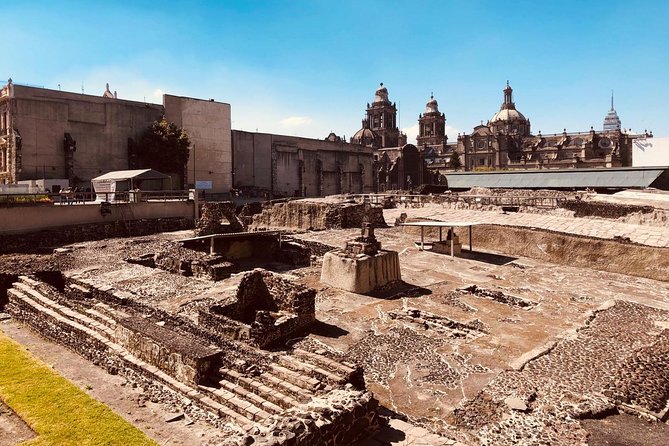
The route starts near Zócalo Central Hotel on Avenida 5 de Mayo, a convenient location in the center. From there, you reach the archaeological area of Templo Mayor, where the remains of Mexico-Tenochtitlan sit among the later city.
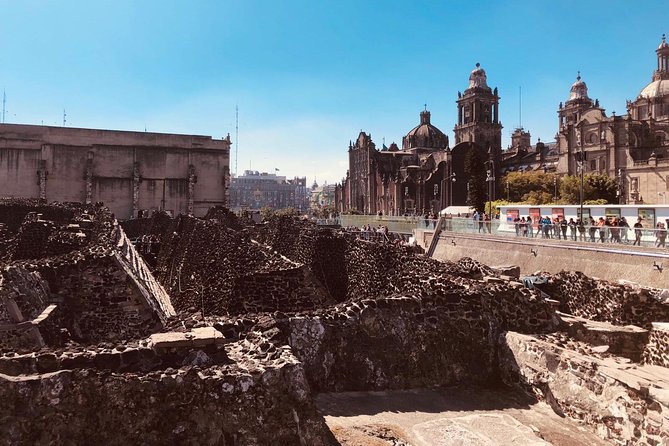
This is not a full archaeological-site tour. You view the ruins from outside for about 20 minutes, and admission to the Templo Mayor Museum is not included. That limitation is important if you want to see excavated objects, models, and detailed displays. You would need a separate visit for those.
Still, the exterior viewpoint is a strong opening. Your guide can explain how the Aztec capital grew into a powerful city and why the temple occupied the symbolic center. The point is not simply to look at old stones. It is to understand that today’s capital was built directly over the heart of an earlier civilization.
A guide can also help you notice the unusual layers of the center. Modern streets, colonial buildings, and archaeological remains exist side by side. Without context, the ruins can feel like an isolated site. With context, they become the first chapter of the entire walk.
Reading the Zócalo from the center of power
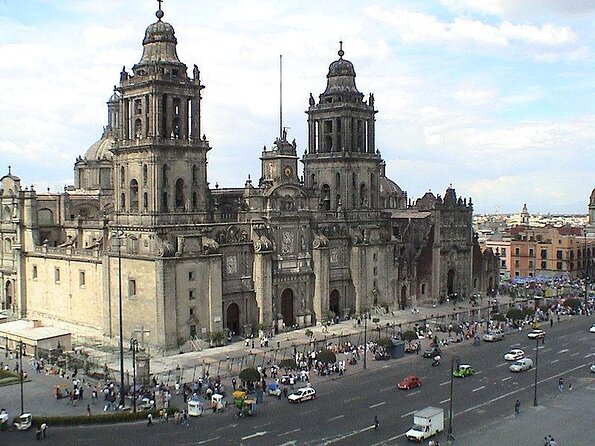
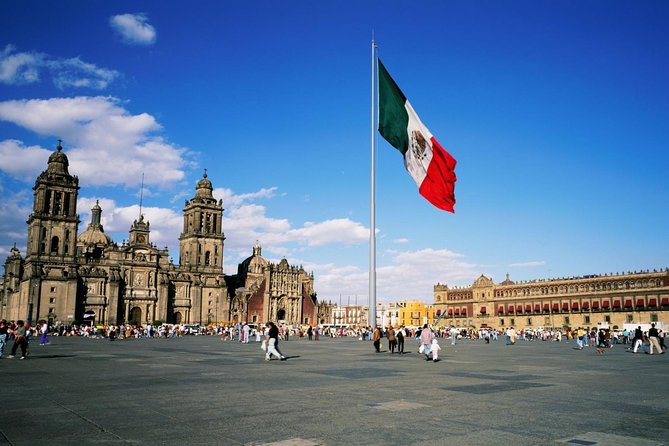
The Plaza de la Constitución, usually called the Zócalo, receives about 20 minutes. This vast square is the civic center of Mexico City, surrounded by the Metropolitan Cathedral, National Palace, and other major buildings.
The guide explains how the plaza functioned during colonial rule and how it has remained the setting for political events, public celebrations, and national ceremonies. You get a helpful orientation here because the Zócalo is the point from which much of the historic center radiates.
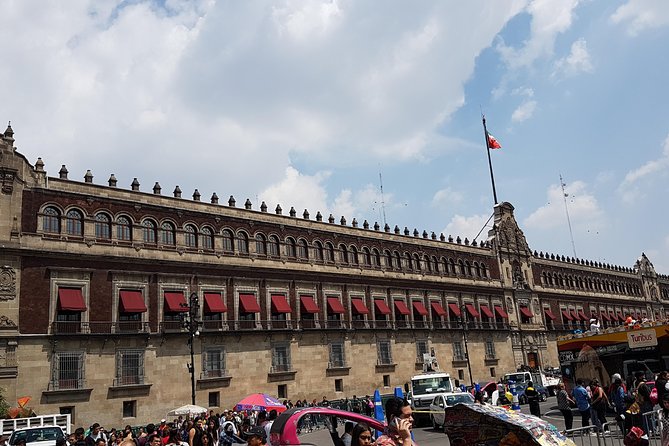
The National Palace is viewed from the square. You do not enter it, and interior access is not allowed on this tour. That means you will not see the famous interior murals or palace rooms during this experience. If those are high on your list, plan a separate visit, subject to opening conditions.
The exterior view is still worthwhile. The palace occupies the site associated with Moctezuma’s former residence and later became a center of Mexican political power. Your guide can make that sequence clear in a way a quick photograph cannot.
Inside the Metropolitan Cathedral
The Metropolitan Cathedral is one of the most rewarding interior stops. You have about 20 minutes to see its chapels and learn how Gothic, Herrerian, Mexican Baroque, and Neoclassical elements came together over time.
This is a building to approach slowly, even on a fast-moving walk. Look up at the scale, then shift your attention to the smaller chapels and ornate details. The cathedral works as both a place of worship and a record of changing architectural taste.
Depending on timing and access, your guide may take you into the sacristy, sometimes called the Mexican Sistine Chapel, or show you the large church organ up close. Neither special access is guaranteed, so consider it an added possibility rather than a promise.
The short visit means you will not study every chapel. That is the tradeoff of a route that also covers the archaeological site, Madero Street, the Postal Palace, and Bellas Artes. If religious art is your main interest, tell your guide at the start so the available time can be used well.
More Historical Tours in Mexico City
- Historic Downtown Walking Tour
★ 5.0 · 1,289 reviews - Historic Center Food Tour in Mexico City
★ 5.0 · 1,263 reviews - Mexico City: Historic Downtown Walking Tour
★ 4.8 · 1,039 reviews - Walking Tour of the Historic Center of Mexico City
★ 5.0 · 870 reviews
Walking Madero Street at an easy pace
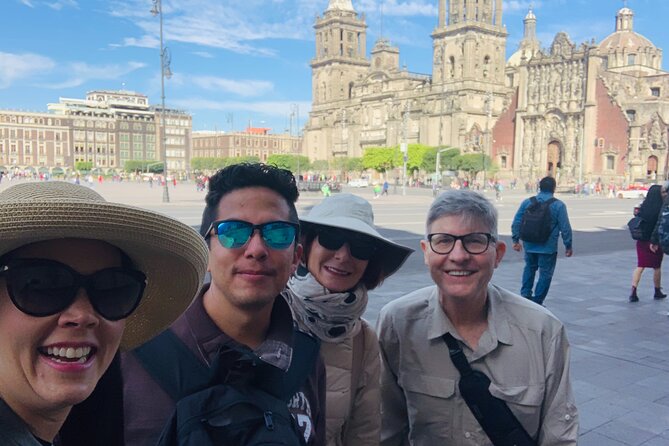
About an hour is devoted to Francisco I. Madero Avenue, a pedestrian street lined with historic buildings and churches. This is the longest outdoor section of the tour and the part where the city feels most like a living center rather than a collection of monuments.
Your guide points out colonial architecture, church facades, and small details that are easy to miss when you are simply walking from one attraction to another. The route is designed to pause for photos, questions, and a complimentary coffee or tea.
This hour can be adjusted. Past tours have slowed for rest, shade, food, or drinks, and some guides have continued beyond the planned four hours when the group wanted more. That flexibility is a major advantage over a large group tour with a fixed script.
The drawback is physical. Madero Street itself is pedestrian-friendly, but the overall route is long. One past visitor estimated close to four miles of walking. Wear shoes that can handle hard pavement, and do not treat the coffee break as an optional extra. It is a useful reset.
Iturbide Palace and the Professed Church
The Museo Antiguo Palacio de Iturbide receives a brief exterior explanation of about 10 minutes. The building is a fine example of Mexican Baroque architecture, and your guide discusses its design and its link to Agustín de Iturbide, the first emperor of independent Mexico.
You do not spend extended time inside the museum on this route. The value here is architectural and historical. It helps you see how Spanish styles changed in Mexico and how buildings carried the political story of the new nation.
The nearby Temple of San Felipe Neri, known as La Profesa, also receives about 10 minutes. Its Baroque altarpiece and collection of sacred art make it one of the most striking religious stops on the walk.
Again, time is limited. You get an informed look and a clear explanation, not a full art-history visit. The brief format works best if you want to recognize important places and decide which ones deserve a longer return visit.
Casa de los Azulejos and the remains of San Francisco
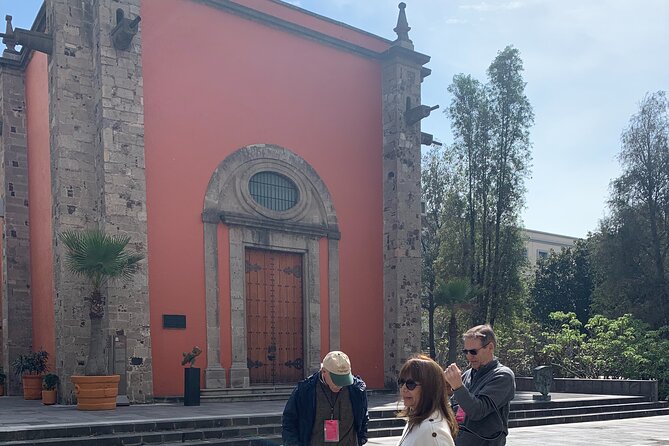
At the end of Madero Street, Casa de los Azulejos, or the House of Tiles, provides one of the route’s most photogenic moments. Its blue-and-white tile facade is easy to recognize, but the interior also offers murals and architectural details worth seeing.
The stop lasts around 10 minutes. You can appreciate the design and hear how the building fits into the colonial center, but you should not expect a long interior tour.
Across the street, the remains of the former Church and Convent of San Francisco include the Chapel of Aranzazú and a preserved, lowered section of the original complex. This is a good example of the city’s layered character. Buildings have changed, streets have shifted, and fragments of earlier structures remain in the middle of the modern center.
These stops are small, but they reward an attentive guide. The route is not only about the grand plaza and famous palace. It also shows how history survives in portions of buildings, altered facades, and spaces you might otherwise walk past.
Manuel Tolsá Square and the Postal Palace
Manuel Tolsá Square is a short pause before the final indoor visits. You view the exterior of the Mining Palace and hear why the square occupies an important place in the city’s architectural story.
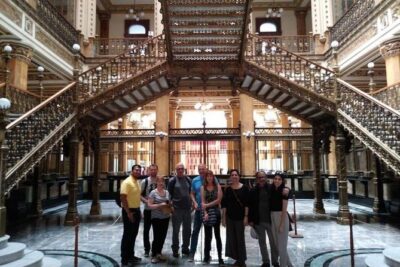
Then you enter the Postal Palace, where admission is included. The interior courtyard, with its decorative work and stained glass, is a welcome change after the long outdoor walk.
The visit lasts about 10 minutes, so it is more of a focused look than a full tour. Have your camera ready, but also spend a moment looking at the details above eye level. The building’s appeal lies in its decorative interior, not just its famous exterior.
This part of the route also shows the value of walking with someone who knows what to point out. The Postal Palace is easy to photograph from the street. The interior makes the stop more worthwhile, and the guide can explain why the building deserves attention.
Bellas Artes and Mexico’s mural movement
The tour ends at Palacio de Bellas Artes, with about 50 minutes inside. Admission is included, and you see the lobby, ornate decor, and upper floors with murals by Diego Rivera, David Alfaro Siqueiros, Rufino Tamayo, and other major Mexican artists.
This is the strongest finish because the murals bring together the themes introduced earlier. The images deal with conquest, class, labor, revolution, identity, and the country’s changing idea of itself. A good guide helps you read the scenes rather than treating them as large, colorful backgrounds.
Alicia Herrera has been praised for her explanations of the murals, especially Diego Rivera’s work. Silvia has used photos, maps, drawings, and other visual aids to make the art easier to follow. Julio has also been especially effective for visitors interested in early twentieth-century muralists.
The building itself is worth attention. It was created as Mexico’s major cultural venue for concerts, exhibitions, and artistic performances. After several hours of streets, ruins, churches, and civic buildings, Bellas Artes gives the walk a polished artistic close.
Access can vary. The stated plan includes the lobby and second and third floors, but public buildings can close portions of their interiors. One past tour had to work around closures and still offered a useful explanation from outside. That is why I would treat the included admission as valuable, but not assume every room will be open on your date.
How much value do you get for $156?
At $156 per person, this is not a budget walking tour. You are paying for a private experience, a certified bilingual guide, a flexible route, coffee or tea, and admission to Bellas Artes and the Postal Palace.
The value depends heavily on group size. For one or two people, the price is a serious splurge. For a larger private group, group discounts may improve the calculation, though the exact savings are not provided.
I think the price makes the most sense when you want a strong first orientation and care about history, architecture, or art. A guide can save you from spending your first day merely identifying buildings. You also gain the chance to ask questions that a standard group tour may not accommodate.
The price makes less sense if you prefer to wander alone, plan to visit each building at length, or mainly want exterior photographs. Several stops last only 10 or 20 minutes, and two major places, Templo Mayor’s museum and the National Palace interior, are not included.
You finish at Bellas Artes on Avenida Juárez, not back at the starting point. That is practical if you want to continue in the area, visit another attraction, or have coffee with a view of the palace after the tour.
Who should book this private walk?
I would choose this tour for a first visit to Mexico City, especially if you have only a few days and want the historic center to make sense quickly. It is also a good fit for art lovers who want help with the Bellas Artes murals.
Families can benefit from the private pace. Guides have adjusted explanations for children aged 11 and 14, and the format lets you pause when attention or energy fades. Couples and solo visitors also gain from the ability to shape the conversation around personal interests.
The walk suits people who enjoy context more than checklist sightseeing. You will see many important buildings, but the guide’s explanations are the main product. If you want only a quick circuit of exteriors, you can spend far less by walking independently.
Plan carefully if mobility is limited. Most people can participate, but the route can cover roughly four miles and includes a lot of standing and city walking. Tell the company about limitations in advance so the guide can shorten or adjust the route.
Public demonstrations and closures deserve attention. A past political march blocked access to several historic sites and created a serious safety problem for one participant. The guide tried to avoid the crowds, but the experience ended early and only a partial refund was provided. Check local conditions before setting out, and do not hesitate to reschedule if the center is unusually crowded or restricted.
Free cancellation is available up to 24 hours before the start time. Changes or cancellations inside that window are not accepted for a refund. Poor weather may lead to a new date or a full refund.
Final decision: a strong orientation with an art-focused finish
I recommend this tour if you want a private introduction to Centro Histórico and prefer a guide who can connect Aztec, colonial, national, and modern Mexican stories. The route covers an impressive range, and the Bellas Artes murals give it a memorable final chapter.
Book it with realistic expectations. Templo Mayor is exterior only, the National Palace is viewed from outside, and many other stops are brief. You are buying interpretation, flexibility, and a well-connected walking route, not a series of long museum visits.
For the best experience, wear comfortable shoes, begin with enough energy for several miles, and tell your guide whether your priority is archaeology, churches, architecture, mural art, or local recommendations. If that sounds like your kind of first day in Mexico City, the $156 price can be justified. If you want more time inside each museum, book the walk as an orientation and return independently to the places that catch your attention.
FAQ
How long does the walking tour last?
The tour lasts approximately four hours. Some private groups have spent longer with the guide when they wanted additional stops or a slower pace.
Is the tour private?
Yes. Only your group participates, and the itinerary can be adjusted to your interests and needs.
What language is the tour offered in?
The tour is offered in English with a certified bilingual guide.
Is admission to Templo Mayor included?
No. The tour focuses on the exterior archaeological site, and admission to the Templo Mayor Museum is not included.
Can you enter the National Palace?
No. The National Palace is viewed from the Zócalo, and interior access is not allowed on this tour.
Is Palacio de Bellas Artes included?
Yes. Admission is included, with a visit to the lobby and the second and third floors when access is available.
Is the Postal Palace included?
Yes. The tour includes entry to the interior courtyard of the Postal Palace.
Does the tour include food or drinks?
A complimentary coffee or tea break is included. Lunch and other beverages are not included.
Where does the tour start and end?
It starts at Zócalo Central Hotel, Avenida 5 de Mayo 61, in the Centro Histórico. It ends at Palacio de Bellas Artes on Avenida Juárez.
More Walking Tours in Mexico City
- Frida Kahlo VIP [Museum Tickets Included] Walk, Markets & Churros
★ 5.0 · 982 reviews - Anthropology Museum Private Experience Walking Tour
★ 5.0 · 355 reviews - Walking Tour in Mexico City for Exploring their Cultural Heritage
★ 5.0 · 245 reviews - Walking Tour – Impressive murals in Historical Center of Mexico City
★ 5.0 · 224 reviews
Recently reviewed around Mexico City
- Town walking tour of the city★ 5.0 · 72 reviews
- Cholula experience (private tour)★ 5.0 · 52 reviews
- Cholula tour from Puebla★ 5.0 · 66 reviews
- Private Hiking Tour in Iztaccihuatl★ 5.0 · 45 reviews
- City walking tour in Puebla (private tour)★ 5.0 · 40 reviews
- Cholula Magical Twon on a Traditional Tram from Puebla★ 4.5 · 61 reviews
- Hiking Excursion to the Iztaccíhuatl Volcano from Puebla★ 5.0 · 74 reviews
- Museum of Anthropology: a look at Mexico’s past★ 5.0 · 52 reviews
Historical Tours, compared.


Mexico City Historical Centre Food Tour with 7 Authentic Tastings
Read our review →
Historical and Cultural Walking Tour of San Miguel de Allende
Read our review →
Historical and Cultural Walking Tour of San José del Cabo
Read our review →
Walking Tour in Mexico City for Exploring their Cultural Heritage
Read our review →Browse the lists this tour appears in