
Reviewed · HISTORICAL TOURS
Walking Tour in Historic Center CDMX
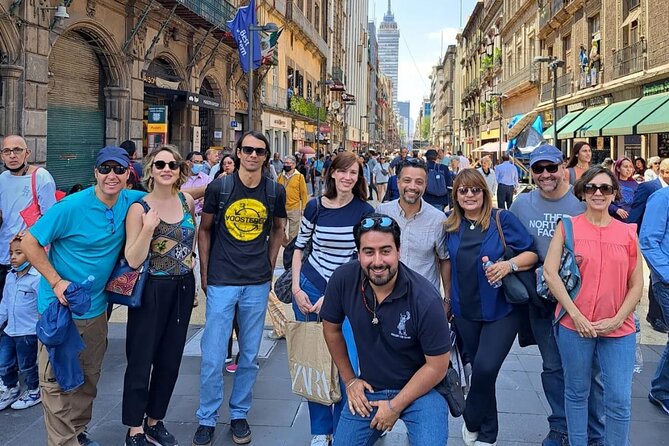
Mexico City’s Historic Center makes the most sense when you see its layers in one long walk. This tour begins with Diego Rivera’s mural about Mexico’s political past and ends with models explaining Tenochtitlan, the Aztec capital buried beneath today’s city. In between, you cross grand plazas, theaters, palaces, museums, and streets shaped by Spanish rule and Porfirian ambition.
I especially like the clear time line, which moves from modern Mexican political history backward to the Aztec world. I also like the variety of buildings, from the ornate Palacio Postal to the dark story of Esperanza Iris and the underground ruins beneath the Centro Cultural España.
The tradeoff is time. You spend roughly 10 to 25 minutes at most stops, so this is a guided introduction, not a slow museum visit. If you want to study every mural or gallery, you will need to return on your own.
In This Review
- Key points to know before you book
- A smart introduction to Mexico City’s Historic Center
- Diego Rivera’s mural sets the political tone
- Alameda Central reveals the city’s public side
- Palacio de Bellas Artes brings art and power together
- Palacio Postal shows Porfirian ambition
- Palacio de Minería connects silver to the capital
- Museo Nacional de Arte adds sculpture and architecture
- Teatro de la Ciudad carries a sad theater story
- Underground ruins at Centro Cultural España
- Templo Mayor closes the story at Tenochtitlan
- The guides make the format work
- Who will get the most from this walk?
- Is $83.64 a fair price?
- My verdict on the Historic Center walk
- FAQ
- How long does the walking tour last?
- Where does the tour begin?
- Where does the tour end?
- Is the tour offered in English?
- What is included in the price?
- Are food and drinks included?
- How large can the group be?
- Can I cancel for a full refund?
Key points to know before you book
- Starts with Diego Rivera and ends with Tenochtitlan: The route gives you a useful sweep through Mexico City’s past.
- Nine stops in about three hours: Expect a brisk pace and short explanations at each place.
- Certified English-speaking guide: Guides including Diego, Delta, Jorge, and Jaime have been praised for clear English, patience, and strong command of local history.
- Mostly central, walkable route: You finish at Templo Mayor Museum after crossing the core of the Historic Center.
- Small maximum group of 25: The group may still feel busy in central Mexico City, but it is limited rather than open-ended.
- Best booked early in the day: An early start can help you avoid the heavier crowds around the most famous sites.
A smart introduction to Mexico City’s Historic Center
At $83.64 per person, this is not the cheapest way to stroll through downtown. Its value depends on how much context you want. You are paying for a certified guide who connects art, politics, architecture, religion, conquest, and daily city life across one route.
That connection is the main reason to consider it. You are not simply looking at a mural, then a post office, then a ruin. You are hearing how different governments and cultures reshaped the same central area over many centuries.
The tour lasts about two hours and 30 minutes to three hours and 10 minutes. That range matters. A small group or flexible guide may spend more time on questions, while a larger group may keep to the planned schedule. The route has nine stops, so you should wear comfortable shoes and expect to stay on your feet for most of the experience.
The group limit is 25 people. That is not a private walk, but it is more manageable than a large coach excursion. The strongest guide names connected with this experience include Diego, Delta, Jorge, and Jaime. Their styles may differ, but the pattern is clear: expect an English-speaking guide who can answer questions and adjust the pace when possible.
More Historical Tours in Mexico City
- Historic Downtown Walking Tour
★ 5.0 · 1,289 reviews - Historic Center Food Tour in Mexico City
★ 5.0 · 1,263 reviews - Mexico City: Historic Downtown Walking Tour
★ 4.8 · 1,039 reviews
Diego Rivera’s mural sets the political tone
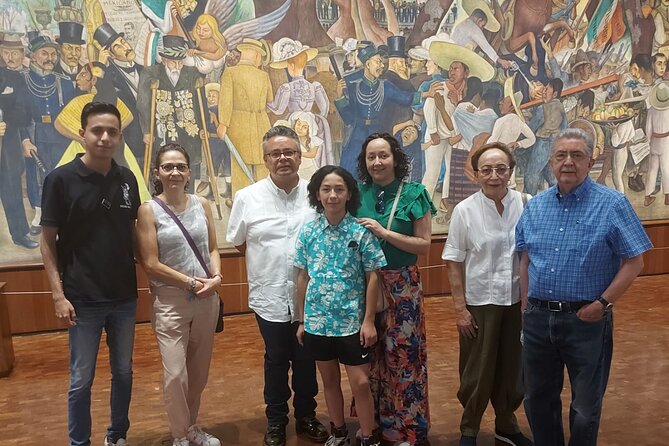
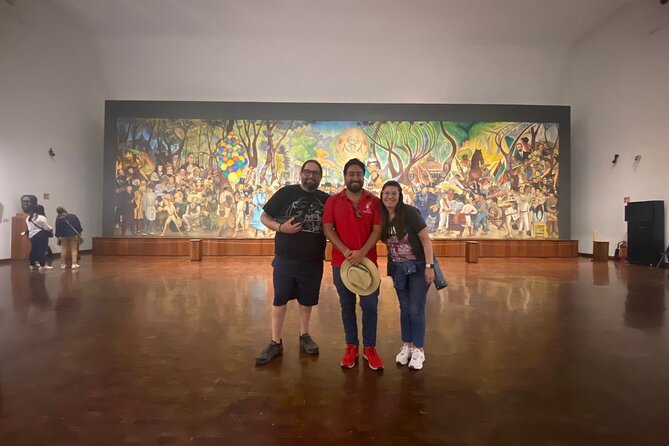
The first stop is the Museo Mural Diego Rivera, where you spend about 25 minutes. The mural at the center of the visit was censored because it included the phrase God does not exist. That detail gives your guide a natural way to discuss the tension between religion, politics, and public art in Mexico.
The explanation also covers figures who changed the country’s political, cultural, and ideological direction. This is a strong opening because it gives you a frame for the rest of the walk. Instead of meeting Mexico City as a pile of unrelated sights, you start with the question of who shaped the country and who had the power to tell its story.
Do not expect to study every part of the mural in silence. Twenty-five minutes is enough for a guided reading of its main figures and themes, but not enough for a full museum visit. If Rivera’s art is a major reason you are in Mexico City, plan to return later with more time.
Admission is listed as included at this stop. The starting point is the museum on Calle Colón Balderas in Colonia Centro, so check the exact meeting details before setting out.
Alameda Central reveals the city’s public side
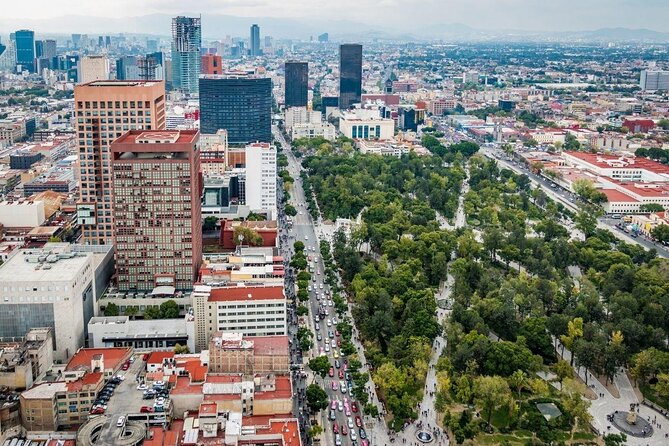
From the mural museum, the walk continues to Alameda Central for about 10 minutes. It is described as the first public park in the Americas, and the guide points out its classical sculptures and the way city residents use the space.
This is a short stop, but it helps you read Mexico City as a living place rather than a collection of monuments. Parks show how people move, meet, rest, and pass through the center. The sculptures also give your guide a chance to explain how European artistic ideals were placed into a Mexican urban setting.
Ten minutes will not allow for a full circuit of the park. Think of Alameda Central as a visual pause between the mural and the grand buildings ahead. You will see enough to understand its role, then continue walking.
Palacio de Bellas Artes brings art and power together
The Palacio de Bellas Artes receives about 20 minutes, making it one of the more substantial stops. The building is widely treated as Mexico City’s most emblematic landmark, and the guide explains its history, design, and place in the city.
This is where the tour’s theme of contrast becomes especially clear. Bellas Artes is polished, monumental, and built to project cultural importance. The walk around it also places you in the middle of a city that has repeatedly rebuilt itself, changed its priorities, and used grand architecture to express national identity.
The short time is again the main limitation. You may get the building’s story and key details, but not a leisurely look through its art spaces. If you want to see the interior murals or attend a performance, treat this stop as an orientation and return later.
The route is particularly useful for first-time visitors because the guide explains why this building matters, not just what it is called. That difference can turn a quick photo stop into a more meaningful part of your day.
More Walking Tours in Mexico City
- Frida Kahlo VIP [Museum Tickets Included] Walk, Markets & Churros
★ 5.0 · 982 reviews - Walking Tour of the Historic Center of Mexico City
★ 5.0 · 870 reviews - Anthropology Museum Private Experience Walking Tour
★ 5.0 · 355 reviews - Walking Tour in Mexico City for Exploring their Cultural Heritage
★ 5.0 · 245 reviews
Palacio Postal shows Porfirian ambition
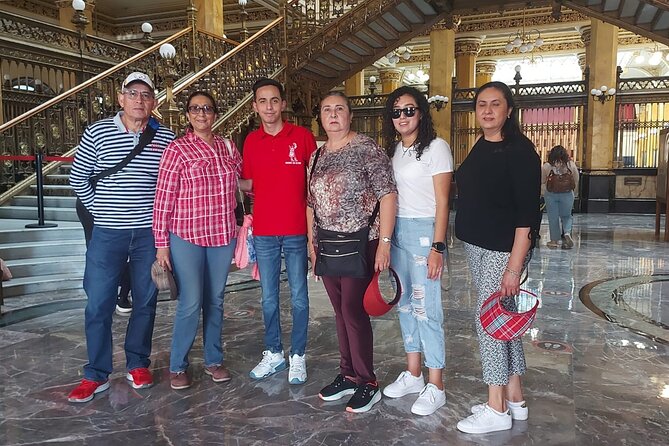
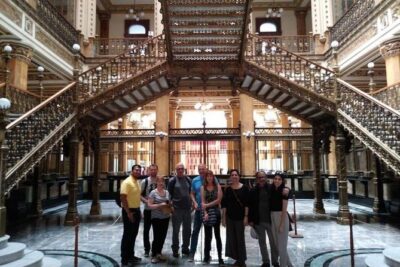
The Palacio Postal is next, with about 15 minutes devoted to it. It formed part of Porfirio Díaz’s project to beautify and modernize Mexico City. The building helps explain how the city’s leaders wanted the capital to look at the turn of the 20th century.
Look for the architectural details while your guide explains the political purpose behind the building. A post office may sound practical, but this one was also a statement about order, technology, and national progress.
Fifteen minutes gives you time to appreciate the exterior and selected details. It is not enough to linger over every decorative feature, so keep your eyes moving and listen for the connection between architecture and government policy.
Palacio de Minería connects silver to the capital
The Palacio de Minería gets about 10 minutes. The explanation links the building to Mexico’s continuing importance as the world’s leading silver-exporting country.
This is a quick but useful economic point. Mexico City’s monuments were not created in isolation. Mining wealth, political power, education, and trade all helped shape the capital. The stop gives you a glimpse of that larger system.
At 10 minutes, you should expect a focused explanation rather than a full architectural examination. It is best for building a mental map of the city’s forces, not for detailed study of the palace.
Museo Nacional de Arte adds sculpture and architecture
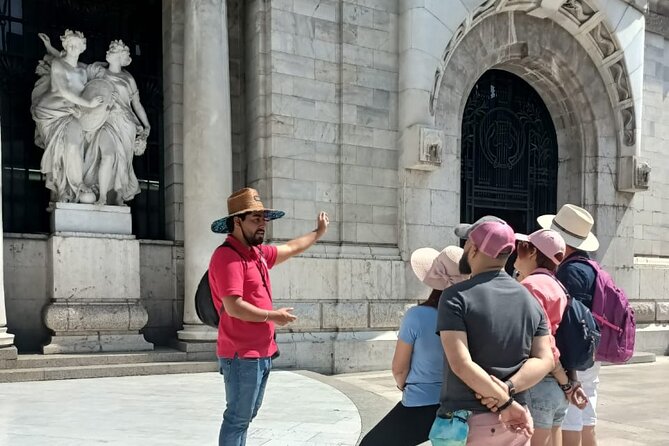
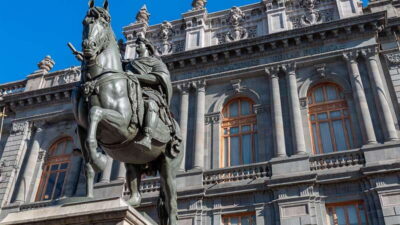
At the Museo Nacional de Arte, the tour lasts around 10 minutes. You enter to see a sculpture made by an artist with one hand, along with architectural details inside the museum.
That combination is nicely chosen. You get a human story tied to artistic skill, then a look at the building itself. The stop reminds you that museums in the Historic Center are not only containers for art. Their rooms, stairways, facades, and public spaces are part of the experience.
The time limit remains important. Ten minutes is a taste, not a museum visit. If you have a particular interest in Mexican painting or sculpture, mark this museum for a separate stop.
Teatro de la Ciudad carries a sad theater story
The Teatro de la Ciudad stop lasts about 15 minutes. Here, the guide explains the history of theater in Mexico and the tragic story of Esperanza Iris, a major figure in Mexican performance.
Across from the theater, you also hear about an 18th-century asylum for women described at the time as insane. This gives the stop a darker edge. The tour does not present the center as only a place of beauty and ceremony. It also points to institutions and social attitudes that now feel painful and troubling.
That contrast is one of the walk’s strengths. You move from elegant performance spaces to stories of confinement and suffering within a few steps. The stop is outside, and no admission fee is listed.
Underground ruins at Centro Cultural España
The Centro Cultural España en México is one of the most unusual stops because the group goes down to see ruins beneath the modern building. These are identified as the remains of a school for the sons of Aztec nobles.
You will spend about 20 minutes here. The setting makes the city’s layers physically clear: a modern cultural center above, colonial and pre-Hispanic remains below. You do not need a long lecture to understand the power of that arrangement.
This is also a useful reminder that Mexico City was built over earlier cities and institutions. The ground beneath the Historic Center is not empty space. It holds traces of Tenochtitlan and the colonial city that replaced it.
The stop is listed as free. The guide’s explanation is the main value, since the visit is brief and focused on the ruins and their purpose.
Templo Mayor closes the story at Tenochtitlan
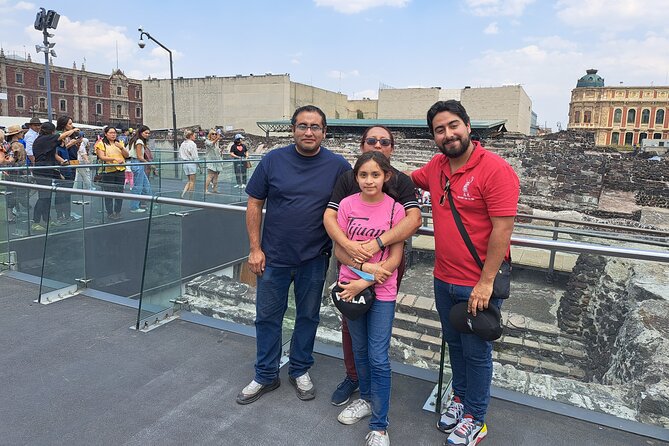
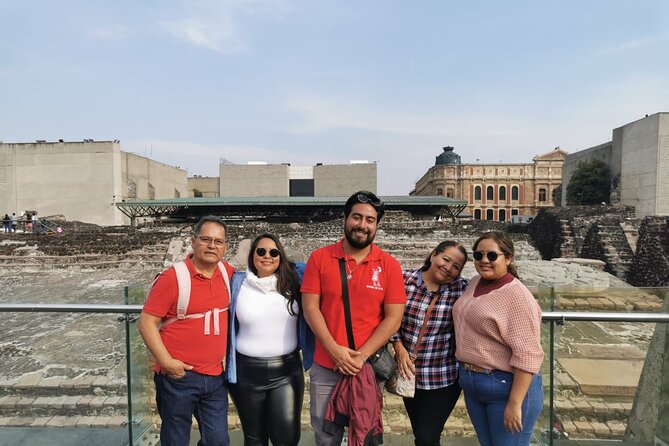
The final stop is the Museo del Templo Mayor, where you spend about 25 minutes. The guide uses models to explain how the Aztecs built Tenochtitlan, how they understood the world, the role of sacrifice, and how the Spanish conquest was achieved.
The experience ends outside while the guide explains the history of the main temple, the models, and the building of Tenochtitlan. That distinction is worth noting. You should not book this walk expecting a long, independent visit through every gallery of the museum.
Still, the ending works well. The tour has moved backward from Rivera’s modern political mural to the Aztec capital beneath the streets. You finish with a clearer sense of why the Historic Center feels layered and why the Spanish city could not erase everything beneath it.
If Templo Mayor is high on your list, return with extra time. The 25-minute explanation can orient you, but the museum and archaeological area deserve a slower look.
The guides make the format work
A short historical walk depends heavily on the guide. The strongest feedback here centers on Diego, Delta, Jorge, and Jaime.
Diego is described as easy to understand in English, relaxed, and willing to adapt the experience for a group of older adults. He also gave practical suggestions for lunch and for finding an Uber back toward Roma. That kind of help is useful because the walk ends in a busy part of the city, and you may want a meal immediately afterward.
Delta is described as pleasant, engaging, and good at managing time. That matters on a route with nine stops. She was able to cover the planned places without letting one site consume the whole morning.
Jorge is praised for his English and for answering questions, while Jaime is noted for kindness, flexibility, and strong command of the subject. These details suggest that the guide is not simply reciting a script. You can ask questions, but you should still remember that the schedule is tight.
One isolated complaint raises a serious concern about a booking dispute and alleged fraud. It does not provide enough detail to assess what happened, but you should always confirm the meeting instructions, provider name, and refund terms at booking. The stated cancellation rule allows a full refund if you cancel at least 24 hours before the start time. Inside 24 hours, no refund is offered.
Who will get the most from this walk?
I would recommend this experience to a first-time visitor who wants a strong orientation to central Mexico City. It suits you especially well if art, architecture, politics, colonial history, and Aztec culture all interest you, but you do not yet know how they fit together.
It also works for solo visitors and families who prefer a guide rather than a self-led day. Most people can participate, and service animals are allowed. The route is near public transportation, though the supplied details do not describe the walking surface, stair access, or exact distance.
You may want another plan if you dislike quick stops. Museum lovers, photographers, and anyone who reads every exhibit label will probably feel rushed. The best approach is to use this as a first pass, then return to one or two favorite places.
Book earlier in the day if you can. One guide specifically recommended that timing to reduce crowds, and it makes sense for a route through Mexico City’s most visited central sights.
Is $83.64 a fair price?
At $83.64, the tour costs more than wandering from plaza to plaza with a guidebook. The price is easier to justify if you value an English-speaking certified guide, a carefully linked route, and the chance to ask questions as you go.
The first six stops list admission tickets included, while the final three are marked free. Food, drinks, and tips are not included. Because the stop times are short, the price is not buying long access to each museum. It is buying interpretation and structure.
I would call it fair for visitors who want historical context without spending a full day planning the route. It is less attractive if you are comfortable researching the sites yourself or plan to return for detailed museum visits anyway.
My verdict on the Historic Center walk
Book this tour if you want Mexico City’s center explained as one connected story. The route from Rivera to Templo Mayor is its best idea, and the mix of grand architecture, public art, theater, underground ruins, and Aztec history gives you more range than a standard monument walk.
Skip it if your priority is depth at any single museum. You will see a lot in three hours, but you will not fully explore Bellas Artes, Museo Nacional de Arte, or Templo Mayor.
For most first visits, I think the tour works best on your first morning in the Historic Center. Let Diego, Delta, Jorge, Jaime, or another certified guide give you the framework, then choose the sites you want to revisit at your own pace.
FAQ
How long does the walking tour last?
The experience lasts approximately two hours and 30 minutes to three hours and 10 minutes.
Where does the tour begin?
It begins at the Museo Mural Diego Rivera, on Calle Colón Balderas in Colonia Centro, Mexico City.
Where does the tour end?
It ends at the Templo Mayor Museum on Seminario 8 in the Historic Center. The final explanation takes place from outside and covers the main temple, models, and the construction of Tenochtitlan.
Is the tour offered in English?
Yes. The experience is offered in English and includes a certified guide.
What is included in the price?
A certified guide is included. The first six listed museum and building stops show admission tickets included, while the final three stops are marked as free.
Are food and drinks included?
No. Lunch, food, and drinks are not included. Tips are also not included.
How large can the group be?
The maximum group size is 25 people.
Can I cancel for a full refund?
Yes, if you cancel at least 24 hours before the experience start time. Cancellations made within 24 hours are not refunded, and changes during that period are not accepted.
Recently reviewed around Mexico City
- Town walking tour of the city★ 5.0 · 72 reviews
- Cholula experience (private tour)★ 5.0 · 52 reviews
- Cholula tour from Puebla★ 5.0 · 66 reviews
- Private Hiking Tour in Iztaccihuatl★ 5.0 · 45 reviews
- City walking tour in Puebla (private tour)★ 5.0 · 40 reviews
- Cholula Magical Twon on a Traditional Tram from Puebla★ 4.5 · 61 reviews
- Hiking Excursion to the Iztaccíhuatl Volcano from Puebla★ 5.0 · 74 reviews
- Museum of Anthropology: a look at Mexico’s past★ 5.0 · 52 reviews
Historical Tours, compared.


Mexico City Historical Centre Food Tour with 7 Authentic Tastings
Read our review →
Historical and Cultural Walking Tour of San Miguel de Allende
Read our review →
Historical and Cultural Walking Tour of San José del Cabo
Read our review →
Walking Tour in Mexico City for Exploring their Cultural Heritage
Read our review →Browse the lists this tour appears in