
Reviewed · MUSEUMS
Mexico City: Anthropology Museum Tour with Historian
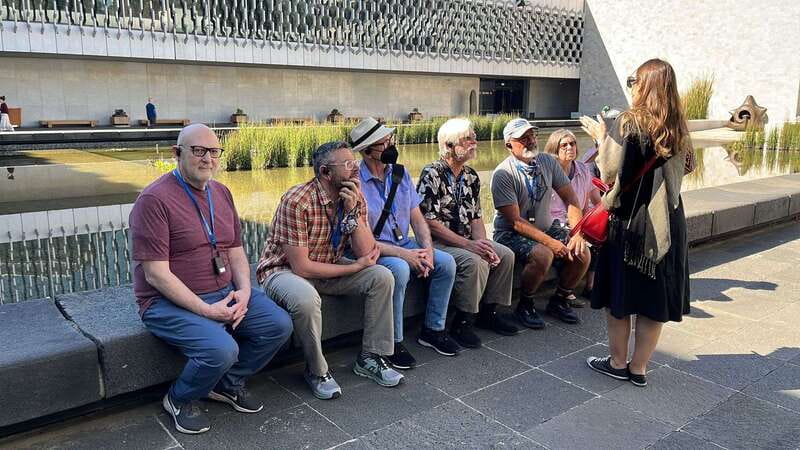
Mexico City’s National Museum of Anthropology is so large that a first visit can feel like opening five history books at once. This three-hour tour with an academic historian gives you a clear thread, connecting Olmec sculpture, Mexica engineering, Teotihuacán trade, and Maya writing instead of treating each gallery as a separate stop.
I like two things especially: the guides, including Natalia and Hector, explain difficult ideas in plain English, and the route gives major objects a useful setting. You also get the museum ticket and a small group limited to 10 people. The main drawback is time. Three hours covers the highlights, not every room, and some tours have run longer, so do not schedule a tight appointment right afterward.
In This Review
- Key points
- Why a Guide Helps in This Huge Museum
- Starting with the Museum’s Architecture
- Defining Mesoamerica Before the Objects
- Agave, Textiles, and the Work of Daily Life
- Ritual Clothing and Cultural Exchange
- Meeting the Olmec Colossal Head
- The Mexica City Beneath Modern Mexico City
- Teotihuacán as a Multicultural City
- Maya Writing and the Puzzle of Decipherment
- Pakal’s Tomb and a Museum Heist
- What Three Hours Really Gets You
- Price, Group Size, and Practical Value
- Who Should Book This Museum Tour
- Should You Book It?
- FAQ
- Where does the tour meet?
- How long does the tour last?
- What languages are available?
- What is included in the price?
- Is transportation included?
- How large is the group?
- Is the tour wheelchair accessible?
- Can children join?
- Can I cancel or pay later?
Key points
- A connected Mesoamerican story: Learn how symbols, farming, trade, religion, and art moved across distant cultures.
- The Sun Stone with its real name and purpose: Sort out what is often called the Aztec Calendar and see why that label misses the point.
- A practical look at daily life: Study agave fibers, looms, pigments, chinampas, bridges, and aqueducts.
- Teotihuacán beyond the usual postcard view: Consider the city as a multicultural center shaped by several peoples.
- Maya writing and Pakal’s tomb: Follow the long path to decipherment before ending beside a striking tomb replica.
- A guide who adds real value: Natalia and Hector bring academic training, visual aids, humor, and room for questions.
Why a Guide Helps in This Huge Museum
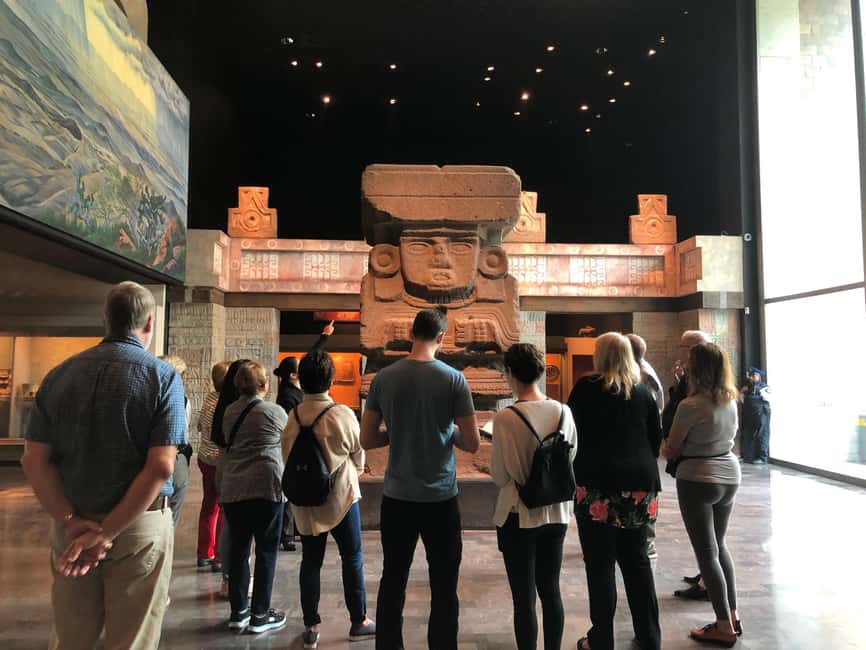
The National Museum of Anthropology is one of Mexico City’s essential sights, but its size creates a problem. You can admire a carved stone, a painted vessel, or a jade ornament without knowing what you are seeing, why it matters, or how it relates to the next gallery.
This tour solves that problem with a story that moves across Mesoamerica. You are not simply shown the famous objects. You learn how people shared ideas about rulers, gods, calendars, agriculture, death, color, and the natural world.
That approach is especially useful if you are new to Mexican history. The material covers many centuries and several cultures, yet the guide keeps returning to broad themes. How did people record knowledge? How did cities feed large populations? How did symbols travel from one region to another?
Natalia and Hector are the names most often associated with this experience. Natalia has graduate training in art history and uses photographs or slides on an iPad to add context. Hector is a former college professor, with a strong speaking voice and an easy way of handling questions. Both are described as warm, funny, and clear.
The tour is offered in English or Spanish. Headsets are provided for large groups, though the group itself is limited to 10 participants. That is a good balance: small enough to ask questions, but structured enough to keep the route moving.
More City Tours in Mexico City
- Mexico City: Teotihuacan, Tlatelolco & Guadalupe Shrine Tour
★ 4.6 · 3,773 reviews - Teotihuacan Hot Air Balloon Flight from Mexico City / Volare
★ 5.0 · 3,262 reviews - Teotihuacan Private Tour from Mexico City
★ 5.0 · 1,890 reviews
Starting with the Museum’s Architecture
The visit begins in the museum’s main lobby, near the ticket booth. Look for the guide holding the WALK MEXICO project logo. Transportation is not included, so you make your own way to the museum and meet the guide there.
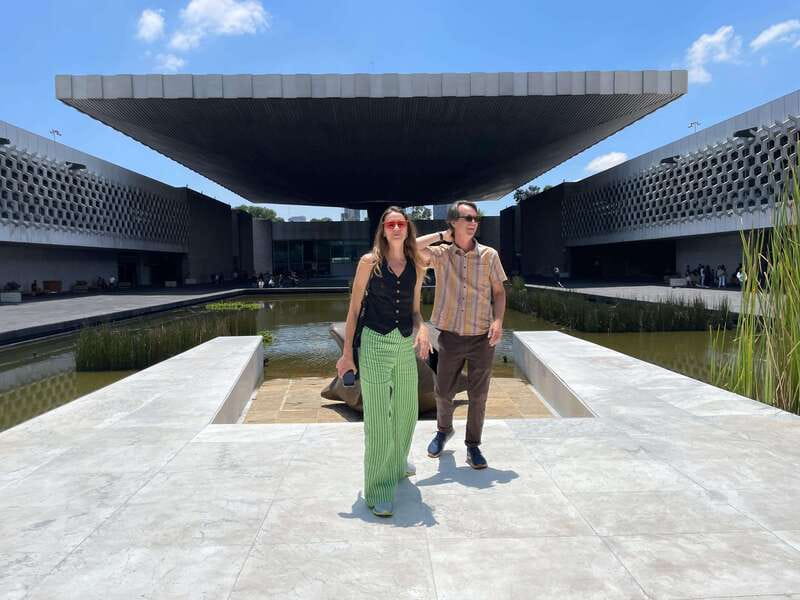
Before entering the galleries, the guide explains the building itself. This is not just a container for old objects. Its design was planned to honor Mesoamerican cultures through murals, symbols, monumental replicas, and carefully arranged spaces.
That introduction matters because the building often competes with the collection for your attention. If you rush through the entrance, you may miss how the architecture frames the objects inside. The guide gives you a way to read the museum before you begin reading its artifacts.
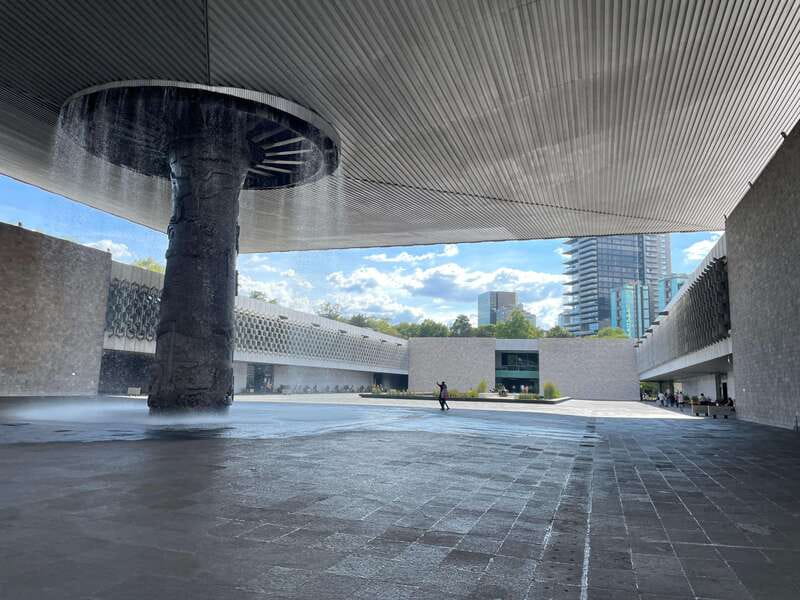
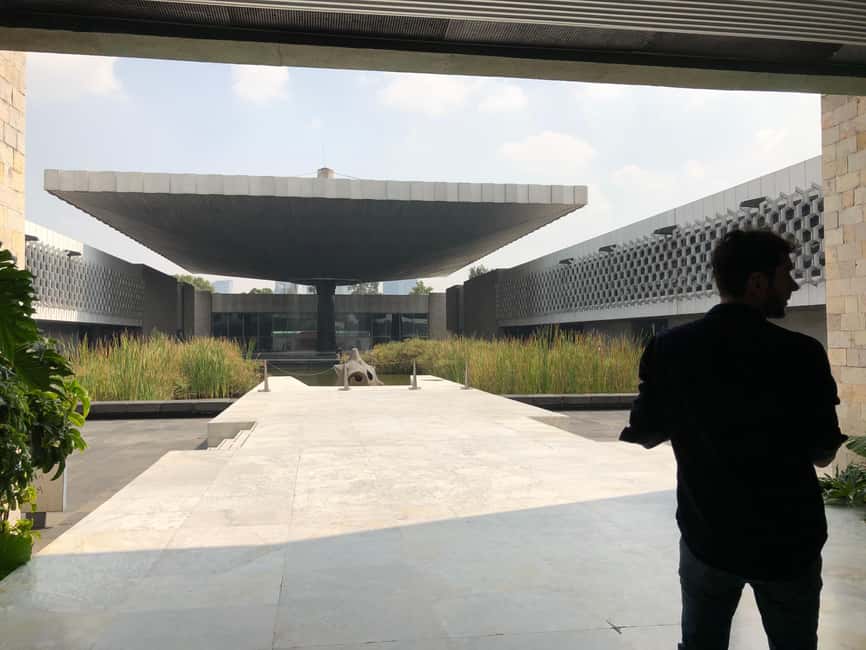
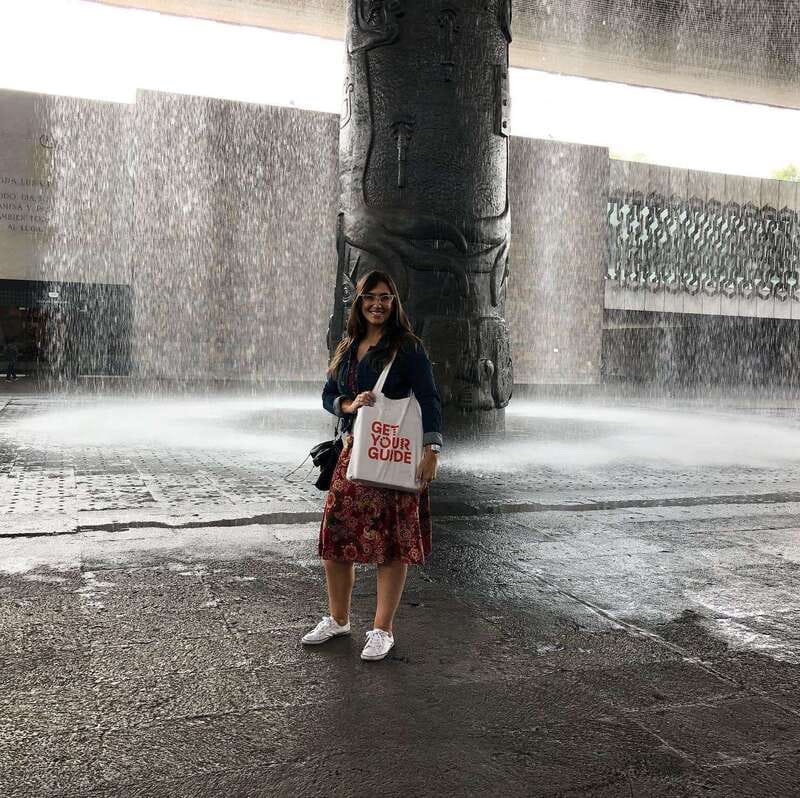
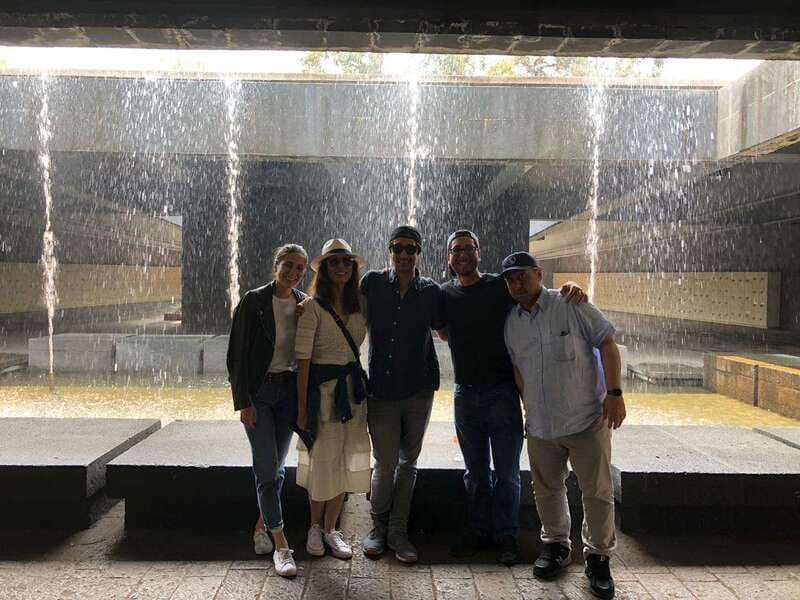
You will also visit the famous central courtyard and its enormous water feature. The fountain is one of the museum’s most memorable sights, but the tour treats it as more than a good photo stop. You learn about its symbolism and how water, fertility, movement, and the natural world appear in Mesoamerican thought.
Defining Mesoamerica Before the Objects
A useful early stop explains what the word Mesoamerica means. The term was defined by the anthropologist Paul Kirchhoff to describe a broad cultural region, not a single empire or one unified people.
This distinction is important. Mesoamerica included many societies spread across what is now Mexico and parts of Central America. They spoke different languages and built their own cities, yet they shared certain practices and ideas.
The guide points out links involving agriculture, calendars, writing, ritual, trade, and cosmology. You begin to see that cultural influence did not always move in a straight line from one famous civilization to another. Ideas were adapted, changed, and given new meanings.
I find this framing one of the best reasons to take the tour. Without it, the museum’s galleries can feel like isolated chapters. With it, an Olmec carving, a Teotihuacán mural, and a Mexica ritual object become parts of a much longer conversation.
Agave, Textiles, and the Work of Daily Life
The displays on textiles and household materials bring the tour down from monumental sculpture to ordinary work. You see looms, garments, fibers, and examples of spinning, weaving, and dyeing.
Agave receives special attention. It was not only a plant used for drinks. Its fibers could become cordage and textiles, while other parts served practical household purposes and could be shaped into tools or useful objects.
This stop is valuable because museum visits often focus on kings, temples, and burial goods. Textiles and plant fibers show how much skill went into daily life, even though fragile materials rarely survive as dramatically as stone.
You also learn about natural pigments and organic dyes. Color was not merely decoration. The making of color required knowledge of plants, minerals, fibers, and techniques. It also helped communicate status, ritual purpose, and group identity.
The gallery may not deliver the same instant impact as the Sun Stone or a colossal head, but it helps you understand the people behind the monuments. I would pay close attention here, especially if you want more than a parade of famous objects.
More Museum Tours in Mexico City
- CDMX: Xochimilco, Coyoacan, Frida Kahlo Museum & Murals Tour
★ 4.4 · 3,025 reviews - Chapultepec Castle & Anthropology Museum Tour
★ 4.5 · 1,348 reviews - Frida Kahlo VIP [Museum Tickets Included] Bike, Markets & Churros
★ 5.0 · 1,072 reviews - Anthropology Museum Guided Tour
★ 4.5 · 1,035 reviews
Ritual Clothing and Cultural Exchange
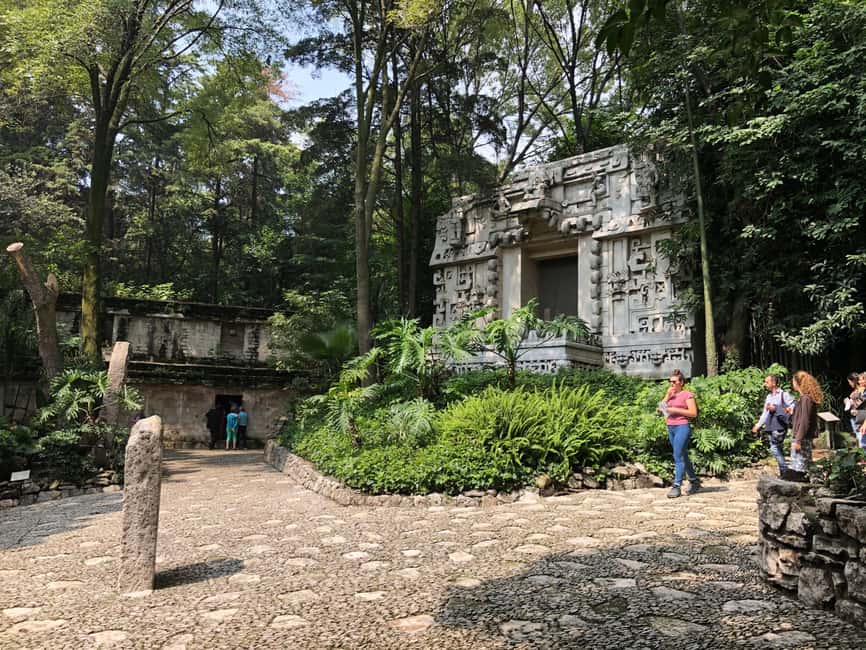
The route then turns to ceremonial clothing, body decoration, and ritual objects. These displays show how identity could be expressed through feathers, paint, fabric, jewelry, and carefully chosen symbols.
The guide explains cultural blending across Mesoamerica. Festivals and ceremonies did not remain unchanged for centuries. Communities borrowed, revised, and combined traditions as people traded, migrated, married, conquered, and worshipped together.
This is one place where the tour avoids a tidy but misleading timeline. Cultural identity was not a sealed box. A later society could adopt an older image and give it a new role. A familiar symbol could mean something different in another city or period.
For you, that means the objects become easier to question. Instead of asking only who made something, you can ask who used it, what message it sent, and how its meaning changed over time.
Meeting the Olmec Colossal Head
The Olmec gallery brings you face to face with one of Mesoamerica’s most recognizable forms: a colossal stone head. These works are powerful even before you know their date or purpose.
The guide discusses why the Olmec are often called the mother culture of Mesoamerica. That phrase is useful as a starting point, but it can also oversimplify the past. The museum route focuses on the wide influence of Olmec artistic styles and religious concepts while leaving room for the fact that later cultures were not simply copies.
The head itself raises practical questions. How was such a large stone moved? Who had the power to organize the labor? What did the facial features, headgear, and scale communicate?
You will not get a complete answer to every mystery, and that is part of the appeal. The guide separates solid evidence from interpretation rather than pretending that every ancient question has been settled.
This is also a good moment to ask questions. The tour is built for explanation, not just presentation. If you want to know how scholars identify influence between cultures, or how archaeologists interpret an object without a written label, this is a useful stop.
The Mexica City Beneath Modern Mexico City
The Mexica gallery shifts the story toward the civilization most closely associated with the capital. You study elements connected with Templo Mayor, chinampas, bridges, aqueducts, and the hydraulic system that supported the city.
A detailed scale model shows how the Mexica capital was organized. The modern city grew over it, so much of that earlier urban world remains beneath colonial and later construction.
The chinampas are especially important. They are often described as floating gardens, but that phrase gives the wrong impression. They were artificial agricultural islands, supported by water channels and linked to a wider system of bridges and aqueducts.
This was not a simple village arrangement. The displays help you picture a planned urban center that depended on engineering, water management, transport, and food production.
Then comes the Sun Stone, often called the Aztec Calendar. The common nickname is catchy, but misleading. The guide explains its actual name and meaning, helping you see it as a complex ritual and cosmological monument rather than a giant wall calendar.
The object can attract a crowd, so the guide’s explanation is particularly helpful here. You may hear fragments of information from other groups, but a dedicated guide gives you a full reading of the symbols and their place in Mexica thought.
Teotihuacán as a Multicultural City
The Teotihuacán gallery offers one of the tour’s most useful corrections to popular assumptions. Teotihuacán was a major city long before the Mexica rise, and the people who built it were not simply the Aztecs under an earlier name.
The guide presents Teotihuacán as a multicultural metropolis. Several peoples lived there or passed through it, and the city’s art and trade show connections across a wide area.
You see refined ceramics, obsidian work, mural fragments, and colorful replicas of architectural decoration. These pieces help you imagine a city that was planned, religious, commercial, and politically powerful.
The rise and decline of Teotihuacán remain subjects of debate. The tour discusses theories rather than offering one neat answer. That is a strength, since the city’s collapse cannot be reduced to a single confirmed cause based on the information presented here.
For me, this gallery gives the museum its widest sense of scale. The story is no longer only about individual rulers or temples. It is about urban life, movement, craft production, and contact between communities.
Maya Writing and the Puzzle of Decipherment
The Maya gallery closes the main route with ceramic portraits, painted vessels, and jade carvings. The objects are beautiful, but the writing story is the real centerpiece.
Maya writing was not understood quickly or easily. The guide traces a long process involving colonial archives, lost manuscripts, surviving inscriptions, and scholars working across different periods.
One striking part of the story involves a Russian soldier from World War II whose work helped advance the decipherment of Maya writing. The story makes the subject feel human. Progress came through persistence, comparison, argument, and the willingness to challenge older assumptions.
This is a good example of what the guide adds. A label may tell you that an inscription exists. The guide can explain how scholars worked out what its signs meant and why that changed our understanding of Maya politics and society.
The ceramics and jade also reward close attention. Portrait vessels can reveal faces and hairstyles, while jade objects point to status, ritual, and long-distance access to valuable materials. You begin to read art as evidence, not just decoration.
Pakal’s Tomb and a Museum Heist
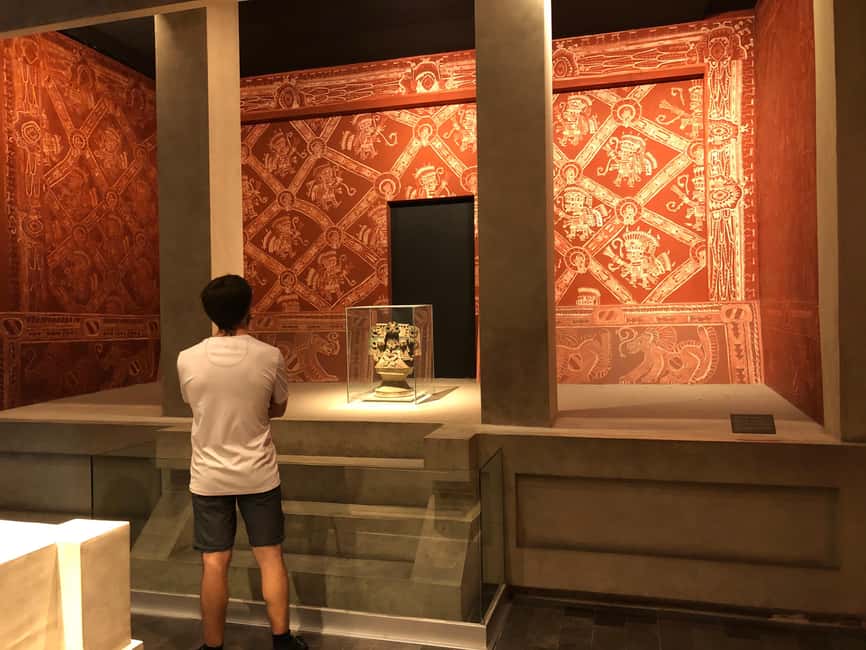
The final stop is the replica of Pakal’s tomb, one of the museum’s most dramatic spaces. The replica gives you a sense of the original burial setting without requiring a trip to the archaeological site itself.
Pakal was a Maya ruler associated with Palenque, and the tomb helps bring together themes from the gallery: rulership, writing, death, ritual imagery, and precious materials. The guide explains what you are seeing and why the space has such force.
The visit ends with an unusual modern story: the 1985 Christmas Eve theft at the museum. Pakal’s mask and many other treasures were stolen, making the episode a sharp reminder that famous objects are also vulnerable objects.
That story adds an unexpected final turn. After hours spent thinking about ancient beliefs and artistic skill, you are brought back to the modern world of museum security, ownership, and cultural responsibility.
What Three Hours Really Gets You
The advertised duration is three hours, but you should treat that as a working estimate rather than a hard stop. One group’s visit lasted about four and a half hours, while other tours have taken a little over three.
That variation likely depends on group size, questions, crowd levels, and the guide’s pace. If you have a ticket for something immediately afterward, leave plenty of room. If you want to continue exploring, you can stay in the museum for the rest of the day after the guided portion.
The route covers several major areas, but it is not a complete museum survey. You will see selected highlights from the Olmec, Mexica, Teotihuacán, and Maya collections, along with architecture, textiles, pigments, and ceremonial objects.
That is the right tradeoff for a first visit. You get a coherent explanation instead of exhausting yourself by trying to cover every room. If you already know the museum well, you may prefer a self-guided visit focused on lesser-known galleries.
Price, Group Size, and Practical Value
The cost is $175 per person. That is a serious price for three hours, especially since food, drinks, transportation, and hotel pickup are not included.
The value depends on how much explanation you want. The museum ticket is included, and the guide has graduate academic training in history or art history. You are paying mainly for access to a person who can connect objects, answer questions, and keep a huge collection from becoming a blur.
For a small group of no more than 10 people, the price makes more sense than it would for a large coach tour. You get a better chance to hear the guide, ask about a specific object, and adjust the discussion to your interests. If your group is small enough, the experience may feel close to private.
The strongest case for the price is simple: without a guide, you may spend hours seeing famous pieces without understanding their place in the story. If you are comfortable reading museum labels and researching later, you can save money. If you want history explained as you look at the objects, this is a useful splurge.
The tour is wheelchair accessible. Children may attend, but an adult must always accompany them. Free cancellation is available up to 24 hours before the activity, and you can reserve now and pay later, which helps if your Mexico City plans are still shifting.
Who Should Book This Museum Tour
I would choose this tour for a first visit to Mexico City, especially if you have limited time or feel unsure about Mesoamerican history. It also suits history fans who want to ask follow-up questions rather than simply listen to a fixed speech.
Families can benefit from the storytelling and visual aids, though younger children may not enjoy three hours of sustained museum attention. The guide’s humor and clear explanations help, but the subject remains demanding.
The tour is also a good fit for visitors who want to understand Mexico as a meeting place of cultures. It does not reduce the past to one empire or one famous calendar. Instead, it shows how different peoples shared ideas while keeping their own identities.
I would skip it if you want a slow, independent study of every gallery, or if $175 feels too high for a guided museum visit. You can still enjoy the museum on your own, and the ticket is easy to use for a longer self-guided day.
Should You Book It?
Book this tour if you want the museum’s major objects to make sense as part of one story. Natalia and Hector bring strong academic training, lively delivery, and the ability to handle detailed questions, which is exactly what this vast museum needs.
Allow more than three hours if your schedule permits, and do not plan transportation or another timed activity too tightly afterward. For a focused first visit that connects Olmec sculpture, Mexica engineering, Teotihuacán city life, Maya writing, and Pakal’s tomb, this is a worthwhile choice for the right museum-goer.
FAQ
Where does the tour meet?
You meet the guide in the Anthropology Museum’s main lobby, near the ticket booth. Look for the WALK MEXICO project logo.
How long does the tour last?
The stated duration is three hours. Some visits may run longer, depending on questions, group pace, and the route through the museum.
What languages are available?
The tour is available in English and Spanish.
What is included in the price?
The price includes the museum ticket, an expert guide with a graduate academic degree in history or art history, and headsets for large groups.
Is transportation included?
No. Transportation, hotel pickup, hotel drop-off, food, and drinks are not included.
How large is the group?
The group is limited to 10 participants.
Is the tour wheelchair accessible?
Yes, the activity is wheelchair accessible.
Can children join?
Yes, but an adult must always accompany children.
Can I cancel or pay later?
You can cancel up to 24 hours in advance for a full refund. You can also reserve now and pay later.
More Museums in Mexico City
- Frida Kahlo VIP [Museum Tickets Included] Walk, Markets & Churros
★ 5.0 · 982 reviews - EXCLUSIVE TOUR Frida Kahlo Museum – SMALL GROUPS
★ 5.0 · 901 reviews - Mexico City: Anthropology Museum Guided Visit
★ 4.4 · 708 reviews - Mexico City: Frida Kahlo Museum Entry Ticket w/Digital Guide
★ 4.5 · 683 reviews
Recently reviewed around Mexico City
- Teotihuacan from Mexico City with early access★ 4.7 · 49 reviews
- Teotihuacan Pyramids: Guided Tour with Entry Ticket Included★ 4.1 · 45 reviews
- Teotihuacan Pyramids: Skip-the-Line Ticket★ 3.8 · 98 reviews
- From Mexico City: Puebla and Cholula Day Tour★ 4.2 · 194 reviews
- Puebla: Cholula Magical Town Tour by Double-Decker Bus★ 4.3 · 74 reviews
- Puebla: Walking Tour of Puebla City★ 4.9 · 45 reviews
- Nevado De Toluca: Reach the Summit with Professionals★ 4.8 · 250 reviews
- Mexico City: Vegan and Vegetarian Street Food Adventure★ 4.8 · 65 reviews
Museums, compared.
Xochimilco, Coyoacan, Frida Kahlo Museum & Murals Tour
Read our review →
Chapultepec Castle & Anthropology Museum Tour
Read our review →![Frida Kahlo VIP [Museum Tickets Included] Bike, Markets & Churros](https://1.bestmexicotours.com/wp-content/uploads/frida-kahlo-vip-museum-tickets-included-bike-markets-churros-400x267.jpg)
Frida Kahlo VIP [Museum Tickets Included] Bike, Markets & Churros
Read our review →
![Frida Kahlo VIP [Museum Tickets Included] Walk, Markets & Churros](https://1.bestmexicotours.com/wp-content/uploads/frida-kahlo-vip-museum-tickets-included-walk-markets-churros-400x267.jpg)
Frida Kahlo VIP [Museum Tickets Included] Walk, Markets & Churros
Read our review →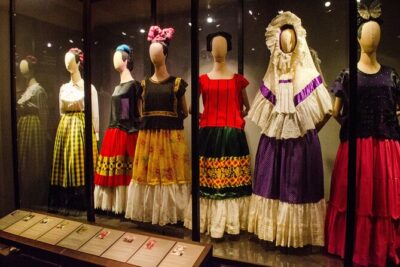
EXCLUSIVE TOUR Frida Kahlo Museum – SMALL GROUPS
Read our review →
Coba Multun-Ha Cenote Tulum and Mayan Museum Small Group
Read our review →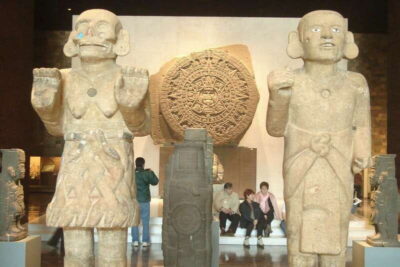
Browse the lists this tour appears in