
Reviewed · CITY TOURS
Mexico City: Night City Tour in a Double Decker Bus
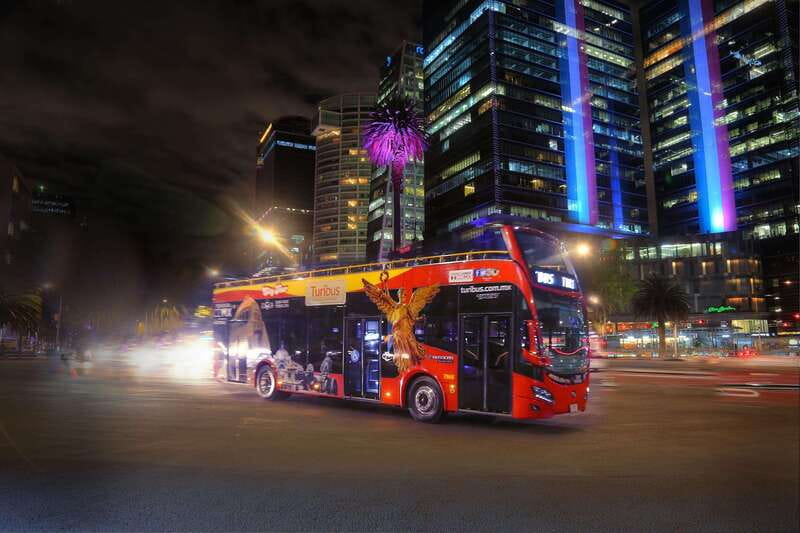
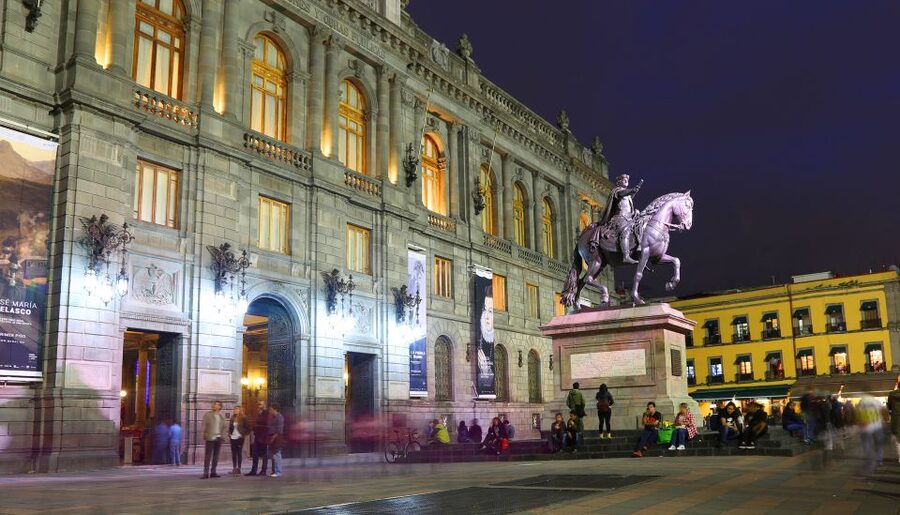
Mexico City takes on a different mood after sunset. From the top of a red Turibus, you can watch the city lights slide past as the route runs from the Historic Center down Paseo de la Reforma, passing grand monuments, fountains, and busy streets without asking you to navigate traffic yourself. For $10, this is an easy first look at the city after dark.
I especially like the short one-hour format and the chance to see several famous sights in one ride. The Angel of Independence, Diana Cazadora, Monumento a la Revolución, and Hemiciclo a Juárez all photograph well under lights. The main drawback is that this is a sightseeing loop, not a walking tour: the recorded audio replaces a live guide, and the bus does not offer hop-on hop-off stops.
In This Review
- Key Points at a Glance
- Starting Beside the Cathedral in the Historic Center
- The First Look at the Zócalo
- Passing Monumento a la Revolución
- Paseo de la Reforma After Dark
- The Angel of Independence
- Diana Cazadora, Reforma 222, and Fuente de Cibeles
- The Hemiciclo a Juárez and Return to the Center
- Upper Deck or Lower Level?
- How Good Is the Audio Guide?
- Is the $10 Price Good Value?
- Who Should Book This Ride?
- Final Decision: Book It for the Lights, Not the Lecture
- FAQ
- How long does the Mexico City night bus tour last?
- Where is the meeting point?
- Is this a hop-on hop-off tour?
- Which languages are available for the audio guide?
- What should I bring?
- Can wheelchair users join the tour?
Key Points at a Glance
- A $10 evening overview: This is one of the least expensive ways to see central Mexico City lit up.
- A Reforma-focused route: The ride follows Paseo de la Reforma, one of the city’s grandest avenues.
- Recorded audio in seven languages: Choose from Spanish, English, French, German, Portuguese, Italian, or Japanese.
- Best for first-night orientation: The route gives you a useful sense of where major monuments sit before you explore on foot.
- Bring a jacket and headphones: Night air can feel cold, especially upstairs, and working audio ports may be limited.
- Not a hop-on hop-off bus: You remain on the vehicle for the sightseeing circuit and return to the starting area.
Starting Beside the Cathedral in the Historic Center
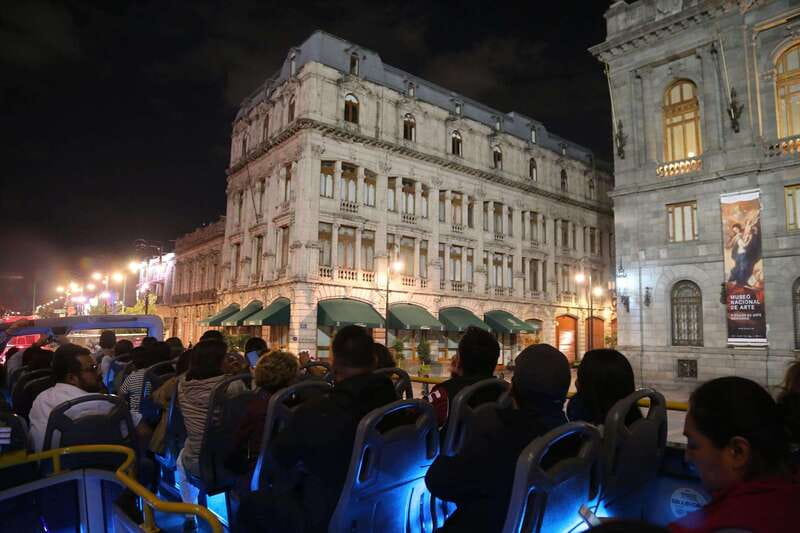
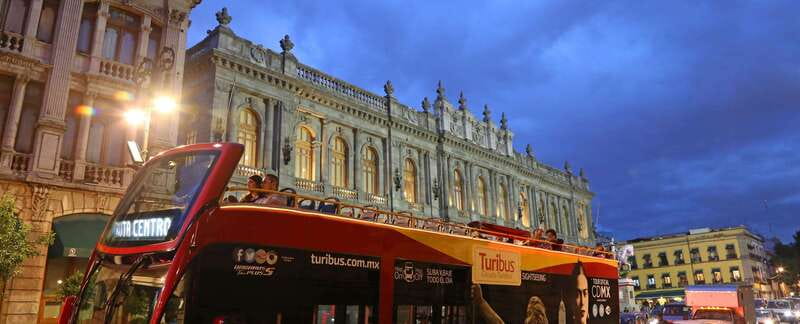
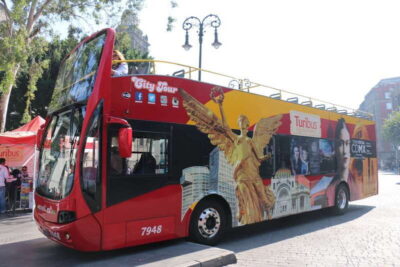
The meeting point is at Turibus Tours between Avenida 5 de Mayo and Calle Tacuba, next to the cathedral. Look for the red double-decker buses with the Turibus logo. Staff should be wearing a Turibus vest and badge, but give yourself time to find the exact boarding spot.
The location can feel less clear than a traditional ticket office. It is a street-side meeting point, and more than one tour operation may use the same general area. I would arrive 15 minutes before departure, keep your booking details ready, and ask staff to confirm the bus and language before you board.
The Historic Center is a useful place to begin. You are close to the Zócalo, the Metropolitan Cathedral, restaurants, and food stands, so you can eat before or after the ride. If you are planning dinner nearby, allow extra time. The bus will not wait for late arrivals.
More City Tours in Mexico City
- Mexico City: Teotihuacan, Tlatelolco & Guadalupe Shrine Tour
★ 4.6 · 3,773 reviews - Teotihuacan Hot Air Balloon Flight from Mexico City / Volare
★ 5.0 · 3,262 reviews - Teotihuacan Private Tour from Mexico City
★ 5.0 · 1,890 reviews
The First Look at the Zócalo
The ride begins in the center and passes the Zócalo, Mexico City’s enormous main square. You do not get a walking stop here, but the view gives you an immediate sense of the city’s scale and formal heart.
At night, the square and surrounding buildings can look especially striking when illuminated. The limitation is simple: this portion is viewed from the bus, so you will not have time to examine the cathedral or the National Palace closely. Think of it as a preview, not a replacement for a daytime visit.
The early part of the trip also helps you settle into the ride. You can choose between the lower level and the open upper deck, depending on available seats and weather. Upstairs gives you a clearer view over traffic and better sightlines for photographs, but it also leaves you more exposed to cool air and rain.
Passing Monumento a la Revolución
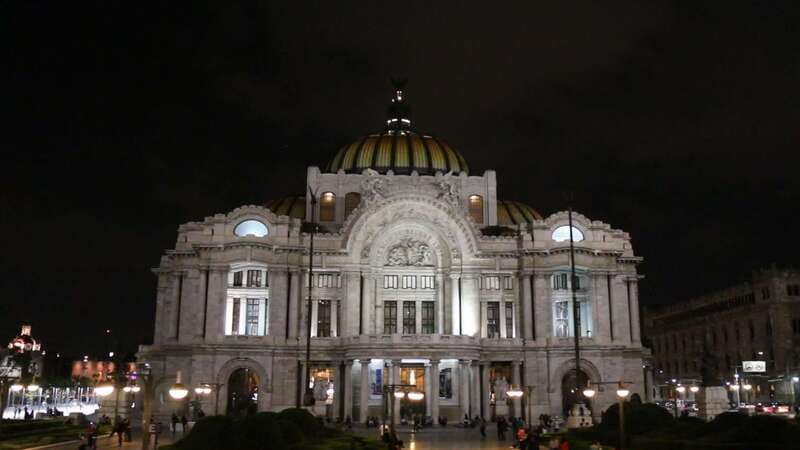
The bus continues toward Monumento a la Revolución, a large domed structure with a powerful presence at night. It is one of the route’s more dramatic architectural views, particularly when the monument is lit against the dark sky.
Again, this is a pass-by rather than a stop for exploring. You will have a few minutes to take in the monument from the road, but the bus format does not allow you to walk around the plaza or study the structure from different angles.
This is where the audio guide can add useful context. The narration is recorded, not delivered live, and it plays through the bus system. Audio is available in seven languages: Spanish, English, French, German, Portuguese, Italian, and Japanese. Bring your own headphones if possible, and check the audio connection early. One practical issue is that not every seat may have a working port, so do not wait until the main sights appear to test yours.
Paseo de la Reforma After Dark
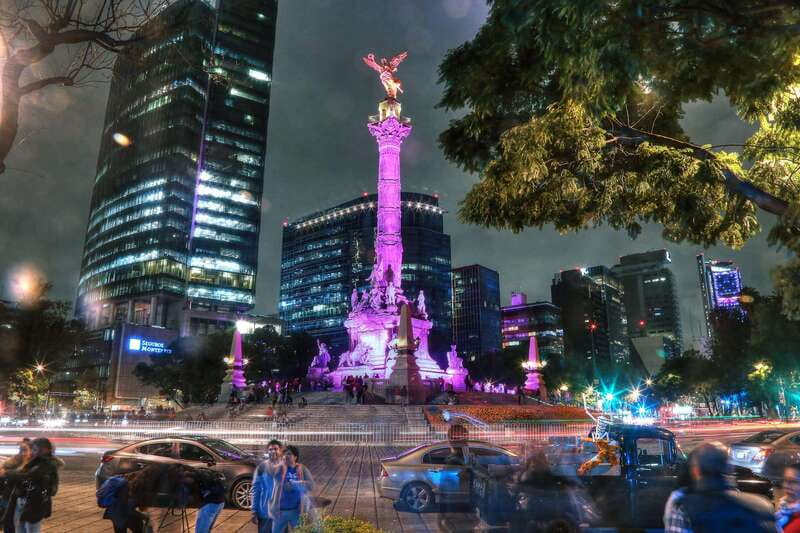
The central portion of the ride follows Paseo de la Reforma, the broad avenue that gives this tour its character. By day, Reforma is known for its monuments and grand urban scale. At night, the avenue becomes a long view of illuminated buildings, traffic, fountains, and moving city life.
I like this part because you can simply sit and watch. Mexico City is large and demanding to cross by car, taxi, or public transport. A double-decker ride lets you cover a good stretch without checking directions at every corner.
The bus does not promise a quiet or private outing. Traffic and road conditions affect the route, and the open upper deck may not suit you if weather turns wet or cold. Itineraries can change because of weather, traffic, road closures, or public demonstrations. The operator does not refund tickets for these unpredictable disruptions, so keep your expectations flexible.
More Mexico City trips worth a second look
- Lucha Libre Tickets & Tacos & Beer & Mezcal – BEST NIGHT EVER!
★ 5.0 · 1,077 reviews - Mexico City: Double Decker Bus Night Tour
★ 3.8 · 373 reviews - Mexico City: Tacos & Mezcal Night Food Tour
★ 5.0 · 100 reviews - Mexico City at Night Walking tour with optional Torre Latino
★ 4.2 · 40 reviews
The Angel of Independence
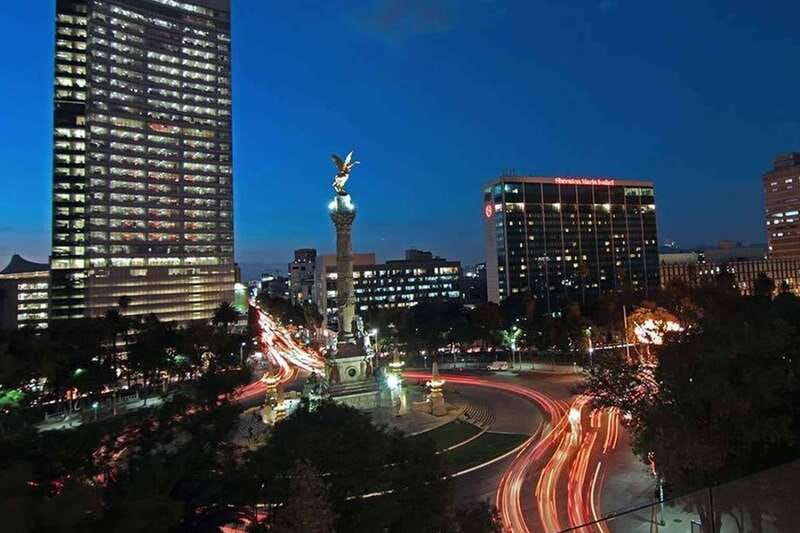
The Angel of Independence, usually called El Ángel, is the route’s headline sight. The golden-winged monument rises from a major Reforma traffic circle and is one of Mexico City’s most recognizable symbols.
Seeing it lit at night gives you a clean photo opportunity, especially from the upper deck. Have your camera ready before the bus reaches it, because the view comes and goes with traffic and the movement of the vehicle. A phone camera may catch the lights well, but reflections from windows or nearby lamps can affect photographs from the lower level.
The bus passes the monument rather than stopping for a close look. That is fine if your main goal is to see it as part of the avenue, but you will need a separate visit if you want to walk around its base or take your time with photographs.
This is also a good point to listen carefully to the audio. The monument is more than a decorative column, and the narration gives the ride some historical shape. Still, the information remains fairly light. If you want a detailed account of Mexico’s history, plan to visit a museum or take a dedicated walking tour as well.
Diana Cazadora, Reforma 222, and Fuente de Cibeles
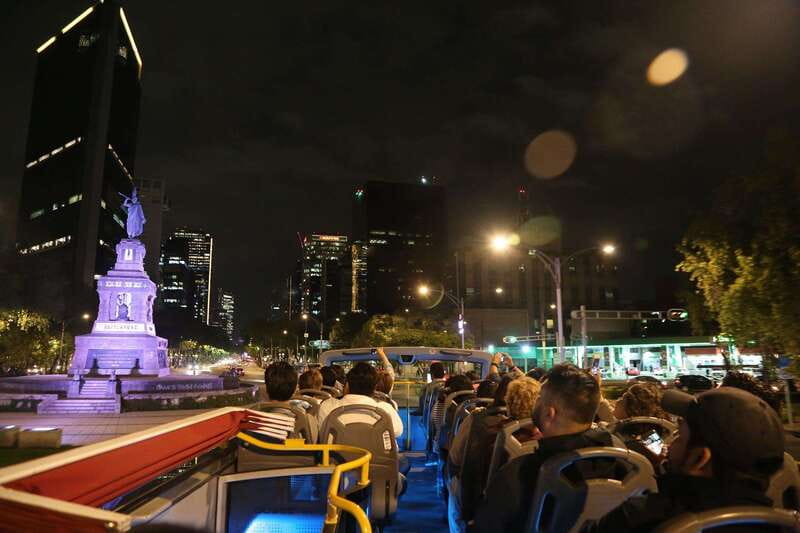
After the Angel, the route continues past other landmarks associated with Reforma. The Diana Cazadora Fountain is a graceful statue and fountain that looks particularly effective under evening lighting. It is one of those sights you might miss while moving through the city on your own, yet it adds variety to the ride.
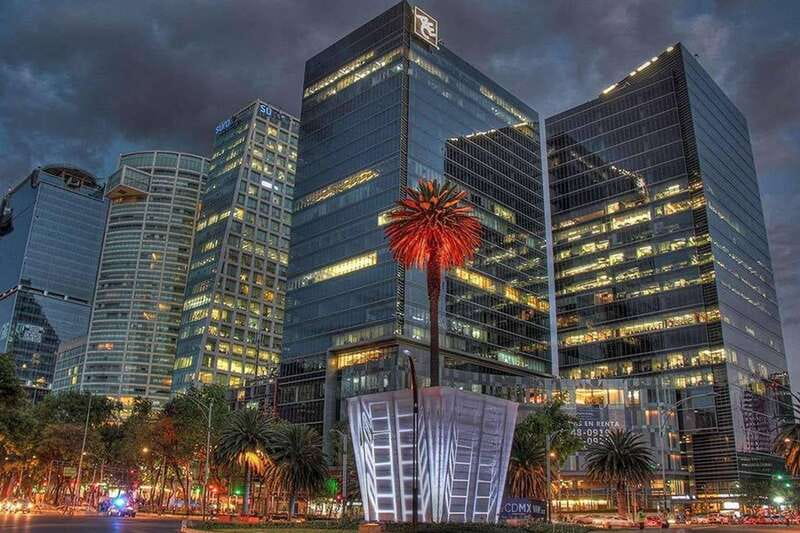
Reforma 222 brings a more modern note. This shopping center contrasts with the older monuments and gives you a glimpse of the avenue’s commercial side. The changing mix of historic symbols, contemporary buildings, traffic, and public art is one reason the night route feels more useful than a simple loop around the Zócalo.
The bus also passes Fuente de Cibeles. This fountain connects the route with another well-known Mexico City neighborhood and adds another photo stop from the road. The itinerary allows only a short look, so stay alert. If you are seated upstairs, keep your phone or camera ready rather than packing it away between sights.
These locations are not full stops for independent exploration. You will see them from the moving bus, hear brief commentary, and continue along the route. That makes the trip efficient, but it also means the experience favors breadth over detail.
The Hemiciclo a Juárez and Return to the Center
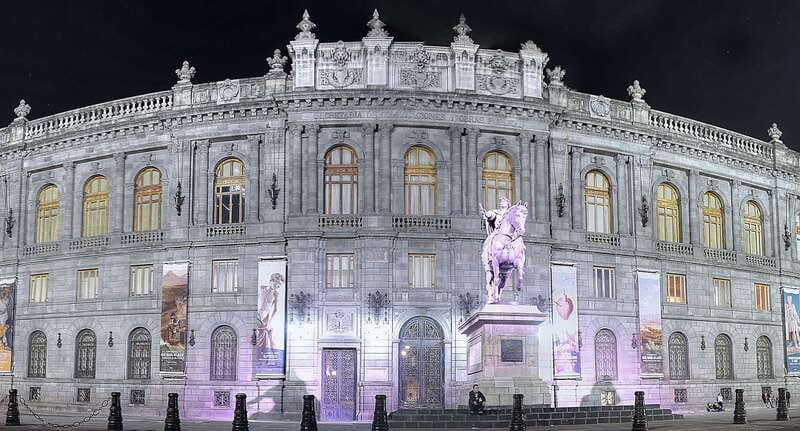
The ride wraps up near Hemiciclo a Juárez, the white marble monument dedicated to Benito Juárez. Its semicircular design and bright stone make it easy to recognize after dark. The monument offers a final historical counterpoint to the modern shopping center and the illuminated Reforma traffic circles.
The published route describes this area as part of the closing section before the bus returns to the Historic Center. The exact timing can shift. The activity is advertised as approximately one hour, while some departures may run a little longer depending on traffic and road conditions.
You should not expect a long guided stop here. This is a final landmark view on a continuous bus ride. If the route is moving quickly, the best approach is to listen to the narration and take in the monument as part of the larger evening circuit.
Upper Deck or Lower Level?
The upper deck is the natural choice for photographs and broad views. You will have fewer obstructions and a better chance of seeing monuments above the traffic. It is also the colder option, particularly in December and on windy nights.
The lower level is more sheltered and may be more comfortable if it rains. It can also be easier for anyone who does not want to climb stairs, though the activity is not suitable for wheelchair users. The supplied information does not promise a specific seating arrangement, so arrive early if choosing a particular level matters to you.
Bring comfortable clothing, a jacket, and comfortable shoes. Shoes matter less while seated, but you still need to get to the meeting point and board safely. Alcohol, drugs, and smoking are not permitted on the bus.
A passport, identification card, or accepted copy is listed among the items to bring. Keep it accessible with your booking information.
How Good Is the Audio Guide?
The audio guide is included and available in Spanish, English, French, German, Portuguese, Italian, and Japanese. You select your language through the bus audio system, making the ride workable for international visitors.
The narration is prerecorded. That means you will not be able to ask questions or request more detail about a particular building. It also means the quality of your experience can depend on your seat and audio connection.
I would test the headphones as soon as you sit down. A guest who expected an English ride ended up on the Spanish audio channel after being directed to change buses, which is an easy problem to avoid by confirming the language before departure. If your audio is not working, speak to staff immediately rather than assuming the narration will improve later.
The audio is best treated as an introduction. It gives you context while the city passes by, but the tour’s strongest feature is the view, not an in-depth lecture.
Is the $10 Price Good Value?
At $10 per person, the price is the strongest part of the package. You get a roughly one-hour night ride along Reforma, access to major central sights, and a multilingual audio guide. Even with the tour’s limits, that is a fair price for a low-effort overview.
The value is highest on your first evening in Mexico City. You can learn the general shape of the center and Reforma, note places you want to revisit, and see how the monuments look after dark. It is also useful if you have only a short stay and want a broad view without arranging several separate visits.
The value is lower if you want a personal guide, long stops, or detailed history. You are paying for transport and orientation, not a private lesson or a series of walking visits. Since the bus is not hop-on hop-off, you cannot get off at the Angel, explore, and board another bus later.
Who Should Book This Ride?
I would recommend it to first-time visitors, couples looking for an easy evening activity, families who prefer to cover ground while seated, and anyone who wants city photos without planning a complicated route.
It also suits you if you arrive in Mexico City with limited time. A one-hour circuit is manageable before dinner or after a day of museums. The central meeting point makes it easy to combine with other Historic Center activities, provided you allow enough time to return for boarding.
You might skip it if you already know Mexico City well, dislike recorded commentary, or want to spend an hour walking through one neighborhood. It is not the right choice for wheelchair users, and anyone sensitive to cold should plan on sitting downstairs or bringing a warm jacket.
Rain does not automatically ruin the outing, but it can reduce the appeal of the open deck and affect the route. Because weather and city events can change the itinerary, this is best booked with some flexibility.
Final Decision: Book It for the Lights, Not the Lecture
Book this Turibus night tour if you want a cheap, simple introduction to Mexico City after dark. The best moments come from the moving view: Reforma glowing with traffic and monuments, the Angel of Independence catching the light, and the contrast between old civic landmarks and newer commercial buildings.
Go in knowing what it is. You will not get a live guide, extended stops, or hop-on hop-off freedom. You will get a compact city circuit, useful audio in your language, and a good chance to see several major sights for $10. For a first night, that is a sensible trade.
FAQ
How long does the Mexico City night bus tour last?
The tour lasts approximately one hour. The exact duration can vary with traffic, weather, road closures, and public demonstrations.
Where is the meeting point?
Turibus Tours is between Avenida 5 de Mayo and Calle Tacuba, next to the cathedral in the Historic Center. Look for the red double-decker Turibus buses and staff wearing Turibus vests and badges.
Is this a hop-on hop-off tour?
No. The night city tour is a continuous sightseeing ride, so you do not get off at landmarks and board a later bus.
Which languages are available for the audio guide?
The audio guide is available in Spanish, English, French, German, Portuguese, Italian, and Japanese.
What should I bring?
Bring comfortable shoes, comfortable clothes, a jacket, headphones, and a passport or identification card. A copy of the identification document is accepted.
Can wheelchair users join the tour?
No. The activity is not suitable for wheelchair users.
Recently reviewed around Mexico City
- Teotihuacan from Mexico City with early access★ 4.7 · 49 reviews
- Teotihuacan Pyramids: Guided Tour with Entry Ticket Included★ 4.1 · 45 reviews
- Teotihuacan Pyramids: Skip-the-Line Ticket★ 3.8 · 98 reviews
- From Mexico City: Puebla and Cholula Day Tour★ 4.2 · 194 reviews
- Puebla: Cholula Magical Town Tour by Double-Decker Bus★ 4.3 · 74 reviews
- Puebla: Walking Tour of Puebla City★ 4.9 · 45 reviews
- Nevado De Toluca: Reach the Summit with Professionals★ 4.8 · 250 reviews
- Mexico City: Xochimilco Boat with Guacamole & Premium Drinks★ 4.8 · 32 reviews
City Tours, compared.
Teotihuacan, Tlatelolco & Guadalupe Shrine Tour
Read our review →
Teotihuacan Hot Air Balloon Flight from Mexico City / Volare
Read our review →

The best tour to Teotihuacán from Mexico City
Read our review →
Browse the lists this tour appears in