
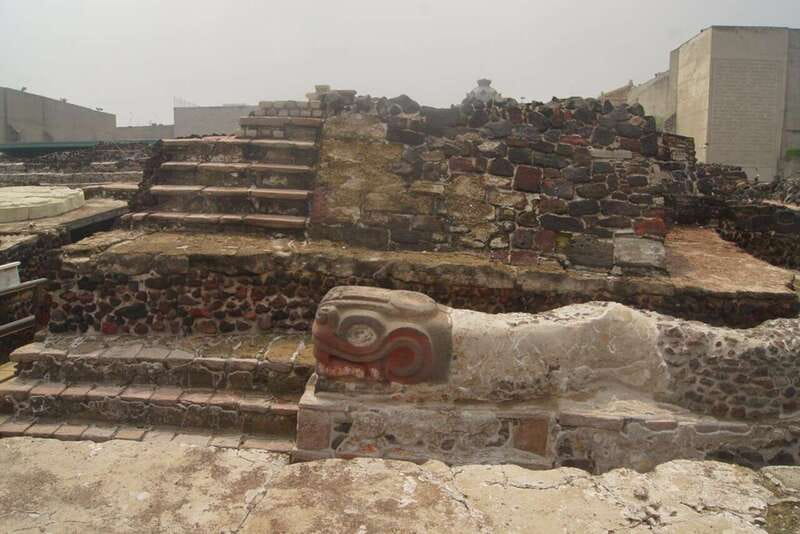
Reviewed · CITY TOURS
Mexico City: Templo Mayor Skip-the-Line Entry Ticket
The most striking thing about Templo Mayor is its location: the remains of the Mexica capital sit in the middle of modern Mexico City. You can walk past the ruins from outside, but entry takes you into the archaeological zone and museum, where the temple’s objects and religious world make far more sense.
I like two things here. First, the skip-the-line ticket lets you avoid the ticket office and go straight to the turnstiles. Second, the museum adds real value, with up to 7,000 archaeological objects spread across eight rooms. The main drawback is that this is an entry ticket, not a guided tour, so you need to read the displays and build your own understanding.
In This Review
- Key points
- Seeing Tenochtitlan beneath modern Mexico City
- What the skip-the-line ticket really saves
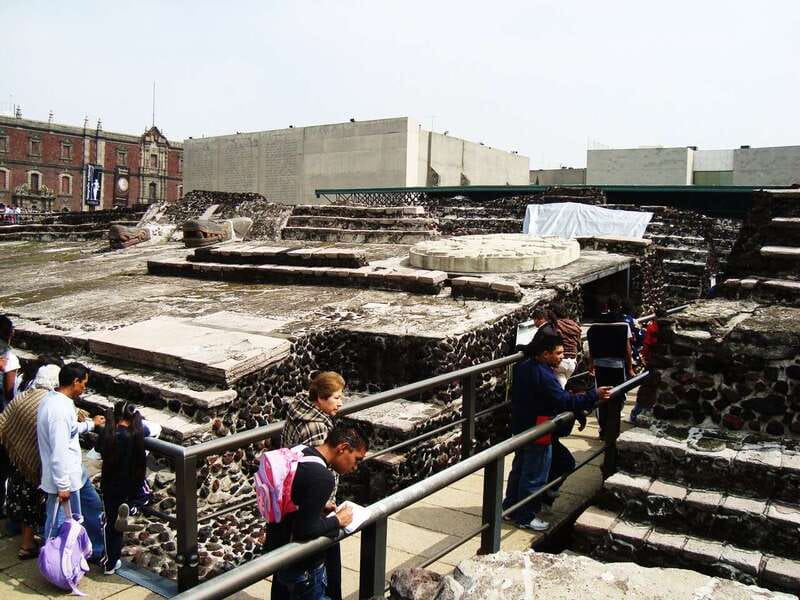
- The archaeological zone and the Greater Temple Enclosure
- Eight rooms built around Mexica religion
- Huitzilopochtli and the southern rooms
- Tlaloc and the northern rooms
- How much time to allow
- A self-guided visit, not a guided tour
- Is $29 a fair price?
- Practical points before you go
- Who will enjoy this Templo Mayor ticket?
- Should you book it?
- FAQ
- What does the Templo Mayor ticket include?
- Is a guide included?
- How do I receive the ticket?
- Do I need to meet someone at the entrance?
- Do I use the ticket-office queue?
- How many museum rooms can I visit?
- How long is the ticket valid?
- Can I cancel the booking?
Key points
- See the heart of ancient Tenochtitlan: Templo Mayor was the center of Mexica religious life and political power.
- Use the separate entry route: You do not queue at the ticket office. Go directly to the turnstiles with your digital ticket.
- Visit eight museum rooms: The displays explain the temple, its gods, its objects, and the wider Greater Temple Enclosure.
- Compare two major deities: The southern rooms focus on Huitzilopochtli, the Solar God of War, while the northern rooms focus on Tlaloc, the God of Rain.
- Plan for a self-guided visit: No guide or audio guide is included, so this suits independent visitors who like to explore at their own pace.
- Pay for convenience: At $29 per person, the ticket can save time, but it carries a sizable premium over buying a lower-priced local admission directly.
Seeing Tenochtitlan beneath modern Mexico City
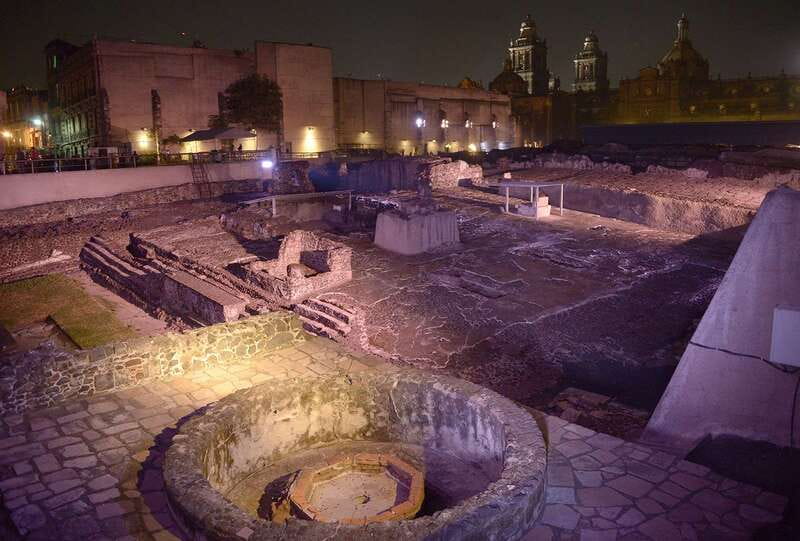
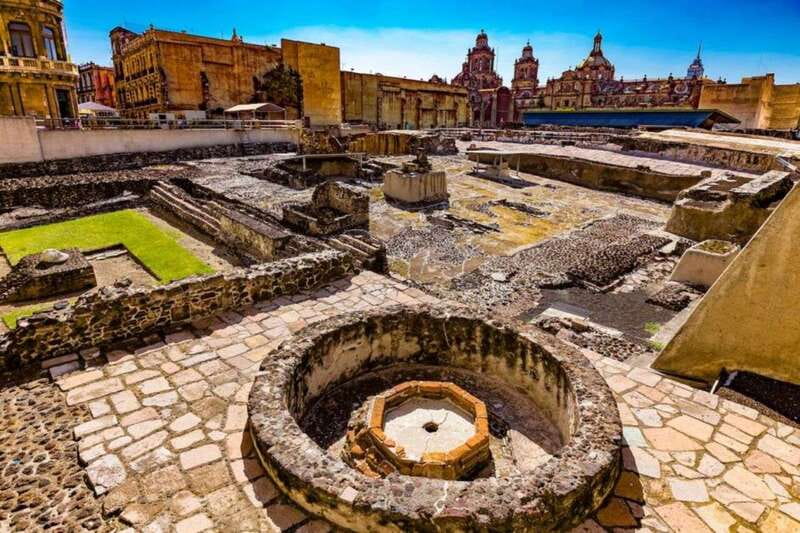
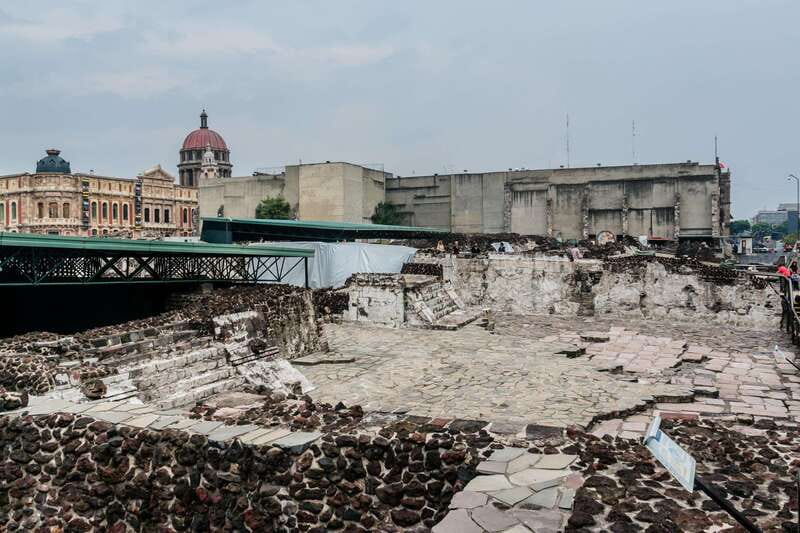
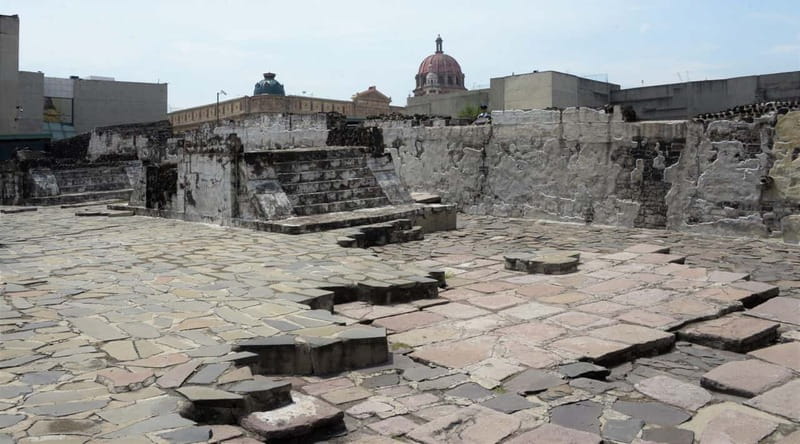
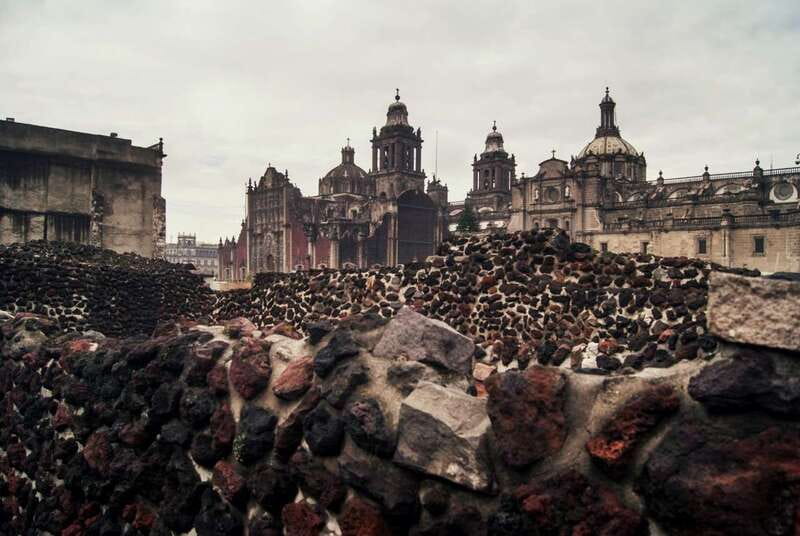
Templo Mayor was the main temple of Tenochtitlan, the Mexica capital built before the Spanish conquest. Today, its remains form an open archaeological site beside the museum, surrounded by the streets and buildings of central Mexico City.
That contrast is the reason I consider this more than a standard museum visit. You are not looking at objects in isolation. You are standing where the Mexica religious center once shaped daily life, warfare, ceremony, and political authority.
The site was not simply one small temple. It belonged to the Greater Temple Enclosure, a larger sacred area containing buildings and temples dedicated to different gods. The walkways let you see the remains in their setting, then the museum supplies the objects and explanations that help you understand what you are seeing.
From outside the fences, the ruins can be easy to treat as a quick photo stop. The ticket is most useful if you want to move beyond that first glimpse. Inside, you can look closely at the archaeological zone and then spend time with the museum collection.
More City Tours in Mexico City
- Mexico City: Teotihuacan, Tlatelolco & Guadalupe Shrine Tour
★ 4.6 · 3,773 reviews - Teotihuacan Hot Air Balloon Flight from Mexico City / Volare
★ 5.0 · 3,262 reviews - Teotihuacan Private Tour from Mexico City
★ 5.0 · 1,890 reviews
What the skip-the-line ticket really saves
This is a straightforward entry product. Your ticket is sent by email or WhatsApp before the date of your visit, and you use it at the separate entrance rather than joining the ticket-office queue.
That distinction matters most when you arrive at a busy time. You are not meeting a guide, collecting a paper ticket, or waiting for a representative to escort you inside. You simply need the digital ticket and must proceed through the turnstiles.
I like that arrangement because it keeps the visit flexible. You do not have to match a guide’s pace or gather with a group. You can stop at the ruins, spend longer in the rooms that interest you, or leave once you have seen enough.
The tradeoff is that the ticket does not solve every practical problem. If the QR code does not download properly, you may have trouble at the entrance. Save the voucher in advance, keep the email or WhatsApp message easy to find, and contact [email protected] if there is a problem.
One booking experience also reported having to buy another admission after failing to access the INAH QR code. That makes a simple preparation step worthwhile: download the ticket before you reach the entrance rather than relying on a weak phone signal or an open message that may not load.
The archaeological zone and the Greater Temple Enclosure
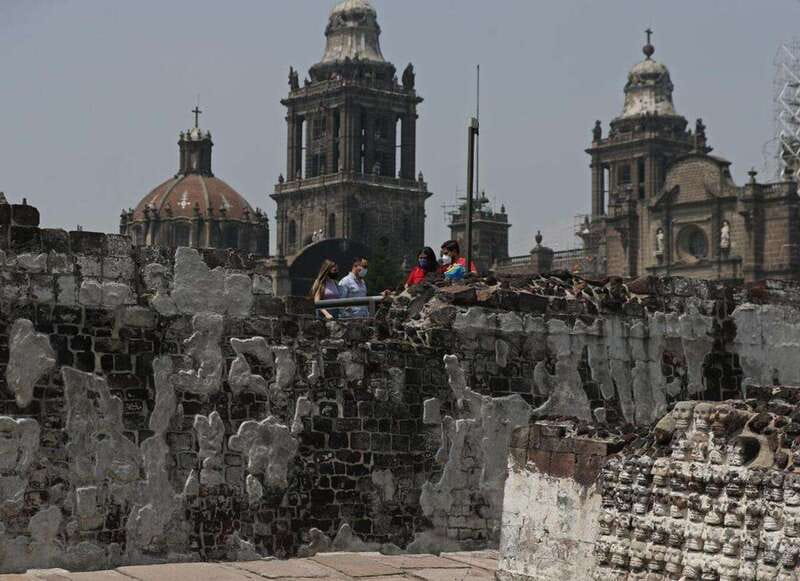
Begin outside with the remains themselves. The exposed structures show layers of construction, since the Mexica enlarged the temple complex over time. Even without a guide, the site gives you a clear sense that this was a major ceremonial center rather than a single isolated building.
The walkways are important. They allow you to move around the remains and see the relationship between the temple platforms and the surrounding enclosure. You will not get the same understanding from looking over the fence from the street.
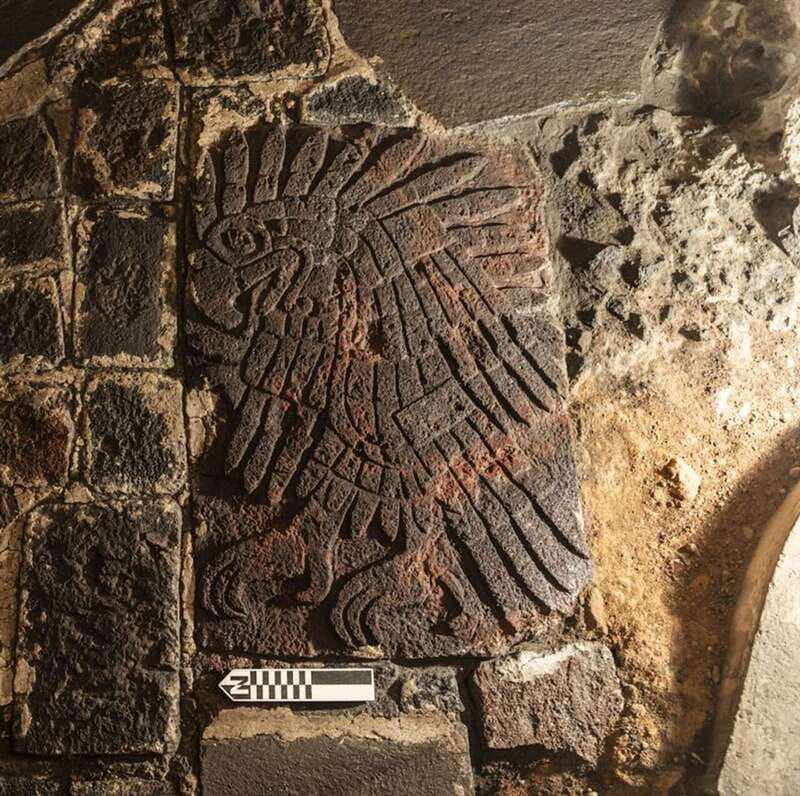
The archaeological zone also gives context to the museum. After seeing the stone remains, the collection becomes easier to read. A carved object or ceremonial item is no longer just an attractive artifact. You can connect it with the temple and the religious system that made the object important.
The visit is not presented as a reconstructed ancient city. Much of what you see is archaeological evidence, exposed foundations, and museum interpretation. If you want a fully rebuilt temple or a theatrical presentation, this may feel restrained. If you prefer original remains and objects, that restraint is part of its value.
Eight rooms built around Mexica religion
The museum is arranged in eight rooms, each contributing to the story of Templo Mayor and the cultures of pre-Hispanic Mexico. You can move through them at your own pace, but the displays work best when you give yourself time to connect the rooms rather than rushing through for a quick look.
The most useful organizing idea is the division between the two principal gods associated with the temple. The southern rooms relate to Huitzilopochtli, the Solar God of War. The northern rooms relate to Tlaloc, the God of Rain.
That division helps you understand the temple’s dual religious focus. Huitzilopochtli represented warfare and the Mexica identity as a conquering power. Tlaloc was tied to rain and agriculture, forces that supported life and food production.
The museum’s objects were selected to complement the archaeological zone. You might find sculptures, ceremonial pieces, and other remains that explain how the temple operated and what people believed about the gods honored there. The collection reaches up to 7,000 objects, so this is not a small side room attached to the ruins.
I would not try to absorb every label. Focus first on the main gods, then notice how the objects relate to ritual, power, war, rain, and agriculture. That approach gives the collection shape and keeps the visit from becoming a long march past display cases.
More Mexico City trips worth a second look
- Mexico City: Anthropology Museum Skip-the-Line Ticket
★ 4.4 · 502 reviews - Mexico City: Chapultepec Castle Skip-the-Line Ticket
★ 3.8 · 122 reviews - Teotihuacan Pyramids: Skip-the-Line Ticket
★ 3.8 · 98 reviews - Skip the Line Chichen Itza Private Tour, Sacred Cenote & Lunch
★ 5.0 · 1,089 reviews
Huitzilopochtli and the southern rooms
The rooms devoted to Huitzilopochtli focus on the Solar God of War. This side of the museum helps explain the temple as a symbol of Mexica strength and military success.
The subject can feel abstract if you only read names and dates. I find it more useful to think of the temple as a statement of power. The Greater Temple Enclosure was a sacred center, but it also represented the achievements of the Mexica against their enemies.
Objects connected with Huitzilopochtli therefore carry more than religious meaning. They also point to the political role of the temple and the way religion supported the authority of the state.
Give this section time if you are interested in Mexica expansion, warfare, or the way ancient societies joined religious belief with public power. If your main interest is art, concentrate on the objects and their forms, then read the labels that explain their purpose.
Tlaloc and the northern rooms
The northern rooms focus on Tlaloc, the God of Rain. This provides a useful balance to the Huitzilopochtli displays because it shifts attention from conquest to the natural forces that sustained society.
Rain was not a minor concern for an agricultural civilization. Tlaloc’s place in the temple shows how central water and crops were to life in the Mexica world. The northern rooms help you see that the temple honored more than one concern or one type of power.
I like this part of the museum because it keeps the story from becoming only a tale of warriors and rulers. The exhibits also point toward farming, seasonal cycles, and the dependence of daily life on nature.
You do not need specialist knowledge to follow the basic idea. The museum’s layout gives you a simple guide: one side emphasizes Huitzilopochtli and war, the other Tlaloc and rain. Keep that contrast in mind as you walk through the collection.
How much time to allow
The ticket is valid for one day, and the activity does not require you to join a fixed guided departure. The available starting times should be checked when you book, but the key advantage is the freedom to use your admission during your visit rather than following a tour leader.
The supplied information does not set a fixed visit length. Your timing will depend on how closely you study the ruins and museum displays. A quick visit can cover the main areas, while a slower visit gives the 8 rooms and large collection the attention they deserve.
I would avoid treating this as a ten-minute stop. The archaeological zone alone rewards a careful walk, and the museum has enough material to make a rushed visit feel incomplete.
Because this is in central Mexico City, it can also fit into a wider day of sightseeing. The one-day validity gives you room to plan around other stops, though you should check the available time options before committing to a schedule.
A self-guided visit, not a guided tour
No guide is included. That is good news if you want to explore independently, but it changes what you should expect from the $29 price.
You will not have a person explaining each room, answering questions, or pointing out details that are easy to miss. You also will not receive an audio guide. One German-speaking visitor specifically noted that an audio guide would have made the experience stronger.
If you already know something about Mexica history, the self-guided format may be enough. The ruins and objects give you plenty to examine, and you can choose where to spend your attention.
If this is your first serious look at Templo Mayor, prepare to do more work. Read the museum panels, move slowly, and use the two-god layout as your basic framework. The ticket gets you through the door quickly, but it does not replace interpretation.
Is $29 a fair price?
At $29 per person, this ticket is priced as a convenience purchase. Its main benefit is skipping the ticket office and receiving a digital voucher before your visit.
That can be worth it if you have limited time, dislike standing in ticket lines, or want to arrange the visit before arriving in Mexico City. It is especially useful for someone who wants a simple plan with no meeting point and no guide to find.
The value is less convincing if your main goal is the lowest possible admission cost. One visitor reported that buying directly through the local system cost about one-third of this price. Since direct prices and ticket rules can change, treat that as a warning to compare costs rather than as a fixed rate.
The museum admission is part of the package, which matters. You are not paying only to look at the ruins from a walkway. You get the archaeological zone and the museum collection, including the eight rooms and thousands of objects.
My view is simple: you pay a premium for speed and convenience, not for a richer tour service. If saving money matters most, check the direct admission option. If saving time and avoiding the ticket office matter more, the price may be reasonable.
Practical points before you go
Keep the digital ticket ready before you arrive. The ticket is sent by email or WhatsApp, and you should go directly to the turnstiles rather than lining up at the ticket office.
There is no guide meeting point. That is one of the easiest parts of the experience, since you can arrive on your own and begin exploring without searching for a person holding a sign.
Pay attention to the entrance rules. A recent admission experience found that a water bottle could not be brought inside even when it was packed in a backpack. The supplied information does not give a full list of restrictions, so it is sensible to avoid assuming that a concealed bottle will be accepted.
Check the date and availability carefully. One poor experience involved arriving when the site was closed, so do not treat the ticket as a guarantee that every date will work without checking the selected time and availability.
If a voucher concern comes up, contact Amigo Tours LATAM at [email protected]. The provider also allows cancellation up to 24 hours in advance for a full refund, and you can reserve now and pay later.
Who will enjoy this Templo Mayor ticket?
I would recommend it to you if you want to see the ruins properly, not just glance at them from the surrounding street. It is also a good fit if you like museums, archaeology, Indigenous cultures, and self-guided sightseeing.
The ticket suits independent planners who want to arrive without a meeting point. Families and mixed-interest groups may also appreciate the freedom to move at different speeds, although younger children may need help with the museum labels and the religious background.
I would think twice if you need a guide to bring the story alive. The site has major historical importance, but the ticket itself offers no personal explanation or audio support.
It is also less attractive for budget-focused visitors who are comfortable buying admission directly. In that case, the $29 price may feel high for a ticket without guiding.
Should you book it?
Book this Templo Mayor ticket if you value fast entry, flexible sightseeing, and access to both ruins and museum. The collection and the eight-room layout make the museum a serious part of the visit, not an optional extra.
Skip it, or compare direct admission first, if you want the cheapest entry or a guided explanation. Also check availability before the day, save your QR code, and allow enough time to appreciate the archaeological zone and the rooms devoted to Huitzilopochtli and Tlaloc.
For most independent visitors who want a clear, low-hassle way into one of Mexico City’s most important archaeological sites, the ticket is useful. Just remember what you are buying: convenient entry, not a guided lesson.
FAQ
What does the Templo Mayor ticket include?
It includes skip-the-line entrance to the Templo Mayor archaeological site and the Museo del Templo Mayor.
Is a guide included?
No. The ticket provides entry only, and no guide or audio guide is included.
How do I receive the ticket?
The ticket is sent by email or WhatsApp before the date of your visit.
Do I need to meet someone at the entrance?
No. You do not need to meet a representative. Go directly to the turnstiles with your ticket.
Do I use the ticket-office queue?
No. This ticket uses a separate entrance, so you should skip the ticket office and proceed to the turnstiles.
How many museum rooms can I visit?
The museum has eight rooms, including areas dedicated to Huitzilopochtli and Tlaloc.
How long is the ticket valid?
The ticket is valid for one day. Check availability when selecting your visit time.
Can I cancel the booking?
Yes. You can cancel up to 24 hours in advance for a full refund. You can also reserve now and pay later.
Recently reviewed around Mexico City
- Teotihuacan from Mexico City with early access★ 4.7 · 49 reviews
- Teotihuacan Pyramids: Guided Tour with Entry Ticket Included★ 4.1 · 45 reviews
- Teotihuacan Pyramids: Skip-the-Line Ticket★ 3.8 · 98 reviews
- From Mexico City: Puebla and Cholula Day Tour★ 4.2 · 194 reviews
- Puebla: Cholula Magical Town Tour by Double-Decker Bus★ 4.3 · 74 reviews
- Puebla: Walking Tour of Puebla City★ 4.9 · 45 reviews
- Nevado De Toluca: Reach the Summit with Professionals★ 4.8 · 250 reviews
- Mexico City: Xochimilco Boat with Guacamole & Premium Drinks★ 4.8 · 32 reviews
City Tours, compared.
Teotihuacan, Tlatelolco & Guadalupe Shrine Tour
Read our review →
Teotihuacan Hot Air Balloon Flight from Mexico City / Volare
Read our review →

The best tour to Teotihuacán from Mexico City
Read our review →
Browse the lists this tour appears in