
Reviewed · CITY TOURS
Mexico City: Ticket de entrada Museo Memoria y Tolerancia
The most powerful part of Mexico City’s Memory and Tolerance Museum is its refusal to treat history as a distant subject. The permanent exhibition covers the Holocaust and genocides in Armenia, Rwanda, Guatemala, Cambodia, Darfur, and Yugoslavia, then asks you to consider how discrimination and indifference grow into violence.
I like two things in particular: the museum gives you plenty of time to move through 43 rooms at your own pace, and it mixes documents with art, film, architecture, and interactive pieces. The $13 admission also includes temporary exhibitions and an audio guide in Spanish or English.
The main consideration is the subject matter. This is not a light museum stop, and the permanent exhibits are recommended for children older than 15. Younger children must be accompanied by an adult, but families should think carefully about whether the content suits them.
In This Review
- Key points at a glance
- Why this museum matters in Mexico City
- Finding the museum at Plaza Juarez
- The 43-room permanent exhibition
- The Holocaust galleries and human stories
- Armenia, Rwanda, Guatemala, Cambodia, Darfur, and Yugoslavia
- Jan Hendrix and the museum’s art installations
- The Berlin Wall fragment and World War II train wagon
- Temporary exhibitions and changing content
- How much time should you allow?
- Is the $13 ticket good value?
- Who should visit the Memory and Tolerance Museum?
- Practical details before you go
- Should you book it?
- FAQ
- Where is the Memory and Tolerance Museum located?
- How much does admission cost?
- How long is the ticket valid?
- Is an audio guide included?
- Does the ticket include temporary exhibitions?
- How many rooms does the permanent exhibition have?
- What subjects are covered in the permanent exhibition?
- Are children allowed in the museum?
- Is the museum wheelchair accessible?
Key points at a glance
- 43 permanent rooms: Follow a large historical presentation with more than 1,200 objects, documents, and audiovisual pieces.
- Genocide and human rights focus: The museum covers the Holocaust along with Armenia, Rwanda, Guatemala, Cambodia, Darfur, and Yugoslavia.
- Powerful art installations: Look for works by Jan Hendrix, Jorge Marin, Rivelino, Carl Fredrik Reuterswärd, and Lozano-Hemmer.
- Temporary exhibitions included: Your admission may add a changing display to the permanent collection, such as an Anne Frank exhibition when scheduled.
- Audio guide in two languages: Choose Spanish or English for added context as you move through the rooms.
- Central Mexico City setting: Find the museum at Plaza Juarez, beside the Secretariat of Foreign Affairs and across from the Hemicycle to Juarez.
Why this museum matters in Mexico City
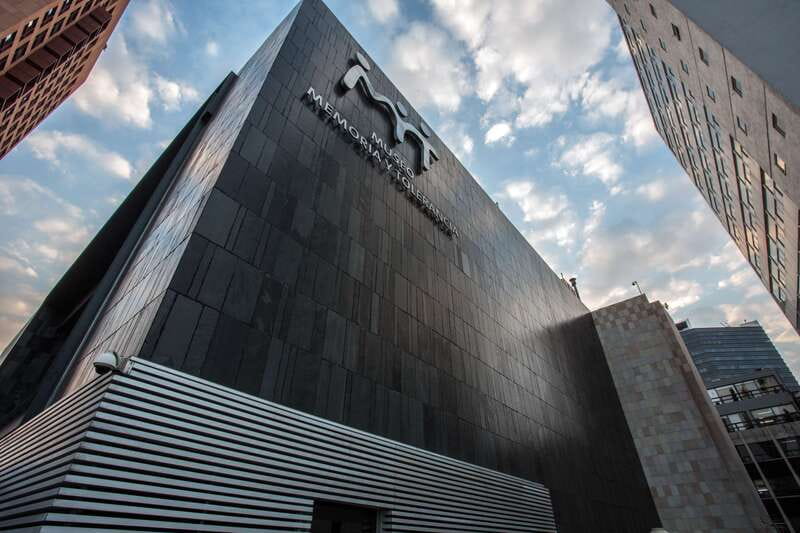
Mexico City has museums for art, archaeology, politics, and popular culture. The Memory and Tolerance Museum takes a different path. It uses historical memory to examine how ordinary prejudice can become organized discrimination, violence, and crimes against humanity.
That purpose gives the visit a clear shape. You are not simply looking at old objects behind glass. You are being asked to connect past events with choices people make in the present: how societies treat minorities, how propaganda works, and what can happen when people stay silent.
The museum’s stated goals are tolerance, a culture of peace, respect for human rights, and social action. You may find that message direct rather than subtle. That is part of the experience. The museum wants you to leave thinking about responsibility, not just dates and names.
More City Tours in Mexico City
- Mexico City: Teotihuacan, Tlatelolco & Guadalupe Shrine Tour
★ 4.6 · 3,773 reviews - Teotihuacan Hot Air Balloon Flight from Mexico City / Volare
★ 5.0 · 3,262 reviews - Teotihuacan Private Tour from Mexico City
★ 5.0 · 1,890 reviews
Finding the museum at Plaza Juarez
The museum is in downtown Mexico City at Plaza Juarez. It is next to the Secretariat of Foreign Affairs and directly across from the Hemicycle to Juarez, so the location is easy to identify once you reach this central area.
The setting makes the museum useful as part of a downtown day. You can combine it with nearby sights rather than treating it as a distant, separate outing. The ticket itself is valid for one day, and you should check the available starting times when booking.
No transport is included in the admission. You make your own way to Plaza Juarez, then enter with your ticket. Food and drinks are not allowed inside, so plan to eat before or after your visit rather than carrying refreshments into the galleries.
The 43-room permanent exhibition
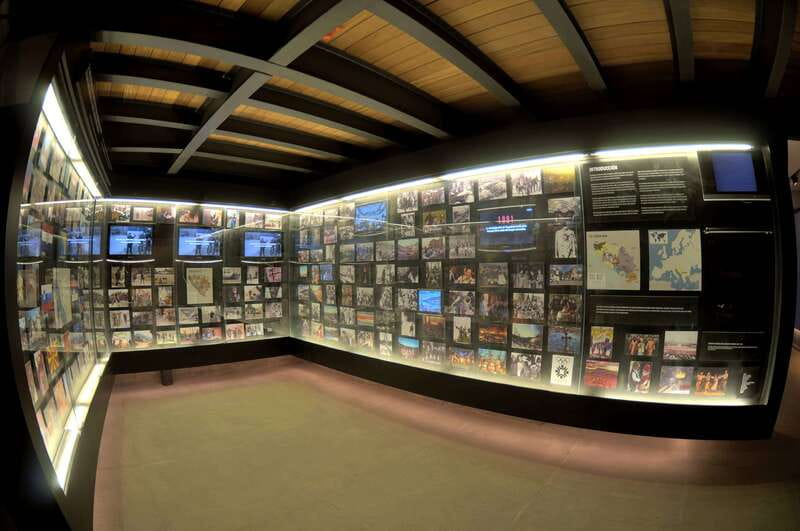
The permanent exhibition is the heart of the museum. Across 43 rooms, you encounter more than 1,200 objects, documents, and audiovisual pieces. That is a large amount of material, so you should not expect a quick 30-minute stop.
The organization brings together historical evidence and personal human stories. The Holocaust receives major attention, but the museum also examines the Armenian genocides and later crimes in Rwanda, Guatemala, Cambodia, Darfur, and Yugoslavia.
This wider scope is important. It places the Holocaust within a broader study of genocide while still recognizing the distinct events, communities, and circumstances involved. You can compare patterns of discrimination and state violence without treating every tragedy as identical.
The displays are supported by photography, documents, films, and other audiovisual material. These formats help vary the pace, but they can also make the visit emotionally demanding. Give yourself room to pause. You do not need to rush from one room to the next simply because the museum has a large amount to show.
The audio guide is included in Spanish and English. I would use it if you want more explanation than the labels provide, especially when moving through unfamiliar events. It also lets you control the pace, since you can listen carefully in one room and move more quickly through another.
The Holocaust galleries and human stories
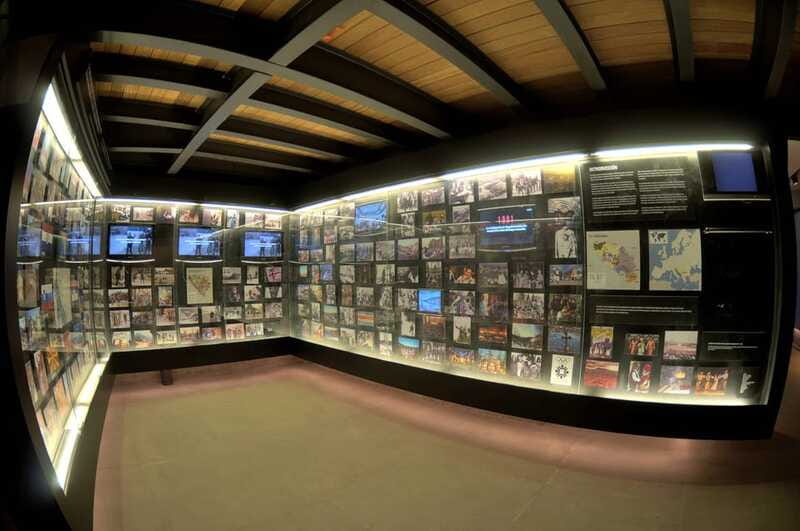
The Holocaust section is likely to be the most affecting part of the permanent exhibition. The museum presents the period through historical documents and visual material, but the goal is not only to explain how persecution happened. It is also to show the human cost of decisions made by governments, institutions, and individuals.
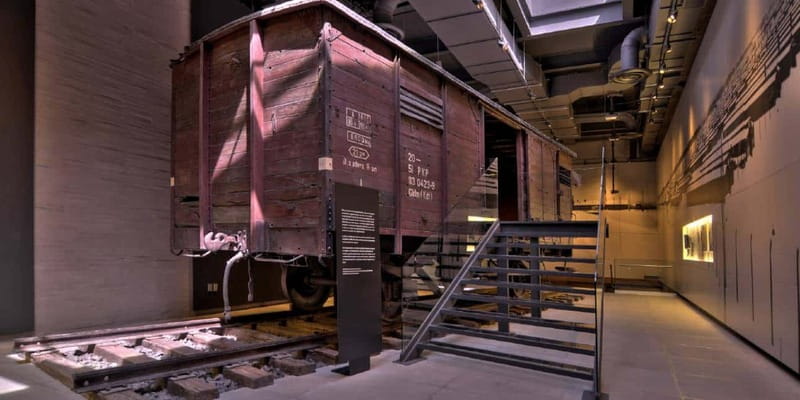
A train wagon used during World War II for the transfer of prisoners is among the most direct objects on display. A piece like this connects the broad scale of history with the machinery used to move real people. It can be more confronting than a text panel because it gives the events a physical presence.
The exhibition also examines the danger of indifference. That theme links the Holocaust galleries to the museum’s wider message. You are encouraged to consider not only what happened, but how discrimination was allowed to grow.
One temporary exhibition has focused on Anne Frank, a subject that can be especially personal for many people. The temporary program changes, so you should not assume that a specific Anne Frank display will be showing on your date. Your ticket does include temporary exhibitions that are scheduled during your visit.
More Mexico City trips worth a second look
- Lucha Libre Tickets & Tacos & Beer & Mezcal – BEST NIGHT EVER!
★ 5.0 · 1,077 reviews - Frida Kahlo VIP [Museum Tickets Included] Bike, Markets & Churros
★ 5.0 · 1,072 reviews - Frida Kahlo VIP [Museum Tickets Included] Walk, Markets & Churros
★ 5.0 · 982 reviews - Mexico City: Frida Kahlo Museum Entry Ticket w/Digital Guide
★ 4.5 · 683 reviews
Armenia, Rwanda, Guatemala, Cambodia, Darfur, and Yugoslavia
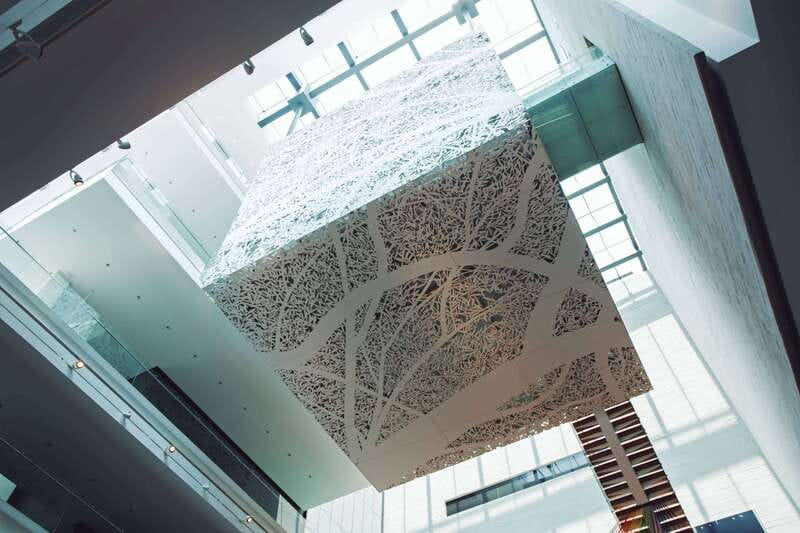
The museum broadens its focus beyond the Holocaust with sections on the Armenian genocides, Rwanda, Guatemala, Cambodia, Darfur, and Yugoslavia. This makes the visit more than a single historical memorial.
Each case has its own political setting and human story. Still, the museum looks for warning signs shared across different crimes against humanity: prejudice, exclusion, dehumanizing language, unchecked power, and public silence.
For you, the value is the connection between the rooms. A single exhibit about one event can leave you with a fixed historical picture. This larger presentation asks you to notice recurring patterns while keeping your attention on the people affected.
The subject is serious, and some material may be difficult to process. The museum is best for visitors who want a thoughtful cultural stop, not for anyone looking for a fast, cheerful attraction between meals and shopping.
Jan Hendrix and the museum’s art installations
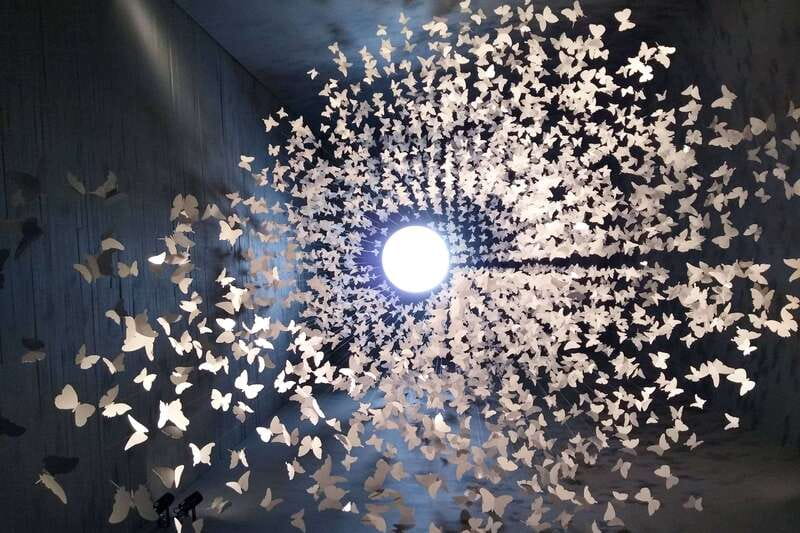
Art gives the museum another way to address memory and social change. Several permanent installations break up the documentary material and encourage a more personal response.
Look for Lost Potential and Cube, both by sculptor Jan Hendrix. These works are part of the museum’s visual language, using form and space to address lives lost and possibilities destroyed. The installations do not replace the historical evidence, but they give you time to reflect on it.
There is also a metronome installation by Lozano-Hemmer. Its rhythm and mechanical quality add a different mood from the photographs and documents around it. You may find that these installations work best when you stop treating the museum as a sequence of information and allow yourself a few quiet minutes with each piece.
The Wings of Peace, by Jorge Marin, is a sculptural and interactive work. Rivelino’s YOU is also sculptural and interactive, giving visitors a more direct physical relationship with the art.
Carl Fredrik Reuterswärd’s Non-Violence Project sculpture adds another widely recognized peace symbol to the collection. Together, these pieces help the museum move from memory toward a question of what kind of society you want to build.
The Berlin Wall fragment and World War II train wagon
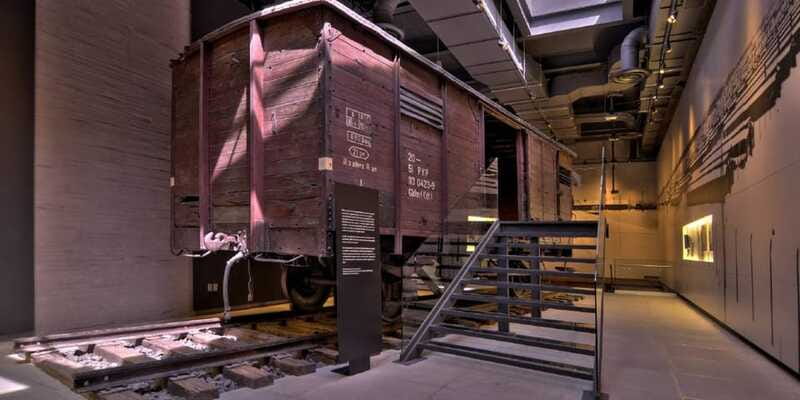
Two objects make the museum’s historical themes especially tangible: a fragment of the Berlin Wall and a World War II train wagon used to transfer prisoners.
The Berlin Wall fragment points to political division, state control, and the eventual collapse of a barrier that once seemed permanent. It also connects the museum’s themes to more recent European history rather than limiting the visit to genocide alone.
The train wagon is more closely tied to the Holocaust galleries. Its plain, functional appearance is part of its force. You are looking at an object used in the process of persecution, not an artistic recreation of one.
These pieces are valuable because they give scale to the exhibition. A document asks you to read. A photograph asks you to look. A train wagon or wall fragment asks you to understand that the past was built from ordinary physical things used by real institutions.
Temporary exhibitions and changing content
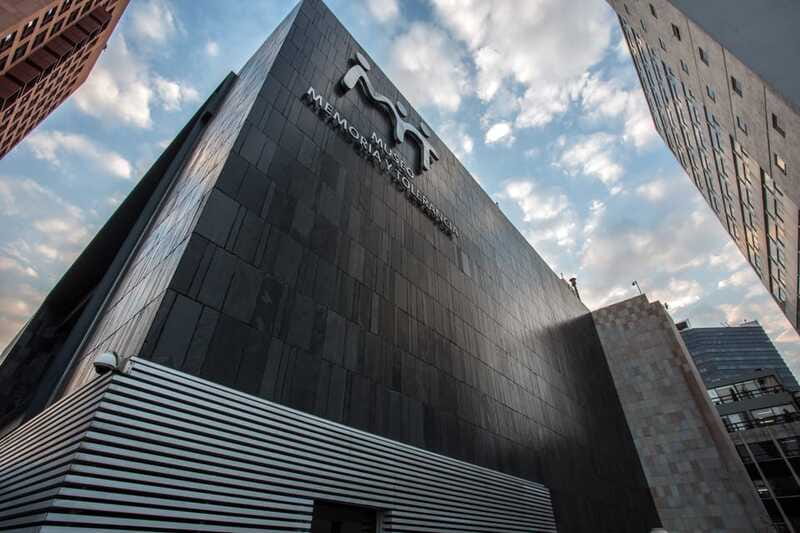
Your ticket includes temporary exhibitions, which gives the visit some added value beyond the permanent rooms. The exact subject changes, so you should check what is scheduled when you plan your day.
The temporary displays can add a closer look at a person, event, or artistic theme. An Anne Frank exhibition has been part of the museum’s program, and that type of focused presentation can provide a more intimate counterpoint to the wider permanent exhibition.
Do not book solely for one temporary show unless you confirm its dates. The permanent collection is the reliable reason to come, while the temporary galleries are an extra benefit that may change.
How much time should you allow?
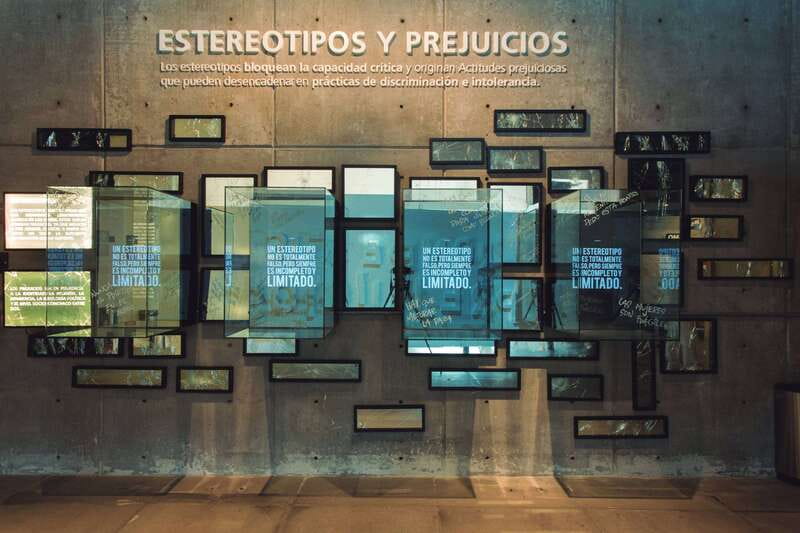
The ticket is valid for one day, but the information available does not set a fixed visit length. That flexibility is useful because the museum contains 43 rooms and more than 1,200 items and media pieces.
I would allow a substantial part of your day if you want to read the displays, use the audio guide, and spend time with the installations. A quick visit can give you the basic message, but it will not do justice to the number of rooms or the range of subjects.
Your pace will depend on how closely you engage with the Holocaust and genocide sections. Some rooms may require a pause, while others may be easier to move through quickly. The open-ended format means you can make the visit more reflective or more selective.
Because food and drinks are not permitted, plan a break outside the museum if you need one. The central location makes that easier than it would be at a remote attraction, but the admission itself does not include meals or transport.
Is the $13 ticket good value?
At $13 per person, this is a reasonably priced admission for a museum visit that includes the permanent collection, temporary exhibitions, and an audio guide. The value is strongest if you plan to spend enough time with the material rather than dropping in for a brief look.
You are paying for scale and range: 43 rooms, 1,200 objects and documents, audiovisual material, and major installations. The bilingual audio guide adds useful support without requiring you to hire a separate guide.
The price may feel less attractive if you prefer short, light museum visits or if the subject matter is not right for your group. This is a serious cultural experience, and its value depends on your willingness to give it attention.
Flexible booking also helps. You can reserve now and pay later, and cancellation is free up to 24 hours in advance for a full refund. Those terms are useful if your Mexico City schedule is still changing.
Who should visit the Memory and Tolerance Museum?
I would recommend this museum to adults, older teenagers, teachers, students, and anyone interested in human rights or modern history. It suits you if you want a museum that connects evidence with moral questions.
The permanent exhibitions are recommended for children older than 15. Children younger than 15 must be accompanied by an adult, but that rule is only part of the decision. Parents should consider the emotional weight of the material before bringing younger children.
The museum is also a good choice if you have visited other museums about genocide or tolerance and want a presentation that combines history with contemporary art. One visitor who had seen three other tolerance museums considered this Mexico City museum the best, with particular praise for its Anne Frank exhibition, photography, architecture, and artistic presentation.
That kind of response points to the museum’s strongest quality: it does not rely on one display. The historical information, physical objects, architecture, and art all work toward the same message.
Practical details before you go
Your entry includes an audio guide in Spanish or English. Choose the language that lets you focus on the content rather than translating every label in your head.
The museum is wheelchair accessible. Food and drinks are not allowed, so finish snacks before entering. Check availability for starting times, since the ticket is valid for one day but does not provide a fixed daily schedule in advance.
The experience provider is Museo Memoria y Tolerancia itself. Admission is $13 per person, and the booking option lets you reserve without paying immediately. Free cancellation is available up to 24 hours before the visit for a full refund.
Should you book it?
Book this museum if you want a serious, well-organized look at the Holocaust, other genocides, tolerance, and human rights, with art installations that give you space to think. The combination of 43 rooms, more than 1,200 historical and audiovisual pieces, temporary exhibitions, and a bilingual audio guide gives the $13 ticket solid value.
Skip it if your Mexico City day is limited to upbeat attractions or if your group is not ready for difficult historical material. For adults and older teenagers who can give the subject time, this is one of the city’s most purposeful museum visits, and its central Plaza Juarez location makes it easy to fit into a downtown itinerary.
FAQ
Where is the Memory and Tolerance Museum located?
The museum is at Plaza Juarez in downtown Mexico City, next to the Secretariat of Foreign Affairs and across from the Hemicycle to Juarez.
How much does admission cost?
The entrance ticket costs $13 per person.
How long is the ticket valid?
The ticket is valid for one day.
Is an audio guide included?
Yes. An audio guide is included in Spanish and English.
Does the ticket include temporary exhibitions?
Yes. Admission includes access to the temporary exhibitions as well as the permanent exhibitions.
How many rooms does the permanent exhibition have?
The permanent exhibition has 43 rooms.
What subjects are covered in the permanent exhibition?
The museum covers the Holocaust and the Armenian genocides, Rwanda, Guatemala, Cambodia, Darfur, and Yugoslavia. It also explores tolerance, discrimination, violence, human rights, and social action.
Are children allowed in the museum?
Children younger than 15 may enter with an adult. The permanent exhibitions are recommended for children older than 15 because of the serious subject matter.
Is the museum wheelchair accessible?
Yes. The museum is wheelchair accessible.
Recently reviewed around Mexico City
- Teotihuacan from Mexico City with early access★ 4.7 · 49 reviews
- Teotihuacan Pyramids: Guided Tour with Entry Ticket Included★ 4.1 · 45 reviews
- Teotihuacan Pyramids: Skip-the-Line Ticket★ 3.8 · 98 reviews
- From Mexico City: Puebla and Cholula Day Tour★ 4.2 · 194 reviews
- Puebla: Cholula Magical Town Tour by Double-Decker Bus★ 4.3 · 74 reviews
- Puebla: Walking Tour of Puebla City★ 4.9 · 45 reviews
- Nevado De Toluca: Reach the Summit with Professionals★ 4.8 · 250 reviews
- Mexico City: Xochimilco Boat with Guacamole & Premium Drinks★ 4.8 · 32 reviews
City Tours, compared.
Teotihuacan, Tlatelolco & Guadalupe Shrine Tour
Read our review →
Teotihuacan Hot Air Balloon Flight from Mexico City / Volare
Read our review →

The best tour to Teotihuacán from Mexico City
Read our review →
Browse the lists this tour appears in