
Reviewed · CITY TOURS
Must-see Buildings & Palaces of Mexico City
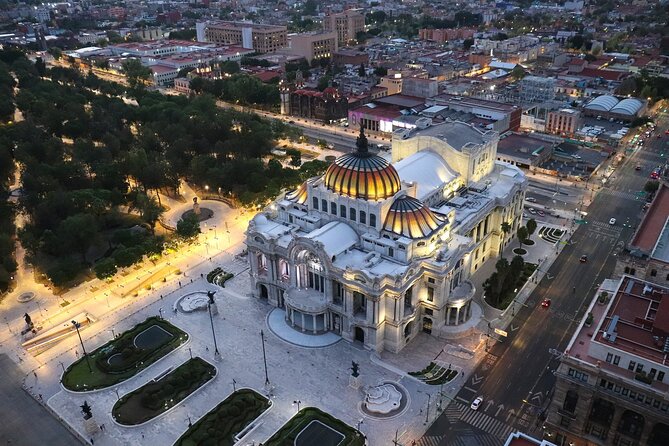
Mexico City’s historic center packs an astonishing amount into a few blocks, and this tour focuses on the details you could easily miss alone. The highlight is Palacio de Bellas Artes, where guides such as Adhara, Leonardo, Yair, and Geovana have provided especially strong explanations of Diego Rivera, Siqueiros, and the building’s striking design.
I like the mix of major art and everyday civic buildings: you get Mexico’s national art museum alongside a working post office and a museum about the peso. I also like the small group limit of 15, which makes it easier to ask questions. The main caution is timing. Several people found the tour rushed or shorter than four hours, and some buildings may be closed or affected by demonstrations.
In This Review
- Key points to know before booking
- Why this four-hour route works in Mexico City
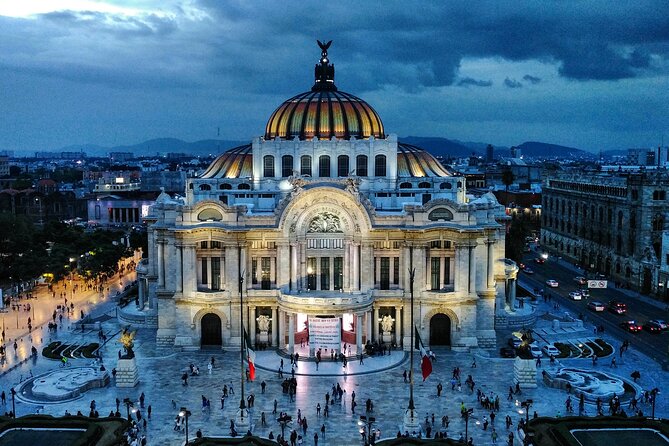
- Palacio de Bellas Artes: the artistic centerpiece
- Museo Nacional de Arte and five centuries of painting
- Museo Banco de México and the story of the peso
- Palacio Postal and Mexico City’s grand public design
- Alameda Central, Mexico’s oldest public park
- Guides make the difference
- Is the $49 price good value?
- Meeting point, timing, and practical concerns
- Who should book this Mexico City tour?
- Final decision: a strong introduction with a flexible itinerary
- FAQ
- How long is the tour?
- How much does the experience cost?
- What language is the tour offered in?
- How many people can join the tour?
- Where does the tour start?
- Where does the tour end?
- Are admission tickets included?
- What happens if MUNAL is closed?
- Can I cancel for a full refund?
Key points to know before booking
- Palacio de Bellas Artes receives the most attention: Expect detailed discussion of its murals, marble interior, architecture, and Mexican cultural history.
- MUNAL covers five centuries of art: The collection runs from the 16th through the 20th century, but the amount of time available can vary.
- Palacio Postal is an architectural treat: Its gold-toned interior and blend of styles make it one of the most photogenic stops.
- The group is capped at 15 people: That is a useful size for a walking tour in the Centro Histórico.
- The route can change: MUNAL may be inaccessible for reasons beyond the operator’s control, and demonstrations or closures have caused missed stops.
- Meetup details matter: The tour begins at Palacio de Bellas Artes and ends at the Banco de México Fábrica de Billetes address, so check the final instructions carefully.
Why this four-hour route works in Mexico City
I like this tour because it treats the Centro Histórico as more than a collection of famous façades. The buildings tell different parts of Mexico’s story. One is devoted to national art, another to money, another to communication, and another to performance and public culture.
The route is also compact. The meeting point is at Palacio de Bellas Artes, near public transportation, and the stops are in central Mexico City. You should still expect a fair amount of walking and standing, but the plan does not require a bus ride across the city.
The advertised duration is about four hours. That gives you enough time for a guided introduction to each place, though not necessarily a slow museum visit. The experience has a maximum of 15 people, which is more personal than a large coach outing but still means you may need to stay close to the guide in crowded streets.
The tour is offered in English. Some past sessions have included bilingual explanations, which can make the commentary slower. If you want the most efficient English-only experience, confirm the language format when booking.
More City Tours in Mexico City
- Mexico City: Teotihuacan, Tlatelolco & Guadalupe Shrine Tour
★ 4.6 · 3,773 reviews - Teotihuacan Hot Air Balloon Flight from Mexico City / Volare
★ 5.0 · 3,262 reviews - Teotihuacan Private Tour from Mexico City
★ 5.0 · 1,890 reviews
Palacio de Bellas Artes: the artistic centerpiece
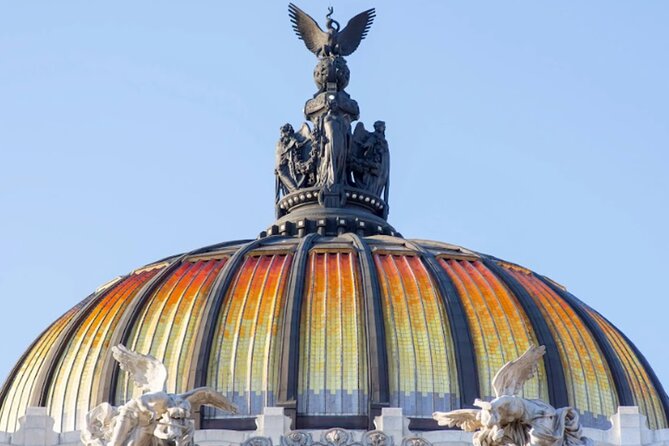
Beginning at Palacio de Bellas Artes is a smart choice. The building is one of Mexico City’s best-known landmarks, with a white marble exterior, a bronze entrance, and a famous domed profile that makes it easy to recognize from the Alameda area.
Inside, the murals are the main event. Diego Rivera and David Alfaro Siqueiros are among the artists represented, and the works are not simply decorative backdrops. They carry political ideas, social conflict, and changing views of Mexican identity.
This is where the quality of your guide matters most. Adhara has been praised for explaining the meaning behind the murals in a clear, approachable way, while Leonardo and Yair have also received strong marks for making the art understandable without burying you in academic language. A good guide helps you notice how figures, machines, workers, and historical references fit together.
You should know that this stop can take much of the tour. That is good news if you care about Mexican muralism. It is less helpful if your main goal is to spend equal time in every palace. One session reportedly spent more than an hour on the murals, while another visitor felt the group received too little time at MUNAL as a result.
The description promises a visit to Bellas Artes, but the exact access can depend on the day’s conditions and the guide’s pace. If you want to see the theater areas or explore every exhibition, plan to return on your own. This tour is best viewed as an informed introduction, not a complete museum visit.
Museo Nacional de Arte and five centuries of painting
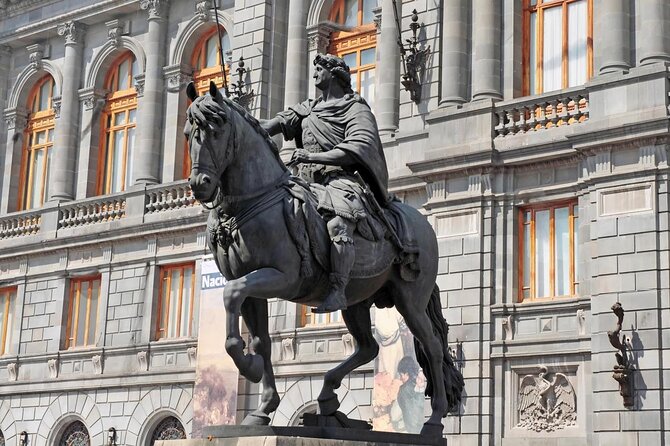
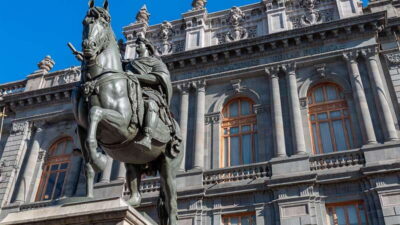
Museo Nacional de Arte, commonly called MUNAL, occupies a grand former palace. The building itself is part of the experience, with monumental rooms and a setting that reflects Mexico’s long colonial and national story.
The collection spans the 16th through the 20th century. That range lets you see how artistic priorities changed over time, from religious and colonial works to later Mexican art. For a first visit, a guide can save you from wandering through a large collection without knowing which paintings deserve your attention.
The best use of the hour is a focused tour of key works, followed by a few minutes to look around independently. That balance has worked well for some visitors, especially when the guide points out major pieces and then gives you space to explore.
There is an important caveat. MUNAL may be inaccessible for reasons beyond the operator’s control. A closure can remove one of the most substantial art stops from the route, so do not book this experience if you would be upset by any possible change in the itinerary.
Even when open, one hour is an introduction rather than enough time for the whole museum. If you enjoy painting, I would return later with more time. The guided visit helps you decide what deserves a second look.
Museo Banco de México and the story of the peso
The Museo Banco de México offers a different kind of visit. Instead of focusing mainly on painting or architecture, it introduces the monetary system and the birthplace of the Mexican peso.
That change of subject is useful. After discussing murals and historic art, you get a look at how money was made and how the country’s economy developed. The museum also occupies an old building with its own atmosphere, so the stop connects finance with architecture.
Expect about an hour here. The material is likely to appeal most to visitors who enjoy social history, objects, and the practical side of national life. You do not need to be an economics specialist to appreciate the idea of seeing where Mexican currency began its journey.
This stop has had a less reliable record than the major art sites. A closure once meant that the museum could not be visited, and a demonstration in the city center also forced a route change. If the Banco de México museum is a top reason for booking, ask about current access before your tour date.
The listed ending point is Banco de México Fábrica de Billetes on Avenida 5 de Mayo, while the itinerary identifies the Museo Banco de México as a stop. Since those names and locations may cause confusion, check the confirmation message and ask the operator where the group will finish.
More Mexico City city days:
- Mexico City: Teotihuacan Early or Afternoon Access Tour
★ 4.6 · 1,547 reviews - Historic Center Food Tour in Mexico City
★ 5.0 · 1,263 reviews - The best tour to Teotihuacán from Mexico City
★ 5.0 · 1,236 reviews - From Mexico City: Puebla, Cholula and Tonantzintla Day Trip
★ 4.3 · 1,191 reviews
Palacio Postal and Mexico City’s grand public design
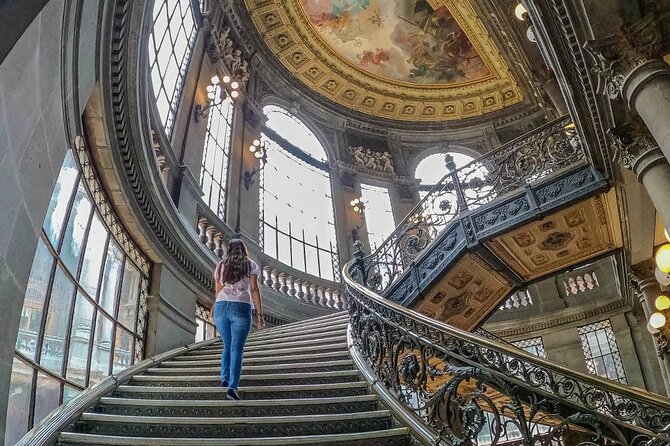
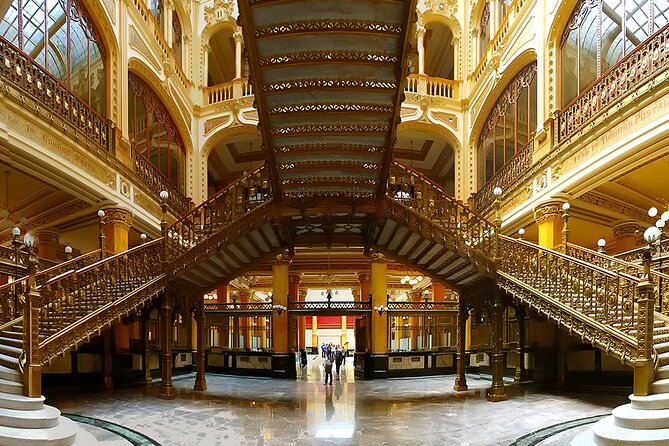
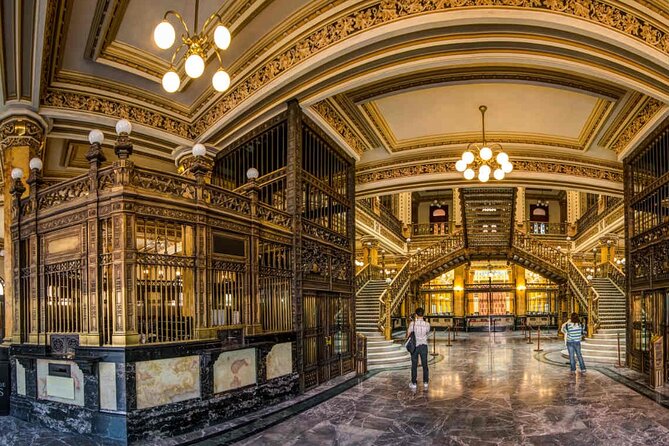
Palacio Postal, the city’s main post office, may be the quickest stop, but it can leave a lasting impression. Its interior is ornate, bright, and heavily decorated, with gold-toned details that make an ordinary public service building feel almost royal.
The building is also useful for understanding how Mexico City presented itself during an era of grand public construction. The tour description points to its imperial appearance and mix of architectural styles. A guide can help you look past the first burst of decoration and notice how the parts fit together.
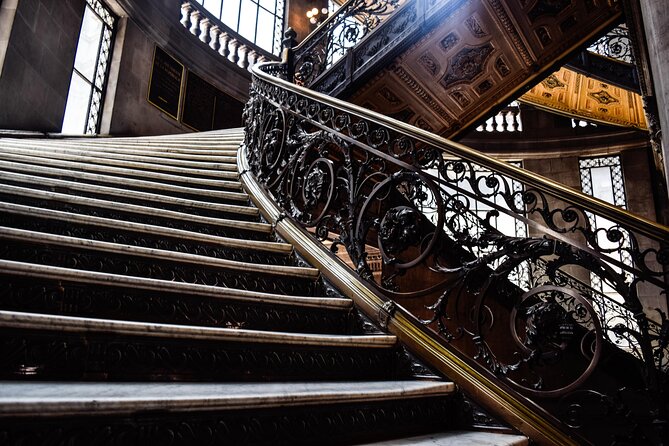
This is a particularly good stop for architecture lovers and photographers. The details reward a slow glance: railings, stairways, decorative surfaces, and the contrast between the building’s practical purpose and its formal design.
Access is worth confirming. One visitor expected more interior access than the tour provided and later paid to return independently. That does not mean the building is always inaccessible, but it does mean you should not assume the guided visit includes every area.
Alameda Central, Mexico’s oldest public park
The tour passes by Alameda Central rather than treating it as a full scheduled stop. You can visit the park after the guided portion ends, and that is a sensible plan.
Alameda is described as the oldest park in Mexico and in the Americas. Its design was inspired by the Alameda de Hércules in Seville, and it includes fountains, sculptures, paths, and quieter corners.
I would use the park as a gentle follow-up to the indoor visits. It gives you room to breathe, take photos, and review what you have seen without a guide setting the pace. Since the route can be changed by demonstrations or street conditions, treat this as an optional extension rather than a guaranteed guided walk.
The surrounding Centro Histórico also rewards extra time. One guide extended a session by a few blocks when time allowed, pointing out colonial buildings and even stopping at an old candy shop. That kind of small local touch depends on the day and the guide, but it shows why leaving a little free time afterward is wise.
Guides make the difference
The strongest part of this experience is the human explanation. Art and architecture can be impressive on their own, but a good guide gives you a way to read them.
Adhara has been praised for her command of architecture and art, especially the murals at Bellas Artes. Leonardo made the buildings’ history easy to follow, while Yair was described as friendly, thorough, and open to questions. Geovana, also called Gio, has been noted for excellent English and for adding background about Mexico City and the country.
Ruben has also been singled out for professional guiding, even on a day when the route changed. Carlo was appreciated for his enthusiasm for Mexico City, its art, and its architecture.
The range of feedback also points to a real weakness: the experience depends heavily on pace. Some guides may spend extra time on Bellas Artes murals, while others may move quickly to fit the schedule. In a bilingual group, every explanation can take longer, leaving less time inside the museums.
If you are an art lover, tell the guide early what interests you most. If you want more time at MUNAL or Palacio Postal, say so before the tour gets moving. You may not control the schedule, but a clear request can help shape the emphasis.
Is the $49 price good value?
At $49 per person, the tour is reasonably priced if you want a guided overview of several central buildings and the listed admission tickets are included. Paying separately for entry, finding the correct rooms, and working out the story behind the murals could take more effort, especially on a first visit to Mexico City.
The value is strongest when you care about context. A quick look at Bellas Artes is easy to arrange on your own, but understanding Rivera and Siqueiros takes more preparation. The same is true of MUNAL, where a guide can steer you toward important works instead of leaving you to guess.
The price is less attractive if you want long, unhurried museum visits. Four hours sounds generous, but walking between sites, gathering the group, and explaining everything in English or two languages can reduce actual viewing time. Several people found the tour ended in under three hours or felt rushed.
Group discounts may be available, which could make the experience a better fit for families or friends. The small group limit helps, but this is still a shared tour, not a fully private itinerary. One past booking was described as private and especially personal, but you should not assume that every departure is private.
Meeting point, timing, and practical concerns
The listed start is Palacio de Bellas Artes, Av. Juárez, in the Centro Histórico. Because the area is large and crowded with tour groups, arriving at the correct building is not always enough. One person had difficulty identifying the guide and had to call the operator and search among several groups.
Look for the company identification and arrive early. The operator has used a small dark flag and shirts with the company logo, but the flag may not be held high or easy to read. Ask for the guide’s name if you need help, and keep your phone available for the confirmation details.
The tour is near public transportation, and most people can participate. No special accessibility details are provided, so anyone concerned about walking, stairs, or standing should ask before booking.
Confirmation is provided at booking. Free cancellation is available until 24 hours before the start time, and changes made inside that window are not accepted. Since demonstrations and closures have affected the route, it is wise to read any last-minute message carefully.
The tour is often booked about 31 days ahead. That does not mean you must reserve a month in advance, but it suggests that planning ahead is sensible during popular travel periods.
Who should book this Mexico City tour?
I would recommend it to a first-time visitor who wants a strong introduction to central Mexico City’s public buildings, art, and civic story. It also suits anyone who finds murals fascinating but wants help understanding the people and political ideas shown in them.
Families can benefit from the variety. A museum about money breaks up the art stops, while Palacio Postal offers immediate visual appeal even if you are not an art expert. Solo visitors may also like the small group and the chance to ask questions.
I would be more cautious if you have already visited Bellas Artes and MUNAL in detail. You may prefer separate tickets and a slower schedule. The same applies if you dislike shared walking tours, need a strict finish time, or want guaranteed access to every interior area.
Final decision: a strong introduction with a flexible itinerary
Book this tour if you want expert interpretation of Bellas Artes murals and a compact look at several important buildings for $49. The guides can add real value, especially when discussing Rivera, Siqueiros, architecture, and Mexico City’s cultural identity.
Do not book it expecting four perfectly equal one-hour visits. Bellas Artes may receive the most attention, MUNAL may be inaccessible, and the Banco de México stop can be affected by closure or public events. Confirm the meeting and ending details, arrive early, and keep time afterward for Alameda Central.
For the right visitor, this is an efficient way to get oriented in the historic center. For a slow museum day, use it as a first look, then return independently to the buildings that deserve more of your time.
FAQ
How long is the tour?
The advertised duration is approximately four hours. Some past departures have finished earlier, so allow flexibility rather than planning an immediate appointment afterward.
How much does the experience cost?
The price is $49 per person. Group discounts may be available.
What language is the tour offered in?
The experience is offered in English. Some departures may use bilingual explanations, which can affect the pace.
How many people can join the tour?
The group has a maximum of 15 travelers.
Where does the tour start?
The listed meeting point is Palacio de Bellas Artes on Avenida Juárez in Mexico City’s Centro Histórico.
Where does the tour end?
The listed ending point is Banco de México Fábrica de Billetes at Avenida 5 de Mayo 2. Check your booking confirmation for the exact final instructions.
Are admission tickets included?
Admission tickets are included for Museo Nacional de Arte, Museo Banco de México, Palacio Postal, and Palacio de Bellas Artes as listed in the tour details.
What happens if MUNAL is closed?
For reasons of force majeure, MUNAL may be inaccessible. The route can also change because of closures or events such as demonstrations in central Mexico City.
Can I cancel for a full refund?
Yes. You must cancel at least 24 hours before the experience start time for a full refund. Changes or cancellations made less than 24 hours before the start are not accepted for a refund.
Recently reviewed around Mexico City
- Town walking tour of the city★ 5.0 · 72 reviews
- Cholula experience (private tour)★ 5.0 · 52 reviews
- Cholula tour from Puebla★ 5.0 · 66 reviews
- Private Hiking Tour in Iztaccihuatl★ 5.0 · 45 reviews
- City walking tour in Puebla (private tour)★ 5.0 · 40 reviews
- Cholula Magical Twon on a Traditional Tram from Puebla★ 4.5 · 61 reviews
- Hiking Excursion to the Iztaccíhuatl Volcano from Puebla★ 5.0 · 74 reviews
- Museum of Anthropology: a look at Mexico’s past★ 5.0 · 52 reviews
City Tours, compared.
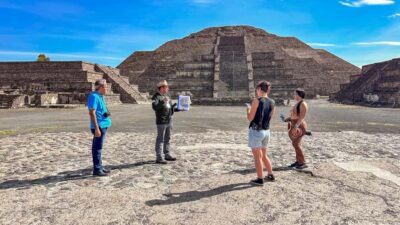
Teotihuacan, Tlatelolco & Guadalupe Shrine Tour
Read our review →
Teotihuacan Hot Air Balloon Flight from Mexico City / Volare
Read our review →

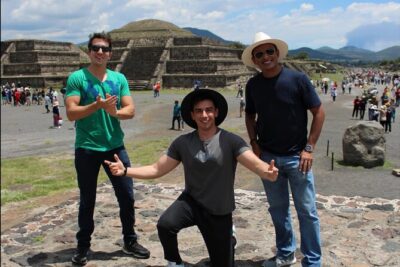
The best tour to Teotihuacán from Mexico City
Read our review →
Browse the lists this tour appears in