
Reviewed · CITY TOURS
Hop-on Hop-off or Night Tour Tourist Bus in Mexico City
Mexico City is far too large to understand from one neighborhood, and this open-top bus gives you a quick look at its grand avenues, museum district, historic center, and polished Polanco streets. The 24-hour ticket is the real draw: you can ride for orientation, hop off to explore, then resume without planning every transfer.
I like the unobstructed upper-deck views, especially along Paseo de la Reforma. I also like the practical route design, which links Chapultepec, the Zócalo, Polanco, Plaza Carso, and other distant sights that would take more effort to connect on foot. The catch is that traffic can slow the ride, and the published rating of 3 out of 5 from 127 reviews suggests that the experience depends heavily on timing, bus frequency, and your expectations.
In This Review
- Key points to know before you board
- Why this bus can be a smart first look at Mexico City
- Starting at the Zócalo and entering the historic center
- El Ángel and Paseo de la Reforma
- Chapultepec Park and the city’s best museum stop
- Polanco, Lincoln Park, and Auditorio Nacional
- Plaza Carso and the Nuevo Polanco museum cluster
- Avenida Moliere and the changing face of the city
- Cibeles Fountain and a small piece of Madrid in Mexico City
- Santa Fe, shopping, and choosing your stops
- Upper deck views, audio commentary, and practical comfort
- Timing, value, and who should book
- Should you book this Mexico City bus tour?
- FAQ
- Where does the Mexico City bus tour start?
- Where does the activity end?
- How long does the tour last?
- What are the operating hours?
- Is the commentary available in English?
- Can I cancel for a full refund?
Key points to know before you board
- A 24-hour ticket gives you room to build your own day, rather than forcing you through a fixed sightseeing schedule.
- Chapultepec is the most useful stop for culture, with the National Museum of Anthropology and other major museums nearby.
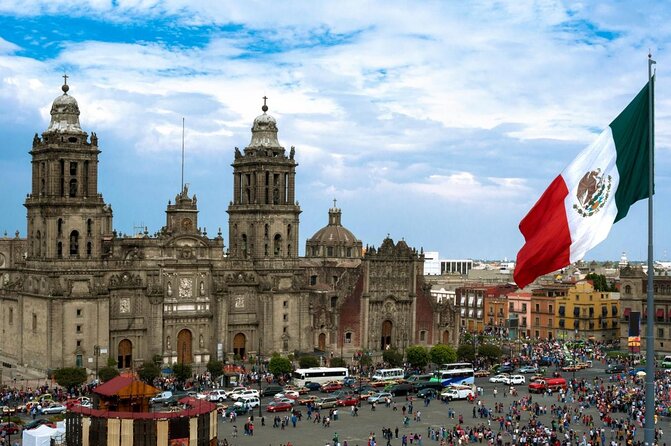
- The Zócalo provides Mexico City’s historic center, including the huge national flag and National Palace.
- Plaza Carso suits museum and shopping plans, with Museo Soumaya, Museo Jumex, and Teatro Telcel in the complex.
- The upper deck offers the best city views, but sun, wind, rain, and traffic are part of the bargain.
- English audio commentary is provided, but no individual guide is named, so this is a self-directed sightseeing ride rather than a personal tour.
Why this bus can be a smart first look at Mexico City
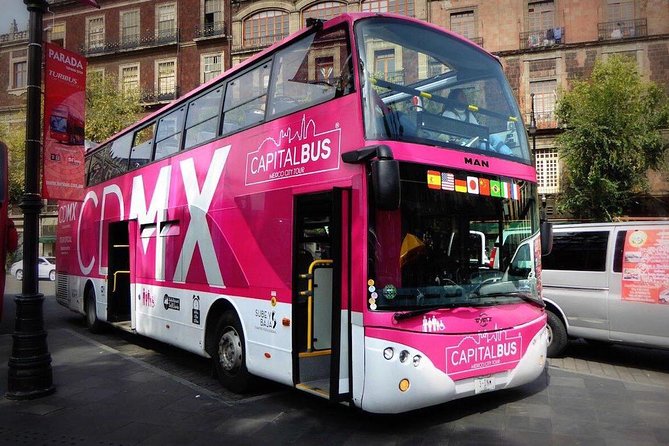
Mexico City is spread across a huge urban area. The historic center, Chapultepec Park, Polanco, Reforma, and Santa Fe do not form one compact walking route. If you are arriving for a short stay, the bus can help you see how the pieces fit together before deciding where to spend your limited time.
I would use the first circuit mainly for orientation. Stay upstairs if the weather is pleasant, listen to the English commentary, and note the stops that deserve a longer visit. Then use the remaining ticket time to return to one or two areas that caught your eye.
This is not a guided walking tour with a host beside you. The audio commentary supplies background as the bus moves, while you choose when to get off. That makes the ride flexible, but it also means you must manage your own sightseeing, museum admissions, meal breaks, and return to the bus.
The ticket is valid for 24 hours, even though the sightseeing route itself may take as little as one hour or as long as roughly 11 hours depending on how often you stop. Buses operate from about 9:15 AM to 8:00 PM, Monday through Sunday, during the stated operating period. Since traffic and departure intervals can affect your plans, leave some slack if you have a timed museum visit or evening appointment.
More City Tours in Mexico City
- Mexico City: Teotihuacan, Tlatelolco & Guadalupe Shrine Tour
★ 4.6 · 3,773 reviews - Teotihuacan Hot Air Balloon Flight from Mexico City / Volare
★ 5.0 · 3,262 reviews - Teotihuacan Private Tour from Mexico City
★ 5.0 · 1,890 reviews
Starting at the Zócalo and entering the historic center
The stated meeting point is the Capital Bus Zócalo stop on Monte de Piedad in the Centro Histórico. This puts you beside one of the city’s most important public spaces and makes the ride easy to pair with a morning walk through the historic center.
The Zócalo is dominated by a massive Mexican flag in the center of the plaza. The National Palace occupies one side, and the surrounding streets lead to churches, shops, restaurants, and other historic buildings. From the bus, you get a broad first impression. To understand the area properly, you should hop off and walk.
The bus is useful here because it saves your legs for the streets you actually want to explore. The drawback is that a moving vehicle cannot give you the same close view of murals, façades, markets, or street life that you get on foot. Treat this stop as a launch point, not a substitute for the historic center.
The meeting point is also the end point, which simplifies the day. You do not need to learn a new return location, though you should pay attention to the last practical departure if you have spent the afternoon far from downtown.
El Ángel and Paseo de la Reforma
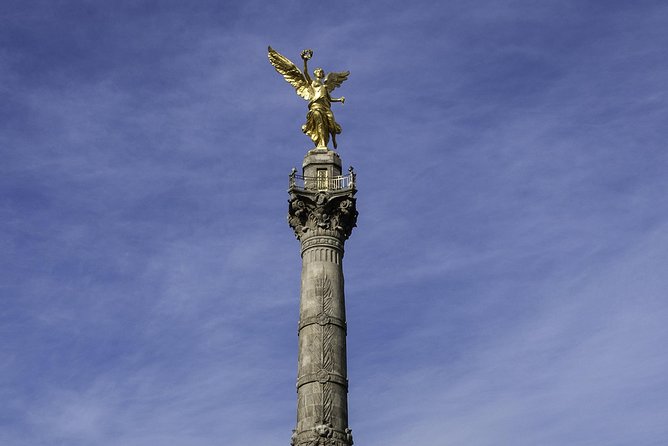
The Monumento a la Independencia, usually called El Ángel, is one of Mexico City’s best-known landmarks. It rises in the traffic circle where Paseo de la Reforma meets Río Tíber and Florencia streets. The monument was inaugurated in 1910 to mark the centennial of the beginning of the Mexican War of Independence.
This part of the ride is about the scale of Reforma. The broad avenue links important parts of the city and is lined with monuments, offices, hotels, shops, and places to eat. From the upper deck, you get a clear view of the avenue and its traffic circles, though traffic may limit how quickly the bus moves.
The route also passes the Fountain of Diana the Huntress. The sculpture represents the Greek goddess Artemis, or the Roman Diana, aiming an arrow toward the stars. It is a quick roadside sight, so keep your camera ready rather than expecting a long stop.
For many people, Reforma is one of the most enjoyable sections of the trip because it gives you a sense of Mexico City’s grand urban scale. It is also a good place to hop off for food or shopping, as the route description points out. If you want an easy break without committing to a museum, this avenue is a practical choice.
Chapultepec Park and the city’s best museum stop
Bosque de Chapultepec is the largest urban park in the Western Hemisphere and one of the key stops on the route. Its size matters. This is not a small green square you can cross in ten minutes. The park contains major cultural sights, including the National Museum of Anthropology, and has long been an important place for people living in the capital.
The National Museum of Anthropology is the main reason many visitors get off here. The stop lets you combine transport with a serious museum visit, which is far more valuable than simply seeing the building from the bus. The park also has other important museums, including the Tamayo Museum and the Museum of Modern Art.
The park has archaeological importance as well. It has been declared an archaeological zone, and nearly 4,000 archaeological objects have been found there. That detail gives the stop extra weight: Chapultepec is not just a pleasant patch of trees between museums. It also holds layers of Mexico City’s past.
Plan this stop carefully. If you want only a quick look, 15 minutes may be enough to orient yourself, but it is not enough for a major museum. The 24-hour ticket helps because you can get off for a longer visit and catch a later bus. Still, confirm the next departure before entering a museum so you do not turn a flexible day into a long wait.
More Mexico City trips worth a second look
- Lucha Libre Tickets & Tacos & Beer & Mezcal – BEST NIGHT EVER!
★ 5.0 · 1,077 reviews - Mexico City: Double Decker Bus Night Tour
★ 3.8 · 373 reviews - A Night of Tacos and Mezcal in Mexico City
★ 5.0 · 262 reviews - Mexico City: Night City Tour in a Double Decker Bus
★ 4.2 · 235 reviews
Polanco, Lincoln Park, and Auditorio Nacional
The route continues toward Polanco, a district known here for its mix of early mansions, apartments, modern offices, and upscale development. Lincoln Park sits in the southern part of Polanco. It was the first park designed for the colony, with another park later added along Horacio Avenue in front of the San Agustín Parish.
Lincoln Park is a useful contrast to the monumental spaces downtown. You see a neighborhood shaped by different periods of construction, with older residences near newer buildings. If you like architecture and city planning, this is one of the more interesting stretches to observe from the bus.
Auditorio Nacional is another major Polanco stop. It is Mexico’s main presentation venue and one of the country’s most important performance spaces. Its reputation rests on the size of its audiences, the number of performances and tickets sold, and its audiovisual facilities.
The bus stop is free to use, but that does not mean every attraction at the stop is included. The tour provides transport and commentary. Museum entry, performances, meals, and shopping are separate decisions and costs. For Auditorio Nacional, your best experience may simply be seeing the building and understanding its role in Mexico City’s cultural life unless you already hold a ticket for an event.
Plaza Carso and the Nuevo Polanco museum cluster
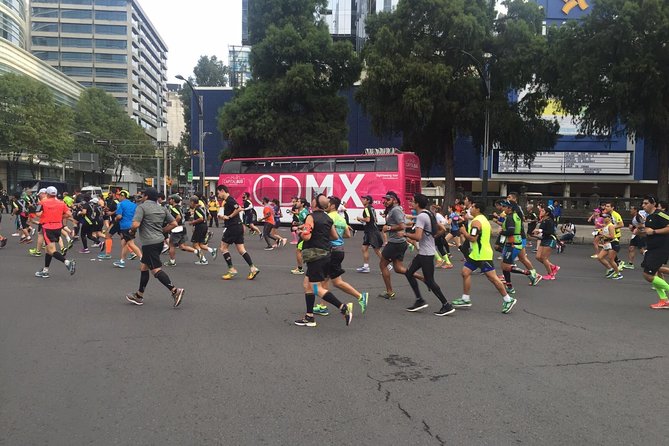
Plaza Carso is a large mixed-use complex in Nuevo Polanco. It includes Museo Soumaya, Museo Jumex, and Teatro Telcel, along with shopping, dining, and other commercial spaces. The development presents a very different side of the city from the Zócalo and Chapultepec.
This is one of the most useful stops for a museum-focused day. Museo Soumaya and Museo Jumex are close enough to combine with the surrounding complex, though you should allow plenty of time if you want more than a quick look. The route description identifies the stop as a 15-minute point, but the 24-hour ticket lets you stay off the bus longer and return later.
Plaza Carso is also a good place to pause for food or shopping. That matters because a hop-on hop-off ride can become tiring if you treat it as a nonstop sightseeing contest. A meal and a museum visit make the ticket more useful than simply riding past another set of buildings.
The limitation is style. Plaza Carso is a modern commercial district, not an old neighborhood filled with small historic details. I would choose this stop for its museums and convenience, not for the most traditional view of Mexico City.
Avenida Moliere and the changing face of the city
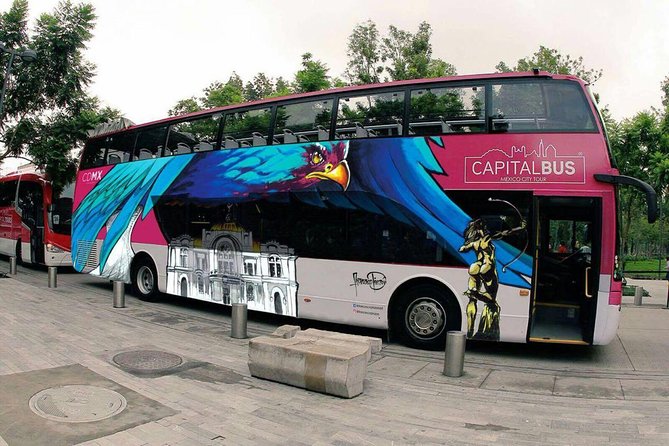
The route crosses Avenida Moliere, where you can continue toward important sites in the area. This portion helps connect Polanco’s residential streets with its newer commercial development.
From the bus, you are mainly watching the city change around you. Older mansions and apartments give way to office buildings, shopping areas, and large cultural venues. The upper deck is particularly helpful here because it lets you scan the streets without the cramped view you would get from a standard vehicle.
Do not expect each passing avenue to function as a full sightseeing stop. Some parts of the route are connective travel. Their value is showing distance and contrast, while the main stops give you places to get off and spend real time.
Cibeles Fountain and a small piece of Madrid in Mexico City
The Cibeles Fountain sits at the junction of Oaxaca, Durango, Medellín, and El Oro streets, two blocks from the Insurgentes roundabout. It is a replica of the Cibeles Fountain in Madrid and was placed in 1980 as a symbol of friendship between Spanish and Mexican communities.
The fountain was remodeled in 2011 as part of a city maintenance and improvement program. It is a short sightseeing moment rather than a destination that needs half a day. Still, it adds a pleasant cultural link to the route and gives you a recognizable landmark in the Roma and Condesa area.
This is another place where the bus’s elevated view helps. You can see the fountain and surrounding traffic circle more easily than from a passing car. If you hop off, use the opportunity to walk a little and find a place to eat, since the area connects well with the food and street life associated with central Mexico City.
Santa Fe, shopping, and choosing your stops
Santa Fe is included as a shopping and dining option. The district is far from the historic center in feel and appearance, and the mall provides a practical place to eat, shop, or take a break from monuments and museums.
I would not make Santa Fe the centerpiece of a first Mexico City visit unless shopping is high on your list. The historic center, Chapultepec, Reforma, and Polanco offer more cultural value for most short stays. Santa Fe makes more sense when you want a modern commercial stop or need a convenient break during a long route.
The same principle applies to Paseo de la Reforma. You can use it for lunch, souvenirs, or a pause between museums. The freedom to choose is the ticket’s strongest feature, but you still need to set priorities. Trying to hop off at every stop will leave you with shallow glimpses and a lot of time waiting for transport.
Upper deck views, audio commentary, and practical comfort
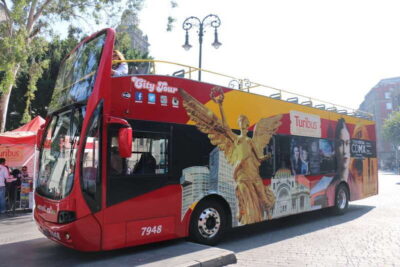
The open-top, double-decker design is best for seeing monuments, broad avenues, and large buildings. You get a much better view from the upper level than from a regular city bus, particularly along Reforma and around the major parks.
The tradeoff is exposure. The upper deck can be sunny, windy, or wet, and the ride may be less comfortable during poor weather. The supplied information does not specify a weather policy, so dress for the conditions and have a plan to move downstairs if needed.
English audio commentary is available, which makes the route more useful if you do not speak Spanish. It gives you context while you ride, but it does not replace a personal guide who can answer questions or adjust the pace around your interests. No guide is named for this activity.
The maximum group size is 45 people. That is large enough to feel like standard sightseeing transport rather than a small personal outing. In return, you get a lower-effort way to cover ground and the freedom to explore independently.
Timing, value, and who should book
No price is provided here, so I cannot judge the ticket against a specific fare. The value depends on how much of the 24-hour period you use. A single short ride is unlikely to justify the ticket as well as a full day that combines two or three distant stops.
You get the best value if you:
- Are visiting Mexico City for the first time
- Want a broad orientation before choosing neighborhoods
- Plan to visit Chapultepec museums and the historic center
- Prefer not to arrange several local transport connections
- Enjoy sightseeing from an open upper deck
- Want the freedom to pause for meals or shopping
You may want another option if you prefer a detailed walking tour, a small group, or a fixed schedule with a human guide. Traffic can make the bus slower than expected, and the published 3 out of 5 rating means I would not book it expecting a flawless, high-touch experience.
The activity is offered in English, confirmation is provided at booking, public transportation is nearby, and most people can participate. Free cancellation is available up to 24 hours before the start time. Inside that window, the amount paid is not refunded, so keep the cut-off in mind when plans are uncertain.
Should you book this Mexico City bus tour?
I would book it for a first-day overview, especially if you want to compare the historic center, Chapultepec, Reforma, and Polanco without arranging each connection yourself. Use the first ride to get your bearings, then spend the rest of the ticket on the two or three stops that fit your interests.
I would skip it if your Mexico City plans already focus on one compact neighborhood or if you want a personal guide with detailed conversation. The bus is most useful as flexible transport with commentary, not as a deep cultural tour. Bring patience for traffic, choose the upper deck when conditions are good, and treat the 24-hour validity as your main advantage.
FAQ
Where does the Mexico City bus tour start?
The stated starting point is the Capital Bus Zócalo stop on Monte de Piedad in Mexico City’s Centro Histórico.
Where does the activity end?
The activity ends back at the meeting point in the Zócalo area.
How long does the tour last?
The experience can last approximately 1 to 11 hours, depending on how long you ride and how often you get off. The ticket is valid for 24 hours.
What are the operating hours?
The stated operating hours are Monday through Sunday, from 9:15 AM to 8:00 PM, during the listed operating period.
Is the commentary available in English?
Yes. English audio commentary is provided onboard.
Can I cancel for a full refund?
Yes, if you cancel at least 24 hours before the experience start time. Cancellations or changes made less than 24 hours in advance are not refunded or accepted.
Recently reviewed around Mexico City
- Town walking tour of the city★ 5.0 · 72 reviews
- Cholula experience (private tour)★ 5.0 · 52 reviews
- Cholula tour from Puebla★ 5.0 · 66 reviews
- Private Hiking Tour in Iztaccihuatl★ 5.0 · 45 reviews
- City walking tour in Puebla (private tour)★ 5.0 · 40 reviews
- Cholula Magical Twon on a Traditional Tram from Puebla★ 4.5 · 61 reviews
- Hiking Excursion to the Iztaccíhuatl Volcano from Puebla★ 5.0 · 74 reviews
- Museum of Anthropology: a look at Mexico’s past★ 5.0 · 52 reviews
City Tours, compared.
Teotihuacan, Tlatelolco & Guadalupe Shrine Tour
Read our review →
Teotihuacan Hot Air Balloon Flight from Mexico City / Volare
Read our review →

The best tour to Teotihuacán from Mexico City
Read our review →
Browse the lists this tour appears in