
Reviewed · CITY TOURS
Mexico City: Diego Rivera’s Murals Guided Walking Tour
Mexico’s history is painted across its public buildings, and this tour helps you read it. You move from Rivera’s early work to later murals while learning how the Mexican Revolution shaped art, education, politics, and national identity. I especially like the close look at the murals and the way guides such as Jorge, David, Laila, and Francisco connect visual details to real events.
I also like that museum admission is included and that the route visits places you may not think to explore alone. The main caution is timing: a late 3:00 start can feel rushed when museums close around 5:30 or 6:00, and access to individual sites can change without notice.
In This Review
- Key points at a glance
- Why Rivera’s murals make such a good Mexico City tour
- Starting at the Museo Vivo del Muralismo
- Ninety minutes at the Secretaría de Educación Pública
- Palace of Fine Arts and the drama of a grand setting
- Twenty-five minutes at the Diego Rivera Mural Museum
- What the guides add to the experience
- Is $78 a fair price?
- How to plan your afternoon
- Who should book this mural walk?
- Should you book it?
- FAQ
- How long does the Diego Rivera mural tour last?
- Where does the tour begin and end?
- Which sites are included?
- Are museum tickets included?
- What languages are available?
- What should I bring and wear?
Key points at a glance
- Three mural-focused stops: Visit the Secretaría de Educación Pública, Palace of Fine Arts, and Diego Rivera Mural Museum.
- History painted on walls: Learn how the Mexican Revolution shaped Rivera’s subjects, politics, and public art.
- Guides who explain meaning: Jorge, David, Laila, and Francisco are praised for clear explanations, warmth, flexibility, and strong command of Mexican history.
- A useful progression: The route lets you compare Rivera’s early and later work, rather than seeing isolated paintings without context.
- Included museum tickets: Entry to the scheduled museums is covered in the $78 price.
- Plan around closing times: Comfortable shoes, an ID, and an earlier start make the three-and-a-half-hour walk easier.
Why Rivera’s murals make such a good Mexico City tour
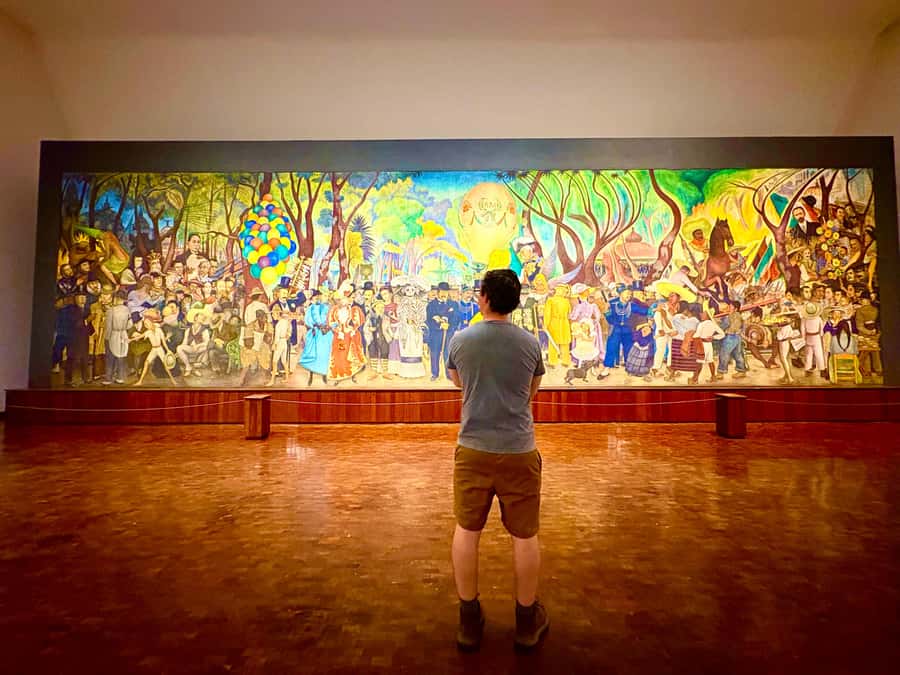
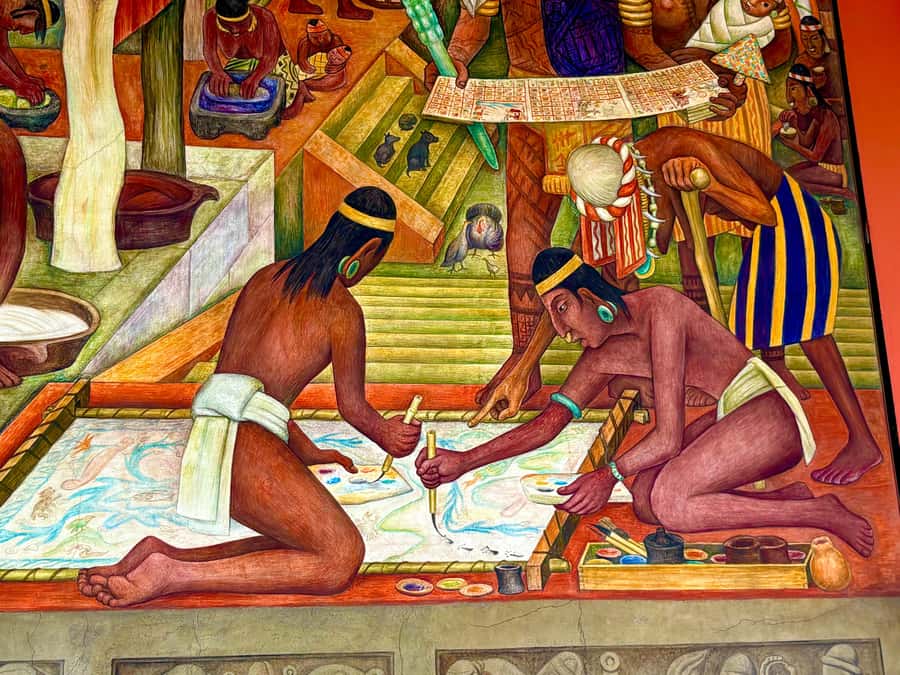
Diego Rivera’s murals are not simply large paintings placed on grand walls. They were made to speak to the public. Their subjects include workers, Indigenous people, political leaders, conflict, education, religion, and the forces that shaped modern Mexico.
That is why I think a guide matters here. On your own, you can admire the scale and color, but you may miss who is pictured, why a particular scene appears beside another, or how Rivera used art to argue for a new Mexico after the Revolution.
The tour also places Rivera within Los Tres Grandes, the group of major Mexican muralists that included José Clemente Orozco and David Alfaro Siqueiros. The focus remains Rivera, but the larger setting helps you understand that muralism was not just a personal style. It was part of a national effort to educate people through art.
You should expect politics. Rivera’s murals are proud, confrontational, and sometimes deliberately provocative. A good guide does not flatten them into simple patriotic decoration. Guides on this tour, including David, Jorge, Laila, and Francisco, are praised for explaining both the artistic skill and the arguments behind the images.
More City Tours in Mexico City
- Mexico City: Teotihuacan, Tlatelolco & Guadalupe Shrine Tour
★ 4.6 · 3,773 reviews - Teotihuacan Hot Air Balloon Flight from Mexico City / Volare
★ 5.0 · 3,262 reviews - Teotihuacan Private Tour from Mexico City
★ 5.0 · 1,890 reviews
Starting at the Museo Vivo del Muralismo
The tour begins at the Museo Vivo del Muralismo. This opening stop gives the experience a useful frame before you move through the streets and larger public buildings of central Mexico City.
I like starting with a museum devoted to muralism because it puts the subject first. You are not simply being led from one famous building to another. You begin with the idea that murals can function as public history, political speech, and art all at once.
Bring your passport or another ID card. Wear comfortable shoes, since the route is on foot and includes several indoor visits connected by city streets. Meals and drinks are not included, so plan to eat before or after the tour rather than expecting a food break during the three and a half hours.
The activity is wheelchair accessible, which is useful, though the route and access to specific buildings can still be affected by conditions on the day. The provider notes that locations and schedules may change without advance notice, so keep some flexibility in your Mexico City plans.
Ninety minutes at the Secretaría de Educación Pública
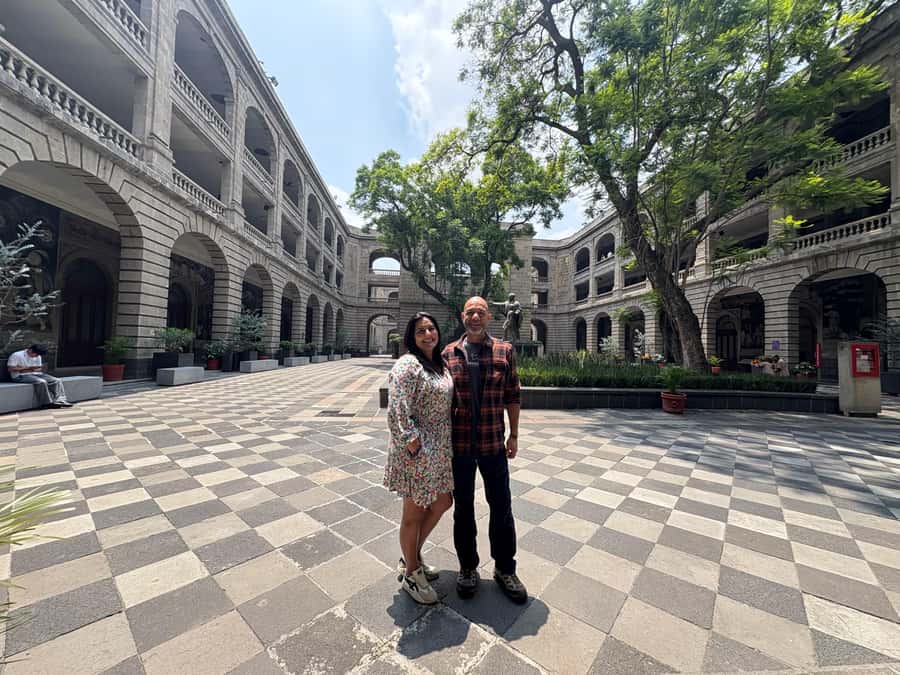
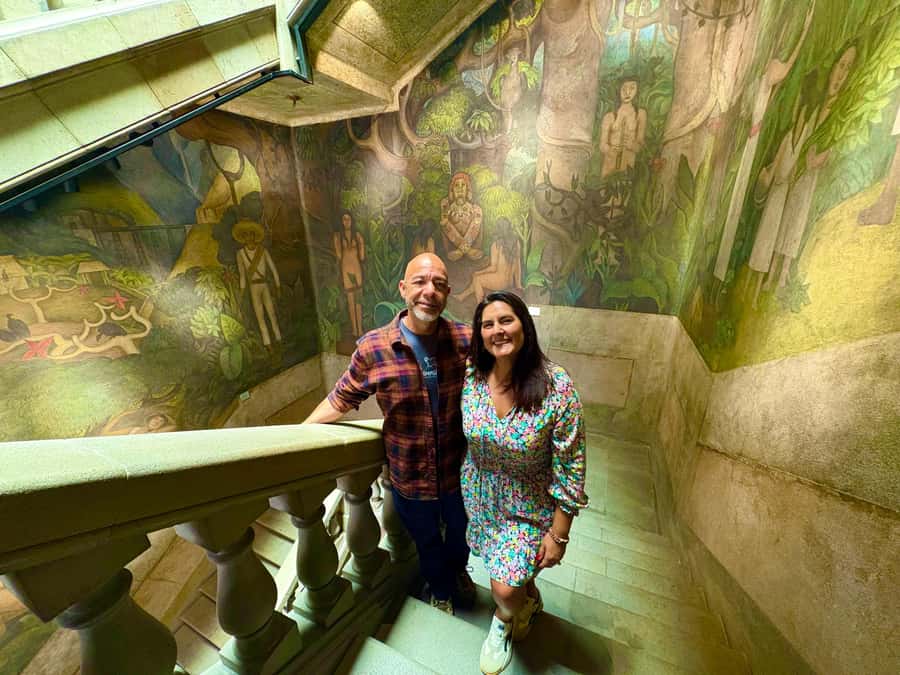
The longest stop is the Secretaría de Educación Pública, or SEP, where you spend about an hour and a half. This is likely to be the heart of the tour for anyone who wants to see many Rivera murals in one setting.
The value here is scale and continuity. Instead of seeing one isolated panel, you can study a larger body of work and notice repeated figures, themes, gestures, and visual choices. Your guide can help you move from one scene to the next, showing how the images work together as a story rather than as separate decorations.
This is also where the political purpose of Rivera’s art becomes easier to grasp. The murals were meant to meet people in public spaces. They present labor, social struggle, education, and the lives of ordinary people as worthy subjects for monumental art.
A guide can point out how Rivera used the wall itself. The architecture, movement through the building, and placement of scenes all affect how you read the murals. You may find that the most important details are not always the largest figures. Faces, tools, clothing, and group arrangements can reveal who holds power and who is being celebrated.
This stop requires time and attention. There is a lot to look at, and the tour is not designed as a quick photo visit. I would avoid planning another tightly scheduled activity immediately afterward. You will get more from the SEP if you pause, ask questions, and let the guide set a pace that works for your group.
One practical warning is worth noting. A past tour had to be altered when the Museo Vivo del Muralismo was closed on the scheduled day, and the guide created an alternate mural route. Another group could not access the National Palace because of holiday security rules. These examples show why the advertised route should be treated as a plan, not an absolute guarantee.
Palace of Fine Arts and the drama of a grand setting
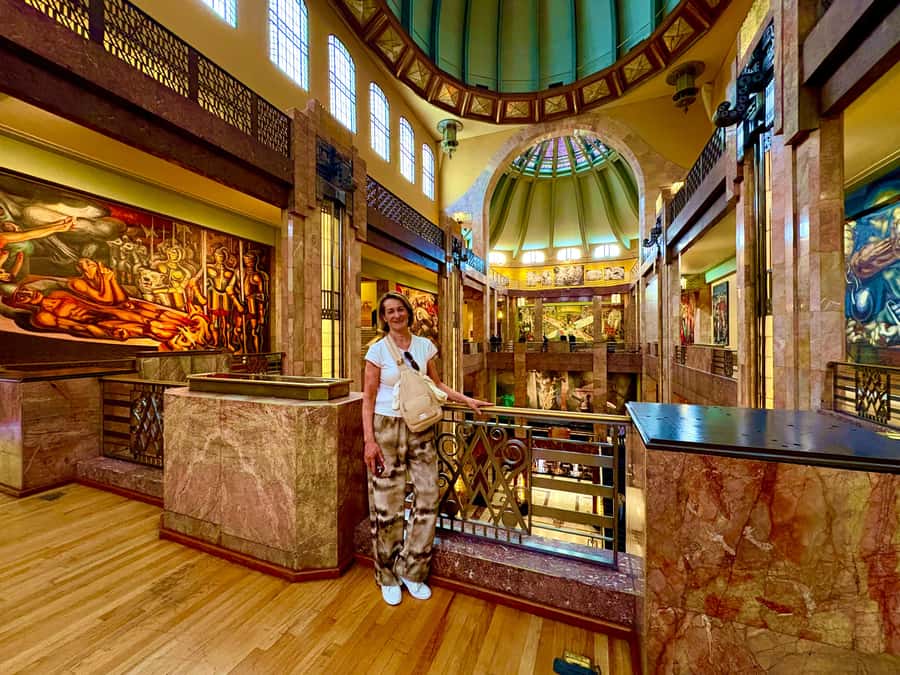
The Palace of Fine Arts visit lasts about 40 minutes. The building itself adds a different mood from the SEP. Here, Rivera’s work is seen in a major cultural setting, alongside the grand architecture and formal atmosphere of one of Mexico City’s best-known arts venues.
The shorter visit means your guide will need to focus the discussion. That can be an advantage. After the longer SEP stop, a concentrated look at Rivera’s work in the Palace of Fine Arts gives you a chance to compare how the murals feel in a monumental public arts building.
You will also have a chance to consider how location changes meaning. A mural in a government education building speaks directly to public instruction and national identity. A mural in a palace of the arts carries a different weight. The setting encourages you to think about Rivera not only as a political artist, but also as a central figure in Mexico’s formal art culture.
The exact order and access can vary. The supplied route names the Palace of Fine Arts, while some past arrangements have included or attempted access to other major mural sites. If a building is closed or security rules change, your guide may adjust the route. That flexibility is useful, but you should not assume every named room will be open on every date.
More Walking Tours in Mexico City
- Historic Downtown Walking Tour
★ 5.0 · 1,289 reviews - Mexico City: Historic Downtown Walking Tour
★ 4.8 · 1,039 reviews - Frida Kahlo VIP [Museum Tickets Included] Walk, Markets & Churros
★ 5.0 · 982 reviews - Walking Tour of the Historic Center of Mexico City
★ 5.0 · 870 reviews
Twenty-five minutes at the Diego Rivera Mural Museum
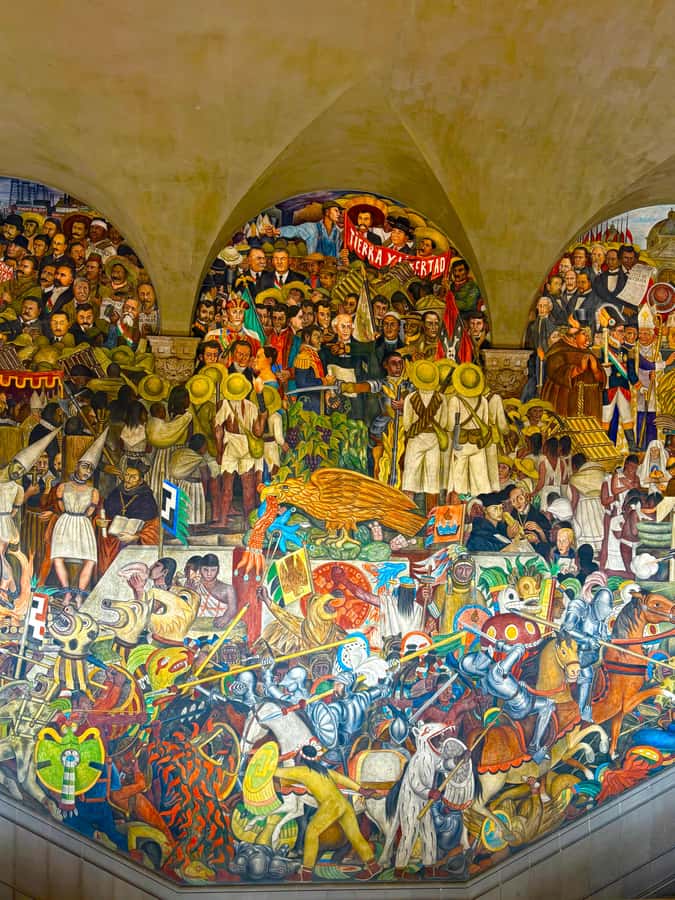
The Diego Rivera Mural Museum is scheduled for about 25 minutes. This is a compact stop, but it gives the tour a clear final chapter before you return to the Museo Vivo del Muralismo.
A short visit works well here because you have already spent substantial time with Rivera’s public murals. You can use the museum to sharpen comparisons and ask final questions about his development, recurring ideas, and place in Mexican art.
The route is especially helpful if you want to see how Rivera’s work changed over time. One guide described the experience as moving from earlier work toward later work, which lets you notice shifts in style and subject. You may also discuss Rivera’s connection to Frida Kahlo, an important part of his public story, though the exact amount of attention given to her depends on your guide and group interests.
Do not expect a full museum day. Twenty-five minutes is enough for a focused explanation, not an unhurried survey of every display. If you like to read every label, take photographs, or study each work alone, you may want to return separately.
What the guides add to the experience
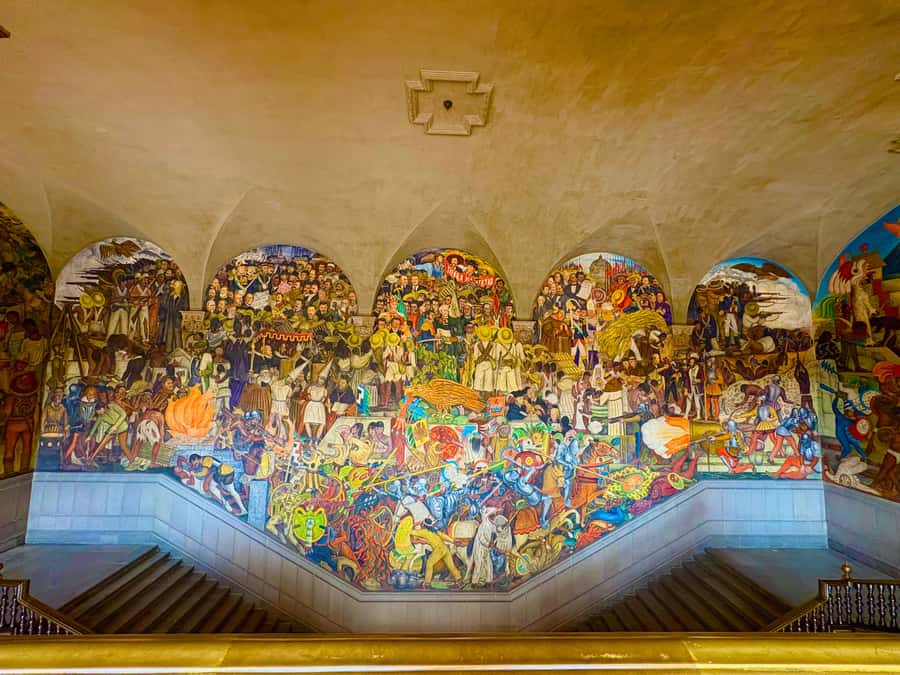
The strongest part of this tour is the human explanation. Guides named in the feedback include Jorge, David, Laila, Francisco, and Lily. Their shared strength is not only factual information. They make the murals easier to discuss.
Jorge is described as patient, witty, generous with time, and careful to explain the story behind the images. David is praised for his command of Rivera and Mexican history, his relaxed manner, and his willingness to continue conversations beyond the basic route. One participant noted that David is also an artist, which may add a useful practical view of how the murals work.
Francisco is praised for clear speech, strong preparation, and enthusiasm. He also adjusted his language for an Italian-speaking participant, showing that communication is treated as part of the job rather than an afterthought. Laila is described as warm, flexible, and easy to talk with, while Lily’s enthusiasm for the art made the subject more approachable.
Guide quality can vary in any live activity, but the repeated pattern here is encouraging: expect a guide who can explain symbolism and historical context, answer questions, and adapt the pace to your group. If you are traveling with children, an older family member, or a stroller, Jorge has been especially accommodating and safety-conscious.
This is not the best format if you prefer to walk silently and study art alone. It is built around conversation. Ask questions. Tell your guide what interests you, whether that is politics, technique, Rivera’s relationship with Frida Kahlo, or the role of Indigenous and working-class figures in the murals.
Is $78 a fair price?
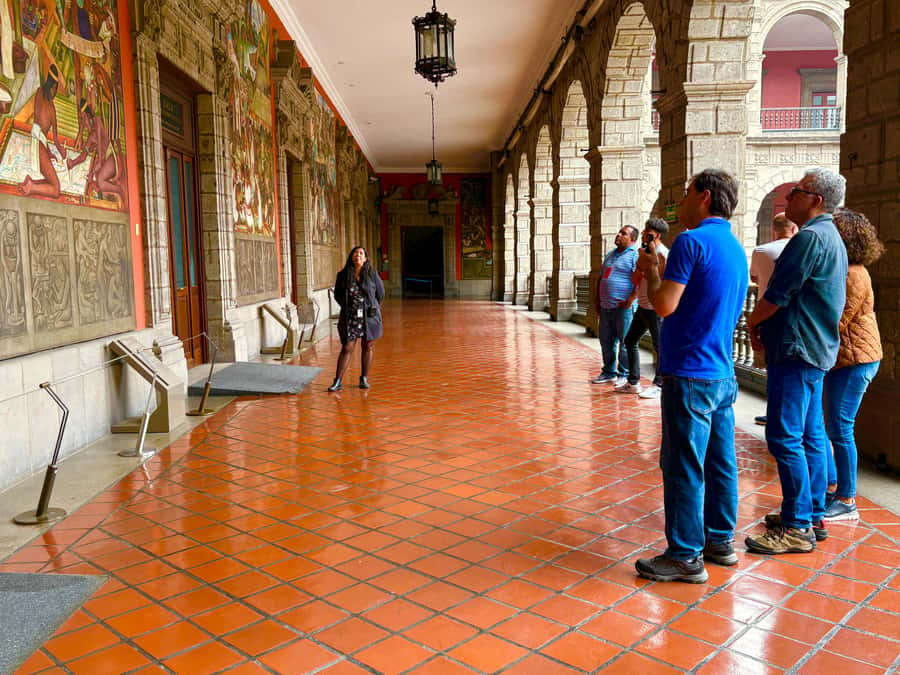
The cost is $78 per person. That is not a bargain-priced city walk, but the comparison should not be made against a simple stroll through downtown.
The price includes a live guide and admission to all museums on the scheduled route. You are also paying for the time needed to connect several sites, explain Rivera’s development, and put the murals into the context of the Mexican Revolution and modern Mexican culture.
I see the best value for people who would otherwise walk into these buildings, look around, and leave with only a general impression. The murals can be visually powerful but hard to decode. A well-prepared guide can show you where to look and why a scene matters.
The value is weaker if you already have a strong background in Rivera, speak with museum staff easily, and prefer to set your own pace. You may also find the cost harder to justify if access changes remove one of the expected sites. Still, the provider’s willingness to create an alternate route or invite a participant to return the next day shows why flexibility matters in this kind of tour.
The tour offers free cancellation up to 24 hours before departure and a reserve-now, pay-later option. Those terms help if your Mexico City schedule is still changing, but they do not remove the need to check the start time and current availability.
How to plan your afternoon
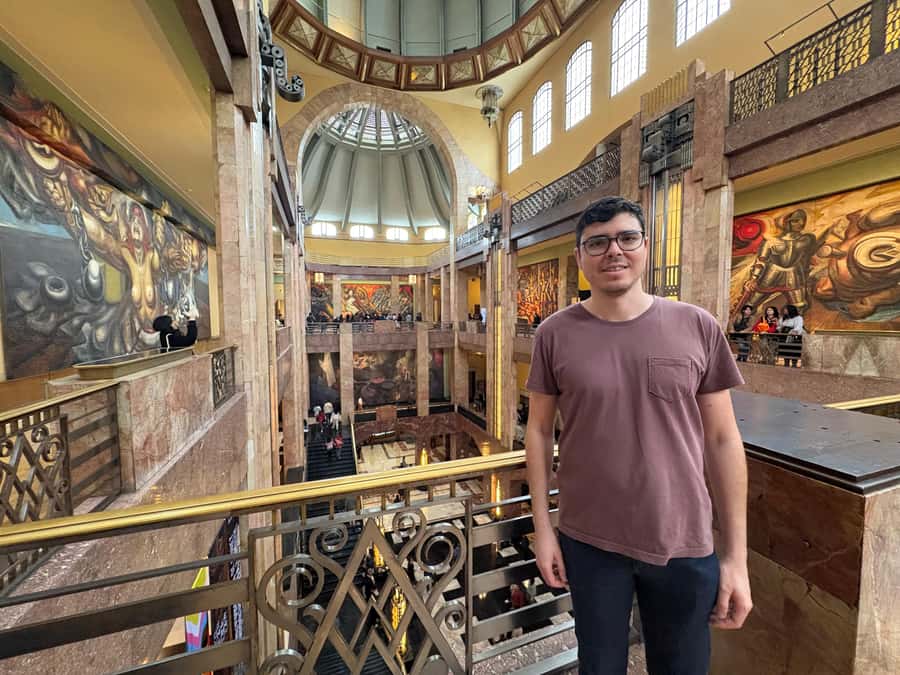
Choose an earlier departure when possible. One 3:00 start became stressful because the venues closed around 5:30 to 6:00. A 2:30 departure was suggested as the latest comfortable start for the full route, though opening hours and access can change.
Allow extra time to reach the Museo Vivo del Muralismo. Transportation to and from the meeting point is not included, so you must arrange that yourself. The tour ends back at the starting museum, which makes it easier to plan your next stop from a known location.
Wear shoes you can walk in for three and a half hours. Bring your passport or ID card, and carry water even though drinks are not provided. Keep your schedule open after the tour in case a discussion runs long or a site change alters the timing.
The listed languages are English, Spanish, French, and German. Confirm your preferred language when booking, since the guide assigned to your departure may determine how the experience is conducted.
Who should book this mural walk?
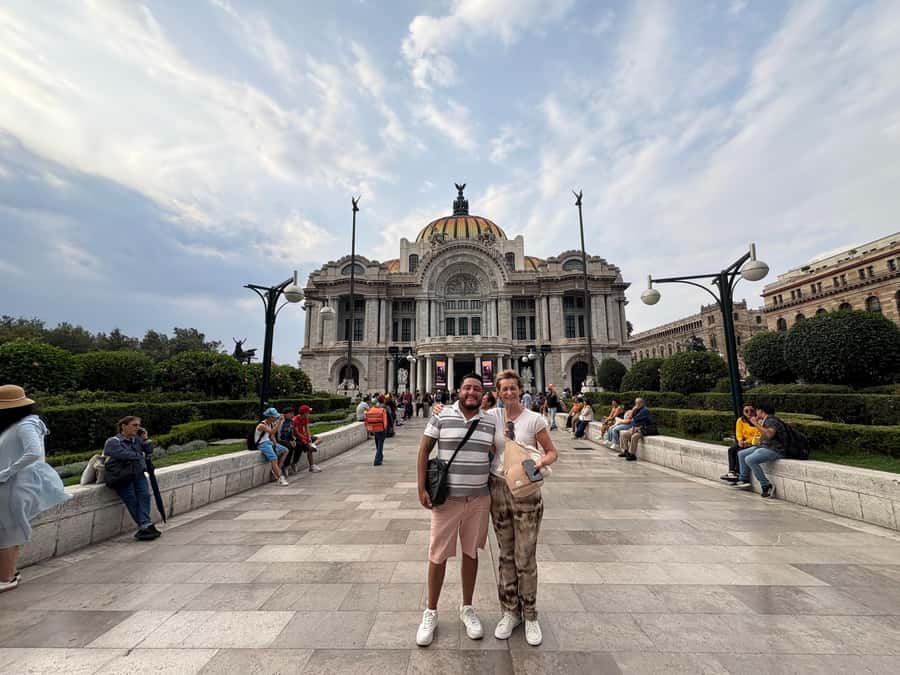
I would choose this tour if you want Mexico City’s art to make sense in its historical setting. It suits first-time visitors, museum lovers, students of political art, and anyone curious about how a country uses public walls to tell its story.
It is also a good choice for families if your group benefits from a flexible guide. The subject is serious, but the right guide can make it accessible through questions, stories, and close observation.
You may want a different plan if you need a fixed route, dislike walking, or want long periods of quiet museum time. The activity is also less suitable for a tightly packed day, especially with a late start.
Should you book it?
Book this tour if you want more than photographs of famous murals. The included museum entry, three distinct stops, and strong guide focus make the $78 price reasonable for an art-centered half day.
I would book an earlier time, arrive prepared to walk, and accept that access can shift. If you do, you will come away with a clearer sense of how Rivera’s art connects to revolution, education, class, identity, and the public life of Mexico City.
FAQ
How long does the Diego Rivera mural tour last?
The tour lasts three and a half hours, including the guided visits and walking between locations.
Where does the tour begin and end?
It begins and ends at the Museo Vivo del Muralismo.
Which sites are included?
The scheduled route includes the Secretaría de Educación Pública, the Palace of Fine Arts in Mexico City, and the Diego Rivera Mural Museum.
Are museum tickets included?
Yes. Entrance tickets to all museums on the scheduled route are included.
What languages are available?
Live guides are available in English, Spanish, French, and German.
What should I bring and wear?
Bring a passport or ID card and wear comfortable shoes. Transportation, meals, and drinks are not included.
Recently reviewed around Mexico City
- Teotihuacan from Mexico City with early access★ 4.7 · 49 reviews
- Teotihuacan Pyramids: Guided Tour with Entry Ticket Included★ 4.1 · 45 reviews
- Teotihuacan Pyramids: Skip-the-Line Ticket★ 3.8 · 98 reviews
- From Mexico City: Puebla and Cholula Day Tour★ 4.2 · 194 reviews
- Puebla: Cholula Magical Town Tour by Double-Decker Bus★ 4.3 · 74 reviews
- Puebla: Walking Tour of Puebla City★ 4.9 · 45 reviews
- Nevado De Toluca: Reach the Summit with Professionals★ 4.8 · 250 reviews
- Mexico City: Vegan and Vegetarian Street Food Adventure★ 4.8 · 65 reviews
City Tours, compared.
Teotihuacan, Tlatelolco & Guadalupe Shrine Tour
Read our review →
Teotihuacan Hot Air Balloon Flight from Mexico City / Volare
Read our review →

The best tour to Teotihuacán from Mexico City
Read our review →
Browse the lists this tour appears in