
Reviewed · CITY TOURS
Muralist Art Semi Private Walking Tour in Mexico City Downtown
Mexico City’s murals are not just grand paintings on old walls. They are public arguments about revolution, class, religion, Indigenous identity, workers, education, and power. This walking tour helps you read them, rather than simply photograph them, with visits to the Ministry of Education, Antiguo Colegio de San Ildefonso, and Palacio de Bellas Artes.
I like the small group size, capped at eight, and I like that guides such as Emilio and Emiliano give the art a firm political and historical frame. The included entrance tickets also make the $58.12 price easier to justify. The main drawback is simple: this is three and a half hours of walking and standing, so comfortable shoes are essential.
In This Review
- Key points at a glance
- Why Mexican muralism works best with a guide
- Starting at the Ministry of Education
- One hour at Antiguo Colegio de San Ildefonso
- Palacio de Bellas Artes and its 17 murals
- Emilio, Emiliano, and the value of the guide
- Walking time, group size, and what to wear
- Is $58.12 a fair price?
- Who should book this mural walk?
- My advice before you go
- Should you book it?
- FAQ
- How long does the mural tour last?
- What locations are visited?
- Which muralists can I see?
- Is museum admission included?
- How large is the group?
- Is the tour offered in English?
- Where does the tour end?
Key points at a glance
- See murals you could easily miss: The Ministry of Education is especially rewarding because its mural-covered courtyards are easy to overlook when exploring downtown alone.
- Visit three major mural sites: The route includes the Ministry of Education, Antiguo Colegio de San Ildefonso, and Palacio de Bellas Artes.
- Get more than artist names: Expect discussion of Diego Rivera, José Clemente Orozco, David Alfaro Siqueiros, Jean Charlot, Mexican politics, and social issues.
- Small groups make questions easy: The maximum is eight people, and some departures may feel nearly private.
- Admission is included: You do not need to buy separate tickets for the museums visited.
- Plan for a serious art walk: The experience suits people who want careful interpretation, not a quick photo stop.
Why Mexican muralism works best with a guide
You can see a famous mural in seconds. Understanding what you are seeing takes longer.
Mexican muralism grew into a major public art movement in the years after the Mexican Revolution. Artists were commissioned to paint in schools, government buildings, museums, and other public places. Their work was meant to reach ordinary people, not only museum patrons. The walls carried stories about workers, Indigenous communities, revolutionaries, foreign influence, religion, education, and the making of modern Mexico.
That context matters because these murals are often crowded with people, symbols, dates, gestures, and scenes from different periods. A guide can point out how one figure relates to another, explain a political reference, or show you why a detail matters. Without that help, you may admire the scale and color while missing the argument.
I especially like the way this tour treats the murals as works of art and historical documents at the same time. The strongest guide commentary, based on the experience described by past participants, connects artistic style with the social issues of the period. Guides also ask what you see before offering their own reading, which turns the visit into a conversation instead of a lecture.
The tour is offered in English with a certified bilingual guide. Emilio and Emiliano are the names most often associated with the departures described, and the feedback points to guides who are personable, clear, and able to handle detailed questions. That is important here. This is not a route where a basic list of dates and artist names will do the job.
More City Tours in Mexico City
- Mexico City: Teotihuacan, Tlatelolco & Guadalupe Shrine Tour
★ 4.6 · 3,773 reviews - Teotihuacan Hot Air Balloon Flight from Mexico City / Volare
★ 5.0 · 3,262 reviews - Teotihuacan Private Tour from Mexico City
★ 5.0 · 1,890 reviews
Starting at the Ministry of Education
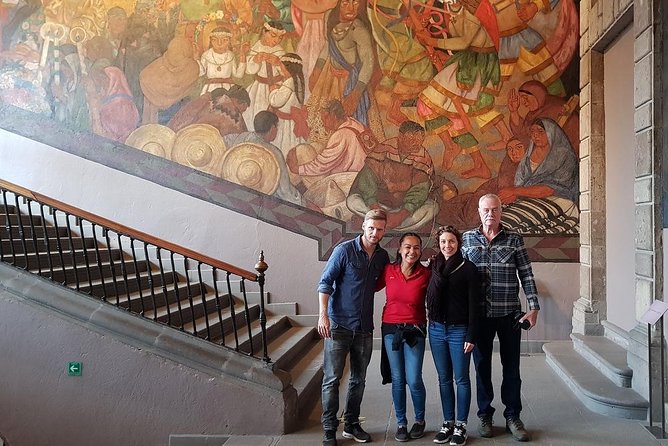
The route begins at Portal de Escribanos in Santo Domingo, in Mexico City’s Centro Histórico. From there, the tour visits the Ministry of Education, a building decorated with murals by Diego Rivera and other major artists.
This first stop is one of the tour’s best reasons to book. The building is less obvious than Bellas Artes, and its murals can be difficult to find if you are exploring on your own. The setting also changes how you see the paintings. Instead of viewing one isolated work in a gallery, you encounter murals across a public building, with courtyards, walls, and architectural spaces shaping the experience.
Rivera’s work is central here, but the point is not simply to tick off another famous name. Your guide can help you follow repeated themes and compare Rivera’s approach with the artists you will see later. Look for how workers, rural people, political figures, and symbols of national identity are arranged. The wall is doing more than decorating the building.
Allow time to look up and around. Murals are often large enough that you need to step back, then move closer to inspect a face, gesture, or small scene. A good guide will help you slow down at the right places instead of rushing from one wall to the next.
The Ministry of Education also sets up an important idea for the rest of the walk: Mexico’s muralists made art for public life. The setting is part of the meaning. You are seeing art where education, government, and civic identity meet.
One hour at Antiguo Colegio de San Ildefonso
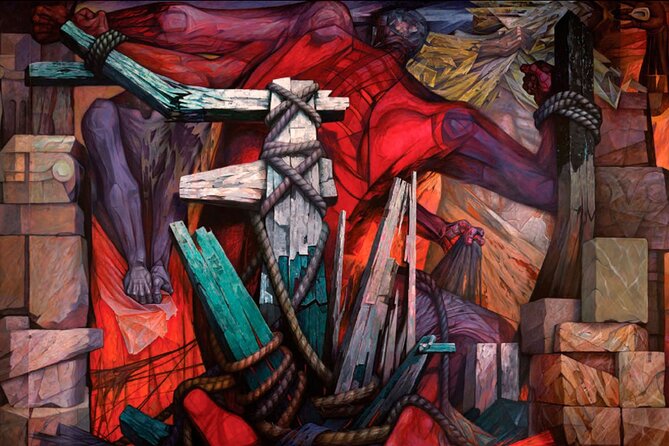
The next major stop is Antiguo Colegio de San Ildefonso, with about an hour allocated and admission included. It is regarded as a cradle of the Mexican muralist movement, and the building contains work by José Clemente Orozco, Diego Rivera, and Jean Charlot.
This stop gives you a useful change of mood and setting. The former college provides a historic interior for some of the movement’s early and important work. Orozco’s murals are a major draw, and his style can feel more severe and dramatic than Rivera’s. A guide’s explanation helps you notice those differences instead of treating every mural as part of one uniform style.
You will likely spend much of the hour moving between large painted surfaces and listening to the stories behind them. The building’s murals are not only about beautiful colors or heroic figures. They can be unsettling, critical, and full of tension. That is part of their value.
I would pay close attention to the way your guide explains the artists’ lives and the period in which they worked. The best commentary connects the paintings to social conflict and political ideas without reducing the art to a history lesson. Past participants have especially valued this balance, describing the visit as a crash course in Mexican art and history.
San Ildefonso is also a good place for questions. In a group of eight or fewer, you can ask why a particular figure appears, how an artist’s style changed, or what a symbol might mean. If you are traveling with family or friends, this is the kind of stop that can prompt a good discussion afterward.
The possible limitation is time. An hour is enough for a guided introduction, but not enough to study every wall in detail. If you already have a strong interest in Orozco or Rivera, you may want to return independently if your schedule allows. The tour gives you a thoughtful framework, but it cannot cover every work at length.
Palacio de Bellas Artes and its 17 murals
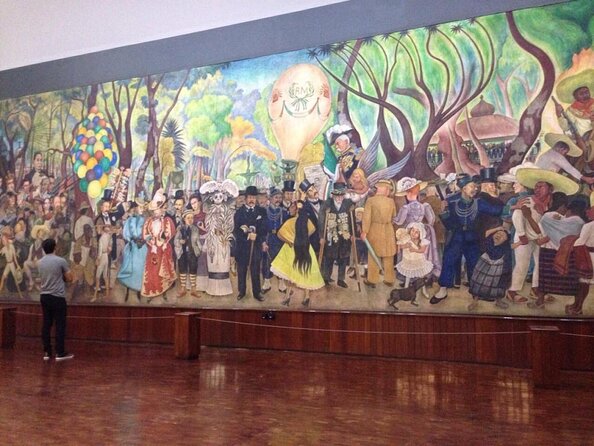
The walk ends at Palacio de Bellas Artes, one of Mexico City’s most important arts buildings. The tour visits the 17 murals inside, created by different artists over the years, and ends inside the Mural Museum of Palacio de Bellas Artes.
This final stop brings together a broad view of Mexican muralism. You will see work by leading figures such as Rivera, Orozco, and Siqueiros, along with murals by other artists. Because the collection spans different artists and periods, it is a useful place to compare styles, subjects, and political messages.
Bellas Artes is also a strong finish because the setting feels more like a formal art institution than the public government spaces earlier in the route. That contrast lets you think about how the same movement appears in different buildings. Some murals were made for public education, while others now sit within a museum setting where you can study them as major works of art.
The guide’s role matters most here. Seventeen murals can become a blur if you try to absorb them all at once. You will get more from the stop if the guide selects key works and explains how they connect to the wider story. Look for links between artists, recurring political themes, and changes in the way national identity is presented.
The tour ends inside the mural museum rather than merely outside the building. That is a practical advantage. You finish with the art, not at a street corner, and you can continue exploring the Centro Histórico afterward from a central location.
Keep in mind that the Bellas Artes portion is not a silent, self-paced museum visit. You are part of a guided route with a set duration. If you want to examine every mural for as long as you like, plan a separate visit. If you want a clear introduction that gives the collection shape, the guided format works well.
More Walking Tours in Mexico City
- Historic Downtown Walking Tour
★ 5.0 · 1,289 reviews - Mexico City: Historic Downtown Walking Tour
★ 4.8 · 1,039 reviews - Frida Kahlo VIP [Museum Tickets Included] Walk, Markets & Churros
★ 5.0 · 982 reviews - Walking Tour of the Historic Center of Mexico City
★ 5.0 · 870 reviews
Emilio, Emiliano, and the value of the guide
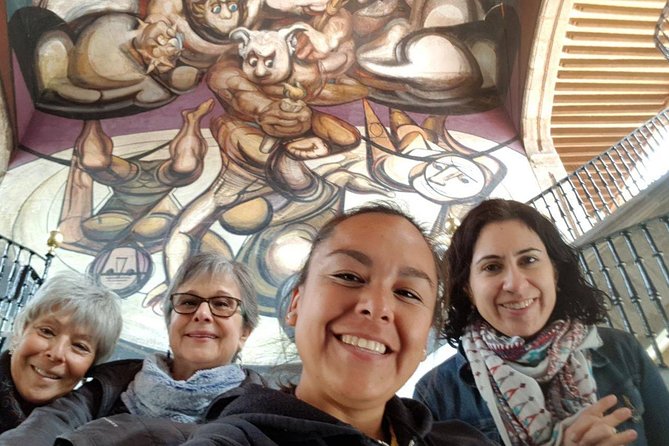
The most praised part of this experience is the guiding. Names in the feedback include Emilio and Emiliano, and the descriptions are consistent: clear explanations, strong command of Mexican history and art, careful answers, and a personal interest in the subject.
That praise makes sense because Mexican muralism asks for more than translation. A guide needs to explain historical events, political positions, artistic choices, and cultural references without losing the group. The best guides also know when to let you look quietly and when to add another layer.
Several useful qualities come through in the guide descriptions. The commentary can be detailed without feeling rushed. Questions are welcomed. The guide may ask what you notice in front of you before explaining a work, which gives you a chance to form your own response.
This style suits you if you like to understand an artwork rather than receive a quick label. It may feel too slow if you want to cover many downtown sights in a short time. The tour is focused. Its subject is muralism, and the history surrounding it.
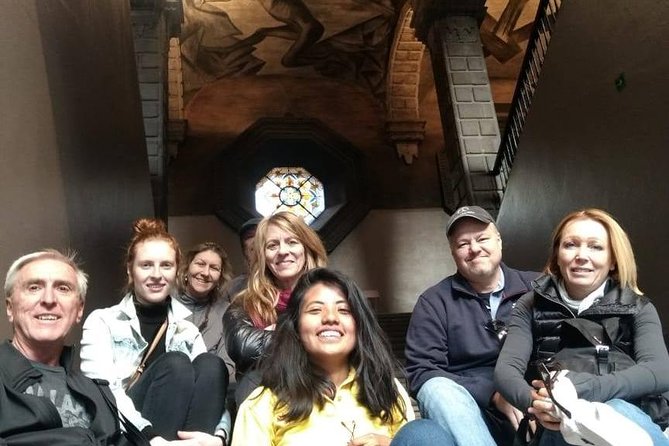
The experience can also become almost private. With a maximum of eight people, some departures may have only a few participants. That makes it easier to hear, ask questions, and stand in the right place when the guide points out a detail.
Walking time, group size, and what to wear
The stated duration is about three hours and 30 minutes. Some tours may run longer when the group has many questions, so avoid scheduling a tight appointment immediately afterward.
You will walk between downtown locations and spend time standing inside the buildings. Comfortable shoes are not a minor suggestion here. Several people specifically point out the amount of walking and standing, and that is the main physical consideration.
The group maximum of eight is a real advantage in historic buildings. A large group can block a view or make it hard to hear. A smaller group lets the guide adjust the pace and respond to the interests of the people in front of the mural.
Transportation to the meeting point is not included. You are responsible for reaching Portal de Escribanos, Santo Domingo, in the Centro Histórico. The area is near public transportation, but you should still allow time to find the exact meeting location.
The tour ends at Museo del Palacio de Bellas Artes on Avenida Juárez, at the corner of Eje Central Lázaro Cárdenas. That location is useful for continuing your day in central Mexico City, though the experience itself does not provide transport afterward.
Service animals are allowed, and most people can participate. The activity is offered in English, with a certified bilingual guide.
Is $58.12 a fair price?
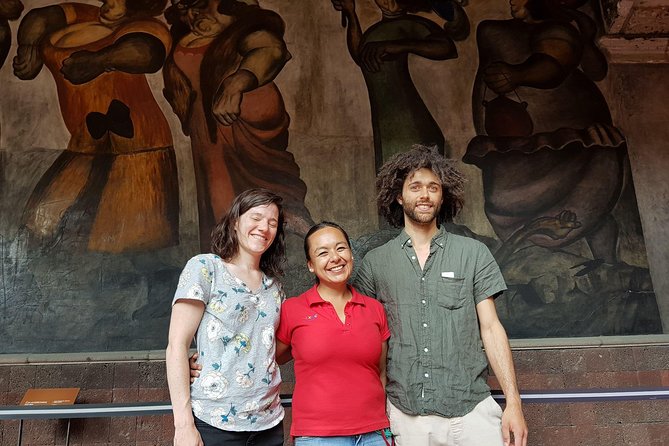
At $58.12 per person, this is not the cheapest way to spend a morning in downtown Mexico City. It is also more than you would pay to wander around and view a single museum on your own.
The value comes from what is included and what you would likely miss alone. Admission to all museums visited is included, and the guide brings together three important mural locations. The Ministry of Education, in particular, is not as simple to discover without help.
You are also paying for interpretation. If you already have a background in Mexican art, you may prefer independent visits and your own reading. If you are new to the subject, the guide can save you from seeing a wall of symbols without understanding the people, events, and ideas behind it.
For me, the price is easier to defend if you treat the tour as a focused history and art class conducted on foot. It is not a general Mexico City sightseeing tour. You are paying for depth, access to several sites, and a small group.
Group discounts are available, which can improve the cost for families or friends booking together. Free cancellation is available when you cancel at least 24 hours before the start time. Changes or cancellations made less than 24 hours ahead are not accepted for a refund.
Who should book this mural walk?
I would recommend it first to anyone interested in art, architecture, political history, or Mexican culture. It is especially useful early in your Mexico City stay because it gives you a framework for seeing the city’s public art afterward.
Families can enjoy it if children are ready for extended walking, standing, and serious discussion. The small group makes it easier to ask questions, but the subject is not a light treasure hunt. Couples and friends who like museums should find plenty to discuss along the way.
Solo visitors also fit the format well. A small group and an active guide can make the experience feel personal, and the English-language setting removes the pressure of decoding complex wall scenes alone.
I would hesitate to recommend it if you want a quick overview of downtown, a bus ride, or a tour with lots of unrelated landmarks. You will spend much of the time looking at murals and discussing their meaning. That focus is the strength, but it is not for everyone.
My advice before you go
Wear your best walking shoes and bring water. The tour lasts roughly three and a half hours, and the combination of walking and standing can wear you down even when the route itself is manageable.
Read nothing into the murals too quickly. Give yourself time to look before listening to the explanation. Notice the people, gestures, tools, clothing, and repeated symbols. Then compare your first impression with the guide’s interpretation.
Book early if the small group matters to you. The experience is often reserved about 20 days ahead, and the eight-person limit keeps the format intimate.
Most of all, expect the murals to be political. They were created to speak about society, power, and national identity. The tour does not treat them as simple wall decoration, and you should not expect a neutral, purely formal art lesson.
Should you book it?
Yes, if you want to understand why Mexico City’s murals matter, not just see famous paintings. The included admission, three major locations, English-speaking bilingual guide, and eight-person limit make this a strong choice for art and history fans.
Book it early in your stay, wear comfortable shoes, and leave room in your schedule in case the discussion runs long. Skip it only if you prefer a fast sightseeing route or a fully independent museum visit. For everyone else, this is a focused way to see central Mexico City through the eyes of its muralists.
FAQ
How long does the mural tour last?
The tour lasts approximately three hours and 30 minutes. It may run longer if the group has many questions and discussions.
What locations are visited?
The experience includes the Ministry of Education, Antiguo Colegio de San Ildefonso, and Palacio de Bellas Artes.
Which muralists can I see?
The tour includes works by Diego Rivera, José Clemente Orozco, David Alfaro Siqueiros, Jean Charlot, and other important mural artists.
Is museum admission included?
Yes. Entrance tickets to all museums visited during the tour are included in the price.
How large is the group?
The maximum group size is eight people.
Is the tour offered in English?
Yes. The experience is offered in English with a certified bilingual guide.
Where does the tour end?
The tour ends inside the Mural Museum of Palacio de Bellas Artes, at Avenida Juárez and Eje Central Lázaro Cárdenas in Mexico City’s Centro Histórico.
Recently reviewed around Mexico City
- Town walking tour of the city★ 5.0 · 72 reviews
- Cholula experience (private tour)★ 5.0 · 52 reviews
- Cholula tour from Puebla★ 5.0 · 66 reviews
- Private Hiking Tour in Iztaccihuatl★ 5.0 · 45 reviews
- City walking tour in Puebla (private tour)★ 5.0 · 40 reviews
- Cholula Magical Twon on a Traditional Tram from Puebla★ 4.5 · 61 reviews
- Hiking Excursion to the Iztaccíhuatl Volcano from Puebla★ 5.0 · 74 reviews
- Museum of Anthropology: a look at Mexico’s past★ 5.0 · 52 reviews
City Tours, compared.
Teotihuacan, Tlatelolco & Guadalupe Shrine Tour
Read our review →
Teotihuacan Hot Air Balloon Flight from Mexico City / Volare
Read our review →

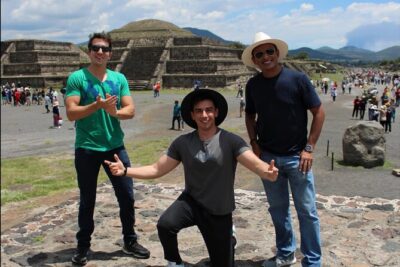
The best tour to Teotihuacán from Mexico City
Read our review →
Browse the lists this tour appears in