
Reviewed · MEXICAN COOKING CLASSES
Oaxaca de Juarez: Traditional Oaxacan Cooking Class
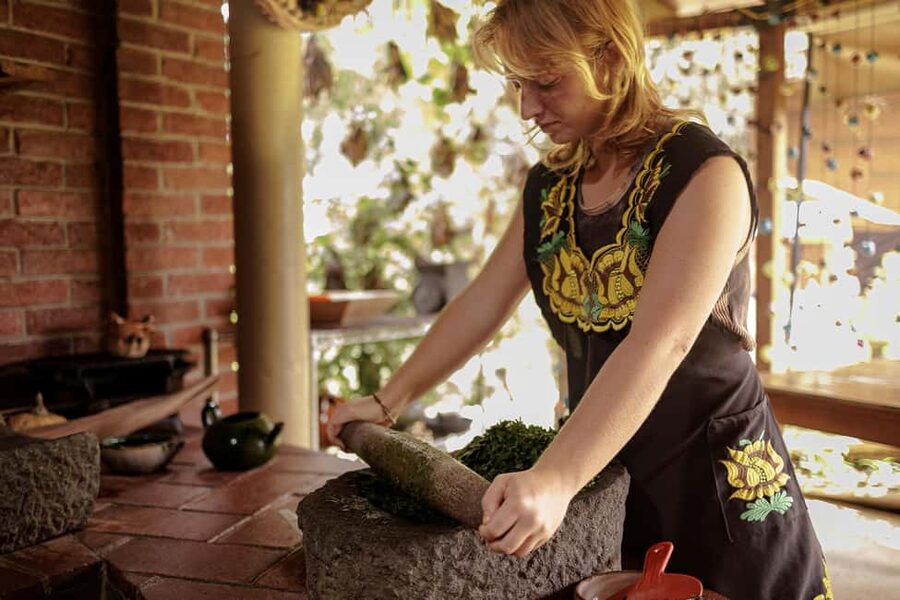
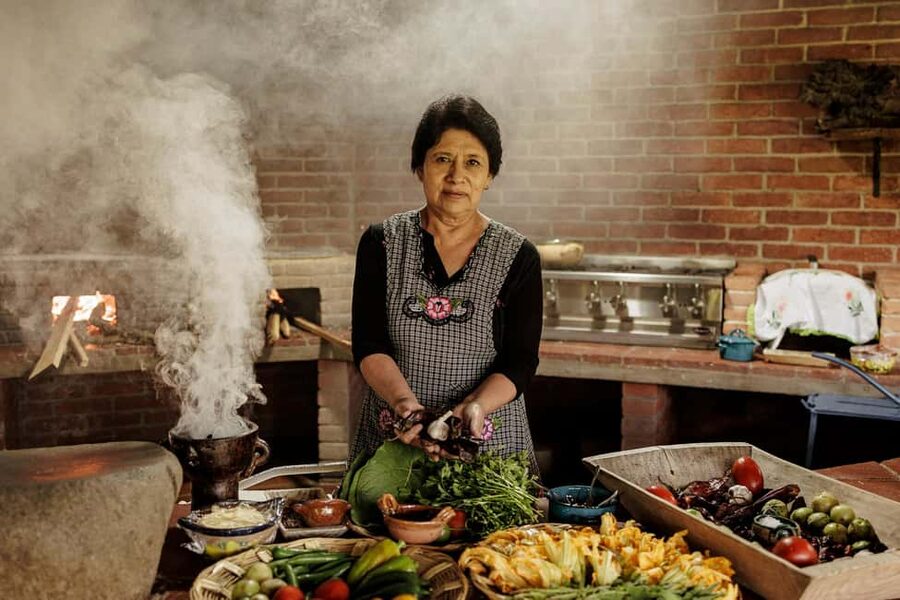
Oaxaca’s best cooking lesson may begin with a ride out of the city and end with black mole, hand-pressed tortillas, and a mezcal tasting. You’ll cook in a village smoke kitchen, using a comal, metate, molcajete, firewood, and charcoal embers. I like the old-school tools, because they show you how flavor and texture are built, not just how a recipe is written.
I also like the garden of organic herbs and chiles, plus the daily cheese making. Baldo leads the mezcal tasting, while Sonia, Teresa, Esperanza, and the rest of the team help make the day warm and personal. The main drawback is the five-hour length and rustic setup, which may feel demanding if you want a quick class or need wheelchair access.
In This Review
- Key points to know before booking
- From Santo Domingo Temple to a mountain village
- Start with the ingredients of an Oaxacan home
- Metates, comals, and the work of making tortillas
- Making a seasonal sauce and one of Oaxaca’s seven moles
- Mezcal, chocolate, and snacks with a local edge
- A five-hour class with real value
- The people who shape the day
- What to bring and how to prepare
- Who should book this Oaxaca cooking class?
- Should you book it?
- FAQ
- Where does the cooking class meet?
- How long does the activity last?
- How many people are in the group?
- Is transportation included?
- Which languages are available?
- Are food and drinks included?
- Can vegans and vegetarians take the class?
- Is the experience suitable for wheelchair users?
Key points to know before booking
- A village kitchen outside Oaxaca: Ride from Santo Domingo Temple to a mountain setting away from the city.
- Hands-on cooking: Cut, grind, mix, press, and cook your own tortillas, tetelas, memelas, tlayudas, sauces, and mole.
- Traditional equipment: Work with comals, metates, molcajetes, firewood, and charcoal embers.
- A full food-and-drink experience: Mezcal, fresh cheese, quesillo, seasonal food, snacks, dessert, coffee, chocolate, and unlimited drinks are included.
- Small bilingual group: Classes run in English and Spanish, with no more than 10 participants.
- Plan for comfort: Wear sturdy, comfortable shoes, and remember that the activity is not suitable for wheelchair users.
From Santo Domingo Temple to a mountain village
The meeting point is easy to find: the main door of Santo Domingo’s church in Oaxaca de Juárez. Baldo, Sonia’s son, meets you there, with his clothing described to you on the day of the activity. From that point, air-conditioned transport takes you to a village outside the city, surrounded by mountains.
That transfer matters. This is not a cooking demonstration tucked into a restaurant near the historic center. You leave the city and enter a home-style setting where the kitchen tools and ingredients have a working purpose. The ride also keeps the day simple. Pickup and drop-off at Santo Domingo Temple are included, so you do not need to arrange a taxi to an unfamiliar village.
The van has comfortable seats and passenger insurance. A child seat is available when needed. The group is limited to 10 people, a useful size for a class where everyone needs room to work at the comal and metate.
You should wear comfortable shoes. The kitchen is rustic, with firewood, charcoal, and traditional grinding stones, so this is not the place for delicate footwear or a polished restaurant routine. Wheelchair users should choose another activity, since the class is not suitable for wheelchairs.
More Cooking Classes in Oaxaca
- Flavors of Oaxaca: Cooking Class with No Set Menu and Local Market Tour
★ 4.5 · 333 reviews - Oaxacan Vegetarian Cooking Class
★ 5.0 · 235 reviews - Traditional Cooking Class with Minerva Lopez
★ 5.0 · 197 reviews
Start with the ingredients of an Oaxacan home
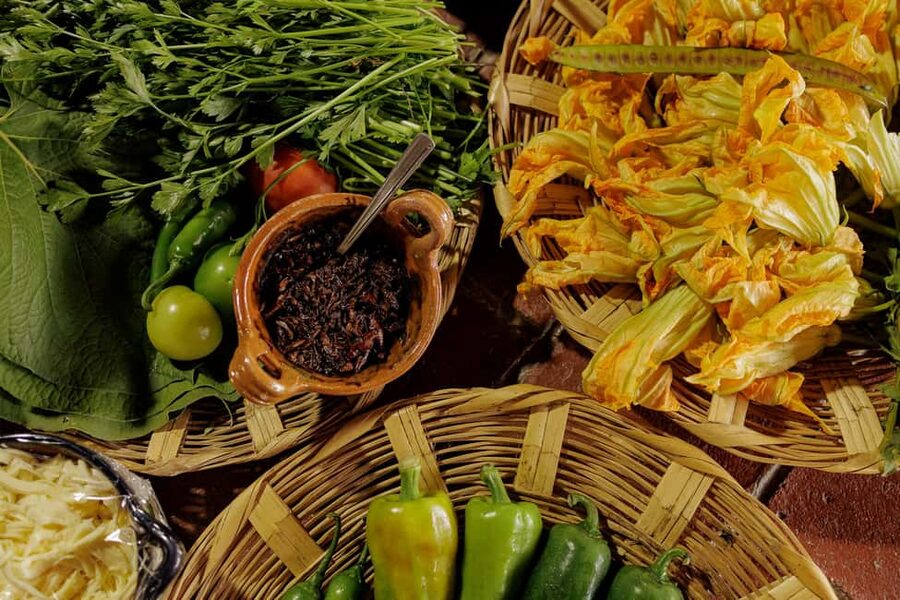
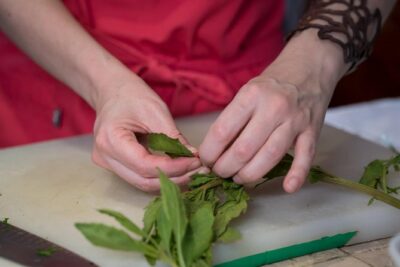
The first part of the class introduces you to ingredients found in Oaxacan homes. You’ll see produce from the hosts’ organic garden, including herbs and chiles. That garden adds a practical lesson: local cooking depends on what is growing and available, not on a fixed supermarket list.
You’ll also see quesillo and fresh cheese made every day. Quesillo, the stringy cheese closely linked with Oaxaca, is more interesting when you see it as a fresh household product rather than just an ingredient listed on a menu. Fresh cheese gives you another point of comparison, showing how different textures fit into Oaxacan cooking.
The class is built around participation. You will cut ingredients, grind them, make sauces, shape tortillas, and eat what you prepare. That makes this a good choice if you want to understand the physical work behind Oaxacan food. If you prefer to sit back while an instructor cooks, you may find the hands-on format more active than expected.
The class can accommodate vegan and vegetarian diets if you notify the hosts in advance. Do not leave this until the morning of the class. The food plan includes many dishes and tastings, so advance notice gives the team a chance to prepare properly.
Metates, comals, and the work of making tortillas
One of the most useful parts of the day is learning how tortillas are made by hand. You’ll use masa to prepare tortillas, then go beyond the basic round tortilla with tetelas, memelas, and tlayudas.
These are not minor variations. Each form gives you a different way to understand masa, fillings, texture, and cooking time. Tetelas are folded, memelas are thicker and often served with toppings, and tlayudas are large and crisp or chewy depending on how they are cooked. The class lets you handle the dough instead of treating these dishes as mysterious items on a menu.
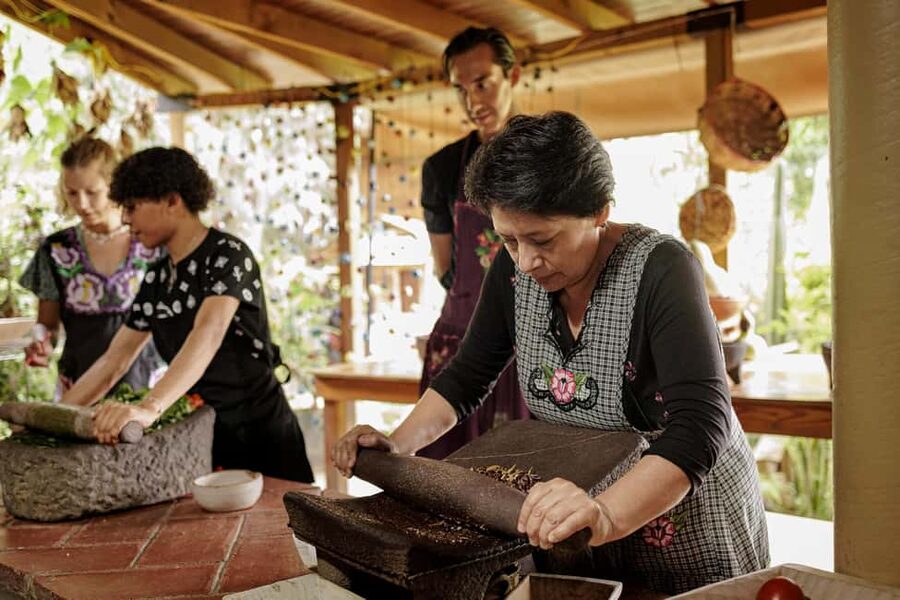
The comal is central here. It is the flat cooking surface used for tortillas and sauces, and the class uses it over firewood and charcoal embers. That method brings a smoky character and requires attention. You will need to watch the heat and judge the food by look, smell, and texture.
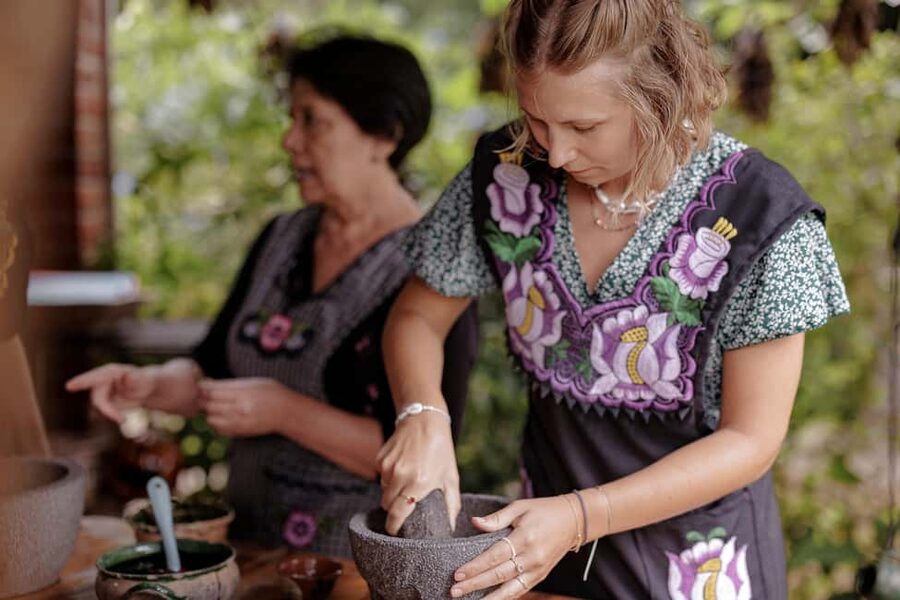
The metate and molcajete make the work slower than using a modern blender. That is part of the point. Grinding by hand helps you see how ingredients change as they break down, and it gives the instructor a natural chance to explain the role of each chile, spice, or seed.
I like this section because it connects the recipe to the tool. You are not simply told that a sauce is traditional. You are shown the work required to make it.
Making a seasonal sauce and one of Oaxaca’s seven moles
Sauces are prepared with seasonal ingredients and cooked on the comal. You’ll work with a mixture of firewood and charcoal embers, then use the molcajete and metate as part of the process.
The class also prepares one of Oaxaca’s seven moles using the metate. Mole can be a long list of ingredients when printed on a menu, but the metate gives the dish a physical story. You’ll see how grinding affects the mixture and how a sauce develops through patient preparation.
The final mole is black mole, one of Oaxaca’s most famous dishes. It is served as part of the meal, along with water chocolate, pot coffee, ice cream, and cake. The menu moves from savory cooking to traditional drinks and sweets, so you should arrive hungry.
That warning is not decorative. Food and drinks are unlimited, and snacks are part of the welcome. This is a generous five-hour visit, not a small tasting with one finished dish. Pace yourself during the early snacks if you want to appreciate the mole and dessert later.
More Oaxaca trips worth a second look
- Oaxaca: Vegetarian Cooking Class
★ 4.8 · 139 reviews - Oaxaca: Traditional Oaxacan Cooking Class with Market Visit
★ 4.9 · 80 reviews - Cabo San Lucas Mexican Cooking Class Experience and Local Markets
★ 5.0 · 915 reviews - Puerto Vallarta Cooking Class Experience with Market Tour
★ 5.0 · 698 reviews
Mezcal, chocolate, and snacks with a local edge
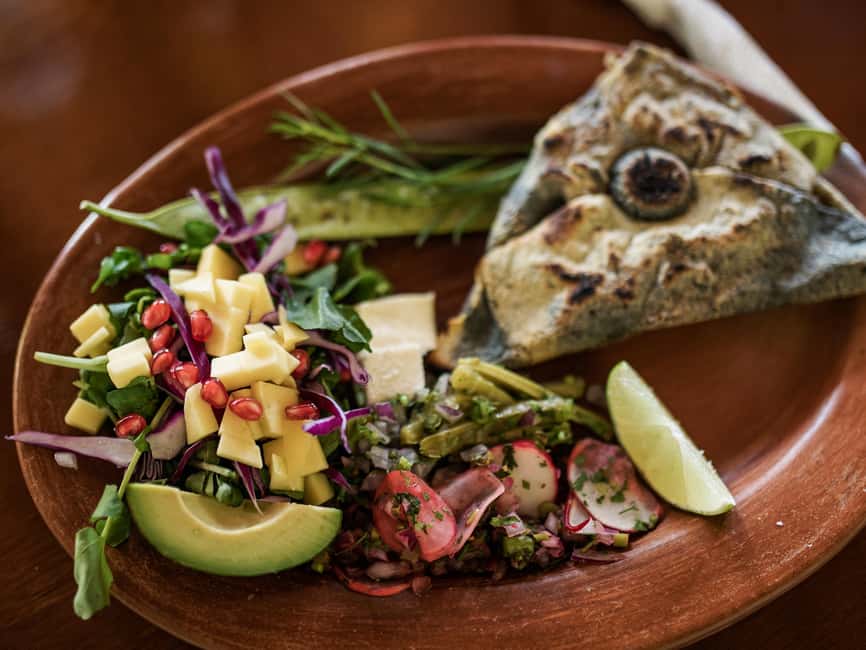
Baldo shares his knowledge of mezcal and leads a tasting. You can sample as much as you like, and fresh water, soft drinks, and juices are also available. The range makes the tasting approachable even if you are not a mezcal drinker.
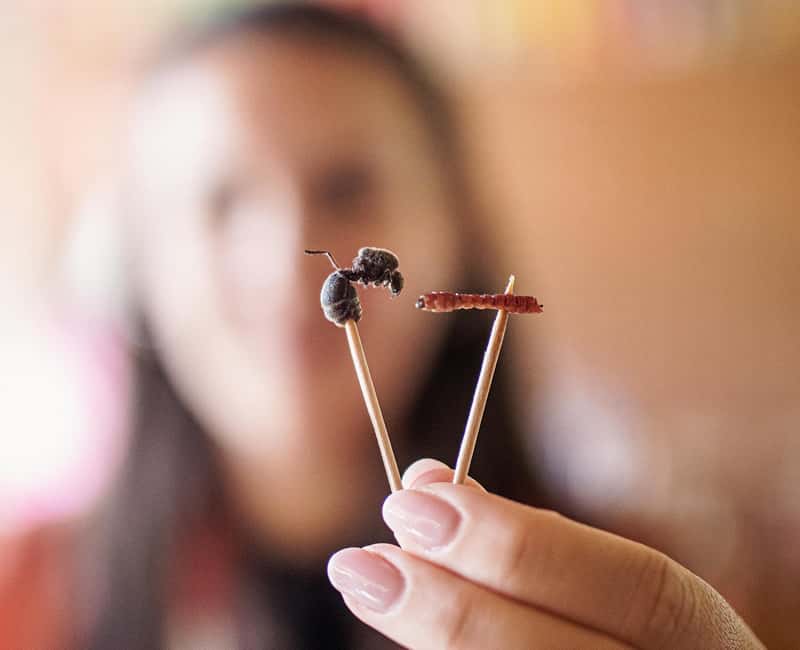
The class also includes three distinctly Oaxacan snacks: gusanos, chicatanas, and chapulines. These may be a bigger hurdle than the tortillas. Gusanos are agave worms, chicatanas are flying ants, and chapulines are grasshoppers. If you enjoy trying local foods, this is an easy place to sample them because they are part of a wider meal rather than the entire point of the visit.
If insects are not for you, do not pretend otherwise. You can focus on the other food, but the experience is designed to present Oaxacan eating as it is, including ingredients that may be unfamiliar to you.
Water chocolate and pot coffee give the drinks a softer finish. Dessert includes ice cream and a cake, and dessert at the end is included. The meal is one of the strongest reasons the $87 price makes sense. You are paying for transport, instruction, ingredients, unlimited food and drinks, a mezcal tasting, dessert, an apron, recipes, and insurance, not just an hour of cooking.
A five-hour class with real value
At $87 per person, this is not the cheapest way to eat in Oaxaca. It is better judged as a half-day outing with transport and a substantial meal included.
The value is strongest if you use the full format. You get a ride from the city, a small bilingual class, access to a garden, instruction with traditional tools, several food preparations, a mezcal tasting, snacks, drinks, and dessert. You also receive a digital recipe book, which gives you a way to repeat some of the dishes at home.
The group limit of 10 matters. A cooking class can become frustrating when too many people crowd around one work surface. This small-group size should make it easier for you to take part, ask questions, and get help with the metate or masa.
The five-hour schedule is the trade-off. You need to set aside a good portion of your day, and the cooking itself involves repeated manual work. If you only have one free afternoon in Oaxaca, compare this with a market visit, a museum, or a day trip before booking.
The activity is offered in English and Spanish. Bilingual instruction is included, so you can choose it even if you do not speak Spanish. Still, food preparation often involves visual demonstrations and physical practice, which means you will have more than spoken explanation to follow.
The people who shape the day
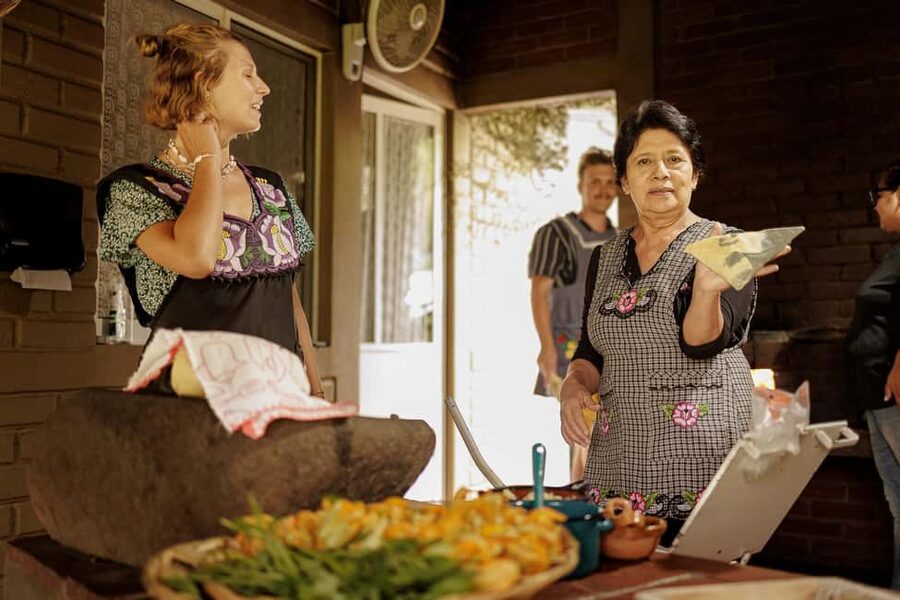
Baldo is the named point of contact and leads the mezcal portion. Sonia, Teresa, and Esperanza are also part of the cooking team. Their presence helps explain why the class feels connected to a family kitchen rather than a large commercial school.
The personal element is important here. The class is built around sharing food, teaching techniques, and welcoming you into a home-style setting. The warm treatment described by the hosts’ guests is one of the experience’s most praised features, along with the food itself and the careful planning of the day.
You should expect an active role from start to finish. You are not simply watching Baldo or Sonia prepare a meal. You will participate in cutting, grinding, making sauces, shaping food, and eating. That structure suits curious cooks, food-focused visitors, and anyone who learns best by doing.
It also suits families if the children can manage a five-hour class and the hosts have the needed child seat in the van. The child seat is available when required, but no other child-specific details are provided, so ask before booking if you need more information about age suitability.
What to bring and how to prepare
Bring comfortable shoes. That is the only required item listed, but it is useful advice for a day involving transport, a village setting, and traditional cooking equipment.
Arrive with an empty stomach. You’ll have snacks, a full spread of handmade dishes, mezcal, nonalcoholic drinks, chocolate, coffee, ice cream, and cake. Eating a large breakfast beforehand would make it harder to enjoy the class.
Tell the hosts in advance if you are vegan or vegetarian. The class can support both diets with notice. Also share any other food concerns when you reserve, although the provided details only confirm vegan and vegetarian arrangements.
Bring a willingness to taste unfamiliar things. Chapulines, chicatanas, and gusanos are part of the Oaxacan way of snacking presented here. You can still enjoy the meal if you skip them, but they are included because they form part of the region’s food culture.
The class includes an apron, but you should still wear clothes you do not mind cooking in. The use of comals, firewood, charcoal, and sauces means the setting is practical rather than spotless.
Who should book this Oaxaca cooking class?
I would choose this class if you want food to be the main reason for a half-day outside Oaxaca’s center. It gives you a real task, a regional meal, a village setting, and time with a small team rather than a quick demonstration.
It is especially well suited to people who want to learn how tortillas, sauces, and mole are made. You’ll get more from the class if you are curious about tools and technique, not only the finished plate.
It is also a strong choice for anyone interested in mezcal. Baldo’s tasting adds a separate lesson to the cooking, and unlimited drinks mean you can sample without treating one small pour as the entire event. Drink responsibly, especially with a long meal still ahead.
I would hesitate if you dislike rustic kitchens, manual grinding, smoky cooking, insects, or a long meal. The class is not designed to hide the work. That honesty is part of its appeal, but it will not suit every appetite.
You can cancel up to 24 hours before the activity for a full refund, and you can reserve now and pay later. Those terms make it easier to fit the class into a changing Oaxaca schedule.
Should you book it?
Book this traditional Oaxacan cooking class if you want a hands-on food day with strong personal contact, plenty to eat, and a clear sense of how regional dishes are made. The best parts are the village setting, the use of a metate and comal, the organic garden, the black mole, and the team led in part by Baldo and Sonia.
Skip it if you need wheelchair access, want a short class, or prefer a polished restaurant setting. For everyone else, $87 is a fair price for five hours of transport, teaching, food, drinks, tastings, and recipes. Just wear comfortable shoes and arrive very hungry.
FAQ
Where does the cooking class meet?
Meet Baldo at the main door of Santo Domingo’s church in Oaxaca de Juárez. The exact clothing he will wear is provided on the day of the experience.
How long does the activity last?
The cooking class lasts five hours. Starting times depend on availability.
How many people are in the group?
The group is limited to 10 participants, making this a small-group class.
Is transportation included?
Yes. Pickup and drop-off at Santo Domingo Temple are included. Transportation is provided in an air-conditioned vehicle with comfortable seats.
Which languages are available?
The class is offered in English and Spanish, with bilingual instructors.
Are food and drinks included?
Yes. Unlimited food and drinks are included, along with snacks, a mezcal tasting, dessert, fresh water, soft drinks, and juices.
Can vegans and vegetarians take the class?
Yes. Vegan and vegetarian classes are available if you notify the hosts in advance.
Is the experience suitable for wheelchair users?
No. The activity is not suitable for wheelchair users. Comfortable shoes are recommended.
More Workshops in Oaxaca
- Oaxaca: Oaxacan Mole Workshop with a Traditional Cook
★ 4.7 · 158 reviews - Oaxaca de Juarez: Art Printing Workshop with a Local Artist
★ 5.0 · 72 reviews - La Paz World Class Snorkeling in Balandras Hidden Beaches
★ 5.0 · 582 reviews - Authentic Mexican Legacy Cooking Class in Cabo San Lucas
★ 5.0 · 530 reviews
Recently reviewed around Oaxaca
- The Mezcal Journey★ 4.9 · 78 reviews
- Street Art with an artist★ 4.9 · 32 reviews
- Oaxaca: Traditional Oaxacan Cooking Class with Market Visit★ 4.9 · 80 reviews
- Oaxaca: San Martín Tilcajete, Jalieza & Ocotlán Crafts Route★ 4.6 · 48 reviews
- Oaxaca: Oaxacan Mole Workshop with a Traditional Cook★ 4.7 · 158 reviews
- Oaxaca: Monte Albán, Hierve el agua, Mezcal and Teotitlán★ 4.9 · 48 reviews
- Oaxaca: Early Arrival at Hierve el Agua + Pickup + Admission★ 4.4 · 105 reviews
- Oaxaca: Legends Tour Mezcalbús★ 3.9 · 34 reviews
Mexican Cooking Classes, compared.
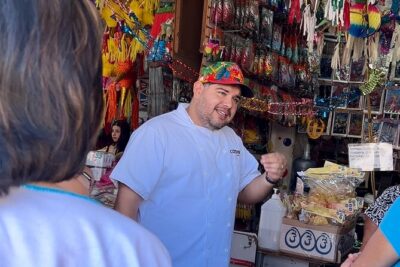
Cabo San Lucas Mexican Cooking Class Experience and Local Markets
Read our review →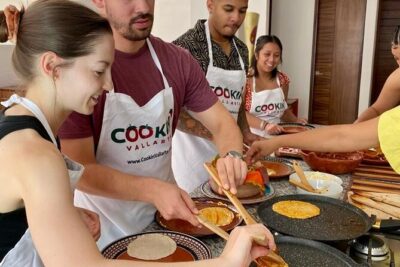
Puerto Vallarta Cooking Class Experience with Market Tour
Read our review →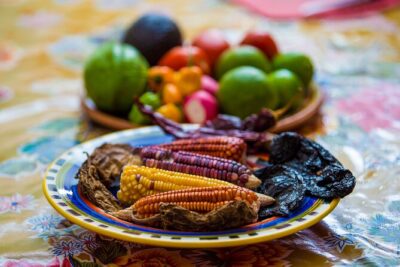
Mexican Cooking from Scratch in a Local Home in Tulum
Read our review →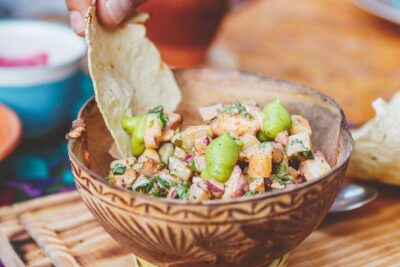
Mexican Cooking Class with Food Market Visit in Mexico City
Read our review →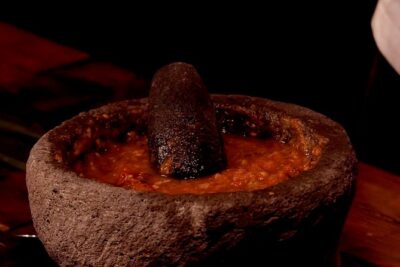
Flavors of Oaxaca: Cooking Class with No Set Menu and Local Market Tour
Read our review →
Essence of Mexico: Authentic Mexican Cooking Class & Market Tour
Read our review →Browse the lists this tour appears in